
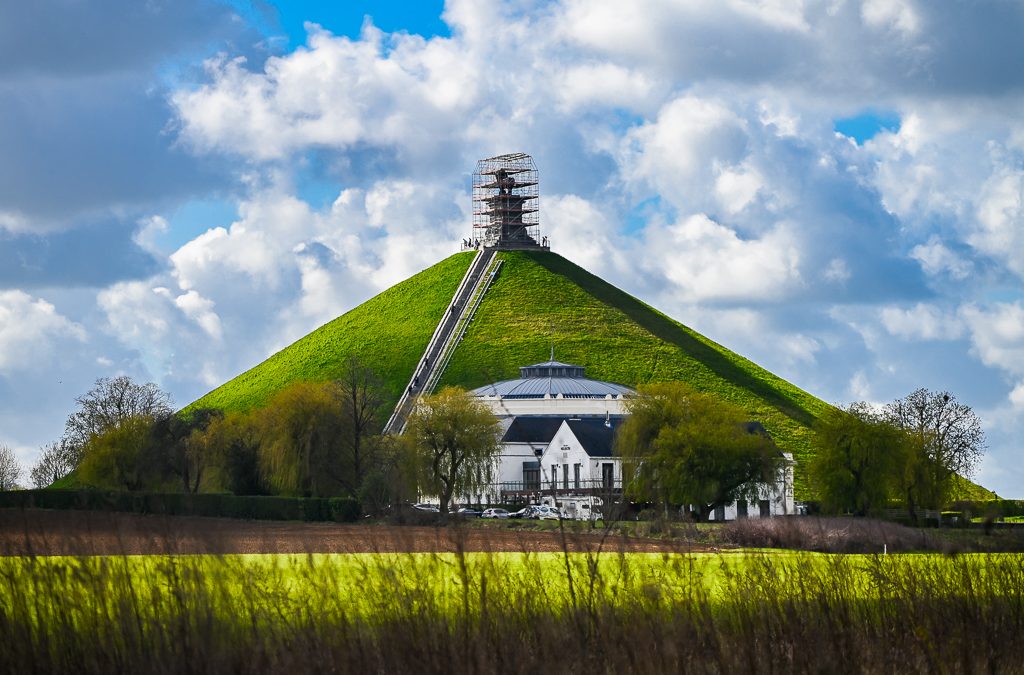
Visiting One of the Most Important Battlefields in Europe
Napoleon’s Final Defeat at Waterloo
March 2026: I used Brussels as the base for a larger trip to Liberia because my friends and I were flying to Liberia via Brussels Airlines.
This was my second visit to Belgium. My first visit had been brief, so I was excited to finally spend more time exploring the country. I was happy to return to Belgium, even if only for a few days.
This gave me the opportunity to see more of the country and visit one of the most historically important battlefields in Europe: the site of the Battle of Waterloo.
Waterloo marked the final defeat of Napoleon Bonaparte, the man who declared himself emperor of France, conquered most of Europe, and helped reshape the balance of power in Western Europe during the early 1800s.
The battle effectively ended one of the bloodiest military campaigns in European history killing millions and changed the political direction of Europe for generations afterward.
Many historians view the Napoleonic Wars as helping set the stage for later rivalries and conflicts across Europe that would eventually contribute to wars such as World War I and World War II.
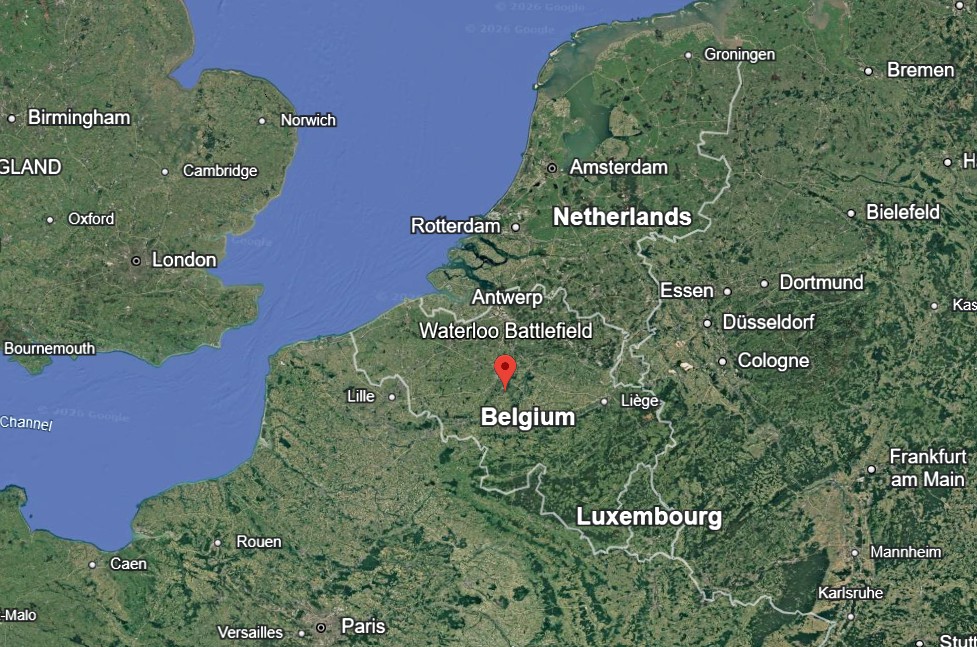
Staying in Brussels
I spent two nights in Belgium on this trip—one on the way to Liberia and another on the return.
The first night I stayed at the Sofitel Brussels Europe near Parc du Cinquantenaire and within walking distance of the famous Cinquantenaire Arch, a monumental triumphal arch built to celebrate the 50th anniversary of Belgian independence in 1880.
Belgium and the Legacy of Napoleon
A Young Country by European Standards
Compared to many other European nations, Belgium is actually a relatively young country and does not represent a single unique ethnic group in the way some older European states do.
Before the rise of Napoleon Bonaparte, much of the region had been controlled by different European powers, including France, and large parts of Belgium remain French-speaking today.
After Napoleon’s final defeat at the Battle of Waterloo, European powers reorganized the region in part to create a buffer between France and the rest of northern Europe, especially Britain and the Netherlands.
Control of this strategically important area—including access to major ports—was seen as a way to make it more difficult for another Napoleon-style ruler from France to rapidly expand across Europe again in the future.
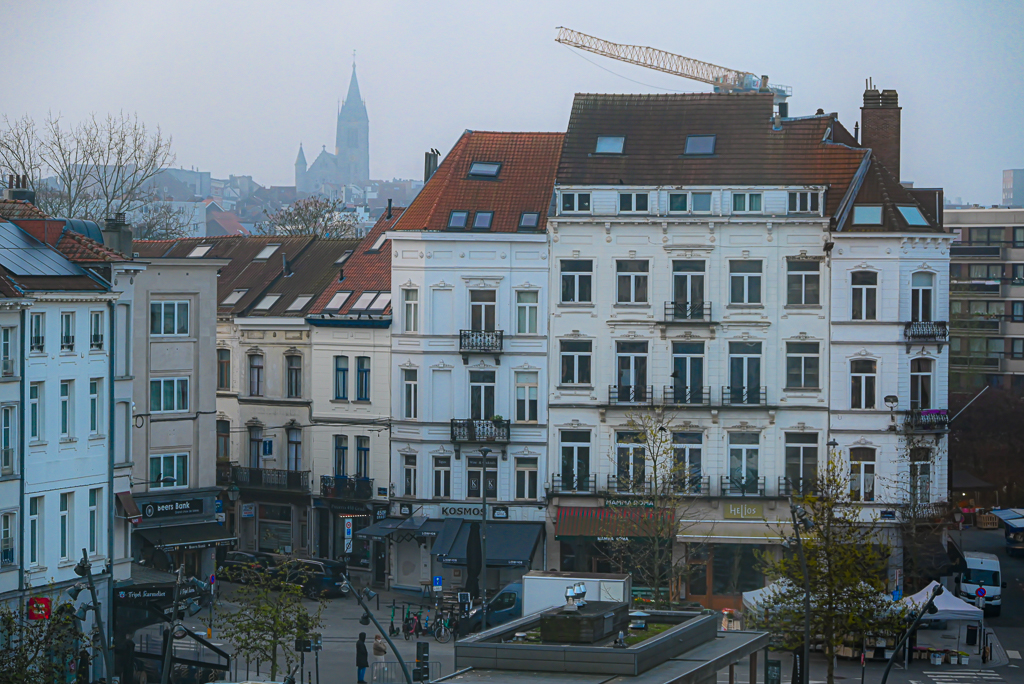
Exploring Brussels Before Liberia
Beer, Parks, and Spring in Belgium
My friends and I spent the afternoon and evening enjoying a few dark Belgian beers at the lively outdoor bars near our hotel.
Between drinks, we wandered for miles through the older neighborhoods of Brussels, exploring the city on foot and watching spring slowly bring the parks and trees back to life around Parc du Cinquantenaire and the Cinquantenaire Arch.
It felt peaceful and relaxed—one of those calm travel days before everything becomes chaotic again.
Then, later that afternoon, we headed to the airport for our flight to Liberia.
That was where my nightmare travel ordeal began.
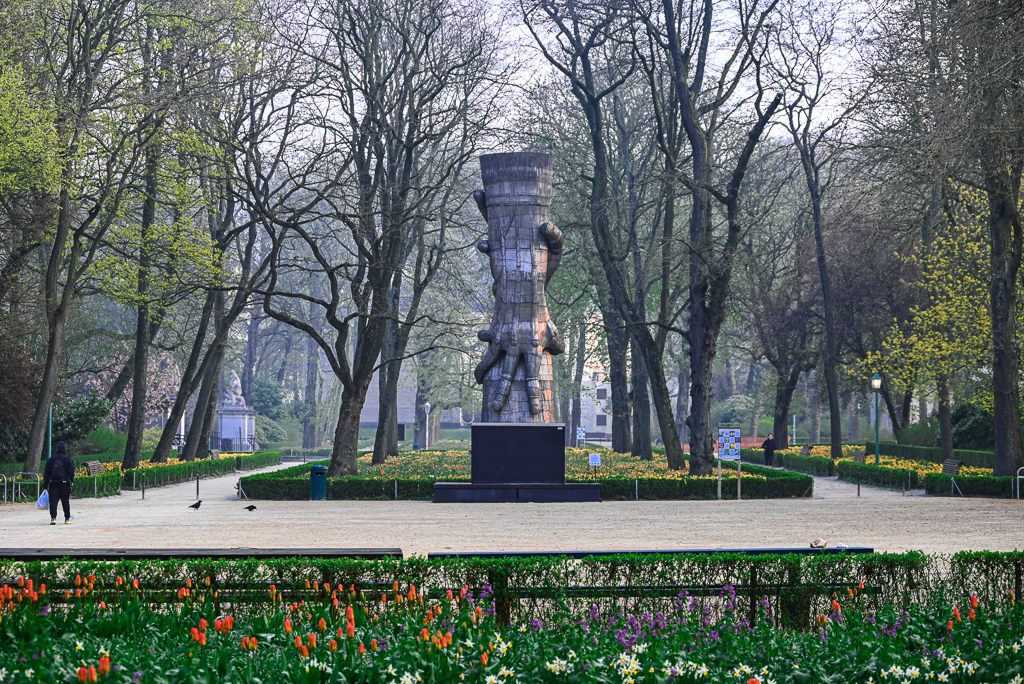
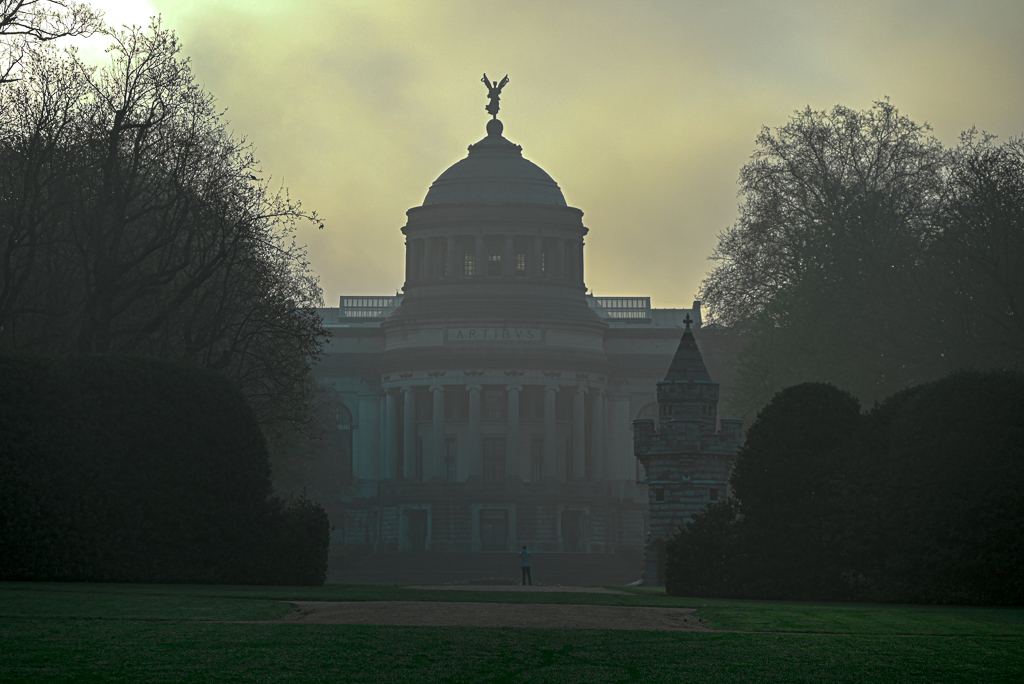
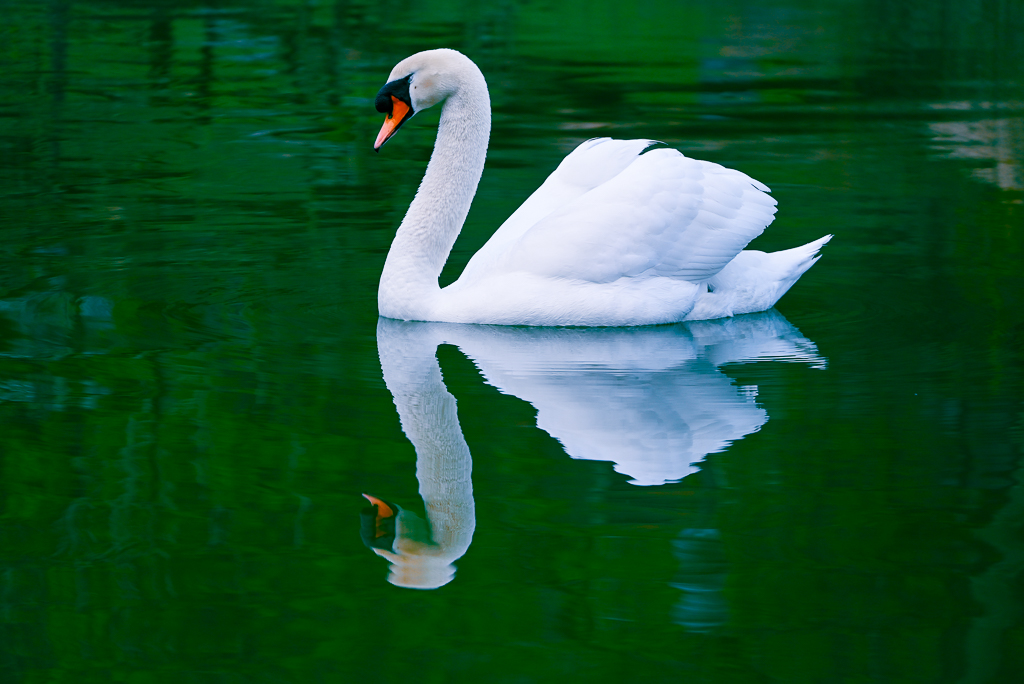
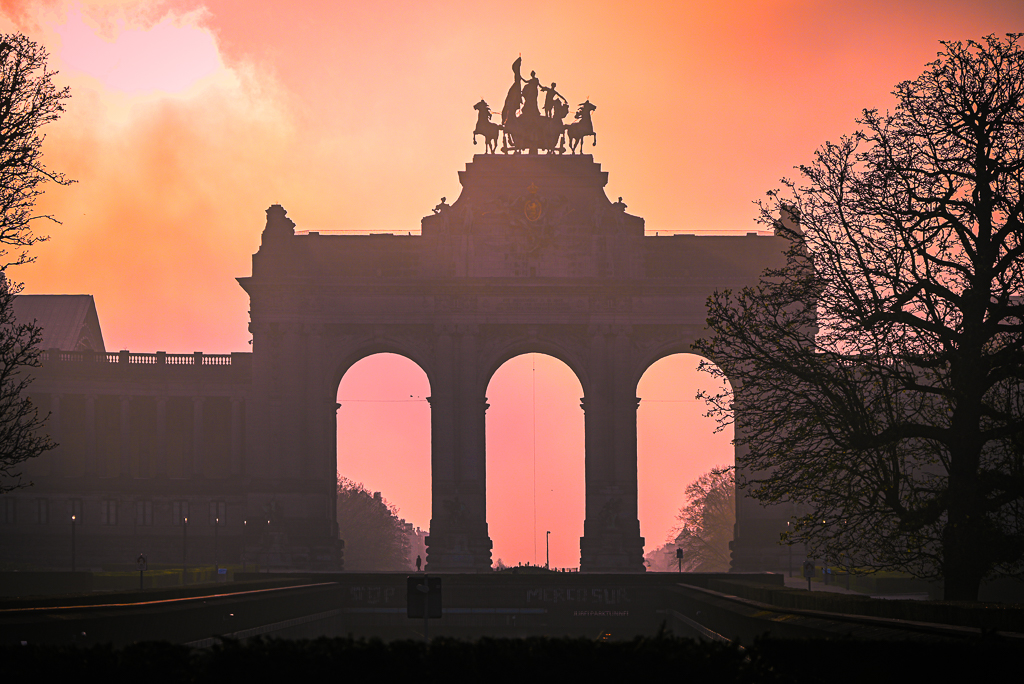
Cinquantenaire Arch
Chaos at the Airport
Bumped From My Flight
After arriving at the airport, I discovered I had been bumped from my flight and rebooked on a much longer route through Ethiopia, arriving in Liberia an entire day later than planned.
What followed was nearly half a day spent sitting in the airport trying to sort everything out.
Most of that time was spent desperately trying to reserve decent seats on my new flights so I would not end up trapped in middle seats during the long journey because of constant website glitches and airline issues.
The Brussels Airport Bombing Memorial
As I sat there exhausted and frustrated in the departures hall, I noticed something I had somehow missed during my previous visit to Belgium.
Directly across from me was a memorial dedicated to the victims of the 2016 Brussels bombings.
The memorial honored the 24 people killed at the airport when suicide bombers entered during rush hour and detonated explosives in an attempt to kill as many civilians as possible.
The attack threw the airport into complete chaos.
According to accounts from the bombing, the explosions left bodies and debris scattered throughout the terminal.
Sitting there dealing with my own minor travel frustrations while looking at that memorial was a reminder of how quickly ordinary places can become scenes of tragedy. It also helped me to appreciate how my situation really wasn’t all that bad.
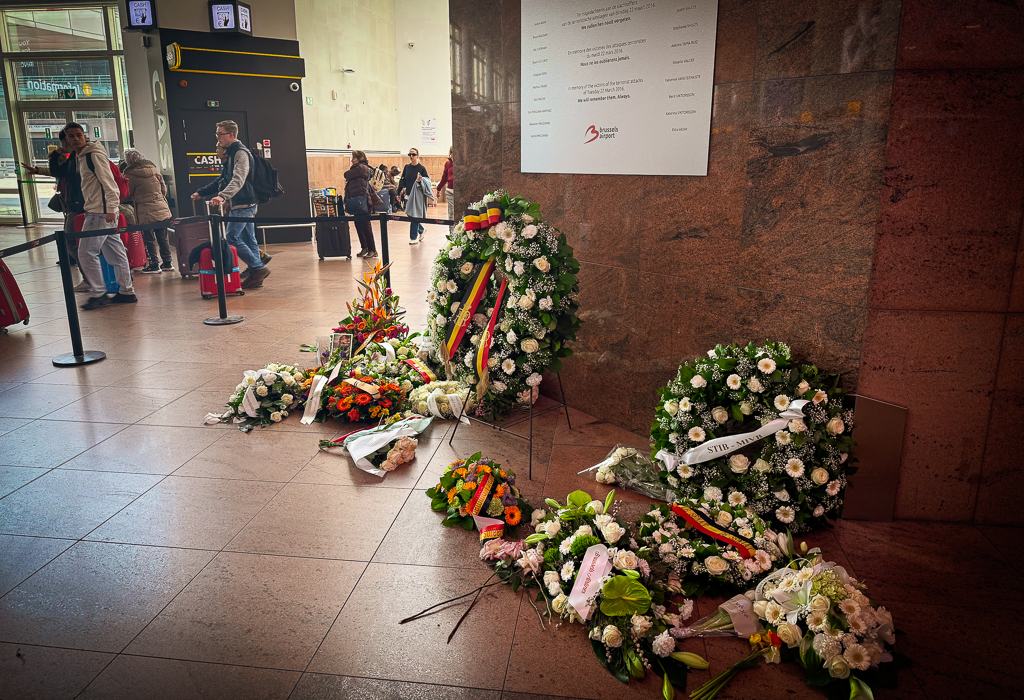
Memorial at the airport to those killed by a suicide bomber
Heading to Waterloo
Walking to the Battlefield
After one week in Liberia, I returned to Belgium via Brussels Airlines, and this time, instead of being bumped from the flight, I was upgraded to business class for free. I was feeling well rested when I landed in Brussels in the early morning, and as soon as I landed, I hit the ground running.
I caught a train to Waterloo, which took about an hour.
From there, instead of taking a taxi, I decided to walk another hour all the way to the battlefield itself.
That was also where my guesthouse was located.
I stayed at a small guesthouse called Le 1815, appropriately named after the year the battle took place.
The guesthouse overlooked portions of the battlefield directly from the window of my room.
My room itself was named after one of Napoleon’s generals.
On the first floor was a wine restaurant with fine dining and excellent wine, where I eventually ate dinner after spending the entire day walking what felt like every corner of the battlefield.
By the end of the day, I had probably walked close to twenty miles exploring the area.
About the Battle of Waterloo
Napoleon’s Final Stand
The Battle of Waterloo was the final stand of Napoleon Bonaparte.
The battle could have gone either way.
Napoleon was pursuing the British-led Allied army under the command of the Duke of Wellington, and for a time the outcome remained uncertain.
One of the factors that may have changed everything was the weather.
Heavy rain the night before turned the battlefield into thick mud, and Napoleon delayed his main attack because the soggy ground made it difficult to move artillery and cavalry effectively.
That delay gave crucial reinforcements from Prussia time to arrive later in the battle, something that likely made the difference.
The battle took place in open farm fields outside the village of Waterloo between several fortified farmhouses that became strong defensive positions for the British and Allied forces.
French cavalry repeatedly charged across muddy fields on horseback while British infantry responded by forming defensive squares with bayonets pointed outward to defend against cavalry attacks.
Cannons pounded both sides throughout the day while Napoleon himself directed the fighting from the battlefield.
The battle was incredibly brutal.
Medical care at the time was primitive, and soldiers hit in the arms or legs by musket balls or cannon fragments often had little chance except immediate amputation.
Inside makeshift hospitals set up in nearby farmhouses, surgeons worked nonstop sawing off shattered limbs while wounded soldiers screamed around them.
Waterloo became one of the bloodiest battles of its era.
In a single day of cavalry charges, musket fire, and artillery bombardments, roughly 20,000 men were killed.
And the suffering did not end when the battle stopped.
According to local stories, nearby farmers said the battlefield was not quiet for nearly three days afterward as wounded soldiers lay abandoned across the muddy fields screaming in pain while slowly dying where they had fallen.
Late in the battle, Prussian reinforcements finally arrived and began attacking Napoleon’s forces from the side.
In a final desperate attempt to save the battle, Napoleon sent in elements of his Imperial Guard, his elite veteran troops who were considered nearly unbeatable.
But by then it was too late.
The attack failed, the French lines collapsed, and the battle was lost.
With Waterloo, Napoleon’s rule effectively came to an end.
The French monarchy was restored, and Napoleon was captured once again.
This time, the British sent him far away to Saint Helena, a remote island in the middle of the Atlantic Ocean where escape would be nearly impossible.
There he spent the final years of his life in exile.
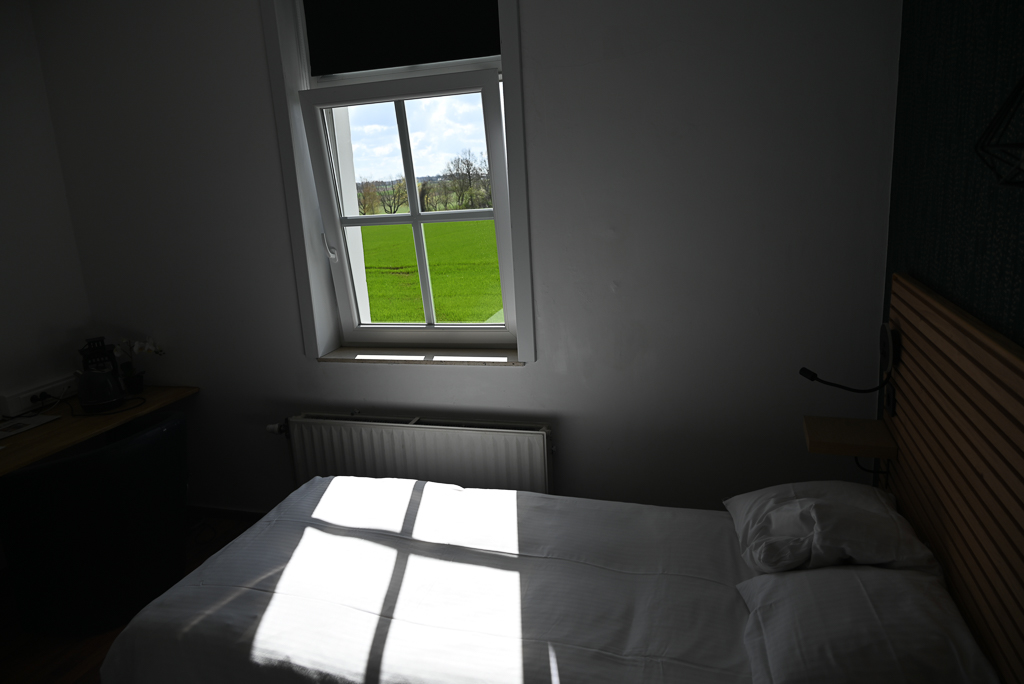
View of the battlefield from my hotel room
Exploring Waterloo
The Museum and Napoleon
Next to the battlefield was a large museum dedicated to the Battle of Waterloo.
Inside was a massive replica model of the battlefield that visitors could stand around and study from above, showing troop positions, movements, and the scale of the fighting.
There were also portraits, statues, uniforms, weapons, and displays dedicated to Napoleon Bonaparte.
Napoleon was one of those larger-than-life historical figures.
After the French Revolution and collapse of the old monarchy, he rose through the military ranks and eventually led France’s First Republic and later the French Empire, conquering huge parts of Europe.
But eventually his ambition pushed too far.
His invasion of Russia during winter became a catastrophe, with massive numbers of his troops dying from cold, starvation, and disease.
After being pushed back and defeated, Napoleon was captured and exiled by the British to the Mediterranean island of Elba.
But that still was not the end of him.
With help from supporters in France, he escaped exile, rebuilt his army, and made one final attempt to reconquer Europe.
That final attempt ended here at Waterloo in present-day Belgium.
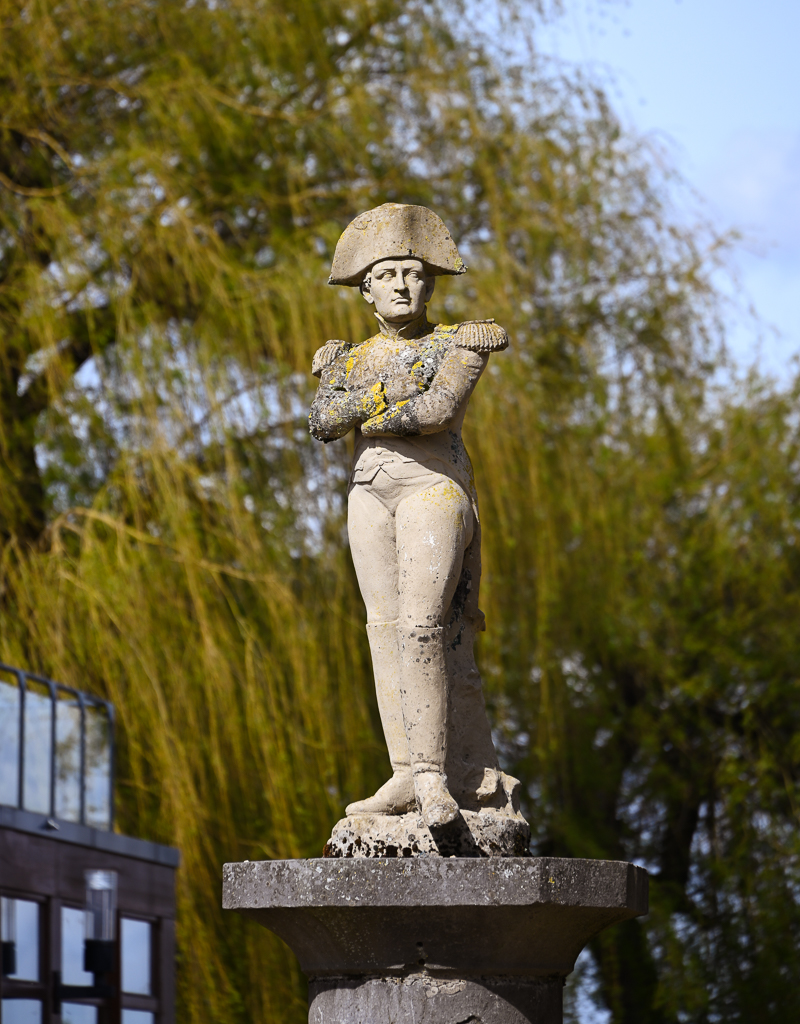
Statue of Napoleon
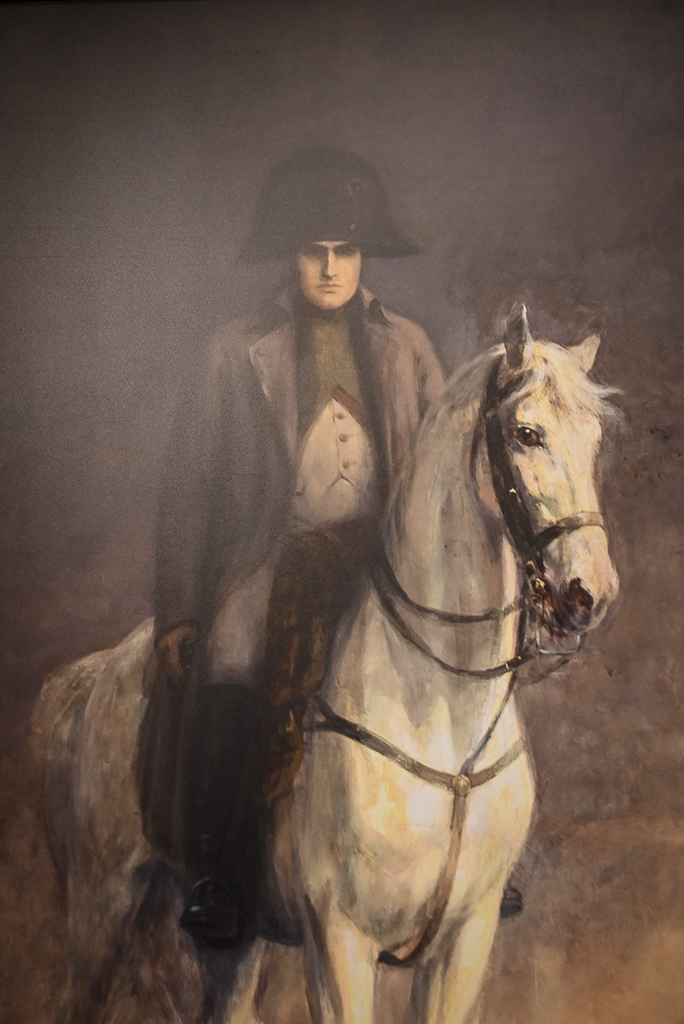
Painting of a Brooding Napoleon
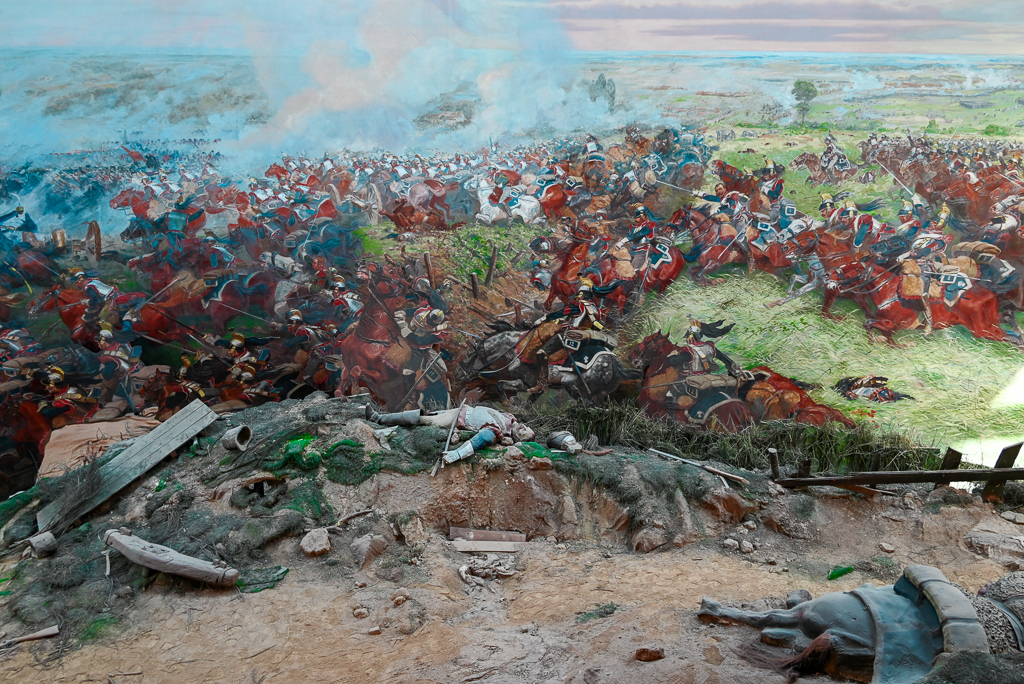
Huge model of the battlefield
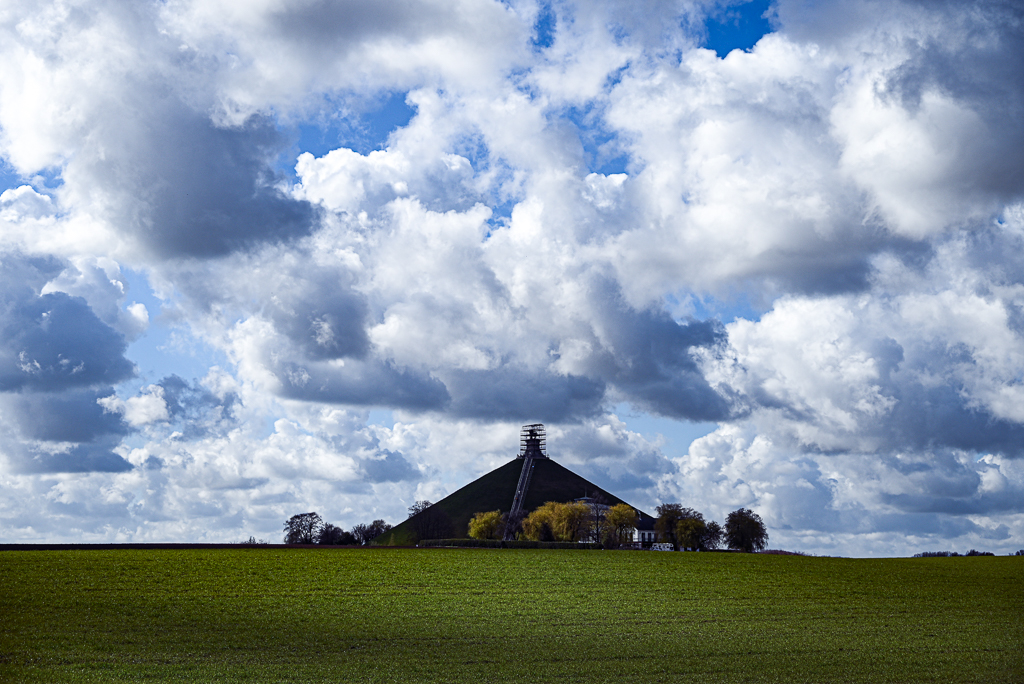
Lions Mound
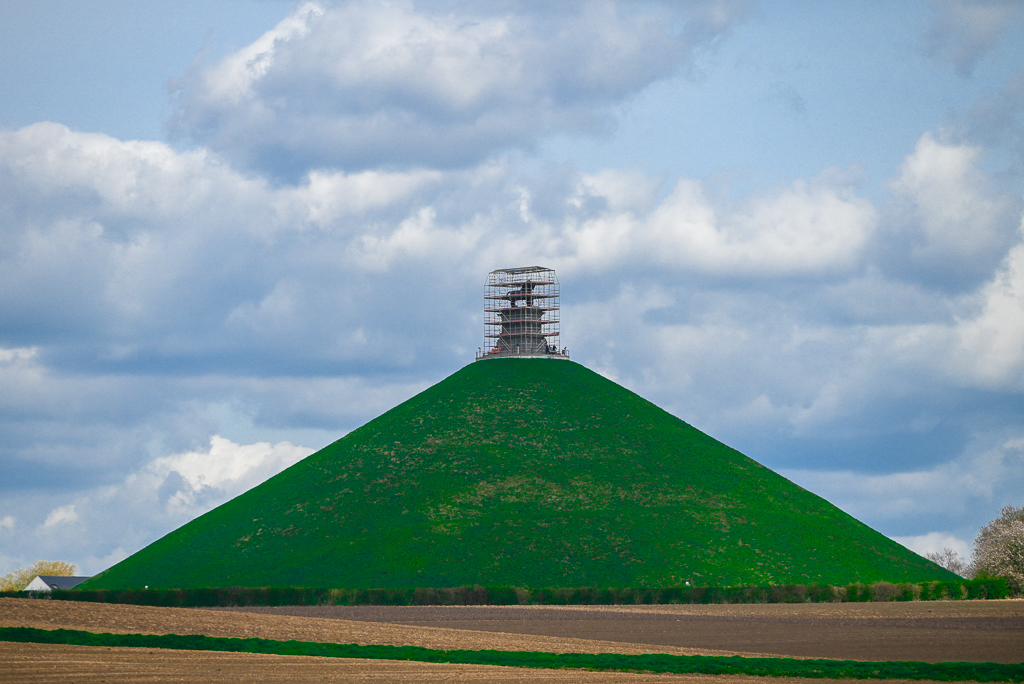
Lions Mound
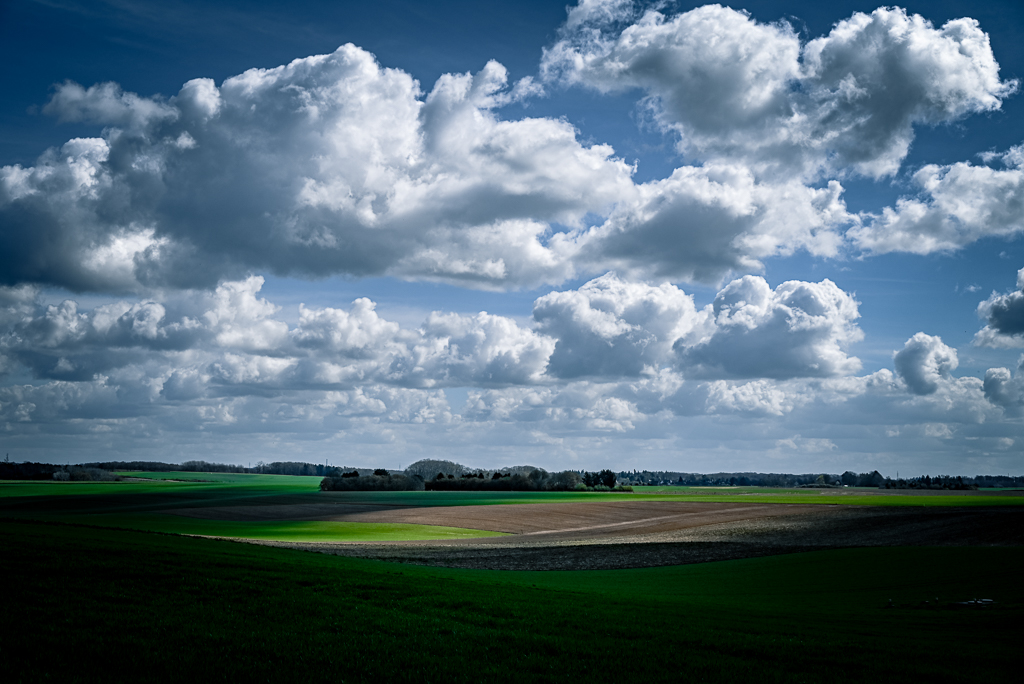
Farming fields that were once the battlefield
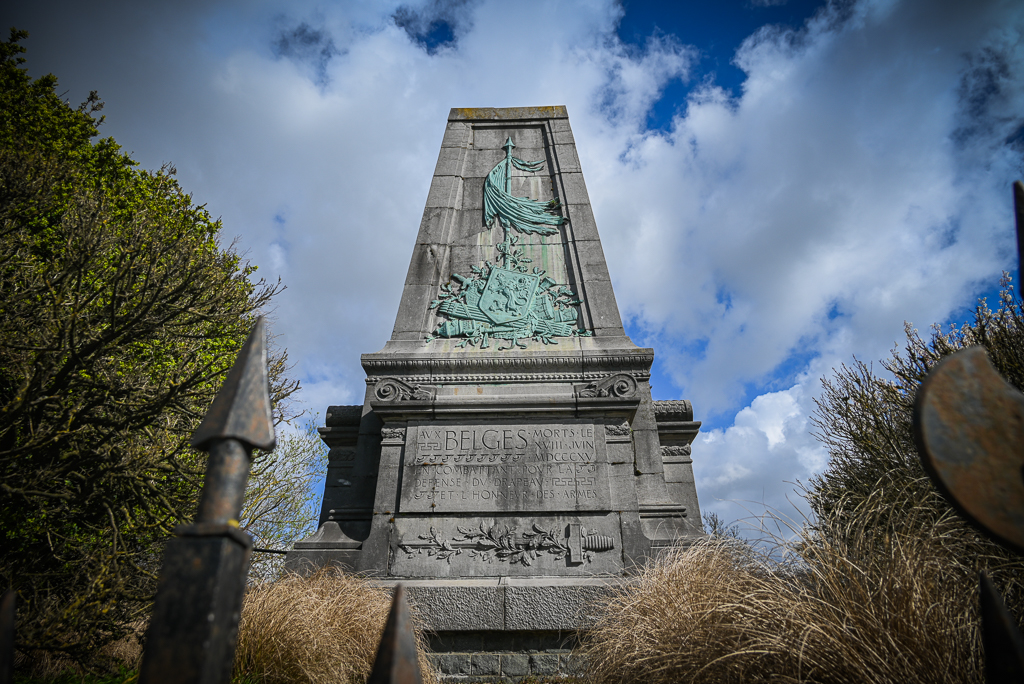
Monument to British Men that died fighting
The Farmhouses of Waterloo
Several key farmhouses around the battlefield became fortified strongholds for the British and Allied forces during the Battle of Waterloo.
One of the most important was eventually captured by Napoleon Bonaparte’s forces, but by the time it fell, it was already too late to change the outcome of the battle.
During and after the fighting, the farmhouse was turned into a makeshift field hospital.
Thousands of wounded soldiers passed through it, and countless limbs were amputated there as surgeons worked nonstop trying to save men shattered by musket balls and cannon fire.
The building still stands today largely in its original form.
Walking through it was eerie knowing how much suffering had taken place inside those walls.
Locals have long claimed the farmhouse is haunted, something that honestly did not feel hard to believe standing there alone surrounded by silent fields that once witnessed so much death.
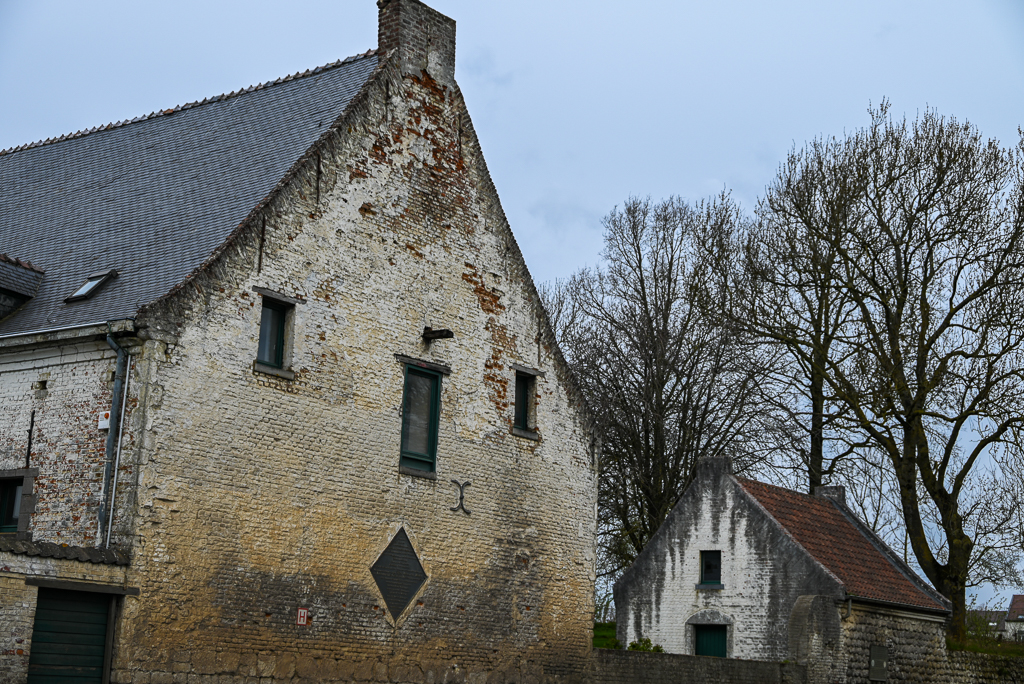
Farmhouse that became a hospital
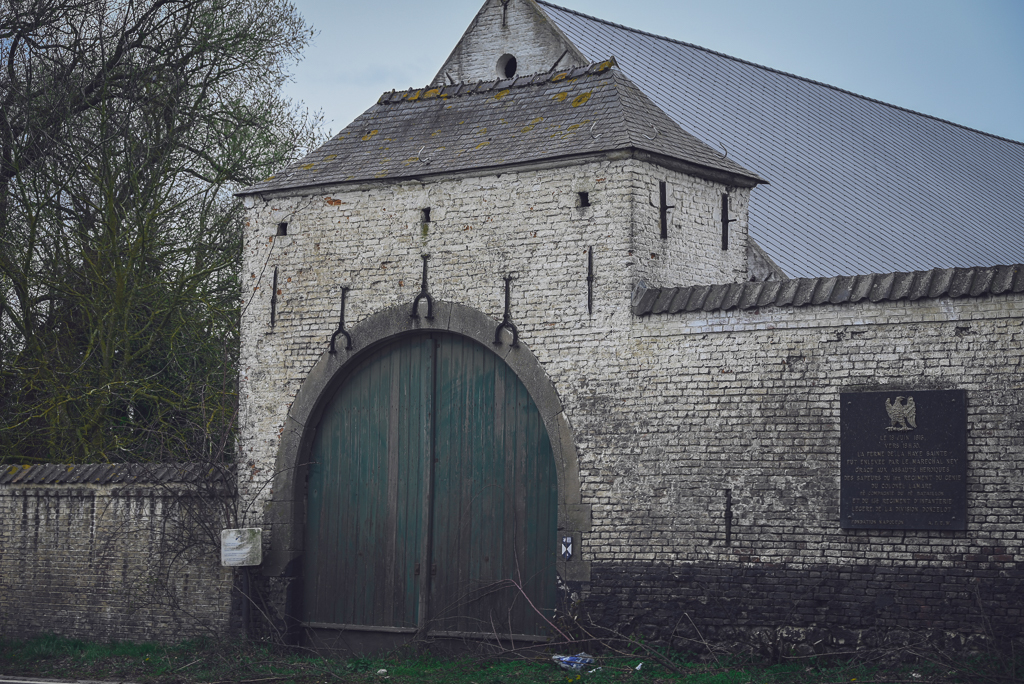
Farmhouse that became a hospital
The Last Stronghold
Another farmhouse became one of the most important defensive positions of the battle and was never fully taken by Napoleon Bonaparte’s army.
The position helped shield much of the British force and became the site of some of the bloodiest fighting during the entire battle.
A small number of French soldiers reportedly managed to breach the compound at one point, but they were quickly overwhelmed and massacred inside.
Parts of the farmhouse caught fire during the fighting, and sections of the structure—including parts of the old chapel visible today—were badly damaged or destroyed.
Walking through the site was haunting.
One night, I walked there alone in the darkness near an old forest bordering the battlefield.
The entire area felt eerie and strangely heavy.
Standing there alone, I found myself wondering how many soldiers were buried nearby—or how many stories and memories still lingered in a place like that.
The nearby forest especially gave me an unsettling feeling.
I only explored it during daylight.
At night, it honestly felt too creepy to enter alone.
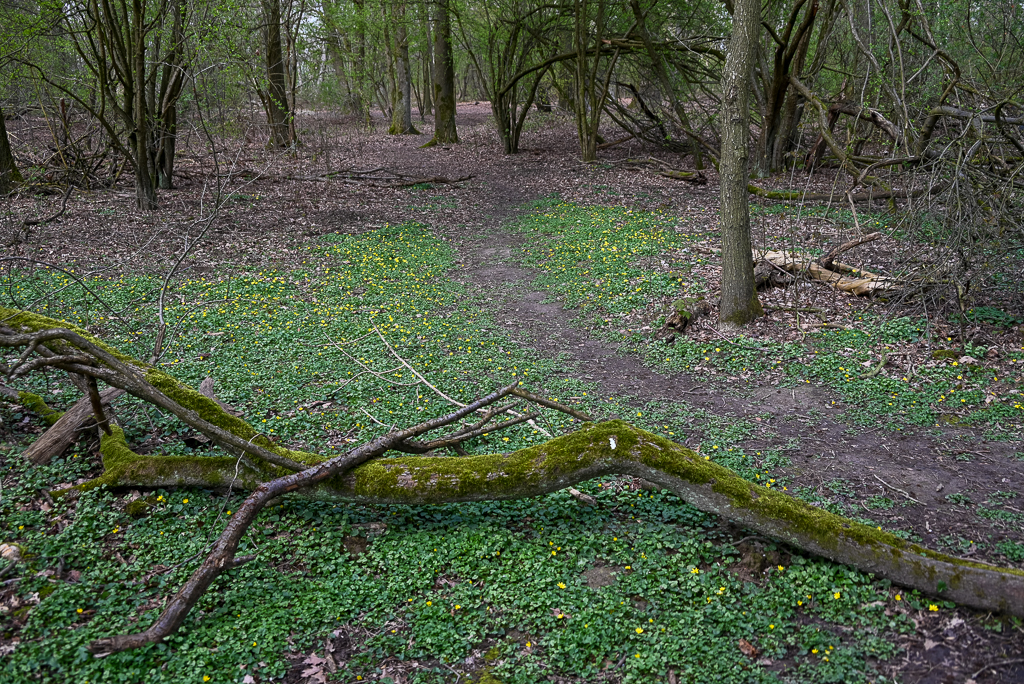
Creepy old woods near Le Haye Sainte Farmhouse
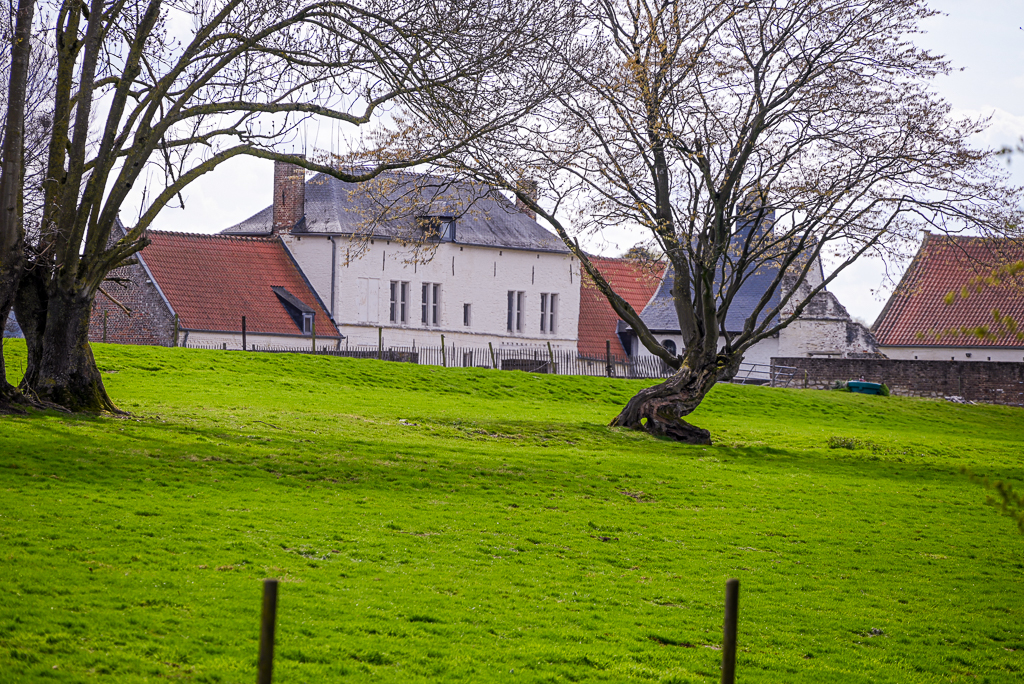
Le Haye Sainte Farmhouse
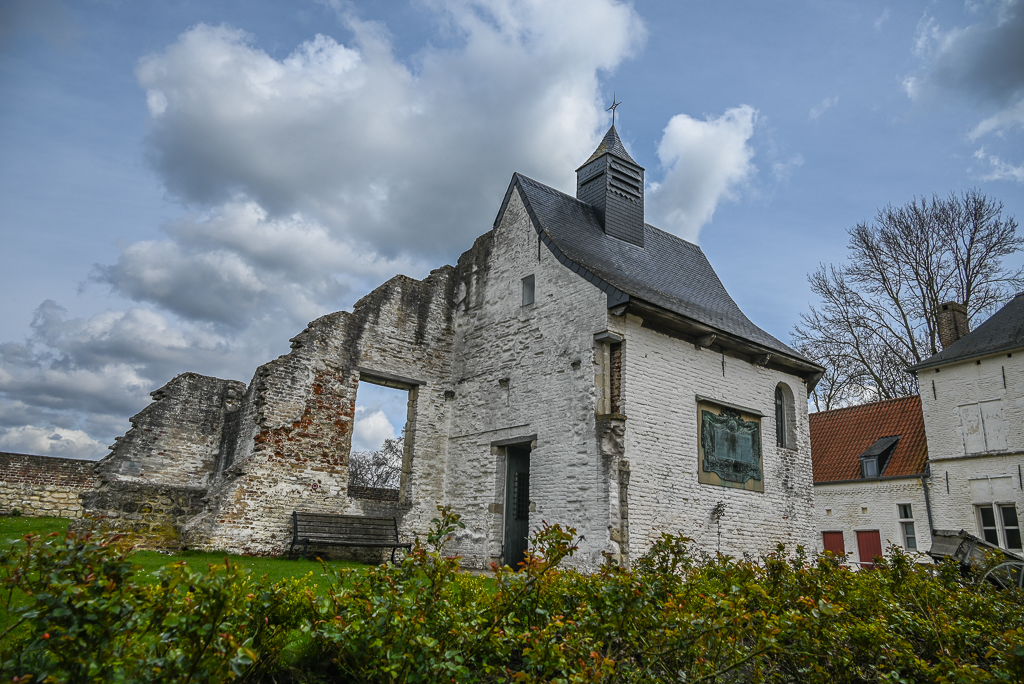
Le Haye Sainte Farmhouse Remnants of the Old Chapel
Leaving Waterloo
Heading Home
On my last day, I woke to a cold and rainy Belgian morning.
After one final walk through the quiet streets near the battlefield, I made my way back toward the airport, leaving the somber fields of Battle of Waterloo behind.
A few hours later, I boarded my flight back to the United States, bringing to an end my week-long journey through Belgium and Liberia.
It had been a trip filled with rainforest, war stories, strange coincidences, difficult history, and places shaped by violence across very different periods of time.
From the civil war scars of Liberia to the battlefields of Napoleon, it was a journey that constantly reminded me how much human history has been shaped by conflict—and how those echoes still remain long after the fighting ends.