
Leaving Eastern Europe Behind
January 2026: After almost a week in the freezing cold of Eastern Europe — the Czech Republic and Slovakia — exploring the beauty of Prague and Bratislava, along with a couple of truly sinister castles with very dark backstories, it was time for a change of scenery and warmer weather.
We were ready for sun.
And we were off to Egypt.
Returning to Egypt
Egypt is a country I have already visited four times. It also holds a special place in my travel history — it was the country where I began my travels in Africa at 24 years old in 2002, and it is a country I will always feel drawn to.
I brought Paula to Egypt for her first time just four years ago, focusing on a completely different corner of the country, Siwa Oasis, deep in the Western Desert.
This time, we wanted to share Egypt with our daughter—to show her the pyramids and let her experience the same sense of awe we feel when standing in front of such immense history.
In the weeks leading up to the trip, I had been trying to get her excited by having her watch cartoons about pyramids and mummies. It worked. Before we left, she kept saying she was excited to see “mummies,” which became her main focus for the trip.
And for me, it was also a chance to finally visit a place I had long wanted to see: the White Desert. I was excited to show Indie the Sahara Desert and to have the experience of camping in it with her.
The Plan for the Week
We would spend nearly a week in Egypt.
Our first few nights would be in Cairo, staying near Giza, where our hotel overlooked the pyramids themselves. From there we would visit the iconic Giza Pyramids, one of the most recognizable ancient sites on Earth.
We also planned to visit one of the oldest pyramids ever built — the Pyramid of Djoser at Saqqara, located further south of Giza.
After Cairo, we would head west into the desert, traveling deep into the Western Egyptian Sahara Desert to camp for a night in the White Desert.
About the White Desert
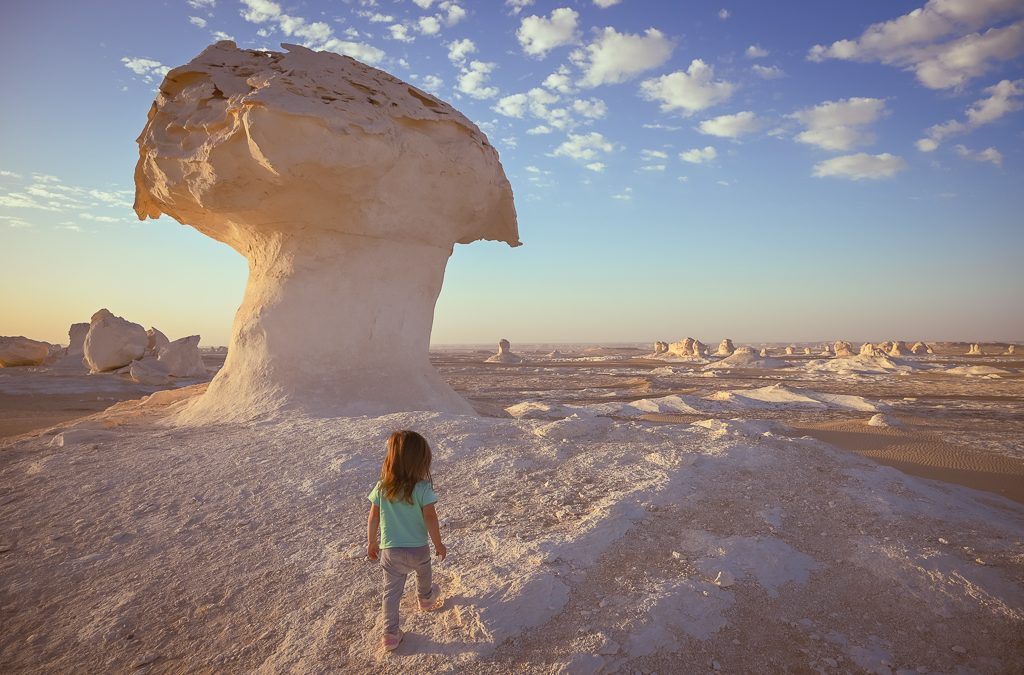
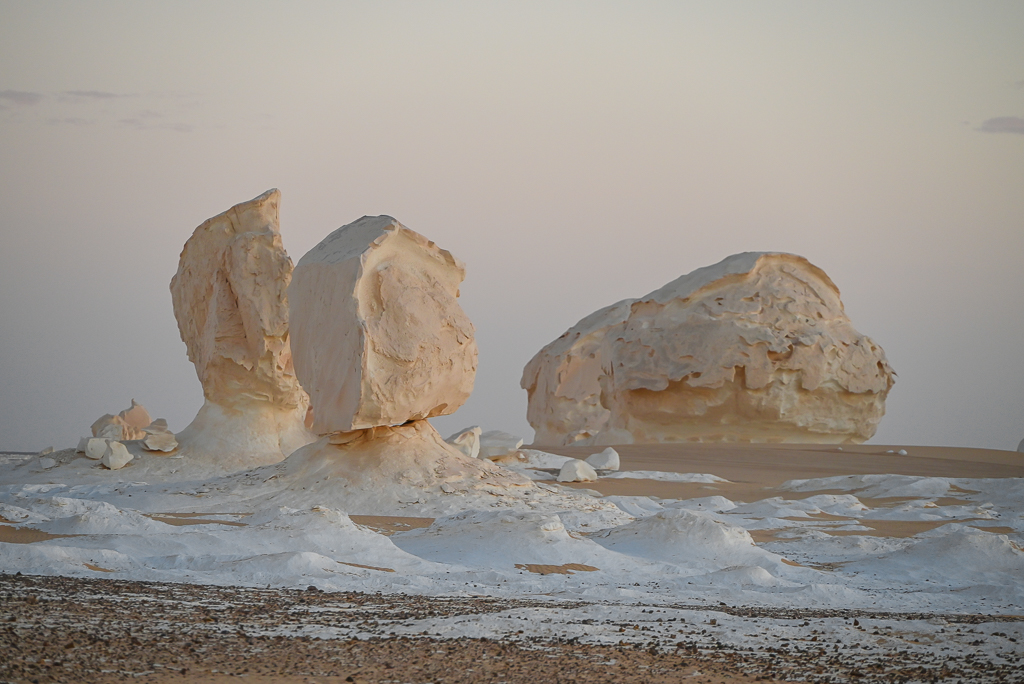
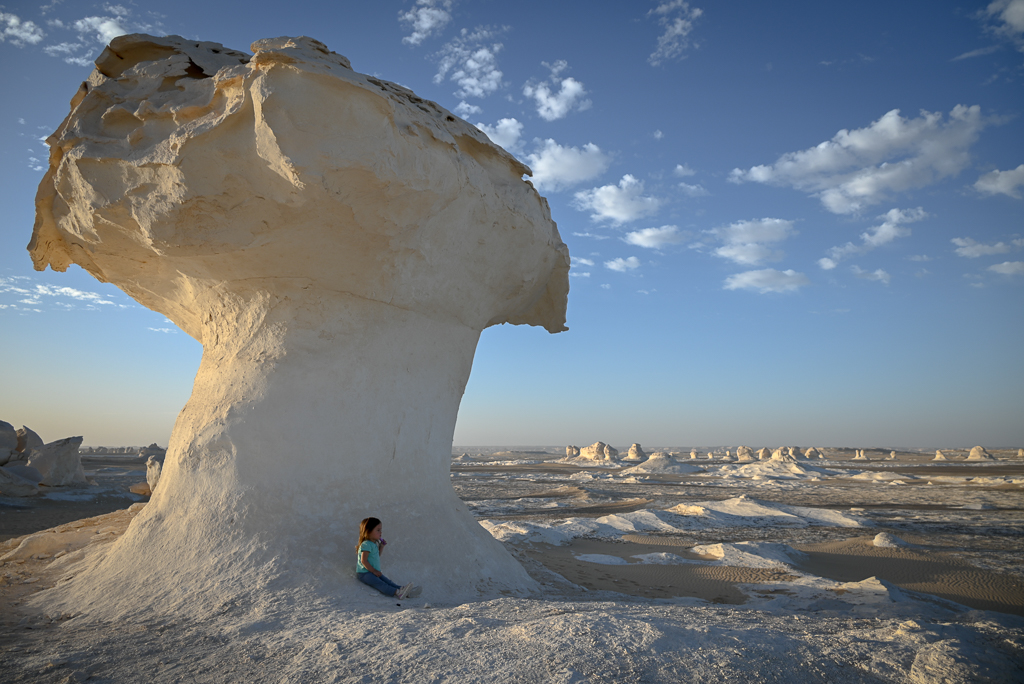
The White Desert of Egypt is one of the most surreal landscapes in the world—a vast expanse of wind-carved white chalk formations rising from the Sahara like frozen waves, mushrooms, and ghostly figures.
The protected reserve is massive, stretching across a huge section of Egypt’s Western Desert all the way toward the Libyan border. A remote highway cuts through parts of it toward western Egypt and Siwa Oasis—where Paula and I traveled on a previous trip—but that route is now restricted and primarily accessible to the military.
Visiting the White Desert requires careful logistics: a 4WD vehicle, an experienced Bedouin guide who knows the maze of desert tracks, and military permits arranged in advance. These precautions are taken seriously—after a tragic incident a few years ago in which a group of tourists traveling without proper coordination was mistakenly targeted by the Egyptian military.
The isolation, scale, and lack of infrastructure make the White Desert both extraordinary—and not a place to explore casually.
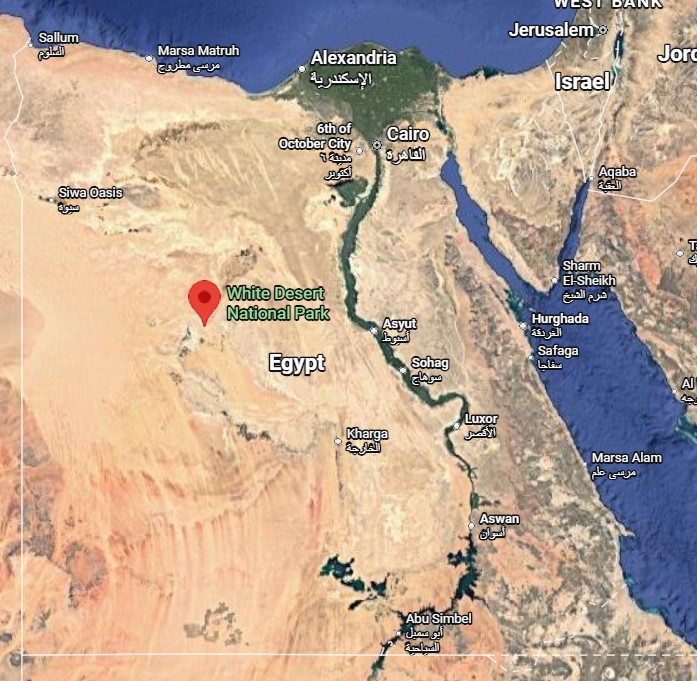
Location of White Desert
Arrival in Cairo
We arrived late at night in Cairo via a direct flight from Prague on Egypt Air. I had arranged for a fixer to meet us inside immigration to assist us through the arrival process and guide us all the way to our prearranged transport. The process went smoothly and helped us navigate some of the usual airport challenges. These types of conveniences are cheap in a country like Egypt.
Through the Cairo Traffic
From the airport, we drove almost an hour through Cairo’s infamous traffic. Even late at night, the city was still at a standstill. In some places, the highways seemed impossibly wide — thirty lanes across — yet still completely choked with vehicles.
Cars, tuk-tuks, trucks loaded with people seated in the open bed, and motorcycles squeezed through every possible gap, darting along shoulders and weaving between lanes, fighting for every inch of progress.
The pollution was overwhelming, and there was a thick smell of burning plastic in the air. At one point, Indie even began coughing from the thick Cairo air. We didn’t know it yet, but this would be the beginning of a bad cough and sickness that would eventually lead to a hospital visit in Turkey at the end of the trip.
First Glimpse of the Pyramids
But all of that stress faded away the moment we arrived at our hotel.
From our room’s patio, we could see them clearly in the night — the pyramids rising out of the darkness near Giza, silent and massive against the sky.
After the chaos of the drive, the view felt surreal. This is a view I will never be tired of.
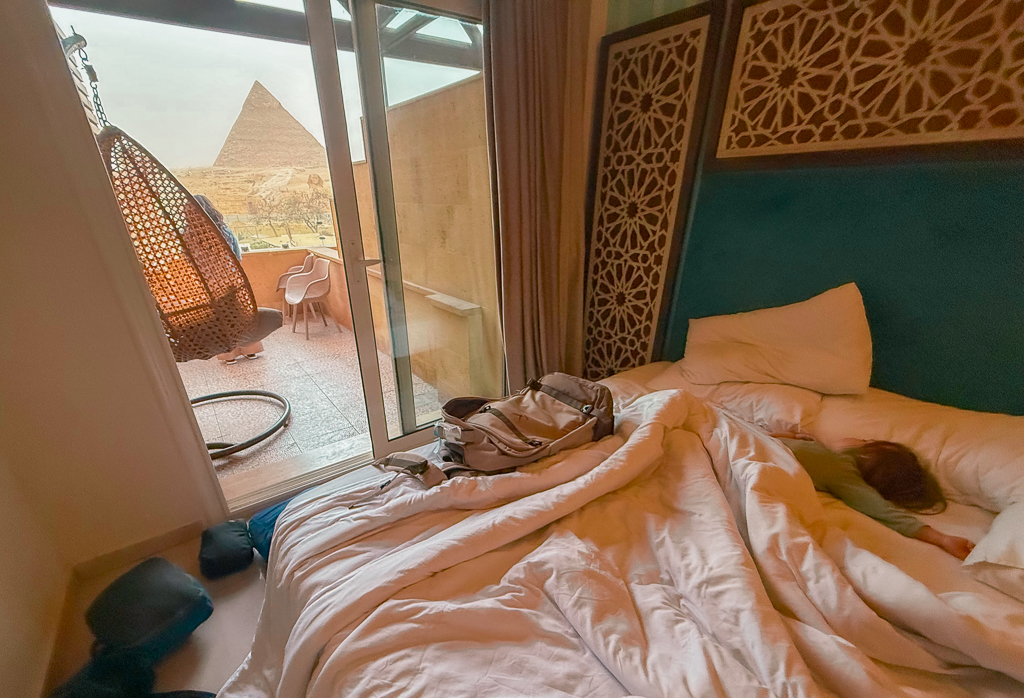
Indie waking up to a view of the pyramids from our room
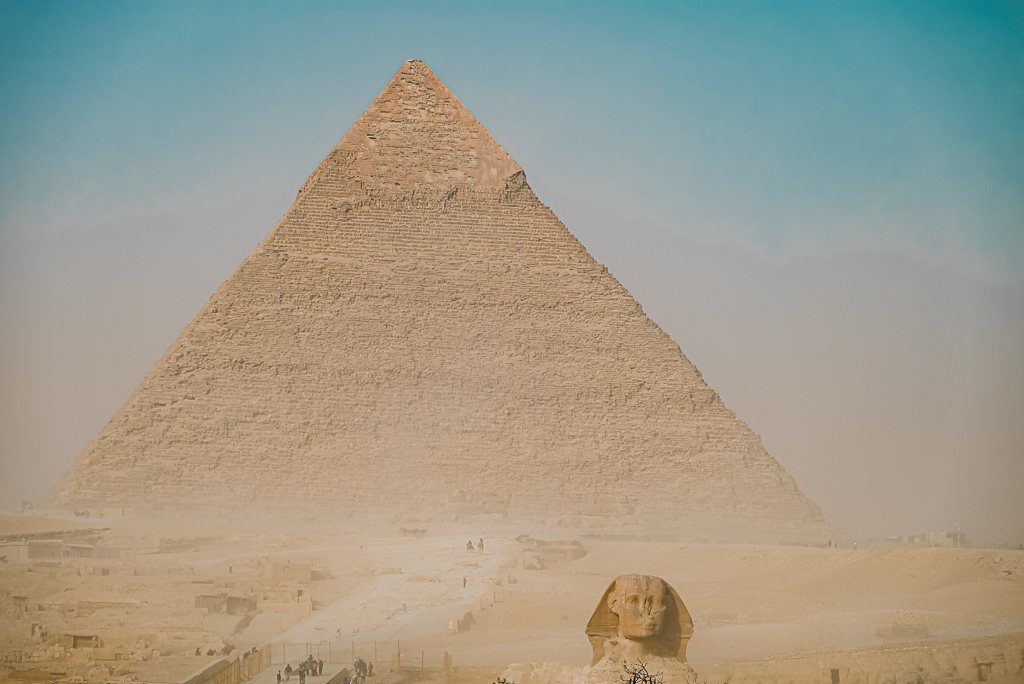
View of Giza Pyramids from our room in the morning in a sand storm
Meeting Our Friend Taha Again
In the morning after breakfast, we met our guide Taha, whom Paula and I had hired a few years earlier to take us to Siwa Oasis. We had really enjoyed traveling with him before and trusted him to help make our trip in Egypt with Indie safe and smooth.
Having someone familiar waiting for us added a sense of ease after arriving in the chaos of Cairo.
Visiting the Step Pyramid
Our plan for the first full day was to visit the pyramid complex at Saqqara, located south of Cairo. The highlight there is the Pyramid of Djoser, one of the oldest pyramids in Egypt, believed to be almost 5,000 years old.
Unlike the smooth-sided pyramids of Giza, this one rises in a series of stacked layers, giving it its distinctive stepped appearance.
The Pyramid of Pharaoh Djoser
The pyramid was built for Djoser, a pharaoh of Egypt’s Third Dynasty. It predates the famous pyramids of Giza and represents one of the earliest large-scale stone constructions in human history.
Standing before it, you can see the transition in architectural ambition — the moment when tombs evolved from simple structures into the monumental pyramids that would later define Egypt.
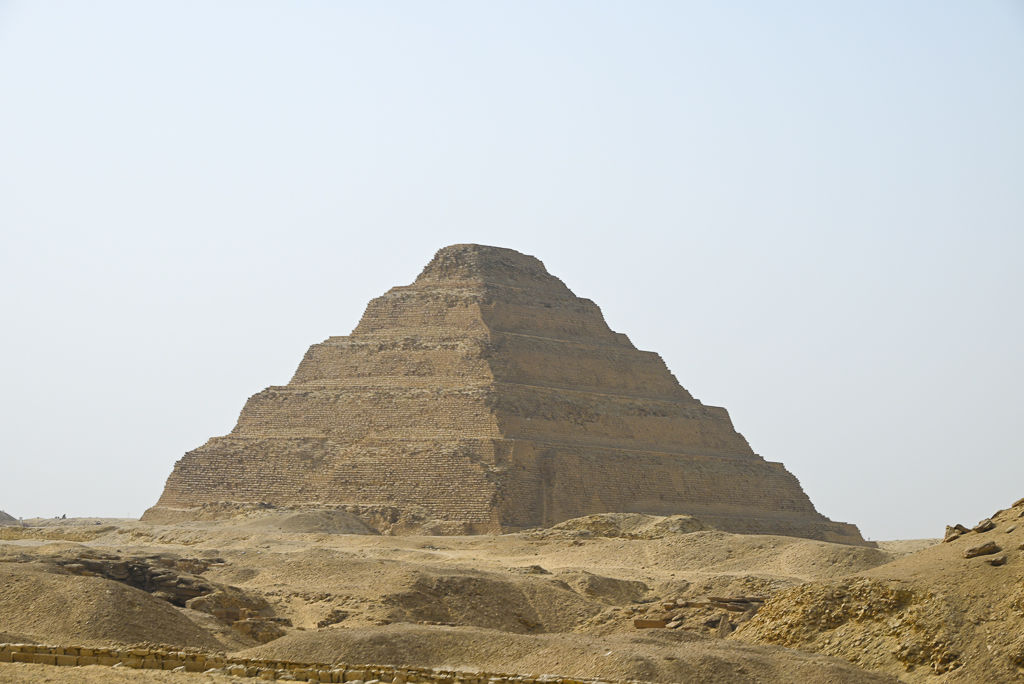
Djoser Pyramid
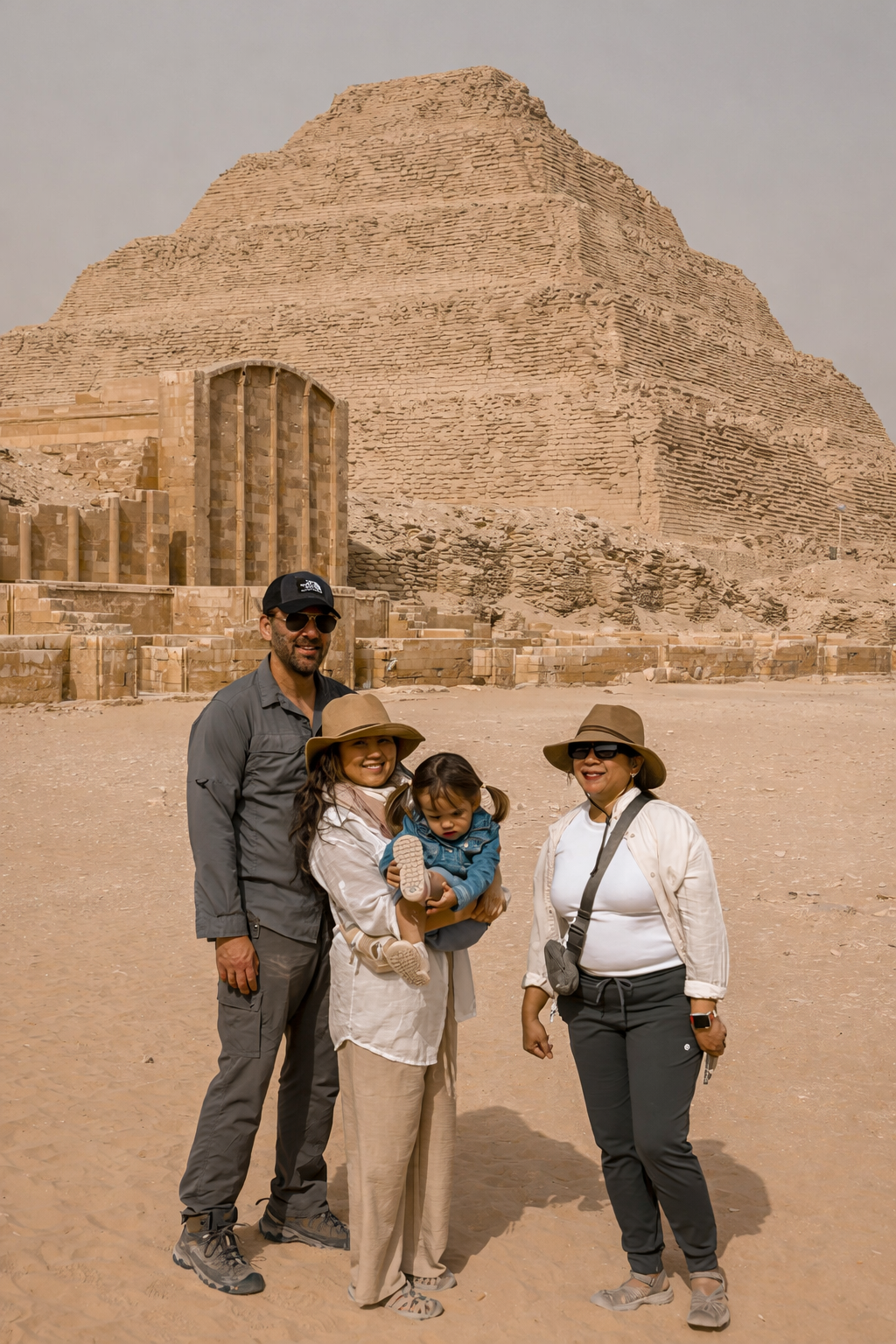
Family at Djoser Pyramid
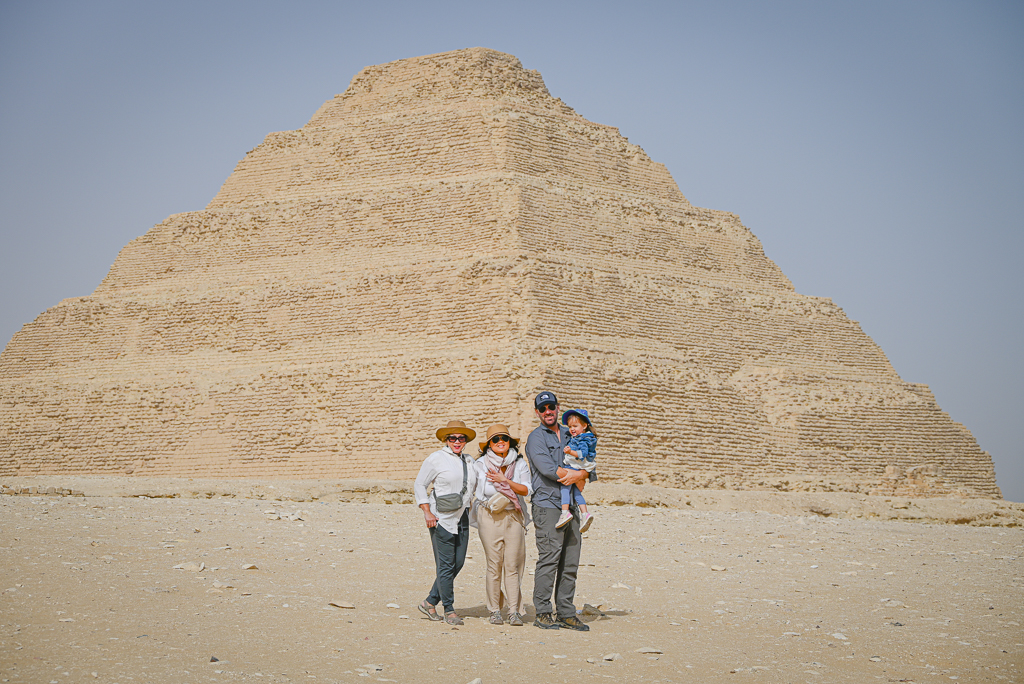
Family at Djoser Pyramid
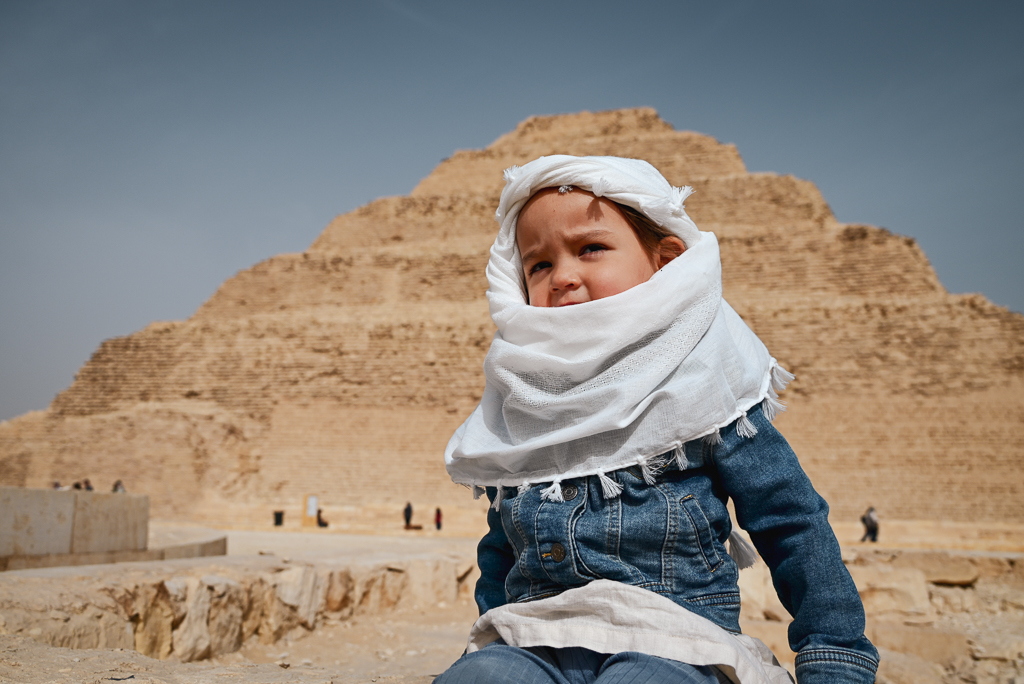
Indie wearing a Bedouin Headwrap
Exploring Saqqara
Djoser Pyramid is just part of the giant complex of tombs, pyramids, and tunnels called the Saqqara Complex. Beneath the complex lies an enormous underground network — at least seven miles of known tunnels — all stretching beneath the pyramid and surrounding structures. It’s the kind of place that makes you wonder what still might remain undiscovered below the surface. I would have loved to explore those tunnels, but they were too small to bring Indie.
Tombs and Ancient Artwork
The Saqqara complex is far more than just the pyramid itself. The surrounding area contains numerous tombs and burial complexes, many decorated with remarkably preserved Egyptian paintings and hieroglyphic writings covering the walls.
A Quieter Alternative to Giza
Another thing that makes Saqqara special is how much quieter it is compared to Giza. While Giza is one of the most visited archaeological sites in the world, Saqqara often feels calm and spacious. In many areas, you can walk through entire sections of the complex with very few other visitors around.
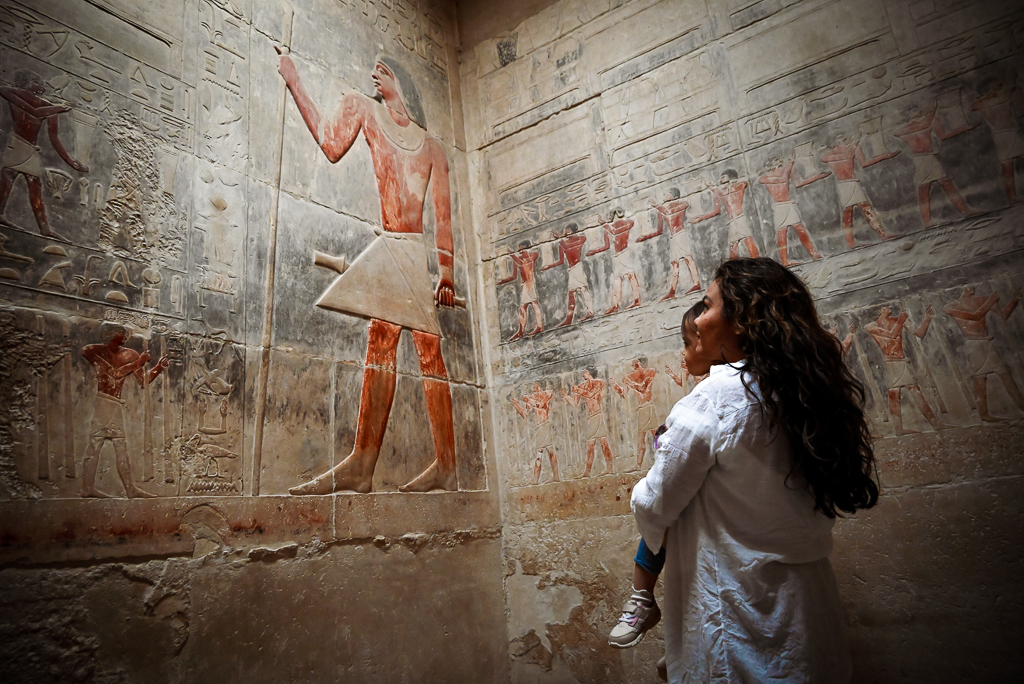
Paula and Indie looking at Egyptian paintings inside a funeral complex
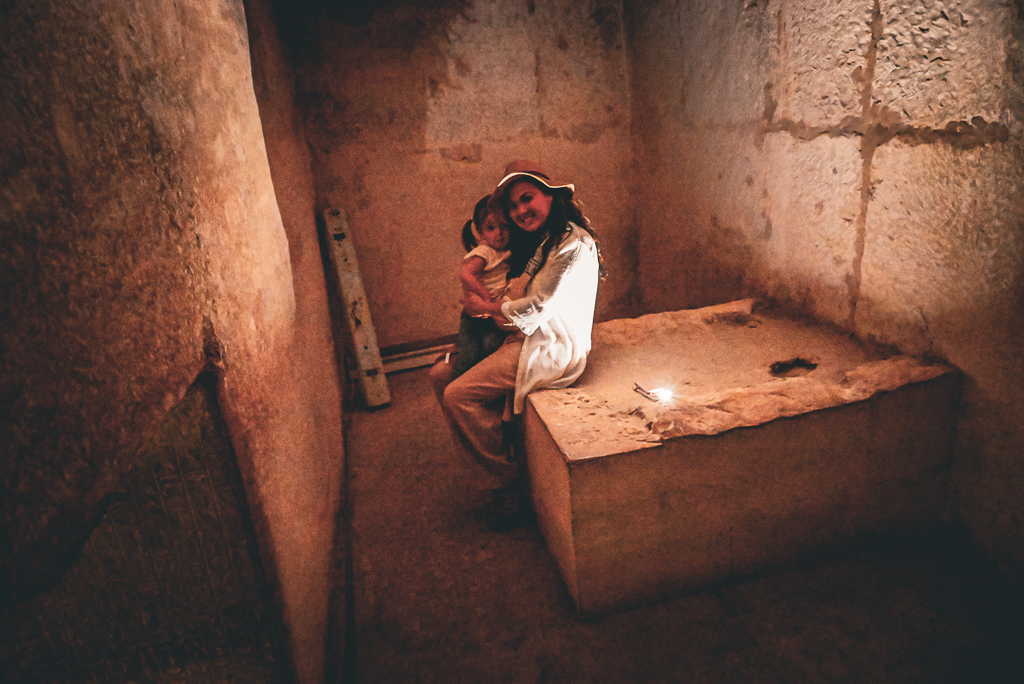
Inside an underground tomb
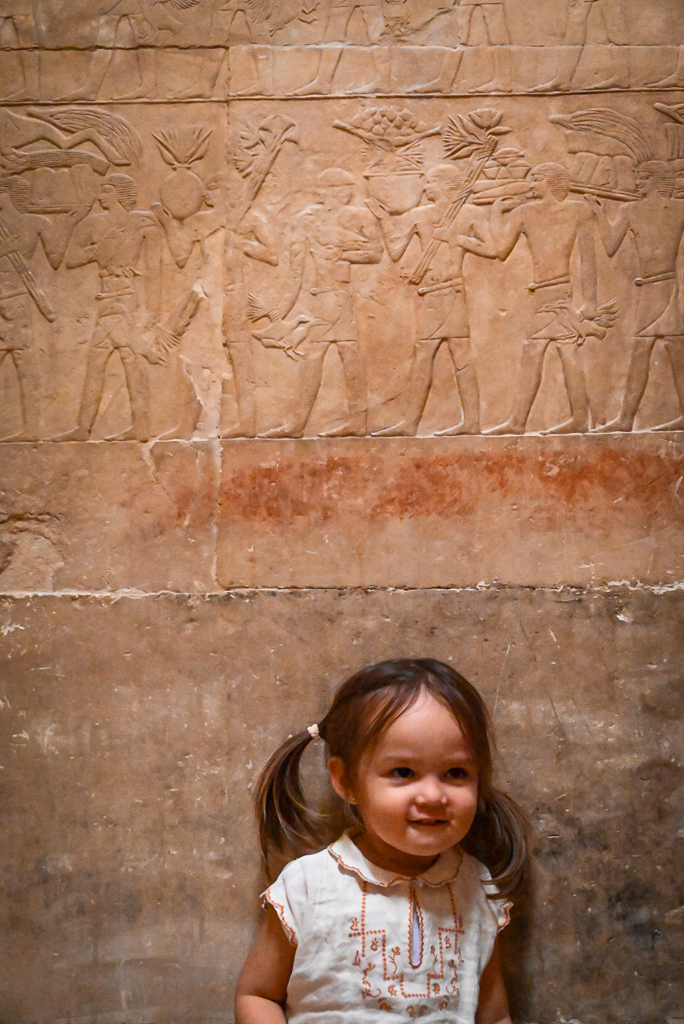
Indie looking for mummies
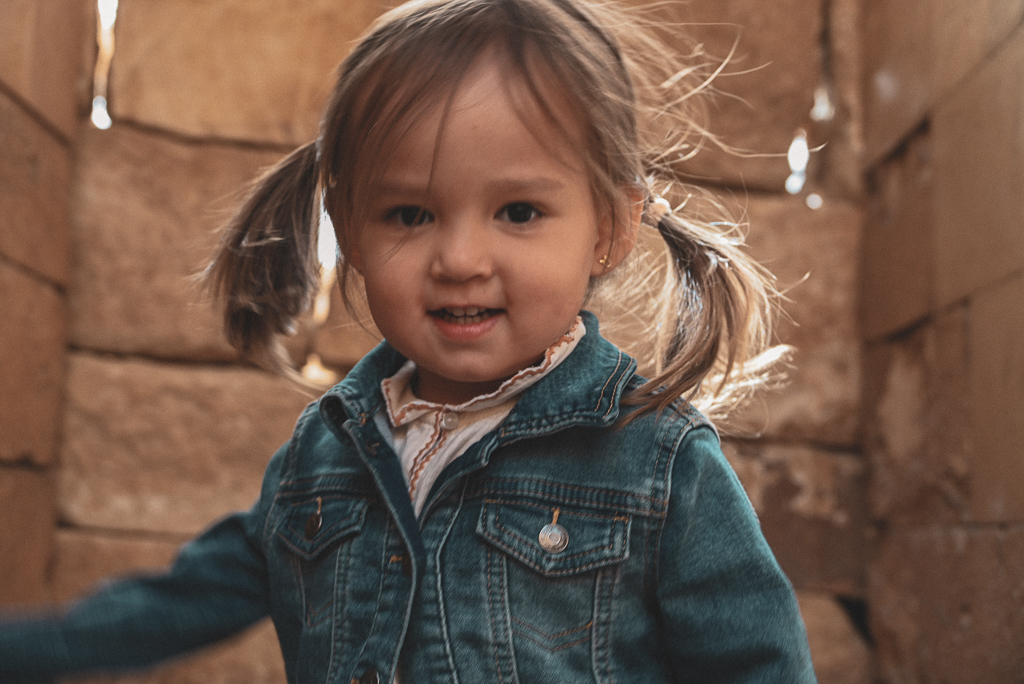
Indie the exploradora
The Underground Animal Tombs — The Serapeum of Saqqara
One of the most unique places we visited in the Saqqara complex was the Serapeum—an underground burial site built for sacred livestock.
Beneath the desert lies a vast network of tunnels carved deep into the earth, forming long corridors lined with massive stone chambers. These were not ordinary tombs, but burial sites for the sacred Apis bulls, animals worshipped as living manifestations of divine power.
The scale was immediately striking.
Massive, perfectly cut stone blocks lined the passageways. The craftsmanship was astonishing—enormous stones fitted together with such precision that they almost looked machine-made. Standing in those tunnels, it was hard not to wonder how such accuracy was achieved thousands of years ago with the tools available at the time.
Each chamber once held a giant stone sarcophagus, some weighing between 60 and 80 tons, carved from granite or basalt and polished to an incredible finish. When an Apis bull died, it was mummified and buried here with full royal honors.
What made the experience even more unsettling was that many of the chambers we saw were empty.
Row after row of carefully prepared burial spaces had been carved into the stone, yet the massive sarcophagi that once filled them were missing or broken open. The tunnels felt quiet and hollow—like something important had once been there, but had long since disappeared.
The Serapeum was rediscovered in 1851 by French archaeologist Auguste Mariette, who uncovered the entrance after following a line of sphinxes buried beneath the sand.
Even today, the site raises questions.
How were these enormous stone coffins transported and placed underground? How were they shaped and polished with such precision? While mainstream archaeology attributes it to skilled labor and time, the scale of the work still feels difficult to fully grasp when standing there in person.
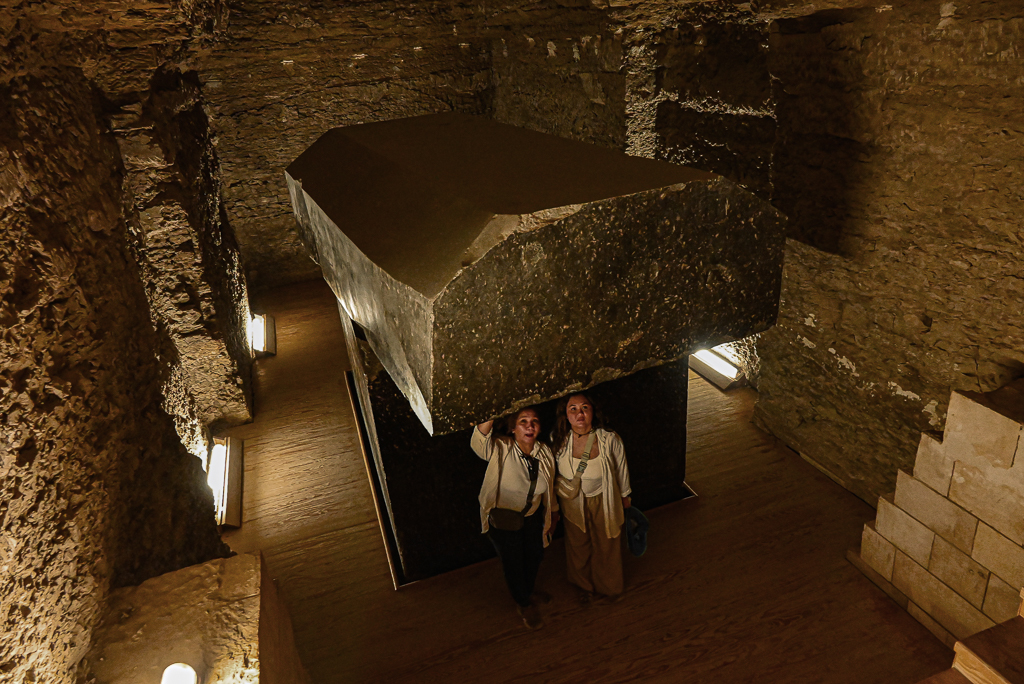
Paula and her mom near a giant sarcophagus for a sacred bull
The Giza Plateau
In the afternoon, it was time to visit the granddaddy of pyramids—the Giza Plateau. This was my fifth time visiting over the years, and somehow I never seem to get enough of it.
But this visit felt different.
Sharing the Experience
This time, I was here to share it with my daughter.
The first time I visited Egypt, when I was about 25, I was the first person to enter the Great Pyramid of Khufu that morning. I’ll never forget the feeling of standing alone at the center of that ancient, mysterious structure. Even then, I remember thinking that maybe one day I would return with my child and experience it again.
Now, almost 25 years later, I was back—with my wife and daughter.
And somehow, just like before, we had the pyramid to ourselves.
We arrived later in the day, and despite rushing, the new entry procedures slowed things down—long lines, shuttle buses, and delays. Even with an expensive entry ticket, we ended up tipping the guards to allow us in before closing.
It was worth it.
Inside the Great Pyramid
The interior is not an easy experience.
The passages are steep, narrow, and physically exhausting. You climb hunched over through low tunnels, the air thick and still. At least this time, there were no crowds to add to the claustrophobia.
I knew bringing Indie would be a challenge, but I had already decided—I would carry her the entire way.
At times, I had to bend nearly in half because of the low ceilings, with her weight on my shoulders. Sweat poured down as I climbed, but she loved it. She looked at me smiling, completely unfazed by the effort or the setting.
At one dark, gated side passage, she peered in and said, “There’s a mummy in there.”
I had to agree—it certainly felt like there could be.
The Center of the Pyramid
Eventually, we reached the central chamber—the empty sarcophagus resting in silence. No mummy or treasure has ever been found here, at least none that has been publicly revealed.
Standing there again after all these years was surreal.
The first time, I stood there alone.
This time, I stood there with my family—sharing the moment with the two people who matter most to me.
Leaving the Pyramid
We couldn’t stay long. The guards were waiting, and part of me wondered—half seriously—if they might just lock us in for the night if we lingered too long.
(Which, honestly, would have been a story of its own.)
We made our way back down through the tunnels and out into the fading light. The complex was already closing, and we walked toward the exit, stopping for photos along the way.
Staying at a hotel just outside the gates made it incredibly easy—something I would highly recommend.
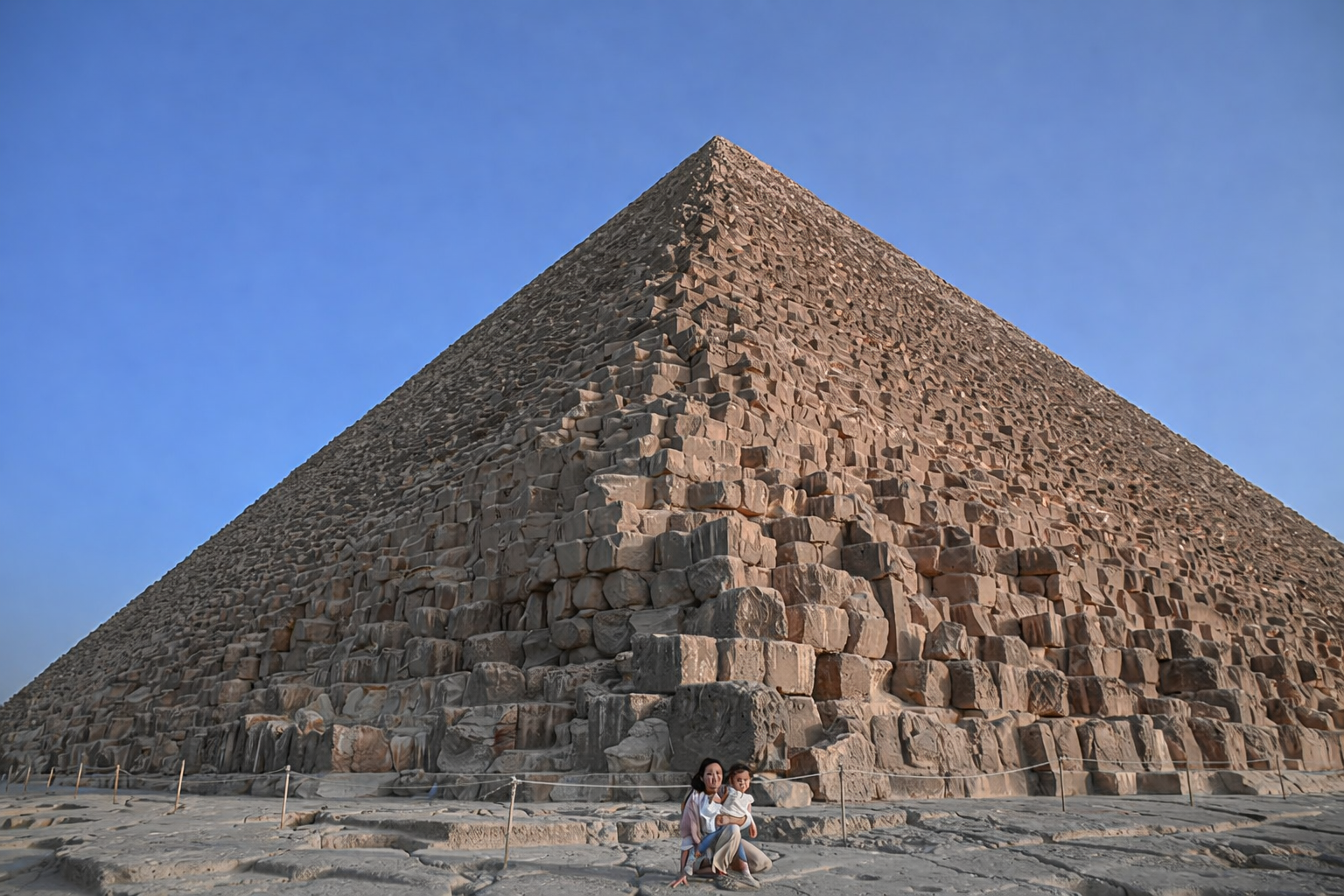
Pyramid of Khufu
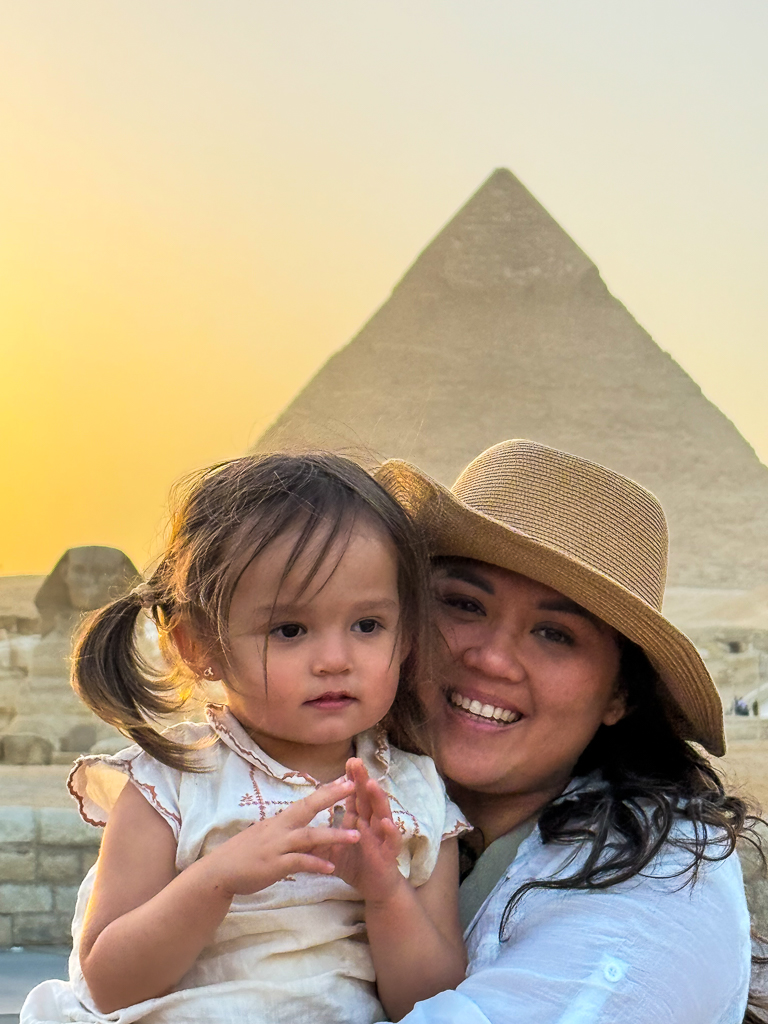
Paula and Indie at the pyramids
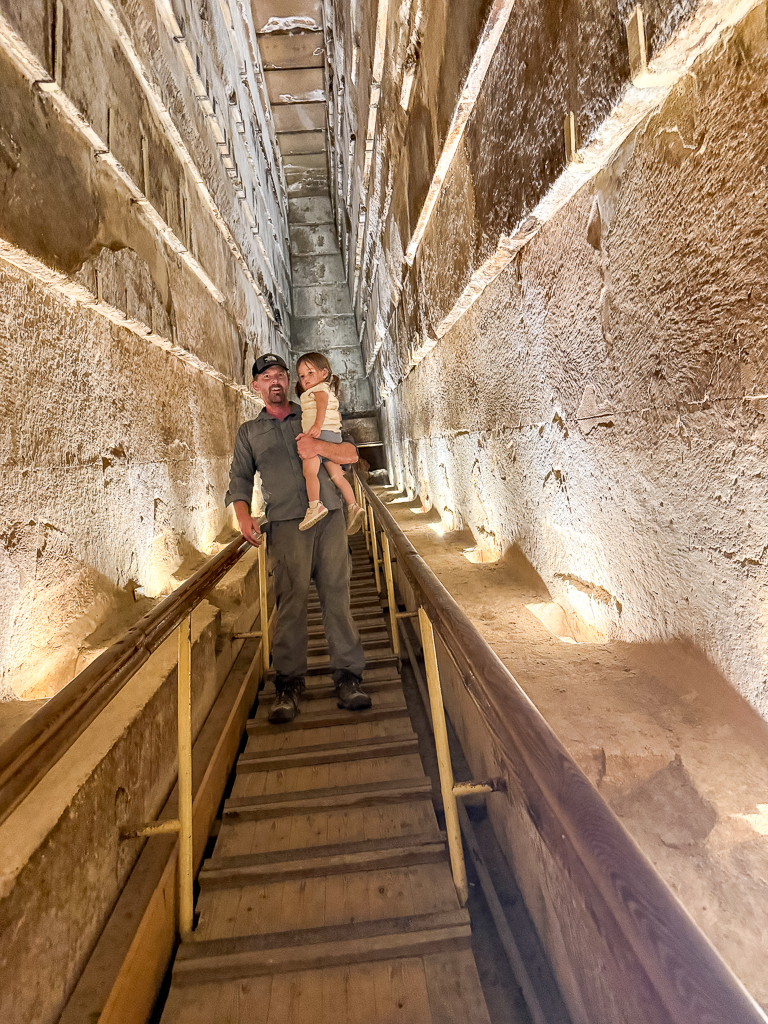
Me carrying Indie inside the Great Pyramid
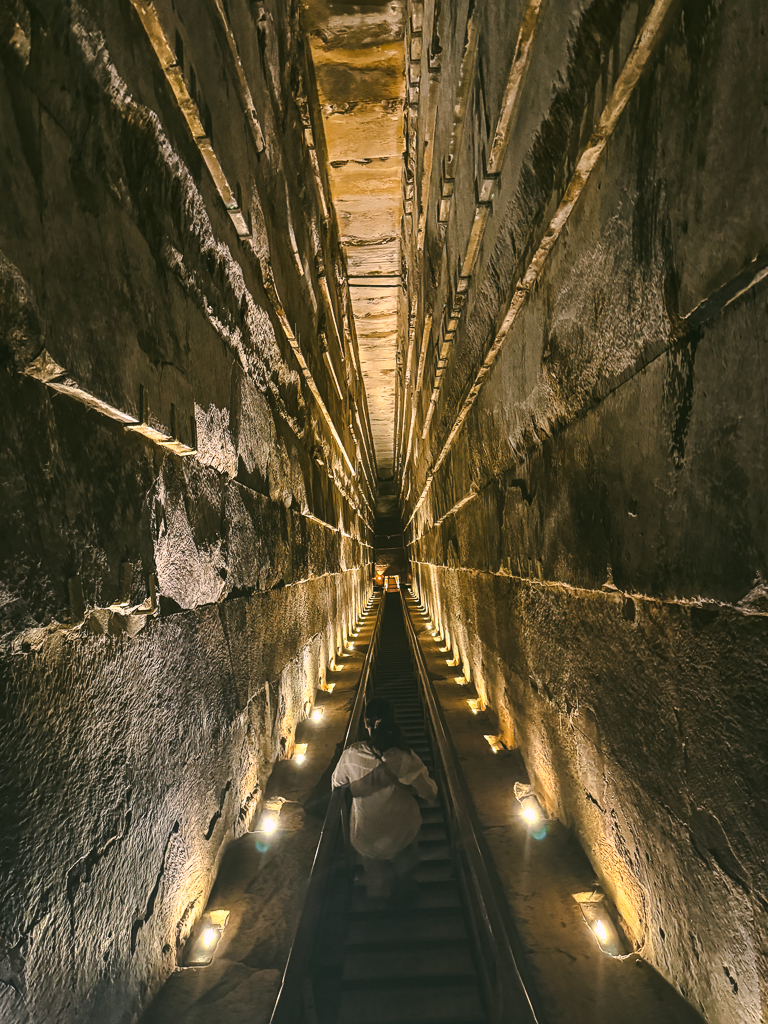
Paula climbing the stairs to the center of the Khufu pyramid
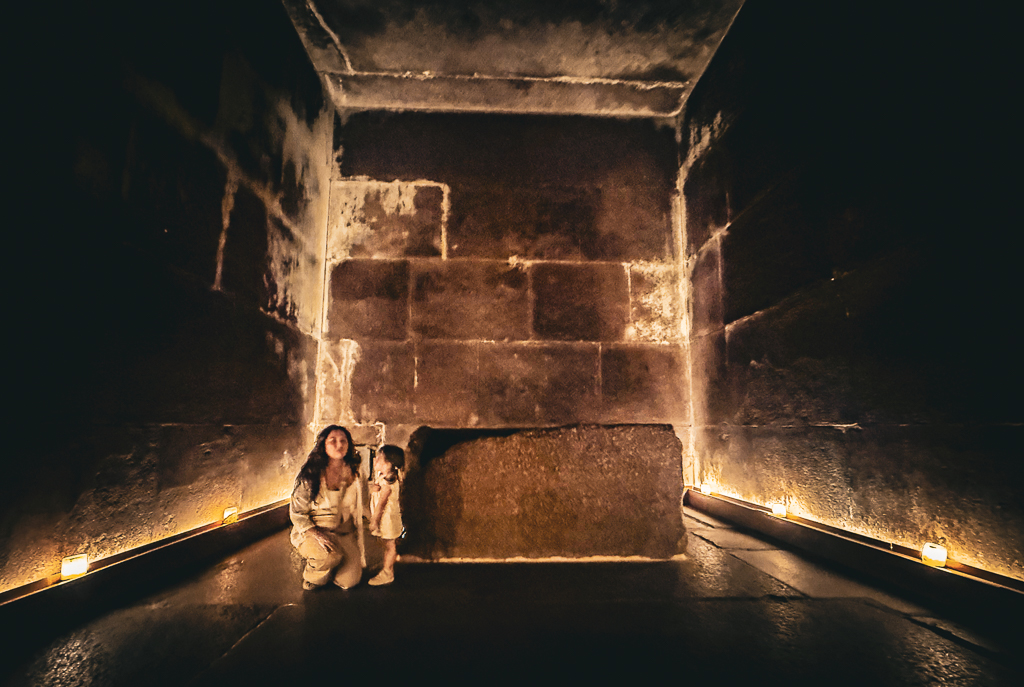
Paula and Indie in the main room where the mummy of Khufu may have rested for thousands of years
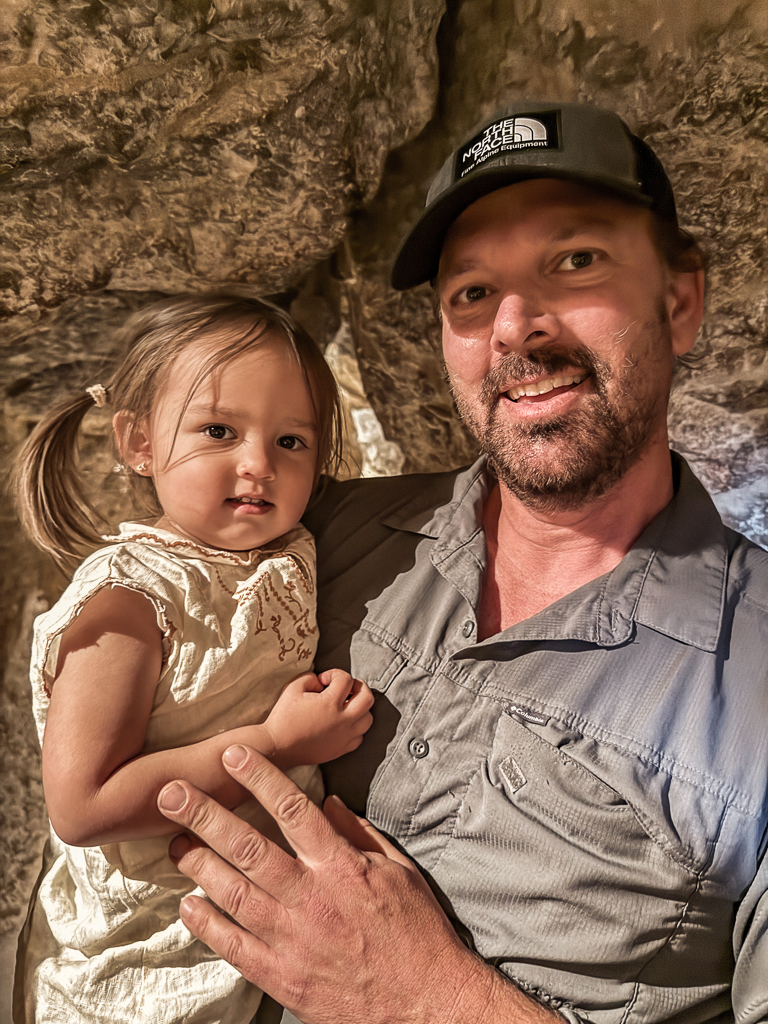
Indie and I in the pyramid
A Final Night in Giza
Although the pyramids night show was suspended while it undergoes renovations after decades of running—a show Paula and I had previously loved—we still found a meaningful way to spend our last night in Giza.
We had dinner at the rooftop restaurant of our hotel, overlooking the pyramids as they faded into the night.
We were joined by Randa, the aunt of a high school friend who lives in Cairo. Over the years, she has always made time to meet me during my trips and has helped me navigate the city. It was special to introduce her to Paula and Indie.
Randa brought Indie a stuffed camel, which immediately became her favorite souvenir and made her incredibly happy.
It was a simple evening—but a perfect way to end our time near the pyramids of Giza.
Journey to the White Desert
The next day we set off toward the White Desert National Park. The drive from Cairo took about five hours, cutting through bleak, flat desert that seemed to stretch endlessly in every direction. The landscape felt almost empty — just highway, sand, and the occasional distant ridge breaking the horizon. Few other vehicles shared the road and we seldomly passed any sign of habitation. We stopped obsessionally at a wayside rest to buy snacks, which usually consisted of dates, chips and cookies.
Other Egyptian travelers and truck drivers stopped at the wayside rests, sometimes the only signs of civilization for hundreds of miles in any direction. Egyptians, especially the men always greeted and smiled at Indie, and this was also common at the rest stops. In one sweet moment of affection, I was walking Indie and an imam with a long beard, seated in the passenger side of his vehicle with the window rolled down smiled at Indie and waved at her making kissy noises. Indie responded by waving back at him and blowing him a kiss.
Lunch in Bahariya Oasis
Eventually we arrived at Bahariya Oasis, a small pocket of life in the middle of the desert. Here we stopped for lunch at the home of our Bedouin guide and to switch vehicles into a landcruiser and stock up on water and camping supplies for the desert. .
While I sat and ate in the guest room, Indie wandered off to play with the guide’s children inside the house in an area off limits to me because it was where the women of the household stayed. I stayed in the guestroom drinking tea with Naha and the Bedouin guide while the children played. They didn’t share a language, but that didn’t seem to matter. Kids always seem to find a way to communicate. Our guide’s wife watched over them while they played, making sure everything stayed calm while we rested and prepared for the next part of the journey into the desert.
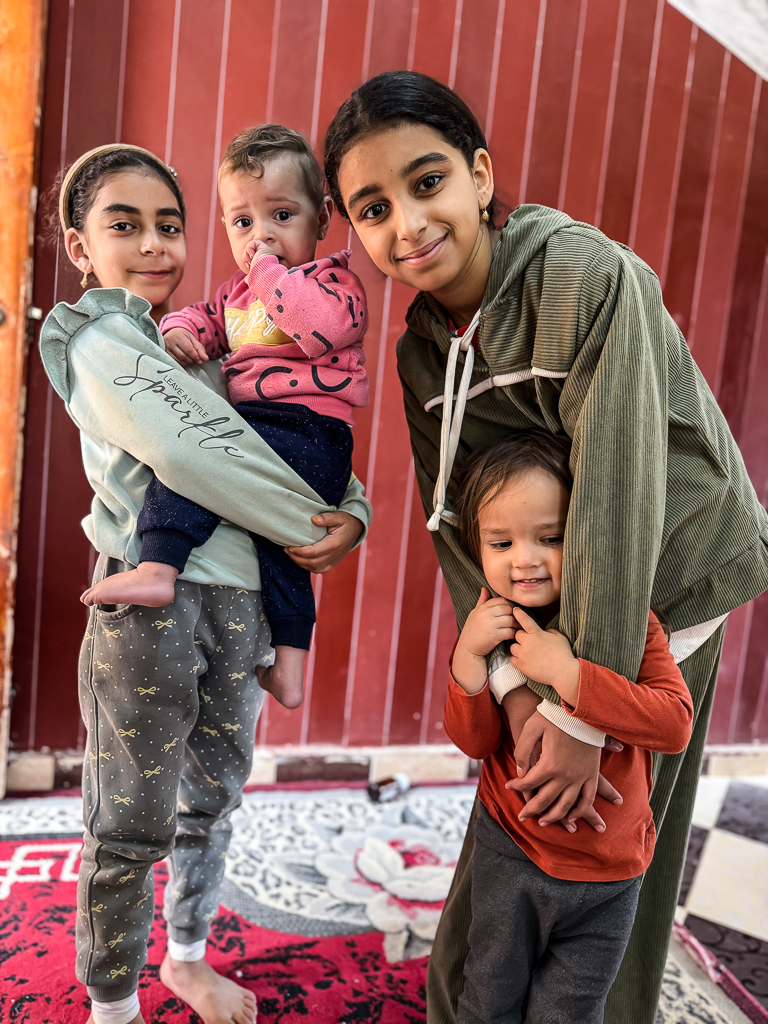
Indie playing with the Bedouin kids
Into Egypt’s Western Desert
After lunch we set off deeper into Egyptian Western Desert, driving west toward Libya and the surreal landscapes of the White Desert National Park. Once we left Bahariya Oasis, we drove for few more hours on the highway. The environment changed quickly. Soon, we turned off the highway and the road disappeared, replaced by open desert tracks as our guides navigated across the vast emptiness.
What followed was a journey through some of the strangest landscapes in the Sahara, and in the desert I have been to in the world. There were actually a lot of varying types of scenery in the White Desert reserve besides the White Desert. Each was unique and amazing in its own way.
Our White Desert Itinerary
The Black Desert
Our first major stop after leaving the oasis was the Black Desert. This area is named for its dark volcanic hills, which are covered in black basalt stones that contrast sharply with the surrounding sand.
Crystal Mountain
Next we visited Crystal Mountain, a small ridge sparkling with natural quartz crystals embedded in the rock.
Valley of Agabat
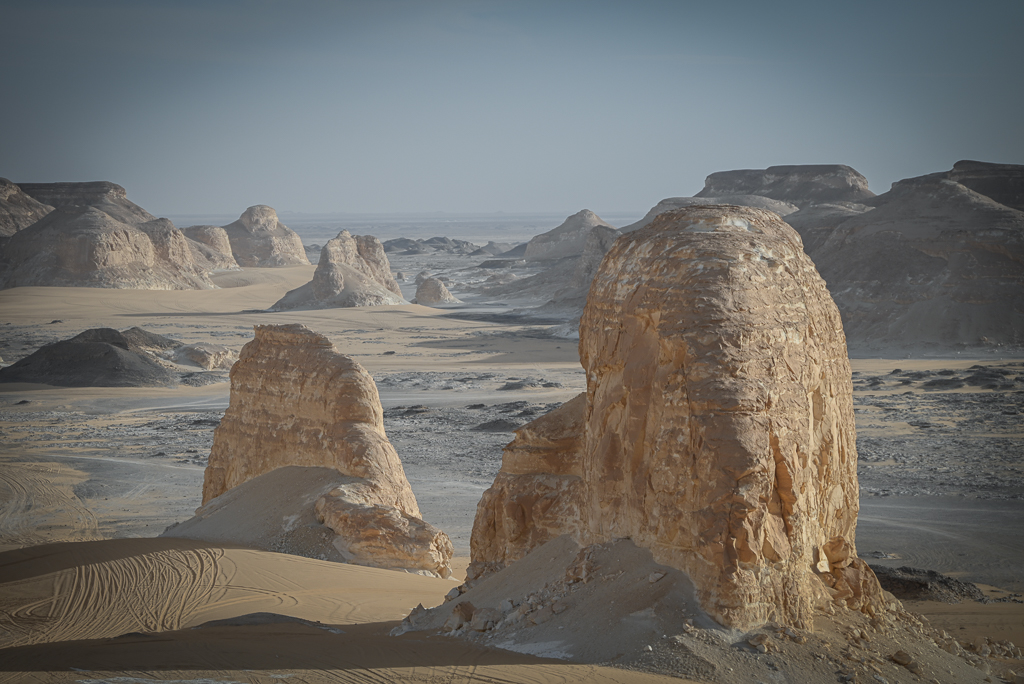
From there we continued into the breathtaking Valley of Agabat, where towering white cliffs rise above sweeping golden sand dunes. The landscape here felt almost alien — smooth sandstone formations surrounded by waves of sand. This area was a favorite of mine.
Sunset in the White Desert
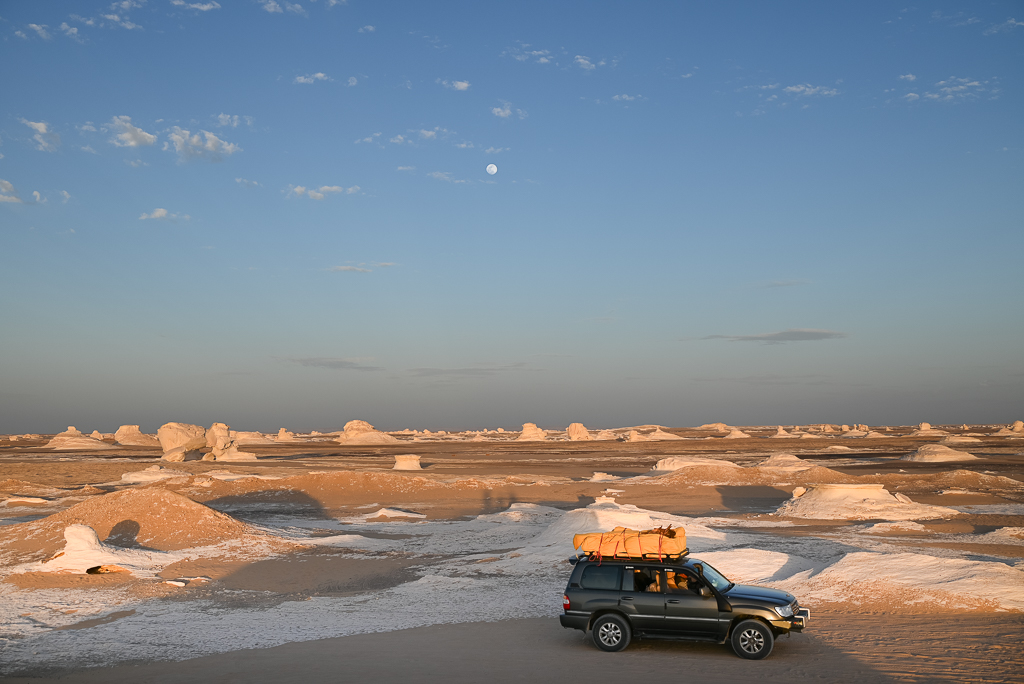
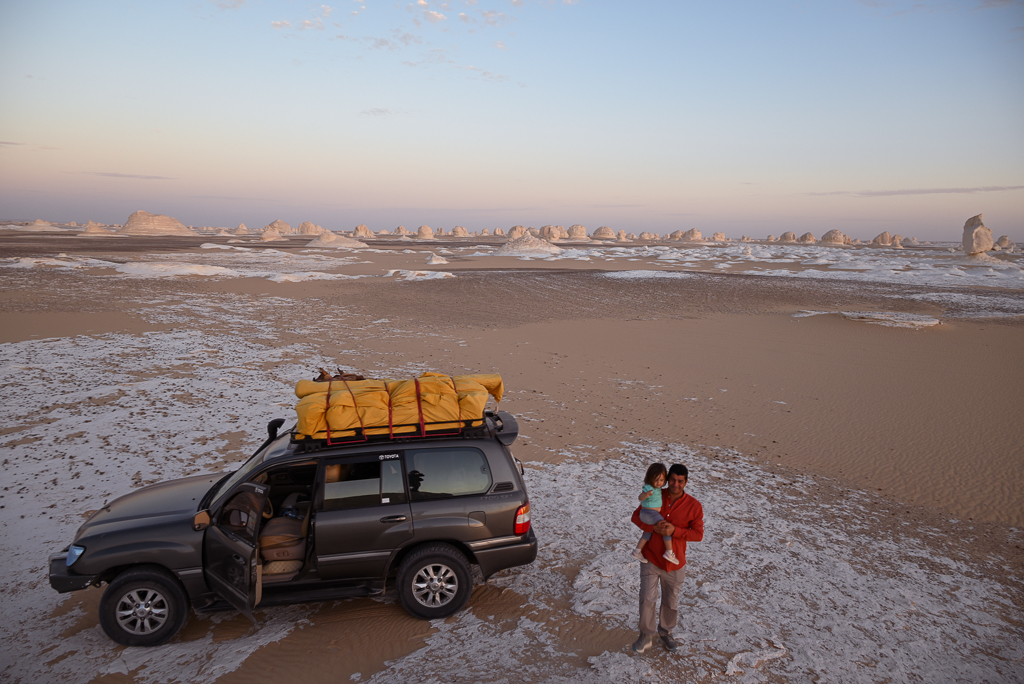
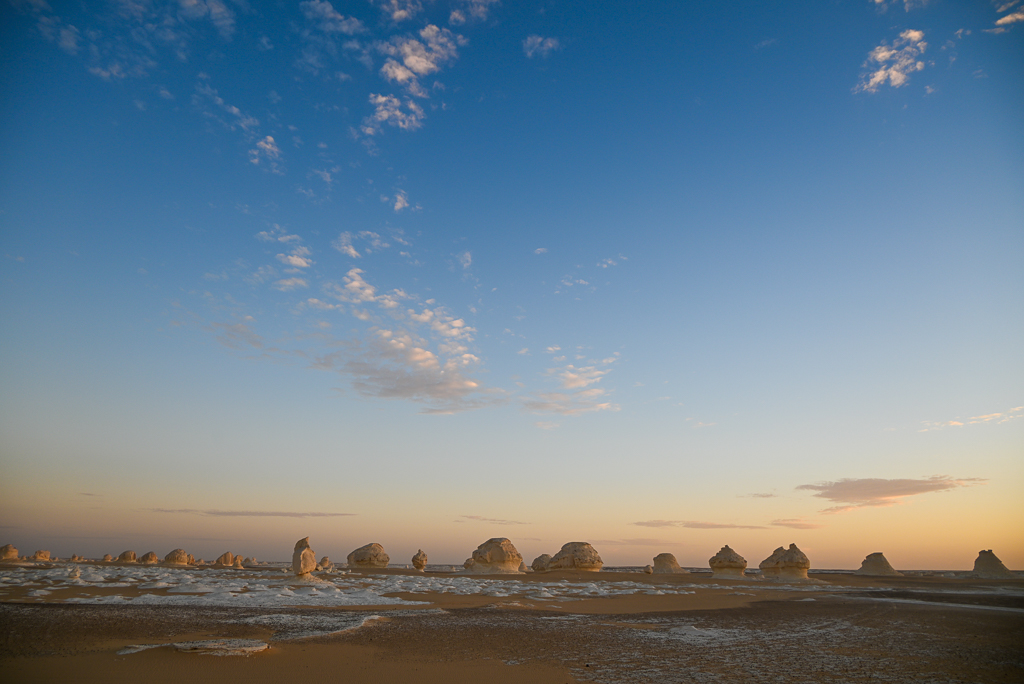
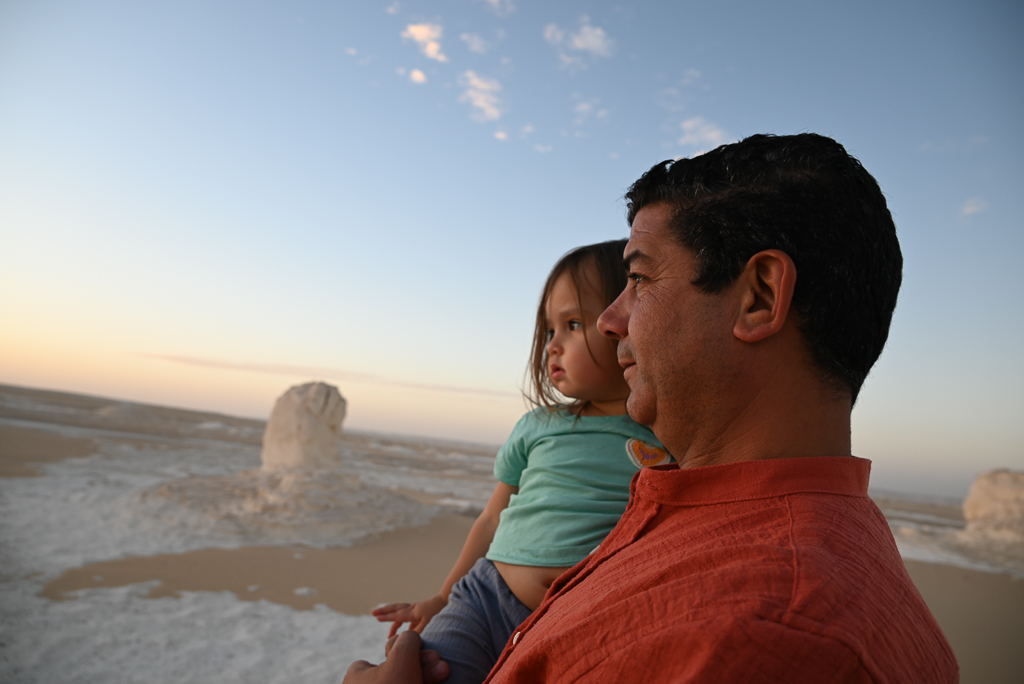
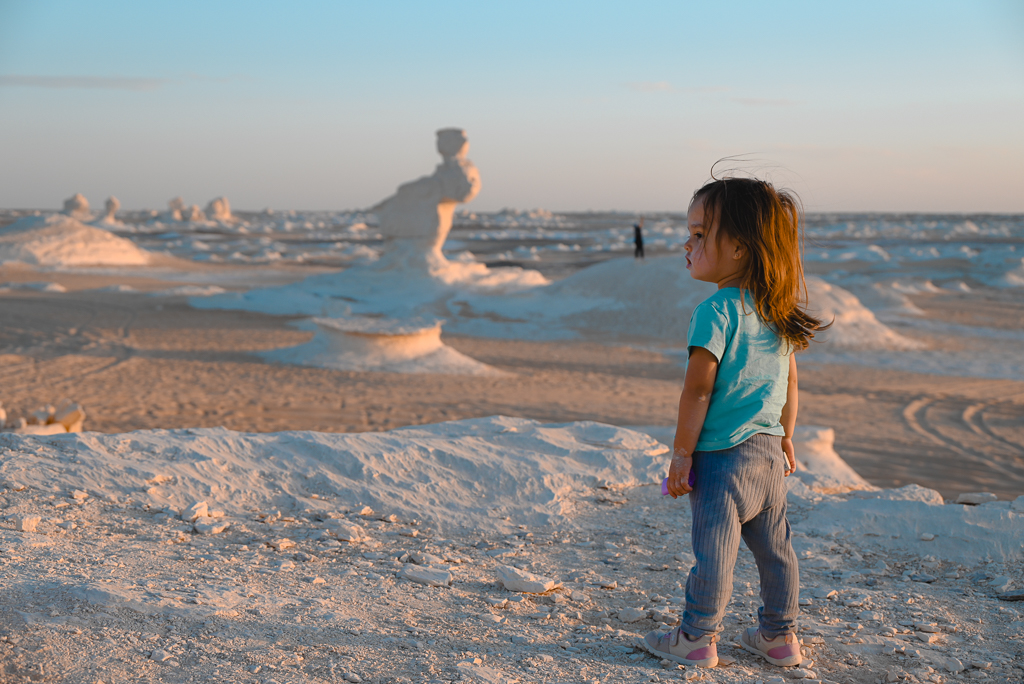
By late afternoon we arrived in White Desert National Park just in time for sunset. The famous chalk formations — sculpted by wind over millions of years — rise from the desert floor in strange shapes resembling mushrooms, animals, and giant sculptures. This was Indie’s favorite place where she ran wild climbing all the strange rock formations while I photographed her.
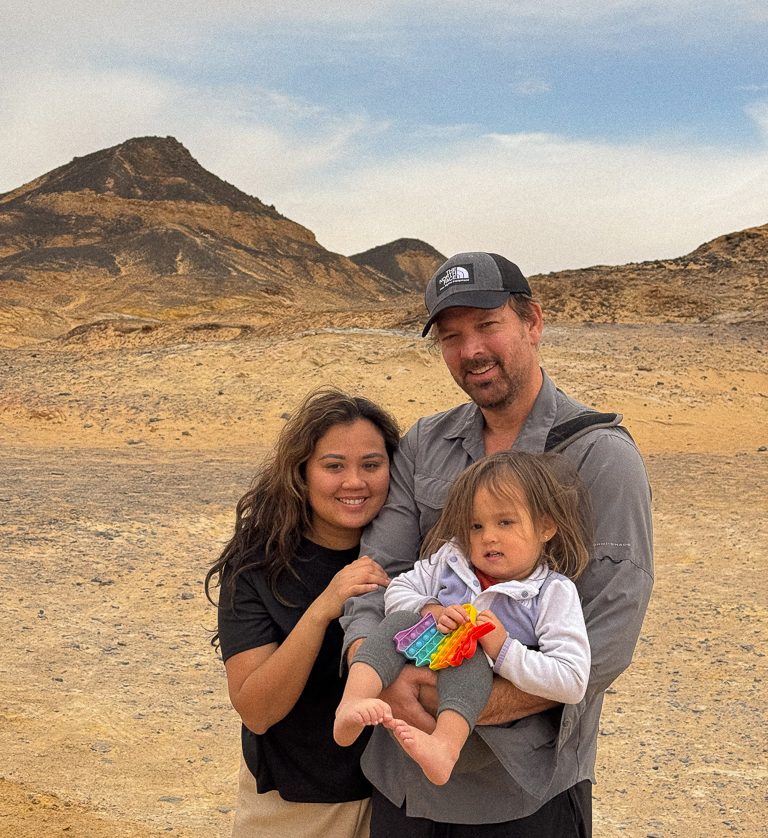
Black Desert
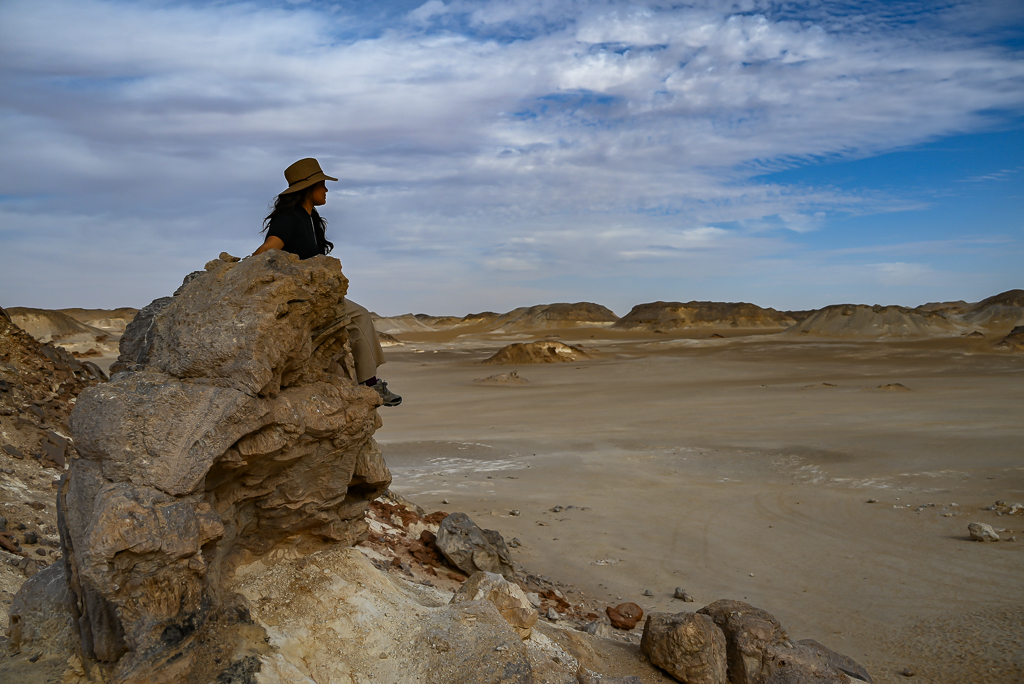
Paula perched on a viewpoint on the Crystal Mountain
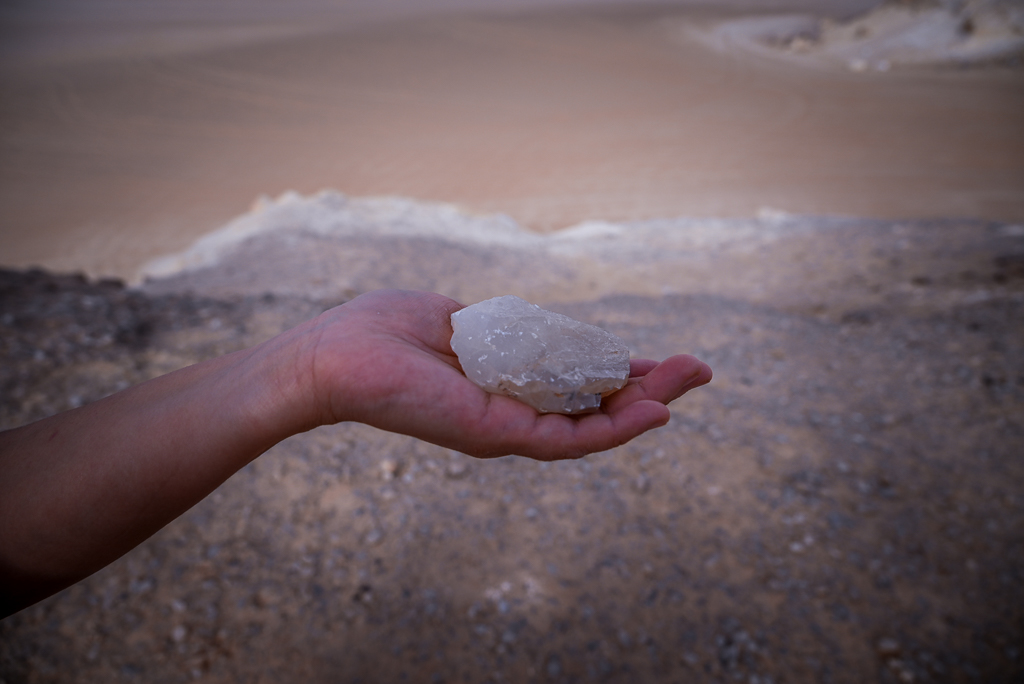
Crystal Mountain crystals that are lying all over the ground
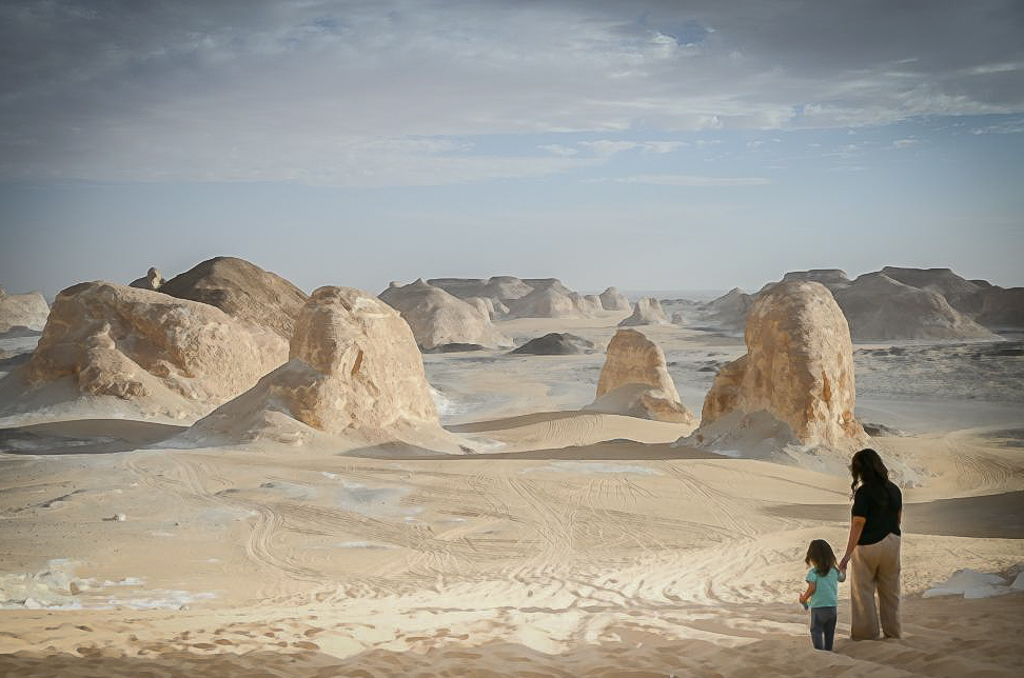
Paula and Indie at Valley of Agabat
Valley of Agabat
White Desert
Taha holding Indie in the White Desert
White Desert
White Desert
Taha with Indie
White Desert
White Desert
Camping in the Sahara
Camping in the dunes near White Desert National Park was easily one of the highlights of the trip.
We had originally planned to camp inside the White Desert; however, a day before we arrived, the Egyptian government made it off-limits to prevent the accumulation of unregulated human waste and garbage, which was probably a good idea. Instead, we camped just outside the park boundaries. It didn’t make much difference—the area was so remote that it still felt completely wild.
After sunset, we left the White Desert and drove for about an hour in the dark toward our campsite. The terrain shifted into larger sand dunes, and at one point we came across what looked like an abandoned Bedouin village—clusters of mud-brick buildings surrounding a small oasis.
Nearby were the ruins of what our guide said was a centuries-old Christian church, also built from mud brick.
Then things got interesting.
Our driver took a wrong turn and descended into a shallow dip between dunes—where we promptly got stuck. After struggling to get out, he decided the best option was to head down toward the village and find another route.
As we approached, we realized the village wasn’t abandoned at all.
A group of children and several Bedouin men came out to help us. After a few failed attempts to drive back up the dune, they worked with our driver to clear a path through brush between the mud-brick buildings. It was a tight fit—but it worked. From there, we found a more gradual route up the hill and finally made it out.
The Bedouin men joined us, and we drove about a mile farther into the dunes where we set up camp.
A Night Under the Full Moon
While our guides and the Bedouin men prepared dinner, Indie ran freely through the sand, playing with them under the full moon. We were alone in the Sahara.
The dunes glowed softly in the moonlight, and the vast emptiness of the Sahara stretched endlessly in every direction.
We slept out in the open dunes under a sky full of stars, gathered around a small bonfire with surprisingly great food.
But to say we relaxed wouldn’t be accurate.
It was a little cold—manageable, but noticeable—and Indie had other plans. She ran amok most of the night, constantly rolling in the sand and getting dirty. She refused to wear shoes, insisting on going barefoot in the cold sand. We were also a bit worried, since she had been having some pretty bad coughing fits during the night.
Still, she was completely in her element.
The Bedouin men from the village stayed with us for most of the evening, helping with cooking and setting up camp—not for money, which they refused—but simply out of hospitality. They were kind, warm, and genuinely welcoming.
They played with Indie, tickling her as she pretended to be a mummy and chased them through the sand.
We hoped to see a fennel fox, cute little foxes with giant bat ears, which sometimes Naha said visit campsites looking for stray scraps of food. But we unfortunately didn’t see one, and the only wildlife we saw was a dung beetle, which Indie found intriguing.
Despite Indie getting full of sand, the cold, and the worry over her cough, we loved every minute of it, mostly.
Stuck in the sand
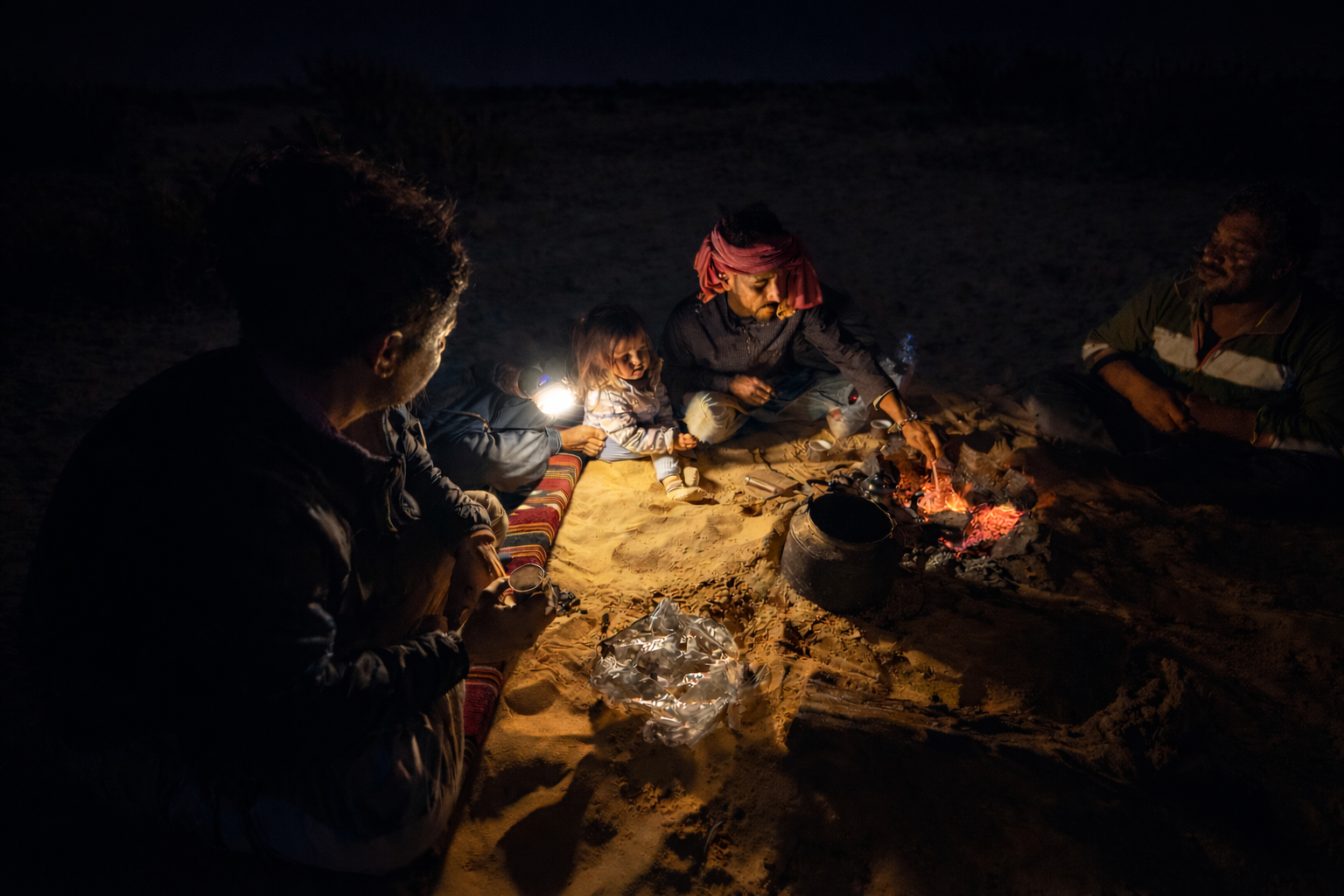
Indie with Bedouin making tea at our campsite
Indie pretending to be a mummy and chase the bedouin
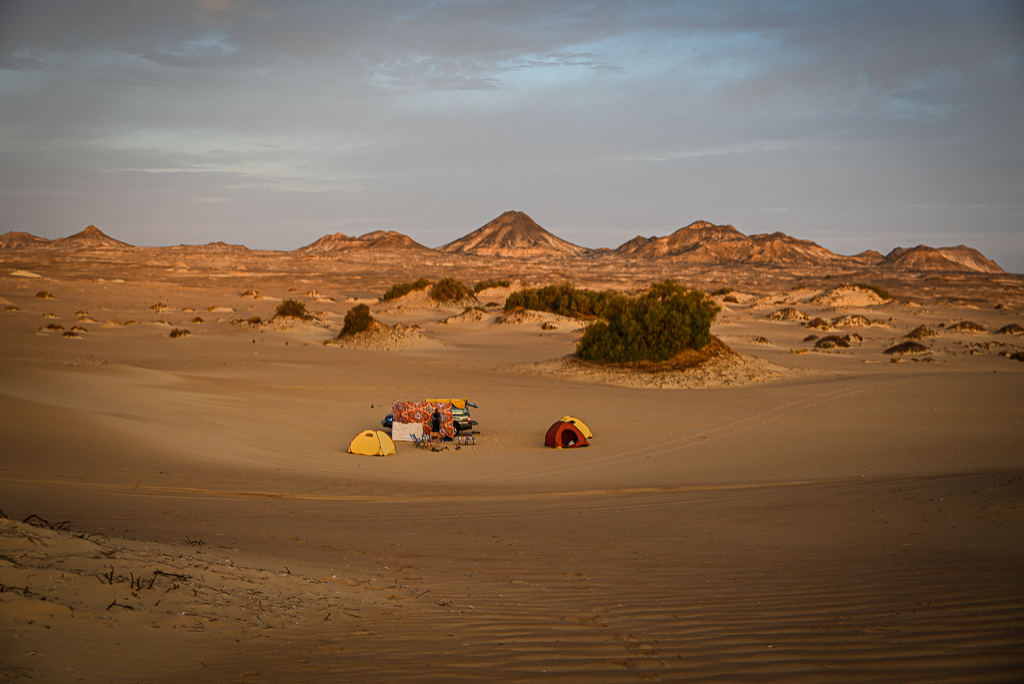
Desert camping next morning
Thoughts About the White Desert
From White Desert National Park, we stopped at a hot spring, said goodbye to our Bedouin guide, and began the long drive back to Cairo, once again crossing the vast emptiness of Egypt’s Western Desert.
The White Desert had genuinely surprised me. It was unlike any desert I had visited anywhere in the world—more unique in its formations and atmosphere than I expected. It was also far less crowded with tourists and noticeably cleaner, with much less garbage than I had anticipated.
The national park itself is enormous, stretching for days. Our guide, Taha, told us that we had already seen the best sections—and that deeper into the reserve, the scenery remains similar, just more remote and isolated.
With Indie, two days and one night felt like the perfect amount of time.
Saying Goodbye to Taha
When we arrived back in the city, we said goodbye to our friend and guide Taha, who had helped make the trip smooth and safe — just as he had done years earlier when he took Paula and me to Siwa Oasis.
Before parting ways, we grabbed a simple but satisfying lunch of falafels and cold Cokes. Taha also surprised us with new kid socks for Indie, which he purchased at the market, since she had removed all of her socks during the trip and was now completely out of them.
A Quiet Night Before the Next Journey
Rather than dive back into the chaos of Cairo sightseeing, we decided to take it easy and stay at an airport hotel for the night. After days of travel and adventure, the idea of a quiet evening and a chance to sleep in felt perfect.
The next morning, we would wake up slowly before heading back to the airport for our afternoon flight to Tabuk in Saudi Arabia, where the next chapter of our journey would begin.