Returning to the Czech Republic — A Decade Later

Spellbound in Prague

January 2026: I first visited the Czech Republic — specifically Prague — ten years ago, in 2015. Despite the crowds of tourists, I was immediately spellbound. There’s something about Prague that gets under your skin. The Gothic spires, the moody skies, the medieval streets that feel like they’re whispering stories if you slow down long enough to listen.

Even then, I knew I would need to return someday — and this time, I wanted to experience it with Paula.

But Prague wasn’t the only reason I felt unfinished there.


The Castle Built Over Hell

The Legend of Houska Castle

For years, one place lingered in my mind: Houska Castle.

According to legend, this medieval fortress was built over a portal to hell — a gaping chasm from which flying humanoid creatures once emerged to terrorize the countryside. The story goes that the castle was constructed not to protect those inside from invaders, but to protect the outside world from whatever lay beneath it.

No strategic position.
No nearby water source.
No clear defensive purpose.

Just a castle sealing something in.

For over a thousand years, Houska has carried a reputation for dark, mysterious energy. To deepen its ominous aura, even the Nazis occupied it during World War II, reportedly conducting strange rites and attempting to tap into whatever power they believed existed there.

This was exactly the kind of place I search the world to experience.

And honestly? It was the perfect excuse to return to Czechia and explore beyond Prague.


A Winter Journey Into the Countryside

Part of a Three-Week Family Odyssey

Our visit to the Czech Republic became part of an almost three-week journey that included Turkey, Saudi Arabia, Egypt, and Slovakia. In between desert landscapes and ancient ruins, we carved out three days for Prague.

But I had a mission.

We rented a car and drove a few hours into the quiet Czech countryside in the middle of winter. The roads narrowed. The villages became smaller. The forests grew denser.

And then — there it was.


Houska in Winter

A Castle on the Edge

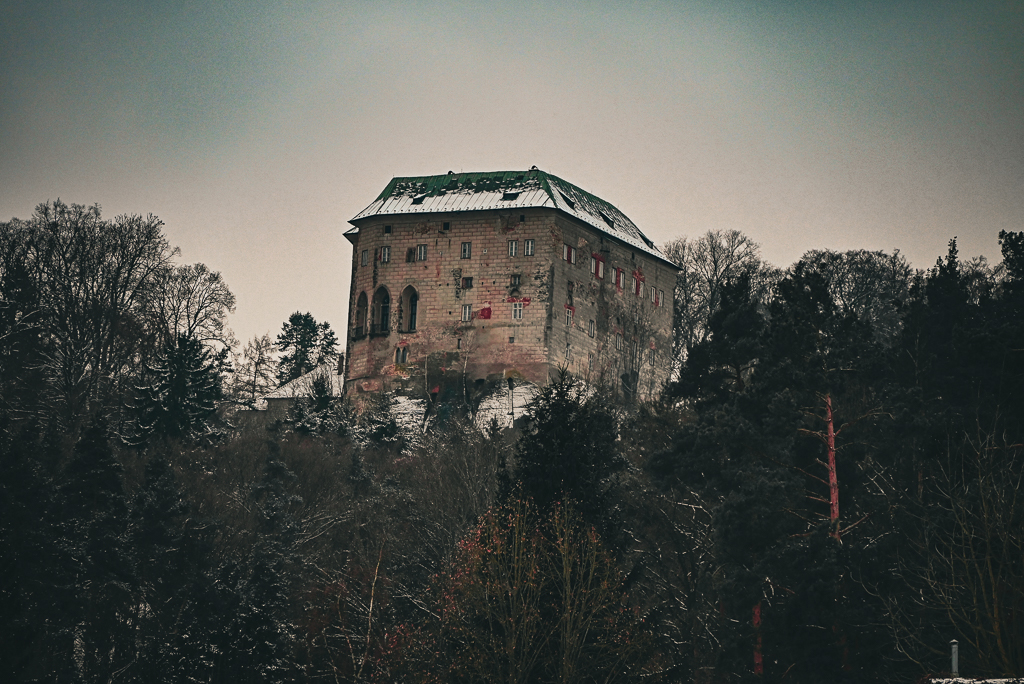
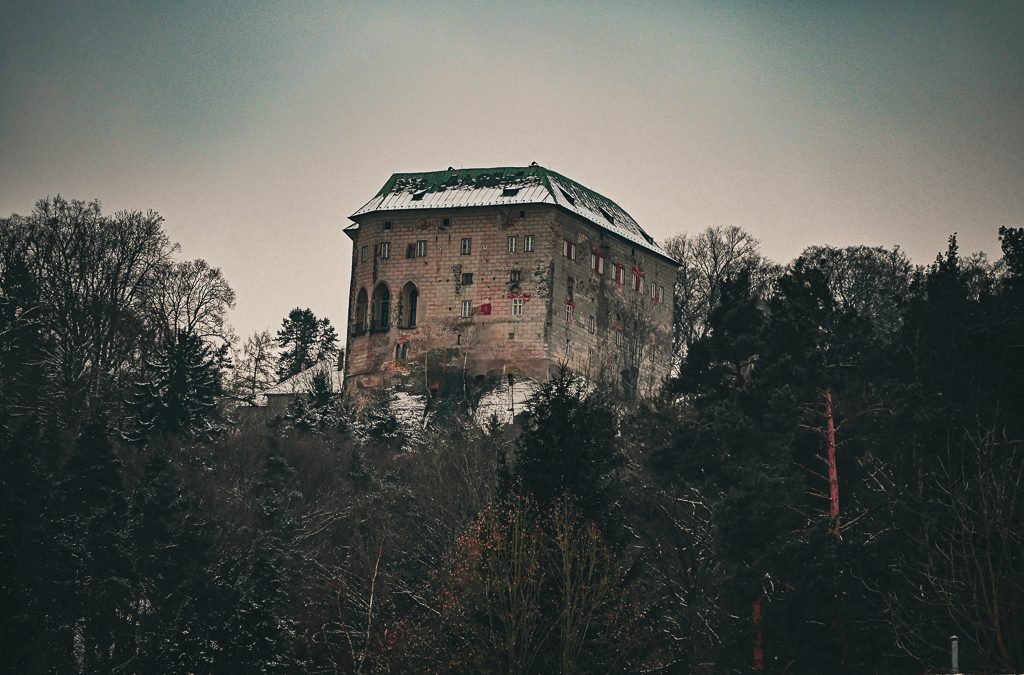
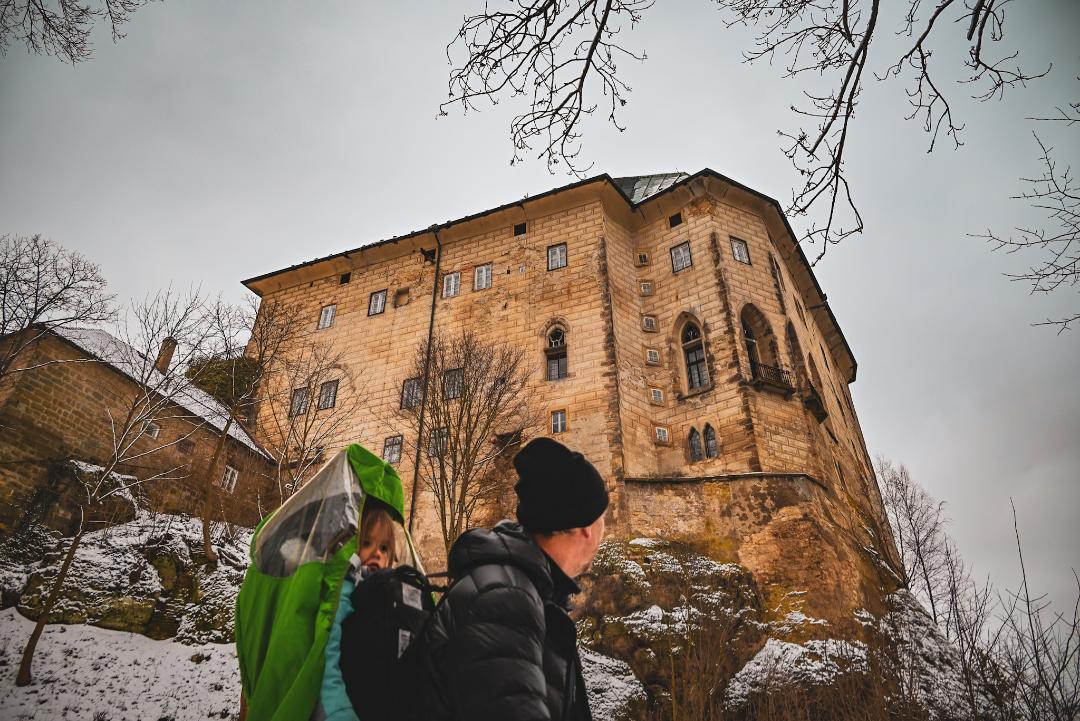
Houska Castle sits on a cliff overlooking a tiny village, pressed against the edge of a forest that feels far older than it should be. Gothic angel statues stand guard around the property — and instead of feeling comforting, they somehow make the place even more unsettling.

In autumn, I had always imagined coming here with friends, camping deep in the surrounding woods. We talked about it for years — setting up tents beneath twisted trees, listening to the wind move through the branches, convincing ourselves every snap of a twig wasn’t something crawling out from below.

It would have been gloriously creepy.

But this was winter. And I was here with family.

So instead of camping in the forest, we stayed at a nearby guesthouse and visited the castle by day — trading ghost stories around a campfire for frost-covered trails and quiet stone corridors.

And even in daylight, the atmosphere was heavy.

Some places feel historic.

Others feel watched.

Houska feels like it’s still guarding something.

About Houska Castle: The Fortress Built to Seal Hell

Deep in the forested karst hills of northern Bohemia stands a castle that was never meant to protect a kingdom.

It was meant to protect the world.

Houska Castle has carried a reputation for darkness for more than 700 years. It has been abandoned, reclaimed, occupied by Nazis, rumored to house sorcerers, and accused of sealing a literal gateway to hell.

And even today, few people want to live there.


Built Without Purpose — Or Built for One?

Houska Castle was constructed in the late 13th century, likely between 1270–1280, during the reign of Ottokar II of Bohemia.

On paper, it makes little sense:

  • No nearby water source

  • No major trade route

  • No border to defend

  • No significant settlement nearby

It was not built as a royal residence. It offered little military advantage. Architecturally, parts of it even appear to have been built inward before outward fortifications were added later.

Which fuels the legend: it wasn’t designed to keep enemies out.

It was designed to keep something in.


The Pit and the Prisoner

Long before the castle, local villagers spoke of a gaping chasm in the forest — a hole so deep no one could see the bottom. They believed it was a portal to hell. Strange half-human, winged creatures were said to emerge from it at night.

To test the depth, a condemned prisoner was offered a choice:

Years of imprisonment.
Or one descent into the abyss — and immediate freedom if he survived.

He chose the rope.

According to legend, moments after being lowered down, he began screaming in terror. The screams echoed so violently that villagers panicked and pulled him back up.

When he returned to the surface, his hair had turned white. His face appeared decades older. He was in shock — unable to speak coherently.

He died shortly afterward.

Soon after, construction of Houska Castle began directly over the hole.

In the chapel today, a large slab of stone is said to cover the original opening.


The Chapel and the Unusual Frescoes

The castle chapel contains frescoes unlike typical medieval Christian imagery. Among them:

  • A centaur-like figure

  • Demonic forms

  • Symbolism that some interpret as pagan

Scholars debate their meaning, but they are undeniably unusual. For believers in the legend, the chapel was not only for worship — it was part of containment.


Sorcerers and Sacrifice

Another persistent legend tells of a sorcerer who once lived at the castle, practicing dark magic and allegedly sacrificing victims in the name of Satan.

Eventually, the story goes, villagers stormed the castle and killed him.

There is no historical documentation proving this occurred. But in regions steeped in folklore, absence of proof has never killed a story.

Houska’s reputation as a cursed place endured.


Abandoned Again and Again

Throughout its history, Houska has repeatedly been:

  • Left vacant

  • Reoccupied

  • Abandoned once more

It was rarely used as a primary residence. Even when owned, people did not stay long.

For centuries it has had a reputation for hauntings:

  • Shadow figures

  • A woman in white

  • Hybrid animal-human apparitions

  • Visitors claiming to see visions of the future

Whether suggestion, imagination, or something else, the castle has never shaken its atmosphere.

Locals still say no one truly wants to live there.


The Nazi Occupation

During World War II, Nazi Germany occupied the castle from 1939 to 1945.

There is no verified evidence that Houska functioned as a concentration or extermination camp. However, the SS presence alone fueled speculation.

Legends claim Nazi officers conducted occult experiments there, attempting to harness supernatural power for a desperate last-minute advantage — something straight out of an Indiana Jones plot.

While documented evidence of rituals at Houska is limited, the Nazi regime did show historical interest in mysticism elsewhere, which keeps the rumors alive.

After the war, stories circulated that several German soldiers were found dead on the grounds under unexplained circumstances. These claims remain unverified — but the darkness around the castle deepened.


The Karst Forest and the Angels

Houska sits in a limestone karst region known for caves, sinkholes, and underground voids — terrain that naturally fuels myth.

The surrounding forest feels ancient.

Statues of angels stand near the grounds, as if guarding the perimeter.

Whether symbolic or spiritual, they reinforce the idea that the castle is not merely a relic.

It is a boundary.


The Modern Era

Today, Houska Castle is privately owned by a Czech businessman associated with the automotive industry. It operates as a tourist attraction during the summer months.

There is even a story that during a private dinner party, guests allegedly witnessed glasses rise from the table on their own.

In winter, however, the castle is closed.

No staff. No tourists. The grounds are secured. Entry is not permitted without special authorization — and permission is rarely granted.


Houska Castle

From San Francisco to the Gates of Hell

We began the journey the way many modern adventures start — on a long-haul flight.

We flew United Airlines from San Francisco to Frankfurt, and surprisingly, it turned out to be one of my best transatlantic flights yet.

It didn’t begin that way.

As we were settling in for takeoff, Indie made it very clear she did not want to put her seatbelt on. The protest was loud. Passionate. Public.

Passengers around us turned with visible irritation. One woman behind us muttered loudly to her friend, “I wish I had brought my headset,” making sure we could hear her.

Not exactly the send-off you want before nine-plus hours in the air.

But here’s where things shifted.

I had managed complimentary Economy Plus upgrades, and we were seated in the spacious bulkhead row. The extra legroom made all the difference. Indie could stretch out comfortably, and once we were airborne, the turbulence — both literal and emotional — faded.

And then, miracle of miracles, she slept.

For most of the flight.

What started with side-eyes and muttered complaints ended up being one of the smoothest long-hauls I’ve had. By the time we descended into Frankfurt, the earlier drama felt distant.

The adventure was officially underway.
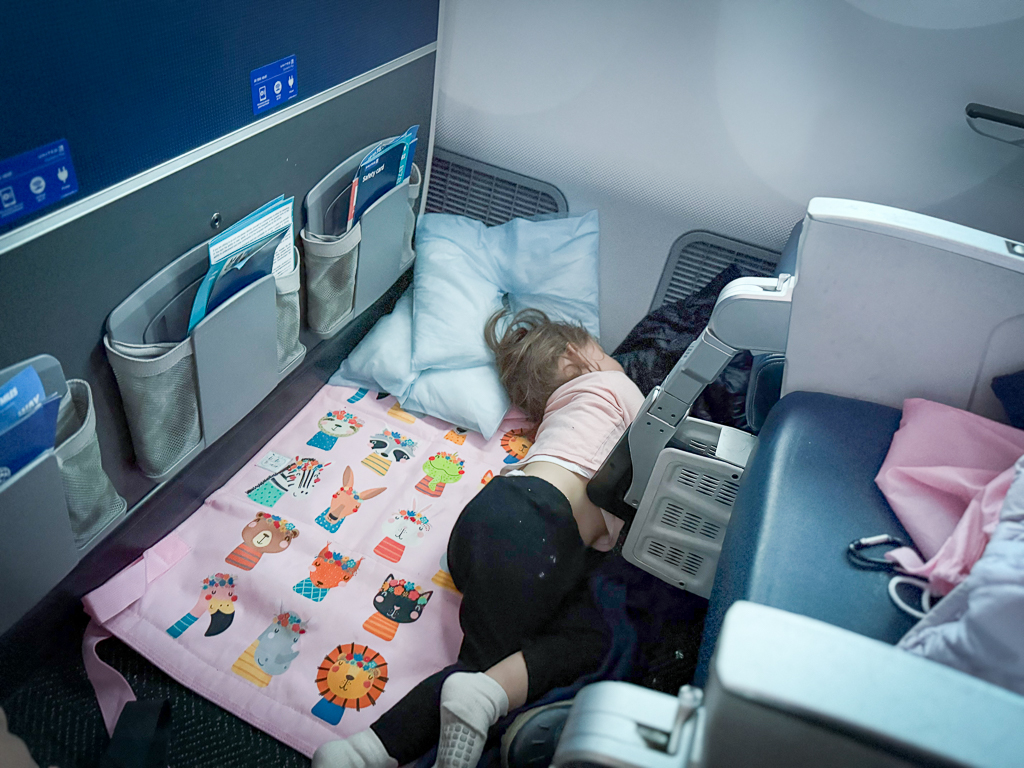
Indie sleeping on the plane

Winter in Prague: Beauty, Crowds, and Contrasts

We spent two nights in Prague, staying in the heart of the Old Town in a hotel building that dated back hundreds of years.

The room itself wasn’t particularly memorable — simple, functional — but the location was extraordinary. Just outside our door rose the towering Gothic cathedral, its dark spires piercing the winter sky. Stepping outside felt like walking directly into a medieval painting.

It was January, and the cold was sharp. We bundled ourselves in layers, scarves wrapped tight, breath visible in the air. If anything, the winter seemed to intensify Prague’s atmosphere. The chill enhanced the city’s age. The stone looked older. The streets felt more dramatic. There’s a certain magic to Prague in winter — the kind that makes history feel closer.

Unfortunately, winter did not slow the tourists down.

The Old Town was still busy — understandably so. Beauty doesn’t take a season off.


The Clock Tower and the Crowds

We climbed the famous Astronomical Clock Tower for sweeping views over the red rooftops and winding streets. The panorama was spectacular — undeniably worth seeing — though the climb itself is surprisingly expensive.

At the turn of the hour, we joined the throngs of tourists below to watch the Astronomical Clock ceremony. The crowd gathered, phones raised, anticipation high.

The spectacle itself? Underwhelming.

But the tower — and the view from above — are what truly matter.


Dining in the Old Town

Eating in the Old Town proved to be less enchanting.

Many restaurants were overtly touristic and overpriced, with impersonal staff and a general sense that they didn’t particularly care whether you came or went. At one restaurant, we were turned away because Paula’s mom was holding a sausage she had purchased elsewhere. She wasn’t actively eating it — just holding it — but we were told firmly that we could not enter.

I later learned that entering with outside food is considered extremely rude, even if you intend to order more inside. At the time, though, it felt unnecessarily cold — especially since we were clearly planning to dine.

It was a reminder that high-tourism zones often lose some of their warmth.


The Other Side of Prague

The downside of staying in the Old Town wasn’t just the restaurants.

It was the noise.

Through the night echoed stag-party chants, drunken shouting, and the kind of revelry that continues long after most people want to sleep. Prague is known not only for its architecture and history, but also for its relatively lower prices compared to Western Europe, its beer culture, and its bar scene.

That combination attracts a party atmosphere — sometimes wild, sometimes disrespectful.

The beauty of the city remains. But so does the noise.


A Different Kind of Prague

On our second night, we moved just outside the Old Town and rented an apartment in an old historic building.

The difference was immediate.

The entrance hall was vast, dark, and atmospheric — the kind of corridor where your footsteps echo and chandeliers cast long shadows across worn stone floors. Inside, the apartment was filled with oversized chandeliers and shelves of antique books. It felt cinematic, almost theatrical.

Most importantly, it was quiet.

Here, Prague felt intimate again. Less spectacle. More substance.
And in that stillness, the city’s true character began to emerge.

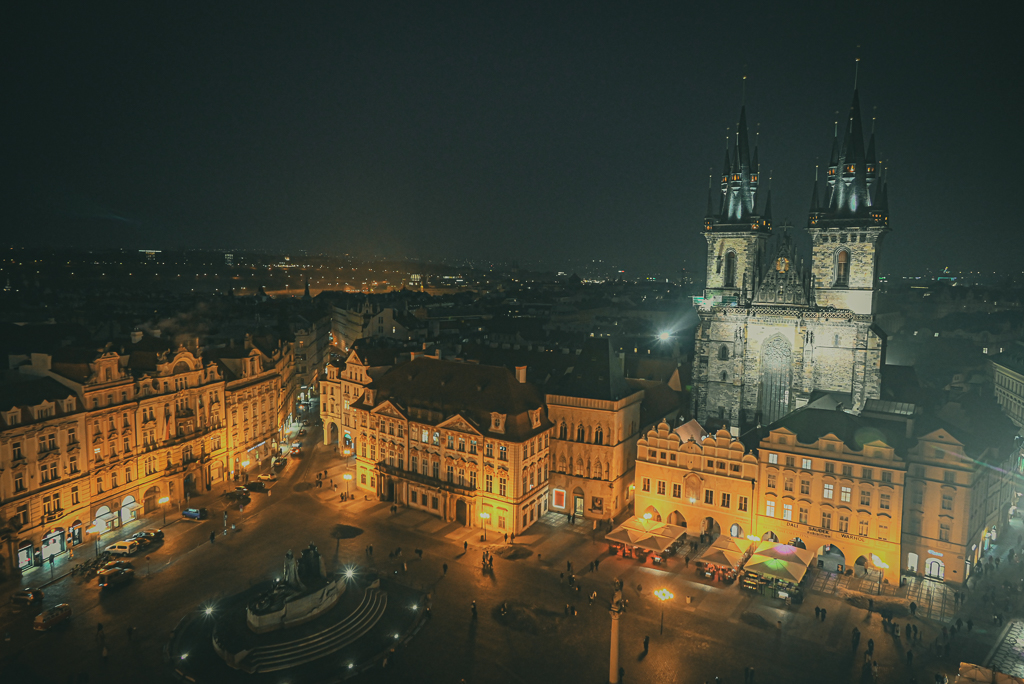
View of Prague from the top of the Astronomical Clock Tower
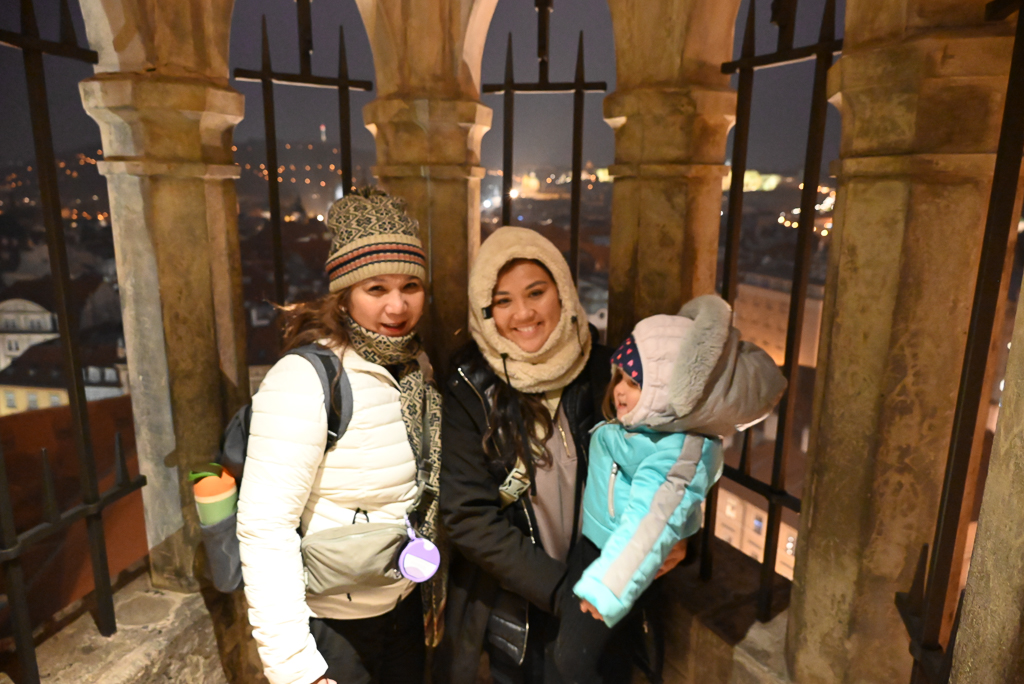
Posing from the top of the tower

Charles Bridge

Prague is crowded by day — but at night, and especially in the early morning, it becomes something else entirely.

When the tourists disappear and the stag parties finally fall silent, you can walk the streets alone. Just you and the weight of centuries.

Jet lag is my secret weapon for this. While everyone sleeps, I wander.

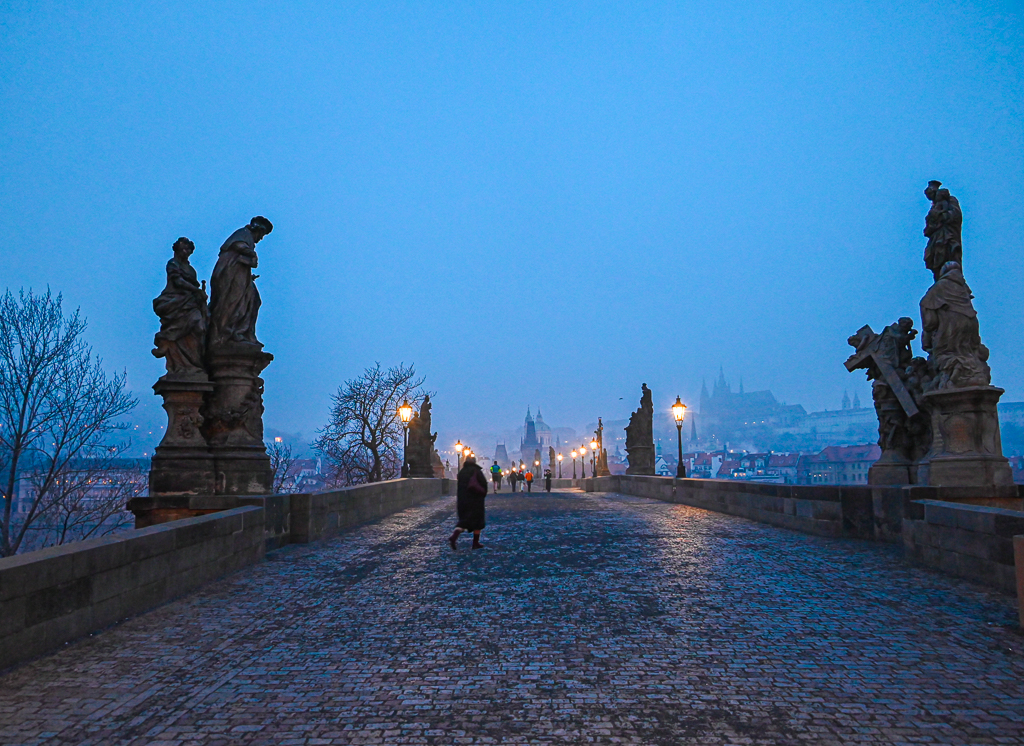
In Prague, that meant returning before sunrise to Charles Bridge — one of my favorite places in Europe.

The medieval stone bridge stretches across the Vltava River, reserved only for foot traffic. No vehicles. No engines. Just footsteps echoing across centuries-old stone. Gothic statues line both sides, watching silently. Across the water, Prague Castle rises above the city like something out of another era.

The bridge feels ancient. Worn smooth. Heavy with history.

In the early 17th century, during the religious wars between Protestant rebels and the Catholic Habsburg crown — part of the wider Thirty Years’ War — 27 Protestant leaders were executed after their defeat. Their severed heads were displayed on the Old Town Bridge Tower at the edge of the bridge as a warning.

One morning I stood there alone as the sky slowly lightened.  A few other early risers, but mostly just me and the silence of the statues, the city, and the river.

It’s one of those rare places in the world that gives me goosebumps
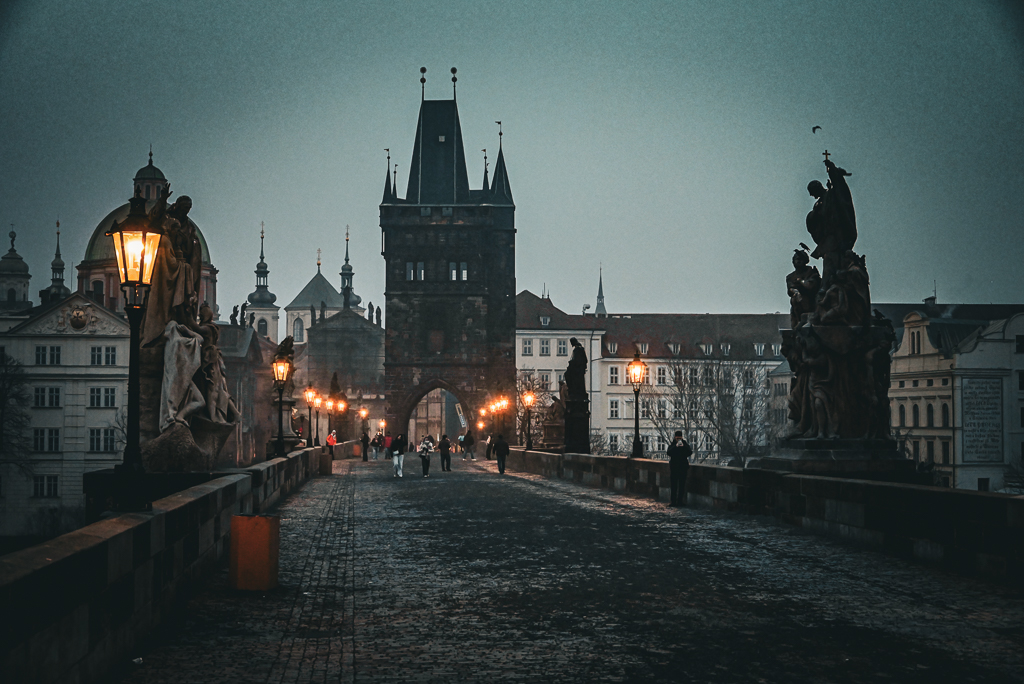
Charles Bridge early morning
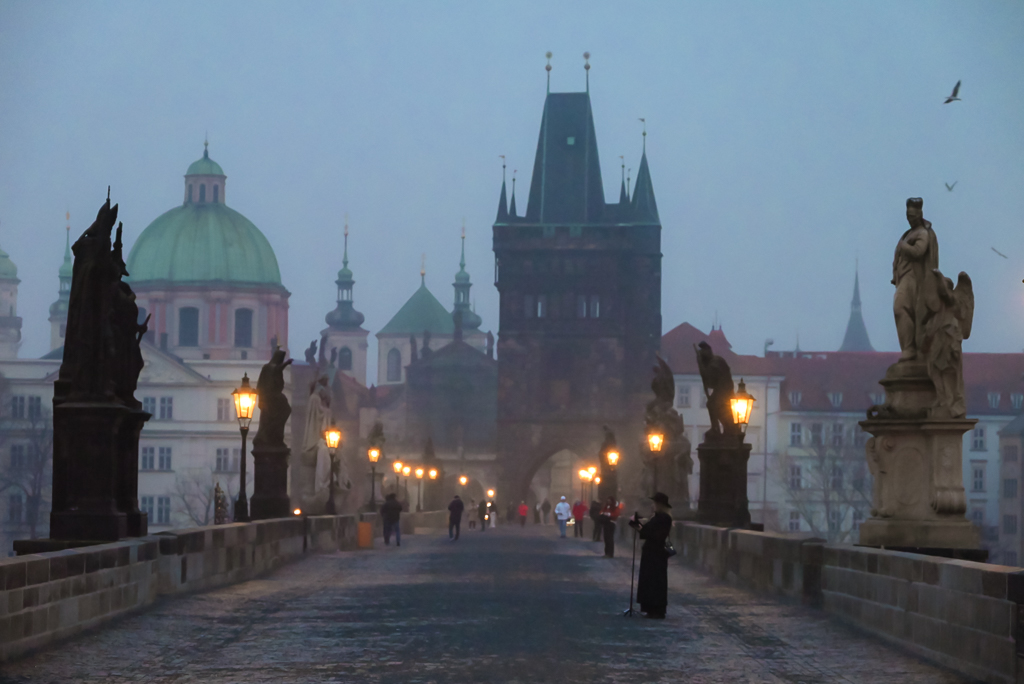
Charles Bridge
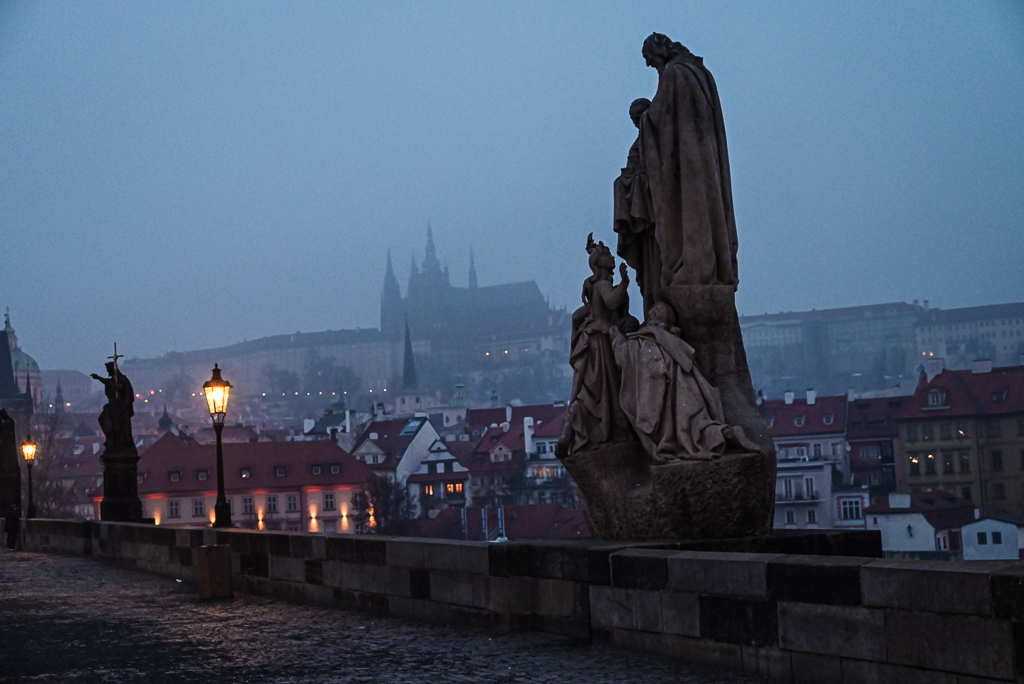
Charles Bridge 
Charles Bridge

The Old Jewish Cemetery

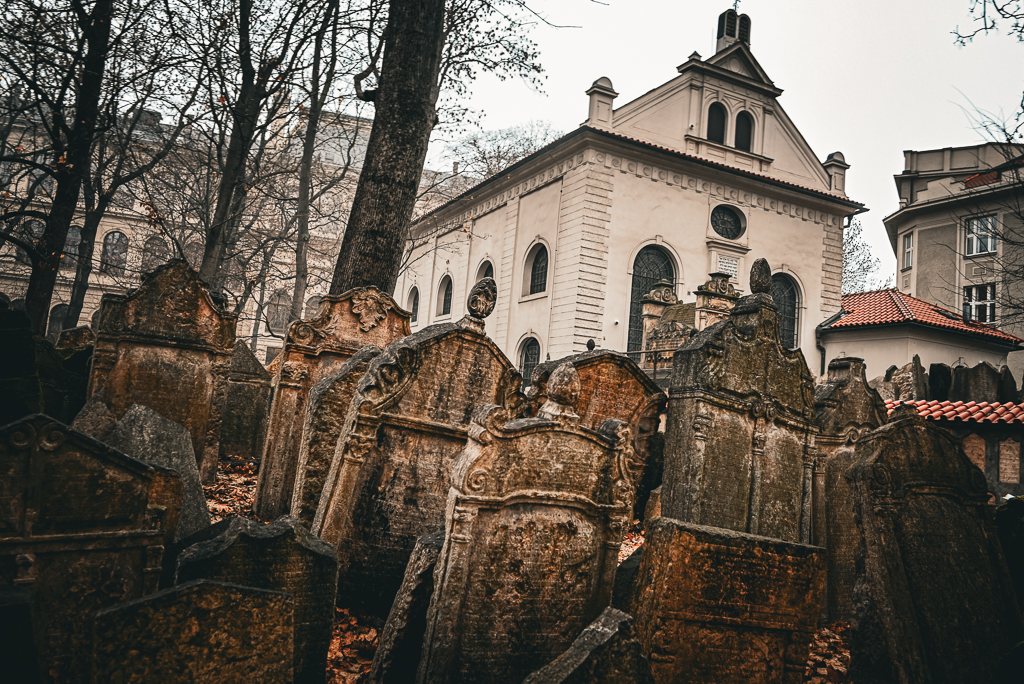
Another place I always return to in Prague is the Old Jewish Cemetery.

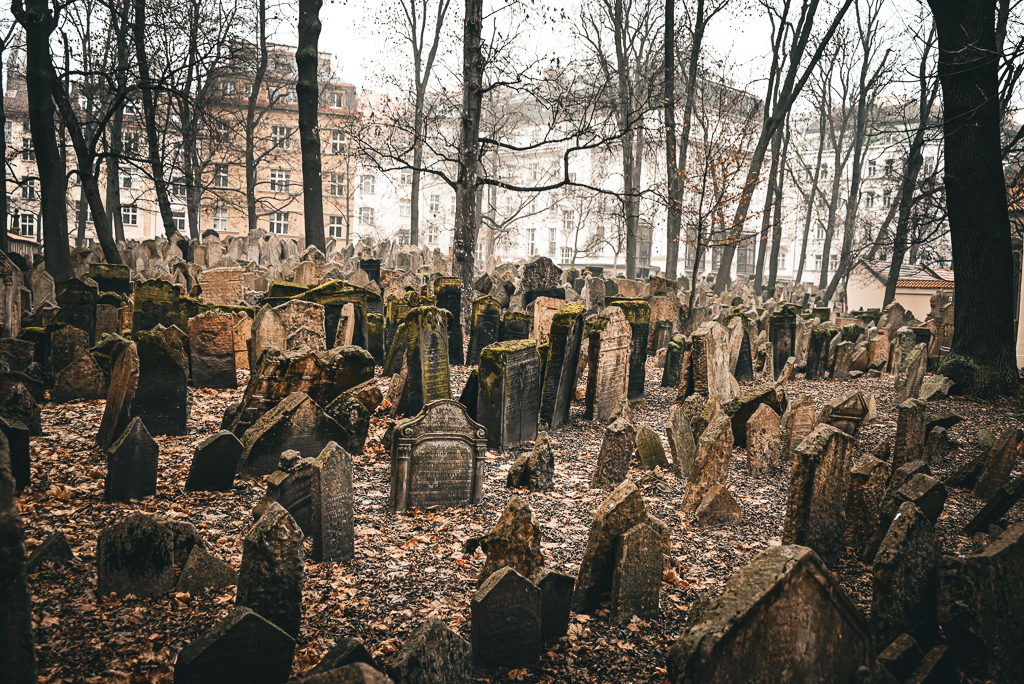
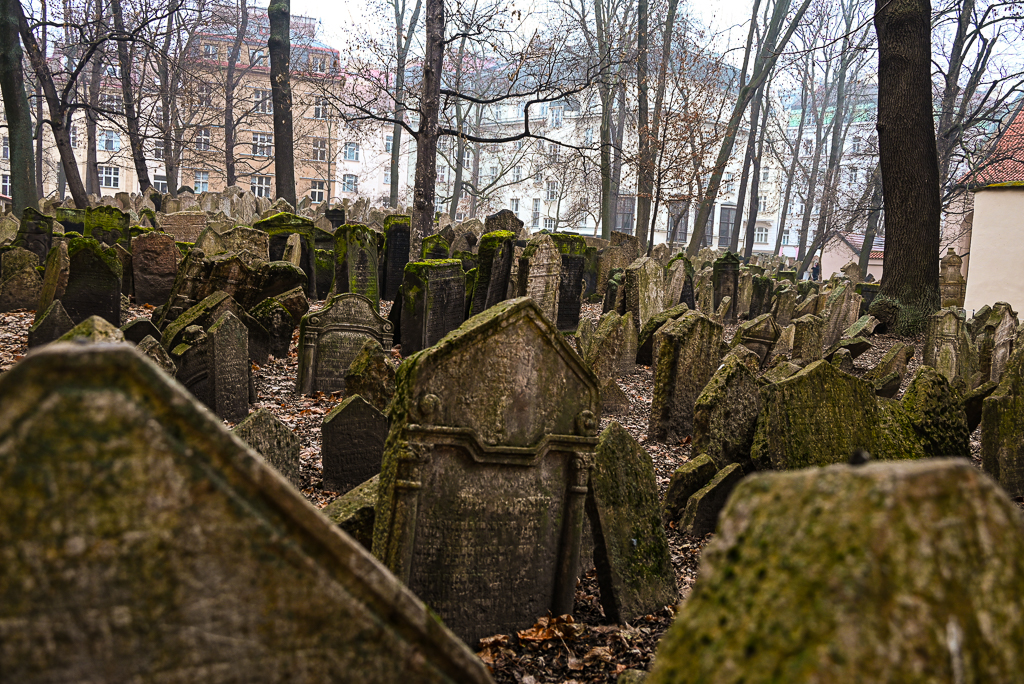
I’ve always been drawn to cemeteries. Not in a morbid way — but because they hold layers of memory. This one is among the most unique and atmospheric I’ve ever visited.

Prague had a significant Jewish population for centuries. The community endured waves of restriction, segregation, and persecution — and during the occupation by Nazi Germany in World War II, many were systematically rounded up, deported to concentration camps, and murdered.

The cemetery itself dates back to the 15th century. Space was limited within the Jewish Quarter, so instead of expanding outward, graves were layered on top of one another over generations. The result is hauntingly beautiful: old stone slabs leaning at impossible angles, crowded together, rising unevenly from the earth.

It looks chaotic. Almost unsettled.

With Indie, we wandered slowly through the narrow paths between the stones. I kept a solemn demeanor, absorbing the weight of the place.

Indie did not.

She laughed. She giggled. She ran along the pathway, chasing a black cat that seemed to live comfortably among the graves.

Old Jewish cemetery
Old Jewish cemetery
Old Jewish cemetery
The Crypt of Operation Anthropoid

One morning, on a solo mission, I went to one of Prague’s most powerful places.

In 1942, Reinhard Heydrich — one of the highest-ranking leaders of the SS and a principal architect of the Holocaust — was assassinated in Prague by Czech and Slovak paratroopers trained by the Allies. The operation was known as Operation Anthropoid.

Heydrich was widely regarded as one of the most ruthless figures in Nazi leadership. His death was a bold and almost unthinkable act of resistance.

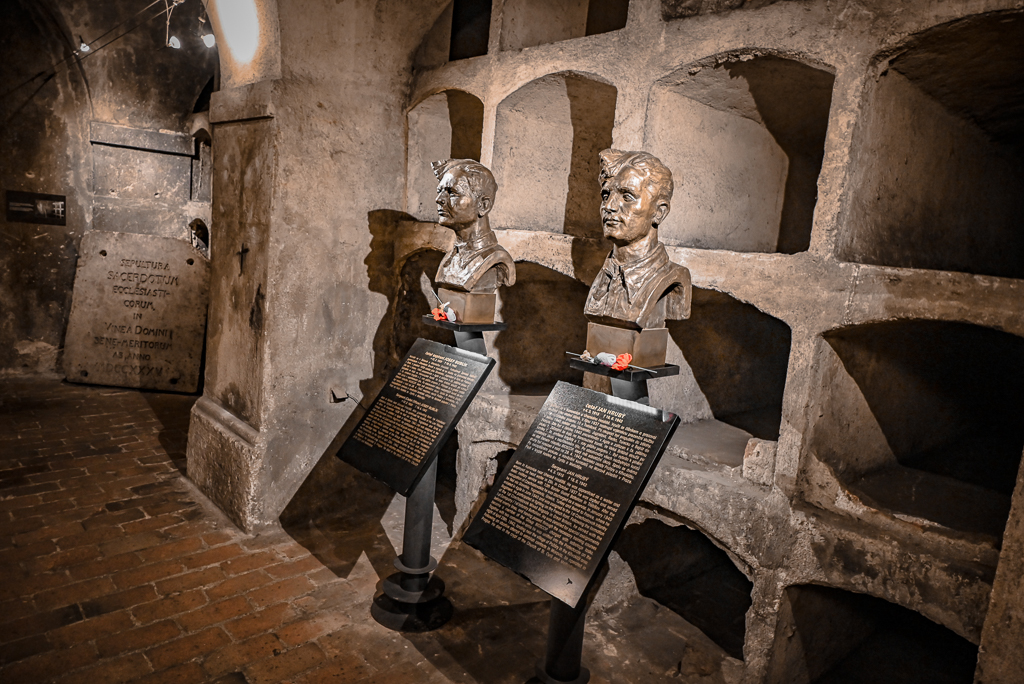
After the attack, the paratroopers went into hiding beneath the Saints Cyril and Methodius Cathedral, sheltered in the crypt by members of the Orthodox Church who risked their own lives to protect them.

For weeks they hid there.

Eventually, one resistance member was captured and, under torture, revealed the location. The Nazis surrounded the church. What followed was a brutal siege. The paratroopers fought from within the crypt, holding off overwhelming forces for hours.

When capture became inevitable — and with it torture and execution — the remaining men took their own lives rather than surrender.

Today, the crypt is preserved as a memorial and museum. It is free to visit — a place of remembrance, pride, and sacrifice for the Czech people.

I went early, before other visitors arrived.

Standing alone in that narrow stone chamber, it was impossible not to feel the gravity of it. The walls still bear marks from the battle. The air feels close and heavy.

I tried to imagine what those men felt in their final moments — knowing the outcome, knowing the cost, and choosing resistance anyway.

Crypt of Operation Anthropoid where brave paratroopers spent their last moments
Into the Sudetenland

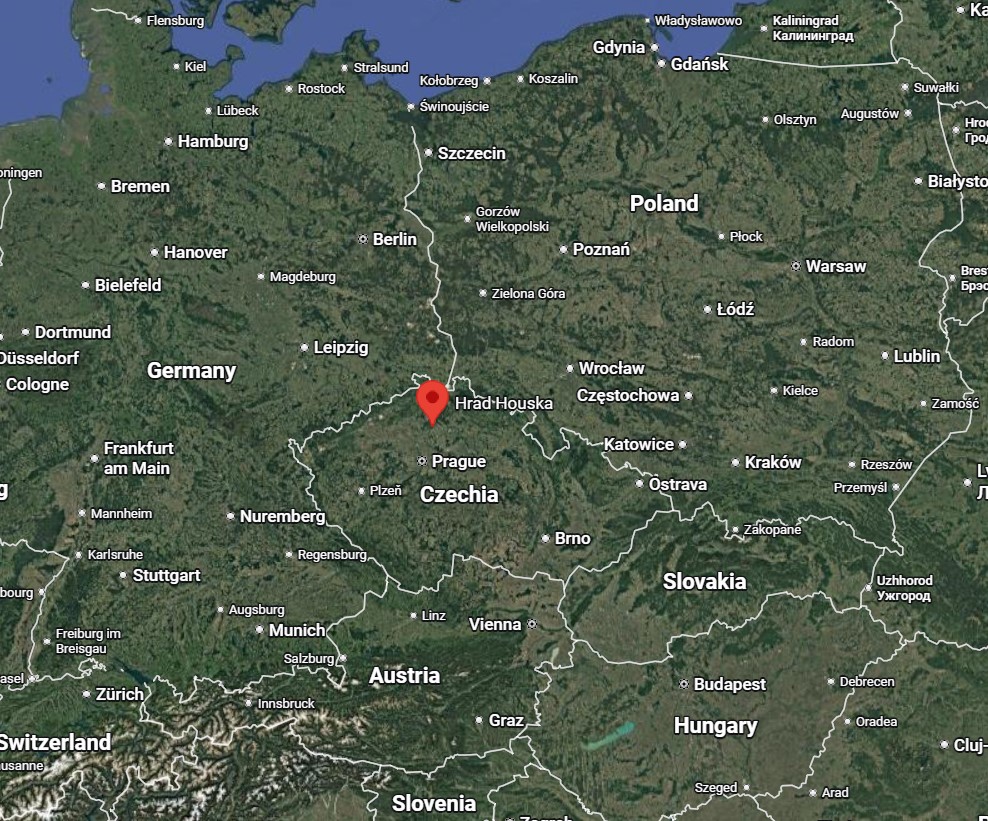
Beyond Prague, the true highlight of our time in Czechia was visiting Houska Castle.

To reach it, we rented a car and drove north into the forested hills. Rather than make it a quick day trip, we chose to stay nearby — not just to see the castle itself, but to explore the surrounding countryside.

The region carries its own complicated history.

Houska sits within what was once known as the Sudetenland — the predominantly German-speaking border region of Czechoslovakia. After World War I, the territory became part of the newly formed Czechoslovak state, though many ethnic Germans continued to live there.

In 1938, under pressure from Adolf Hitler and following the Munich Agreement, the Sudetenland was annexed by Nazi Germany. The move is widely considered one of the critical steps that paved the way for the outbreak of World War II.

Standing in those quiet hills, it’s difficult to reconcile the serenity of the landscape with the political storm that once gathered there.

Today, the forests are peaceful. The villages are small and unassuming.

But this region has stood at the fault line of European history.

And somewhere within those wooded hills, perched above limestone cliffs and sinkholes, is a castle built — according to legend — not to defend a border, but to seal something far older.

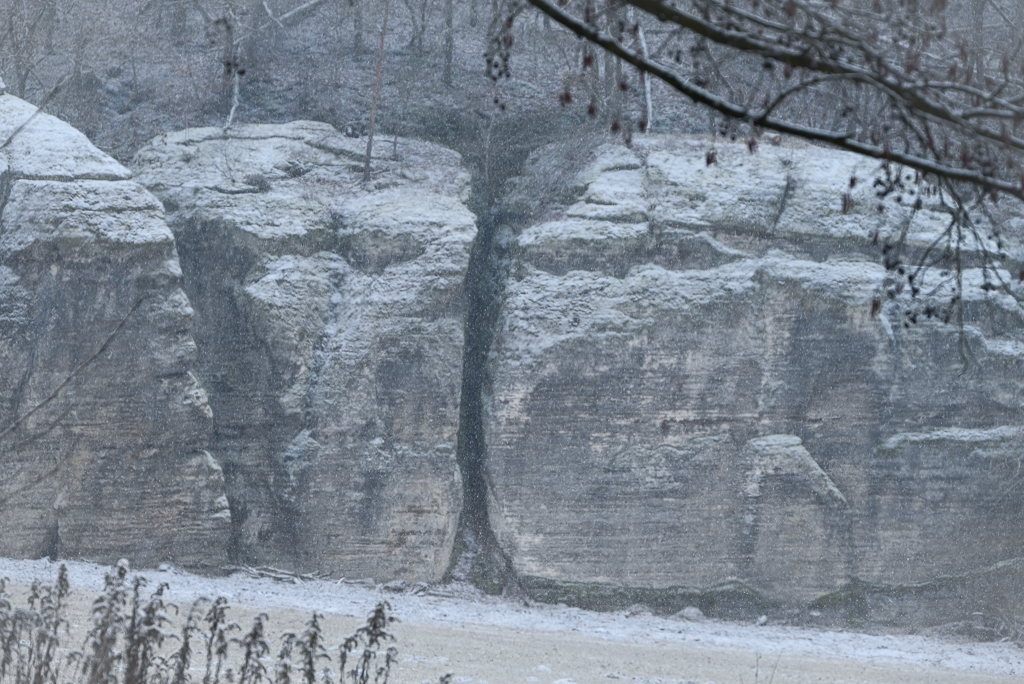
Frozen cliffs near Houska Castle

Houska Castle

The Road to Houska

Reaching Houska Castle felt like entering another layer of Europe.

We drove for several hours through the Czech countryside — passing small villages, remnants of Eastern European communist-era buildings, abandoned factories, and quiet rural farms. The landscape slowly shifted as we moved north. The roads narrowed. The forests thickened.

Eventually, we entered a region of snow-covered karst hills — limestone terrain carved with caves and sinkholes, dotted with frozen lakes and icy creeks. Farmhouses and small villages appeared intermittently, many seemingly empty in winter. I imagined some were summer homes for Prague residents, shuttered and waiting for warmth to return.

The deeper we drove, the quieter it became.

And then we began noticing them.

Stone angel statues standing at the edges of the forest — weathered, solemn, half-covered in snow. They didn’t feel decorative. They felt like guardians. Watching. Marking the threshold between ordinary countryside and something older.

And then, finally, the castle came into view.

Perched on a cliff overlooking the valley, dark against the white hills, it looked exactly as I had imagined — solitary, imposing, and slightly unreal.

There was just one problem.

Our small rental car didn’t have the power — or the traction — to make it up the steep, icy road leading to the castle. The tires spun helplessly against the frozen incline.

So we adjusted.

Paula and I loaded Indie into a backpack carrier while Paula’s mom stayed behind to guard the car — she wasn’t particularly enthusiastic about visiting a castle rumored to sit over a portal to hell anyway.

And we began the hike.

We walked several miles up the icy road, passing old stone cottages and homes partially built into caves and cellar-like chambers carved into the limestone hills. Some looked abandoned. Others showed faint signs of life — wood stacked neatly, doors reinforced against winter.

The cold bit at our faces. Snow muffled our footsteps. The forest felt still.

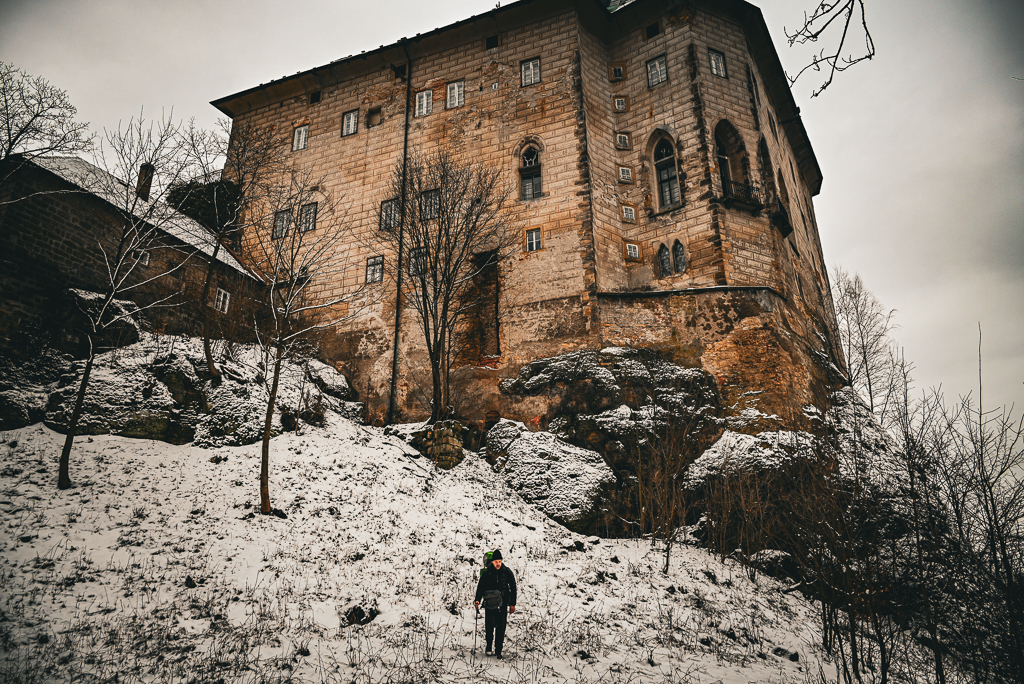
Above us, through the trees, Houska loomed.
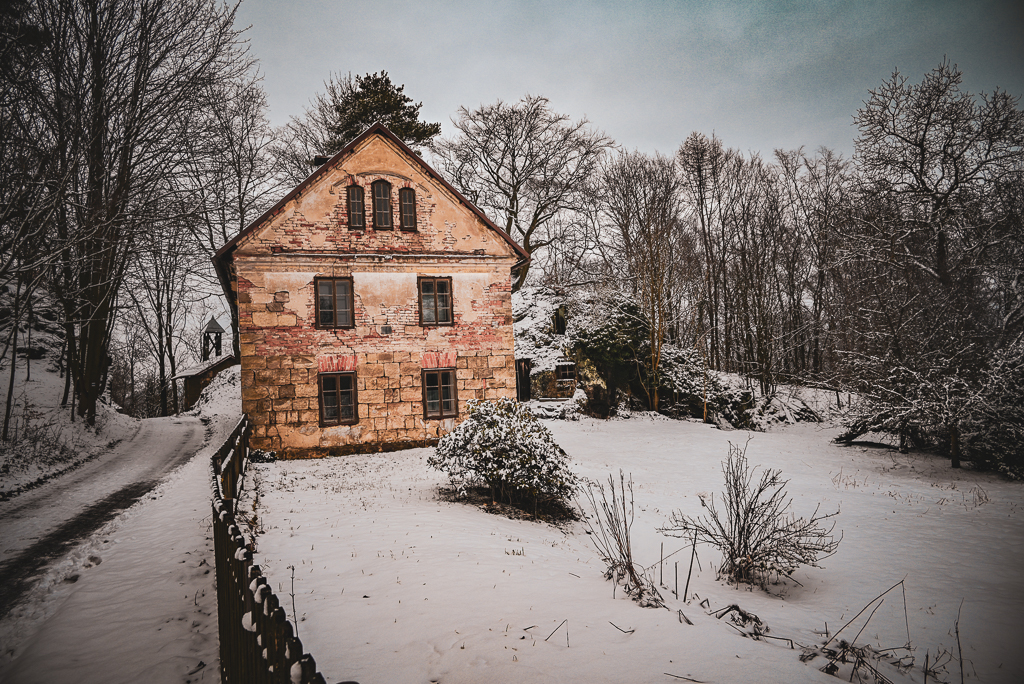
Stone cottage next to a house built into rocks near the castle
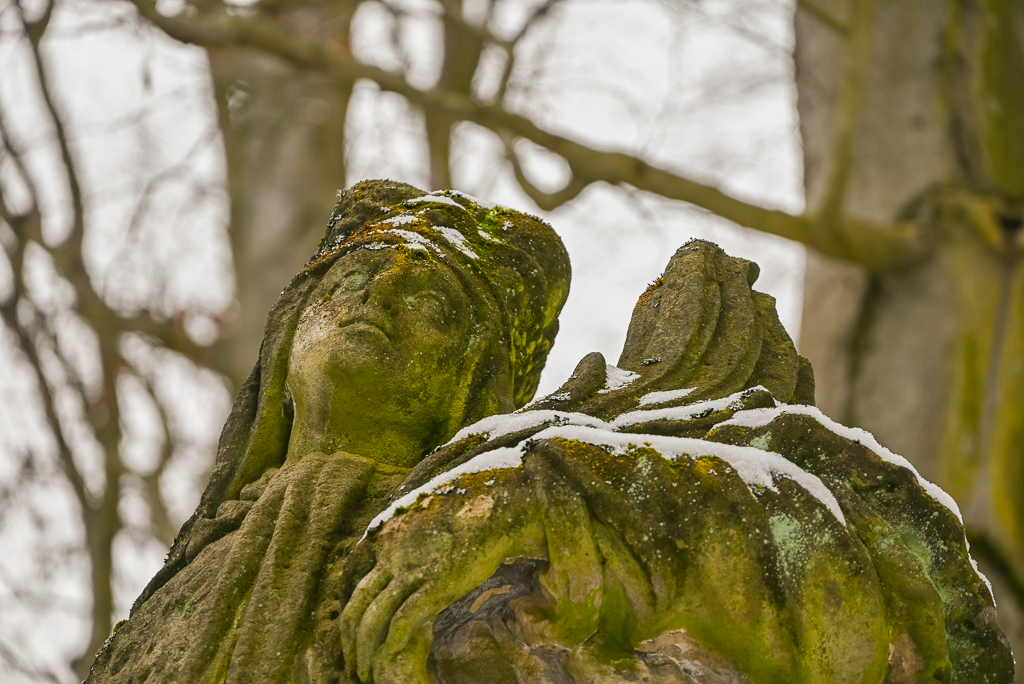
Statues of angels guarding the forest outside of Houska Castle
Arrival at the Castle Gates

We followed the narrow, icy road until the trees finally opened and we stood before Houska Castle.

An elderly man from the nearby village waved at us. I waved back. Other than him, there was no one there.

The castle was closed for winter.

A locked gate blocked the entrance, and as we approached, a large German shepherd appeared from behind it — calm but deliberate, positioning himself as if to remind us that this place was guarded, even in silence.

The snow muted everything. No wind. No voices.

Just the castle.


Touching the Stone

We walked around the perimeter, boots crunching over frozen ground. Near the bedrock foundation — limestone rising sharply from the forest floor — a simple stone cross protruded from the snow.

The castle looked severe. Stark. Almost theatrical in its darkness.

I walked as close as I could, Indie secured in the backpack carrier, and reached out to touch the stone wall.

Cold. Solid. Unyielding.

It had a sinister presence — though perhaps that was my imagination filling in centuries of legend.

There was nowhere else for us to go unless we hopped the fence and squared off with the German shepherd — which, despite the mythology of the day, was not happening.

And truthfully, I didn’t feel disappointed.

Seeing Houska in winter, alone, from the outside — without tourists, without ticket counters — felt more eerie than any summer interior tour likely would have been.


Legends and Lingering Thoughts

In the back of my mind lingered another part of the legend: that misfortune follows those who visit Houska.

Can I say with certainty that such stories aren’t real? No.

But I also don’t believe every summer visitor leaves cursed.

Still, as a father, there’s always that quiet flicker of irrational concern. I didn’t want anything to befall little Indie.

We stayed for about thirty minutes, circling the walls, absorbing the stillness.


Lost in the Snow

Eventually, we began the walk back down.

At one point we took a wrong turn and had to retrace our steps. We attempted to ask a villager for directions, but he didn’t speak English, and we didn’t speak Czech. So we relied on instinct — and the downward slope — to guide us home.

As darkness crept in, we finally saw the car waiting below, where Paula’s mom was no doubt anxiously keeping watch.


The Hotel Beneath Another Fortress

From there, we drove about thirty minutes to our hotel — an old, slightly creaking building in a quiet valley beneath another massive castle. This one had genuine military significance and was the site of historical battles before being decommissioned by Archduke Franz Ferdinand, who reportedly feared it could one day be used against him.

By nightfall, the village was nearly deserted.

The hotel staff went home.

We were the only guests.

Paula’s mom had her own room and was not thrilled about sleeping alone — especially after a day immersed in haunted castles, demon legends, portals to hell, and Nazis.


Late Drive to Melnik

Before turning in, we drove thirty minutes to the nearest real town for dinner — a 1000-year-old medieval city of Melnik.

It was so impressive, even in the cold evening air, that we decided then and there to return the next day in daylight.

Indie in my backpack and I, climbing up to Houska Castle
Into the Underground

After breakfast, we returned to Melnik in daylight.

There were no tourists in this part of Czechia at that time of year. The streets were quiet. The town felt almost empty.

We had hoped to visit the Ossuary — the Church of Bones — near the imposing hilltop St. Cathedral overlooking the medieval village. But it was closed.

So we settled for something else — maybe not as striking, but still interesting.

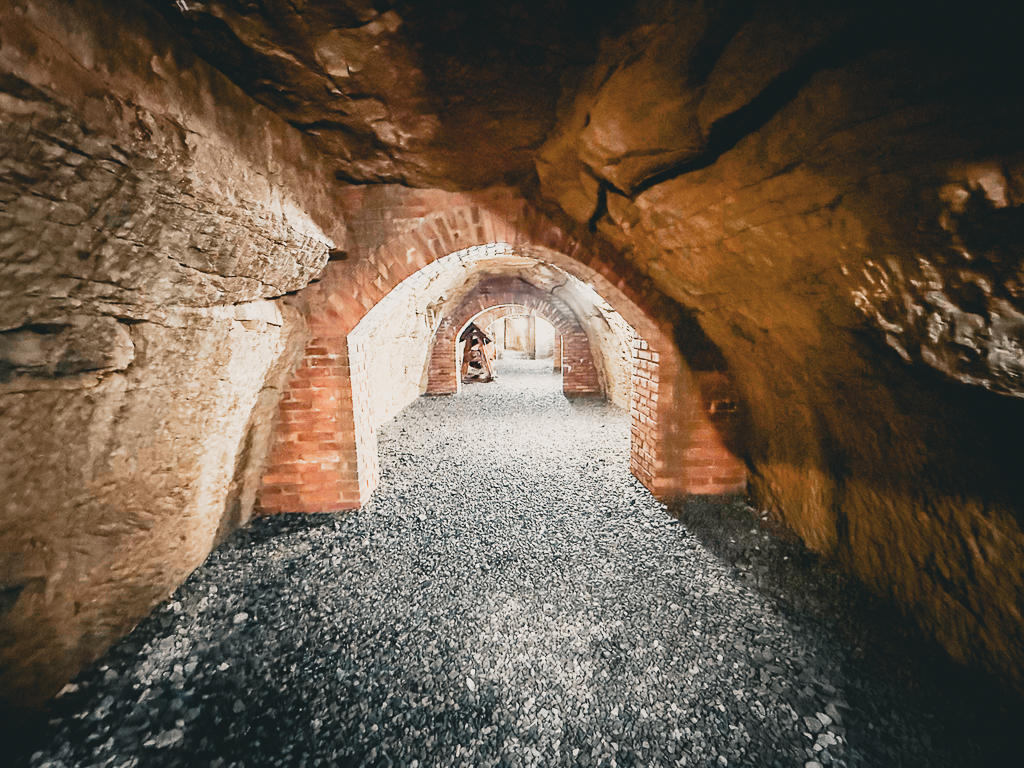
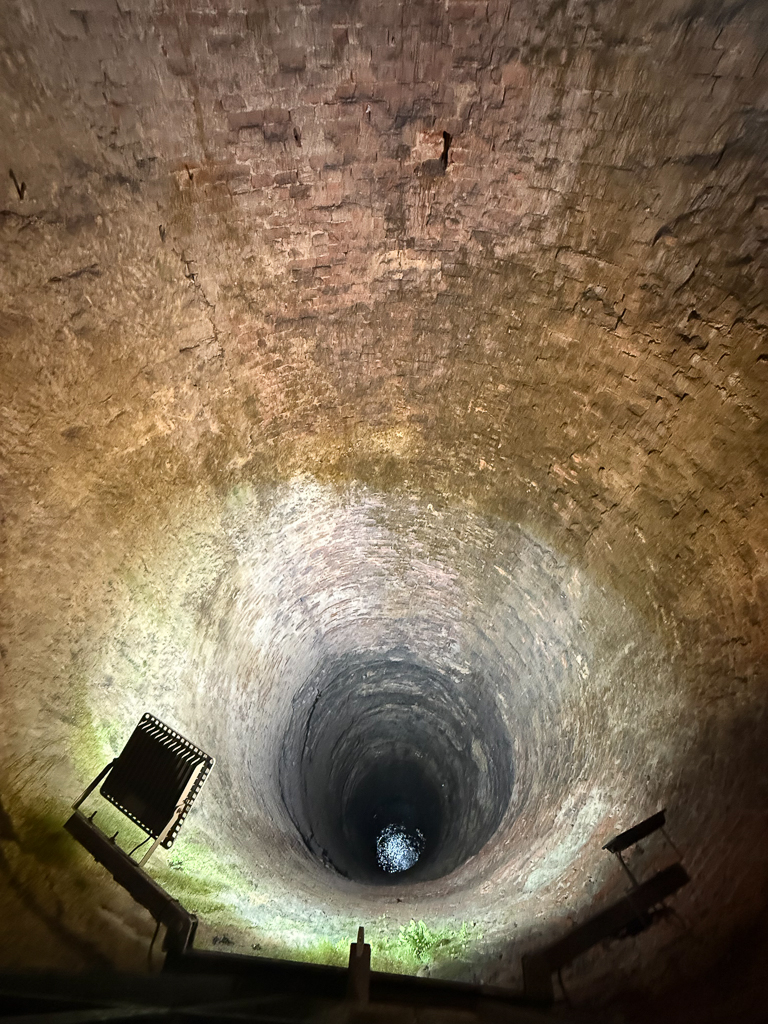
We joined a guided tour into the underground tunnels leading to what is described as Europe’s largest medieval well — a massive mining shaft from the town’s silver-mining era.

It was just us and the guide.

The air was cold. The stone walls tight. Standing at the edge of the shaft, I looked down into darkness. It was far deeper than I expected.

Old Bridge in Melnik

Melnik Underground Tunnels

Melnik Largest Well in Europe
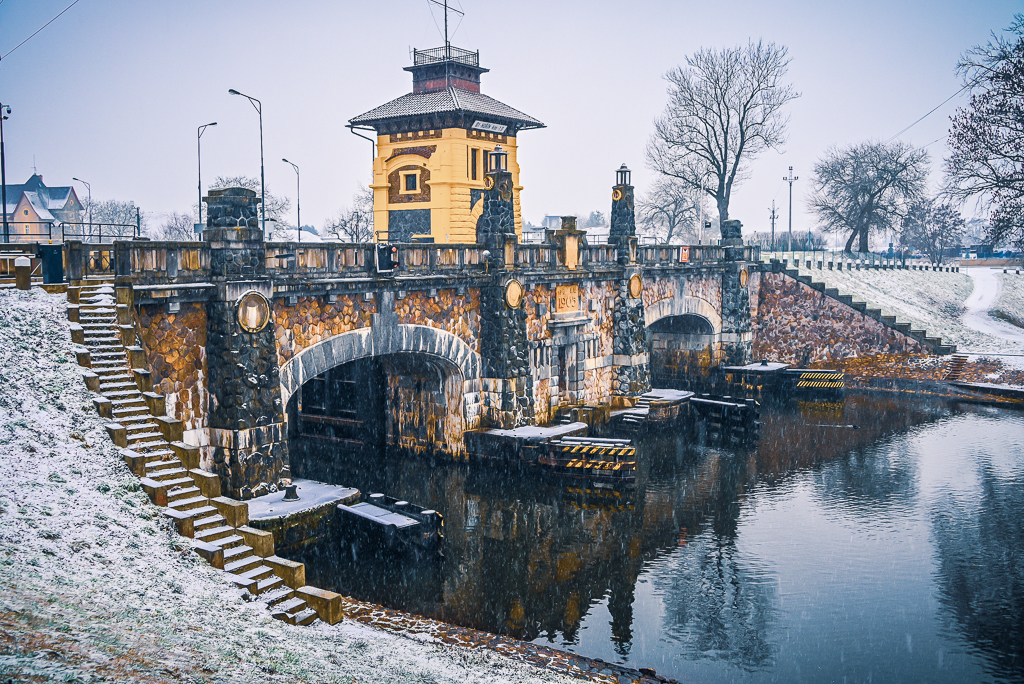
Empty Fortifications

Above ground, the same emptiness continued.

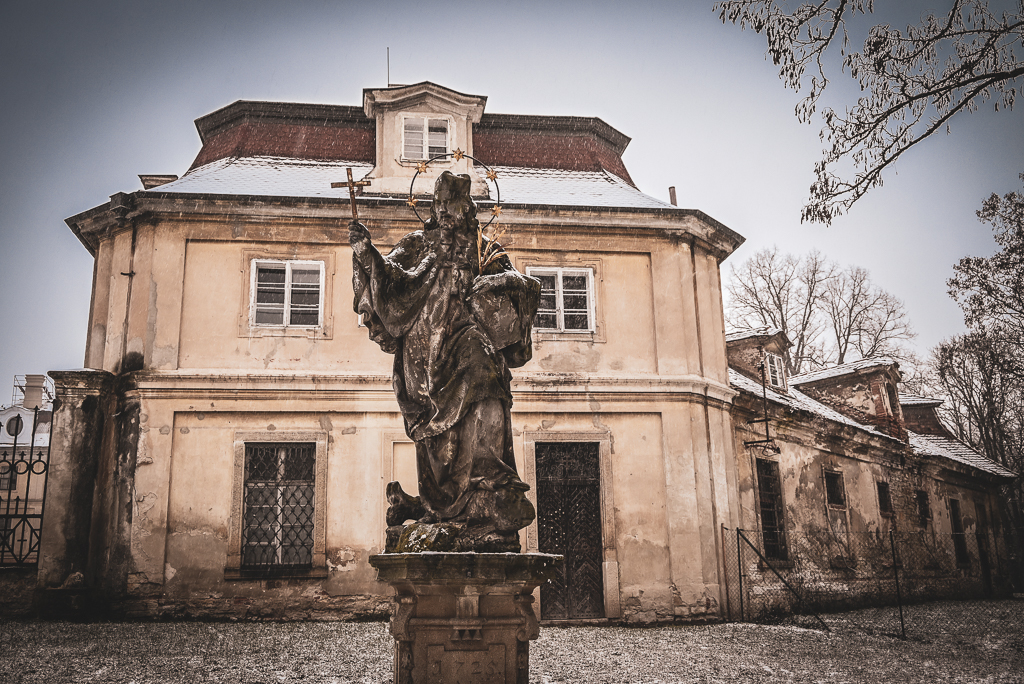
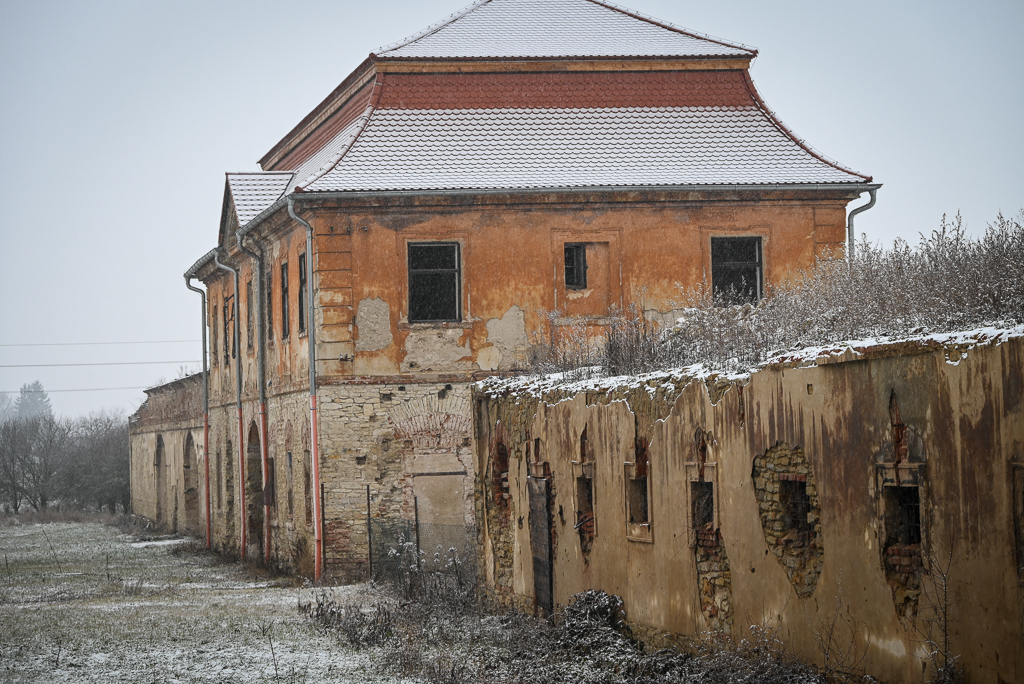
In Mělník, the abandoned fortifications surrounding the old Baroque château were nearly deserted. Some restoration efforts were underway, but much of the complex felt suspended between decay and preservation.

The true highlight came unexpectedly.

We turned a corner and found rows of abandoned buildings stretching along the ridge. Empty windows. Peeling plaster. Heavy wooden doors warped by time. I later learned they were part of the château’s outer defensive and service structures — once tied to a noble estate where royalty and aristocracy had lived centuries earlier.

Baroque statues from the 1700s stood nearby, their stone faces weathered, snow resting along their shoulders.

No ticket lines. No crowds.

Just cold stone and winter air.

Paula and I wandered freely through hollow corridors and neglected courtyards. The place didn’t feel like a museum. It felt uncovered.

And when I found the dark basement stairwell, there were no ropes, no guards, no tourists to discourage exploration.

Just quiet.

I stepped down into the dim space below. The air was colder. Heavier. The walls rough and unpolished. It felt less like a restored landmark and more like a place history had briefly forgotten — abandoned during the communist years and only now slowly being reclaimed.

In winter, with no one else around, it felt as though we had the entire hill to ourselves.

Old Royal Buildings from 1700s  

Abandoned old forts
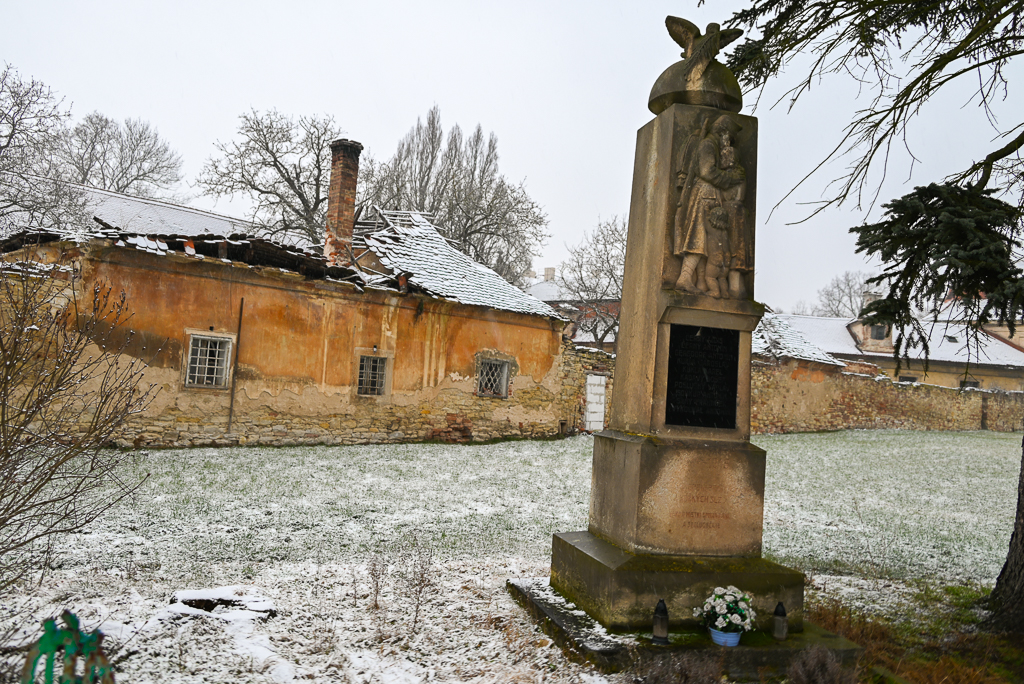
Statues
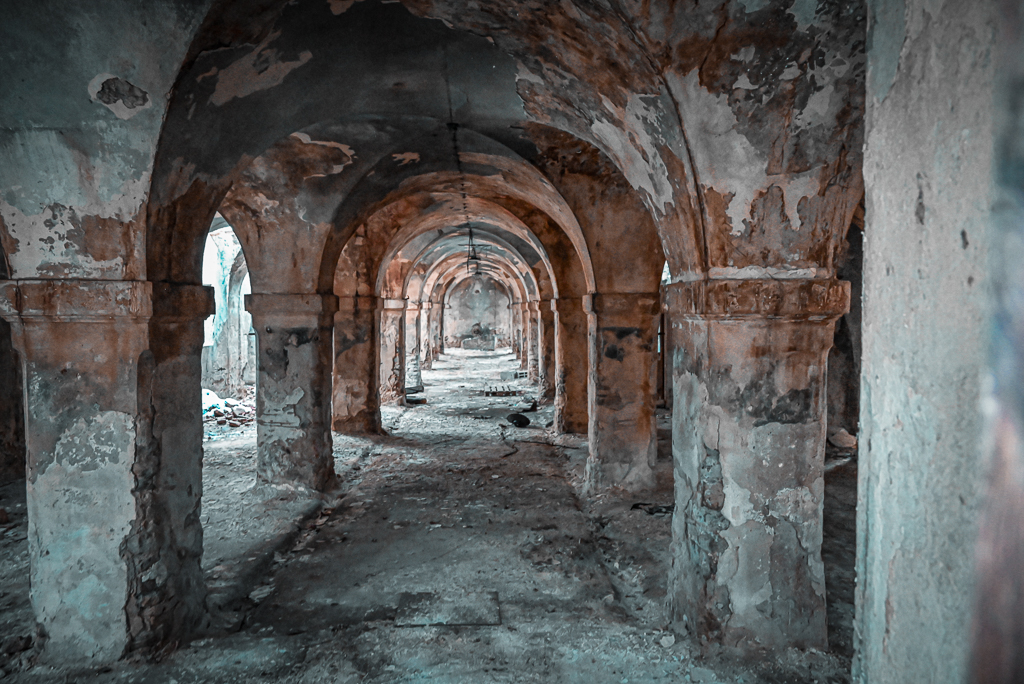
Abandoned buildings we explored
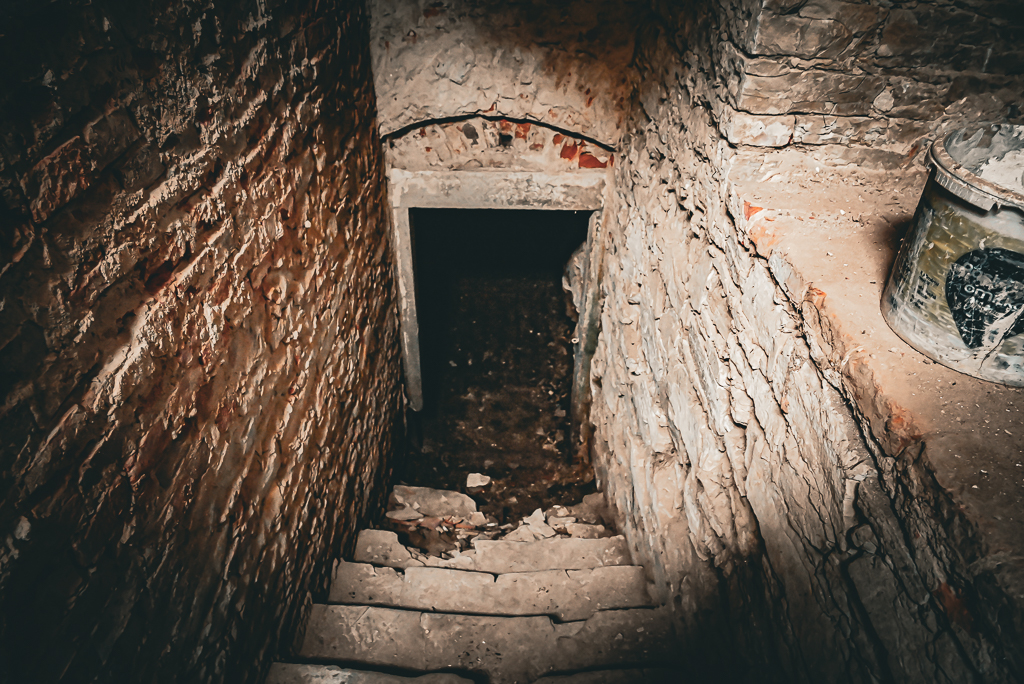
Abandoned buildings we explored

Onward to Slovakia

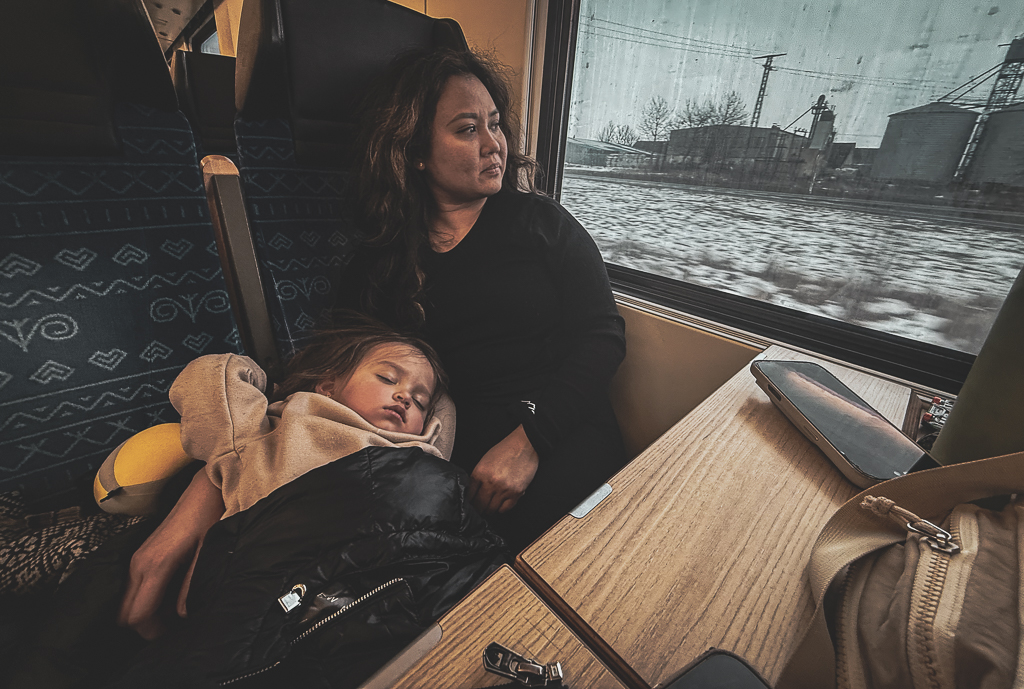
From Prague, we traveled by train to Bratislava in neighboring Slovakia.

The journey was smooth and unhurried — Central Europe sliding past the window in winter tones of gray and white.

We planned to spend a few days exploring Bratislava itself, a compact capital perched along the Danube, and then rent a car to venture into the countryside.

Because one castle, apparently, was not enough.

This time, the destination was Čachtice Castle — better known as the Castle of the Blood Countess.

Its dark lore rivals even Houska’s.

Paula and Indie on the train

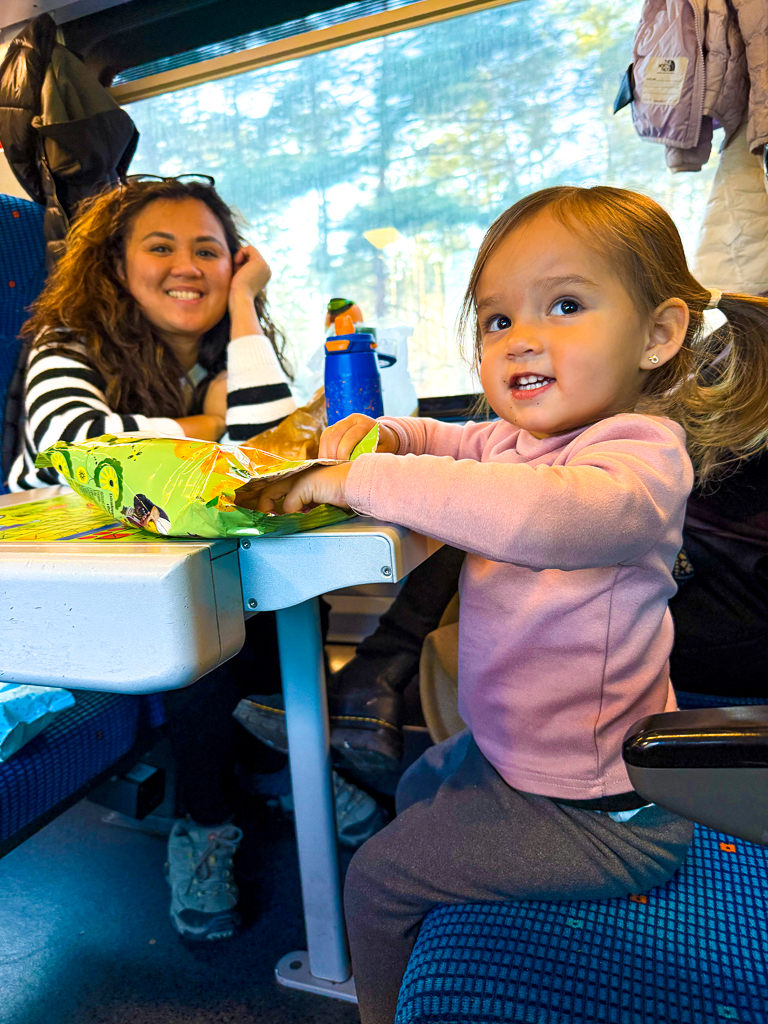
Happy times on the train