
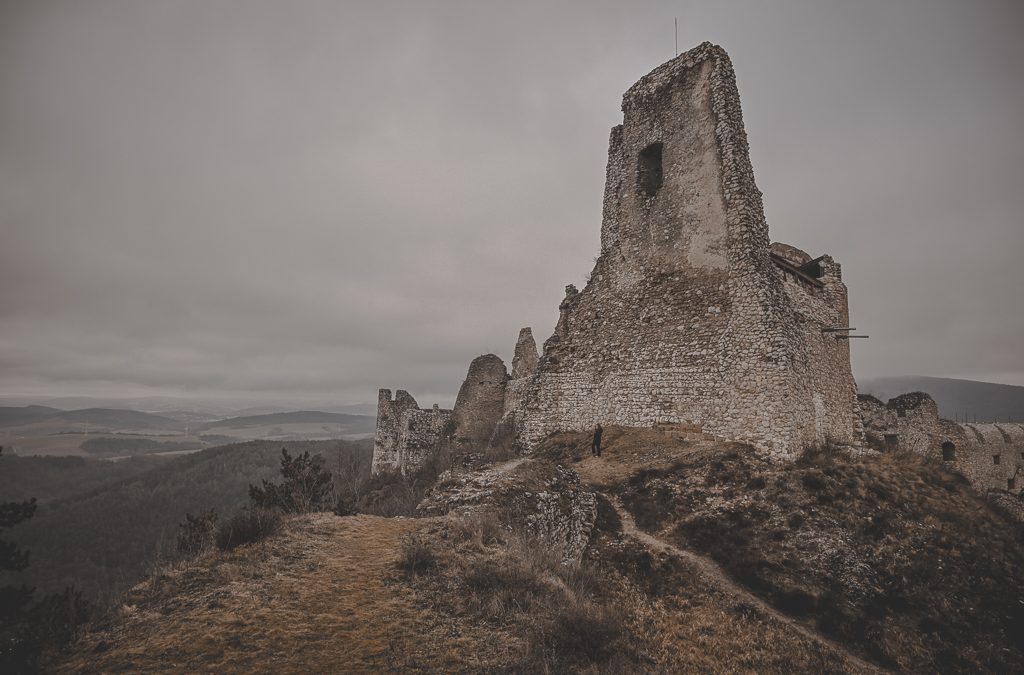
Slovakia, the less Visited Half of what was once Czechoslovakia
January 2026: As part of an almost three-week trip that included Czechia, Egypt, Saudi Arabia, and Turkey, my family and I also visited Slovakia. We traveled to Bratislava by train from Prague and ended up staying in Slovakia for two nights.
The first night was spent in Bratislava’s Old Town, wandering its cobbled streets and soaking in the relaxed atmosphere of the small capital. The second night would be very different.
From Bratislava to a Castle of Nightmares
On our second day, we rented a car and drove a few hours from Bratislava to the small village of Čachtice. Slovakia has the highest concentration of castles of any country in the world, and we were heading to one named Čachtice Castle, another fortress with a dark reputation — similar in tone to Houska Castle in Czechia, which we had visited earlier on the trip.
This castle is known as the home of Europe’s first serial killer, a noblewoman named Elizabeth Báthory. According to legend, she ordered her servants to capture young maidens from nearby villages and have them bled so that she could bathe in their blood in an attempt to what she believed would preserve her youth.
The castle is widely considered one of the most haunted in Europe.
And I can never turn down visiting dark and uneasy places such as this.
So I packed up the family, and we headed off.
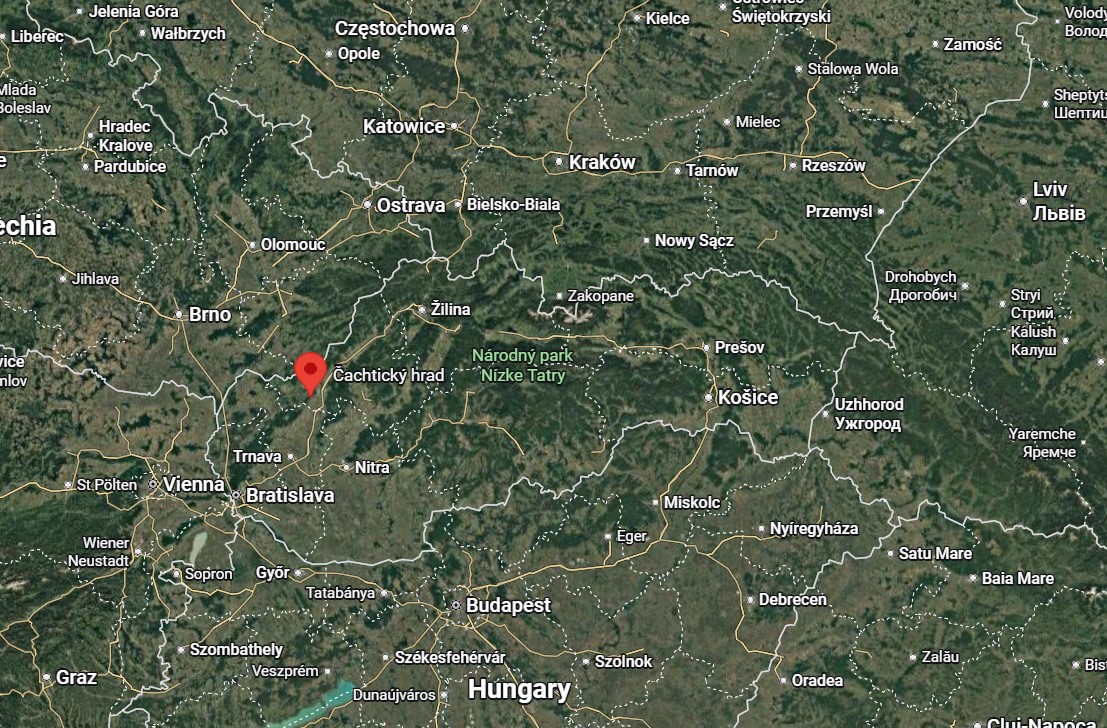
Čachtice Castle
Arrival in Bratislava
We arrived at the train station in Bratislava on a cold, wintry, rain-soaked afternoon after traveling four hours from Prague. The gray sky and steady drizzle made the communist era train platforms feel even more industrial and stark.
The Luggage Regret
Hauling our suitcases is something I never enjoy — especially when moving from place to place across the world. As we dragged them through puddles outside the station, I silently vowed that on our next trip we would eliminate the larger luggage altogether and return to traveling with only carry-ons, just as we had before traveling with our daughter.
Into the Old Town
I ordered an Uber, and a friendly Slovakian driver picked us up. He entertained us during the short ten-minute ride into the Old Town before dropping us off near one of the historic gates. From there, no vehicles were allowed.
Cobblestones and Medieval Towers
That meant hauling every suitcase over slick cobblestones and through narrow lanes to find our hotel. It wasn’t glamorous.
Our hotel sat directly beneath the medieval tower. There was nothing particularly exceptional about it, but it was comfortable, affordable, and perfectly positioned in the heart of the Old Town. Sometimes location matters more than luxury.
A Rainy Night Out
Despite the cold and rain, we put on our rain gear and headed back out to explore and find something to eat. The streets were quiet but atmospheric, the stone glowing under the streetlights.
Dark Beer and Local Flavor
We ducked into a small bar-restaurant with a friendly waitress and ordered rich local dark beers and a wholesome dinner that warmed us from the inside out.
It was already clear that Bratislava was not nearly as touristy as Prague. It felt far less visited, with noticeably more locals than visitors. The city was smaller and a bit rough around the edges — graffiti marking certain walls, fewer fully renovated buildings, and remnants of communist-era architecture still present.
And we liked Bratislava already.
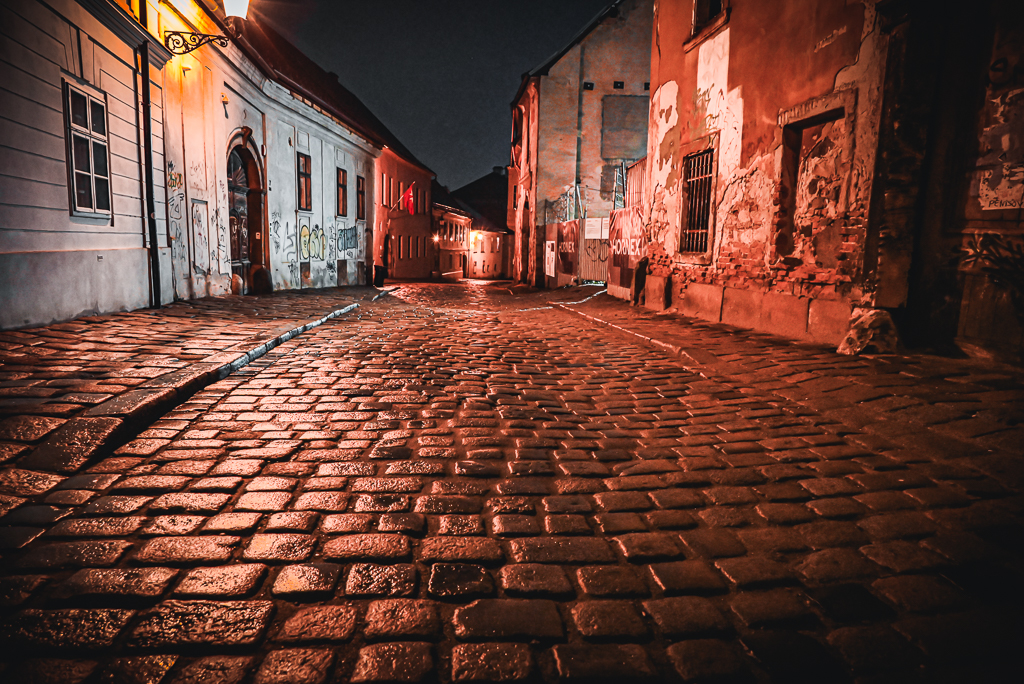
Old town Bratislava

Paula and Indie at the bar restaurant in Bratislava
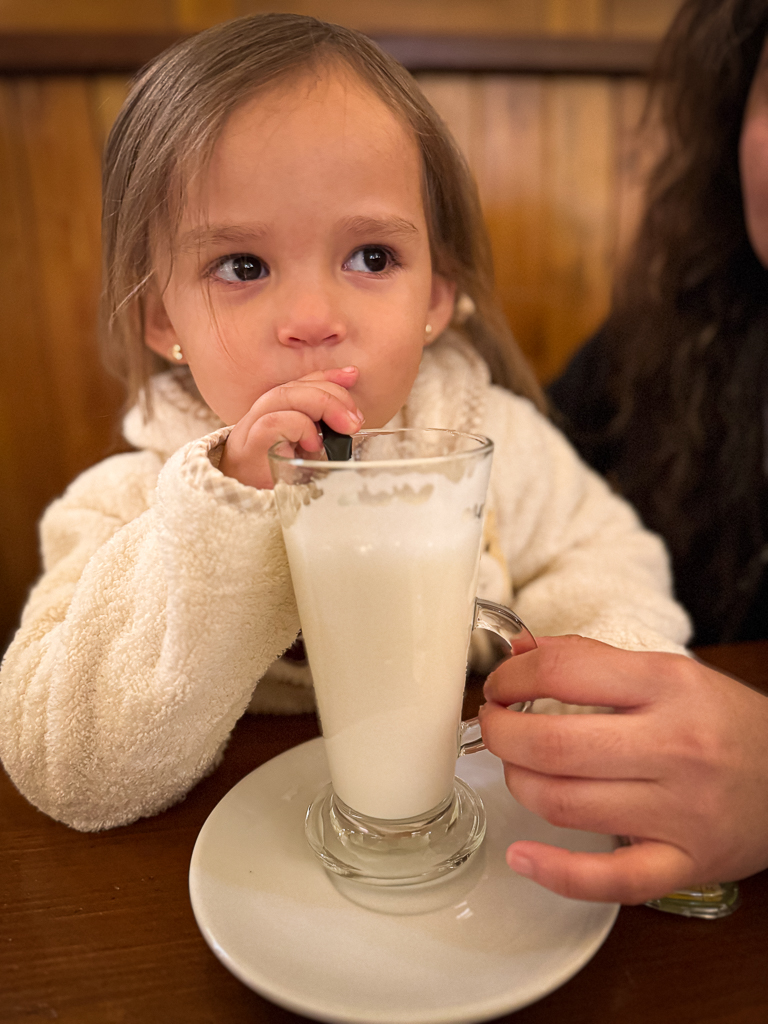
Indie having her milk shake
Embracing the Jet Lag
As I did in Prague, I embraced the jet lag. At 4 a.m., instead of lying awake scrolling on my phone, I pulled on my coat and slipped quietly out into the Old Town of Bratislava, while the rest of my family slept.
Alone in the Ancient Streets
The city was cold and nearly silent. The rain had stopped, leaving the cobblestones damp and reflective under the faint glow of streetlamps. This has become one of my favorite rituals while traveling — wandering unfamiliar cities before they wake.
I walked endlessly through the beautiful old streets of this thousand-year-old city, passing shuttered cafés and empty squares, feeling as though I had Bratislava entirely to myself.
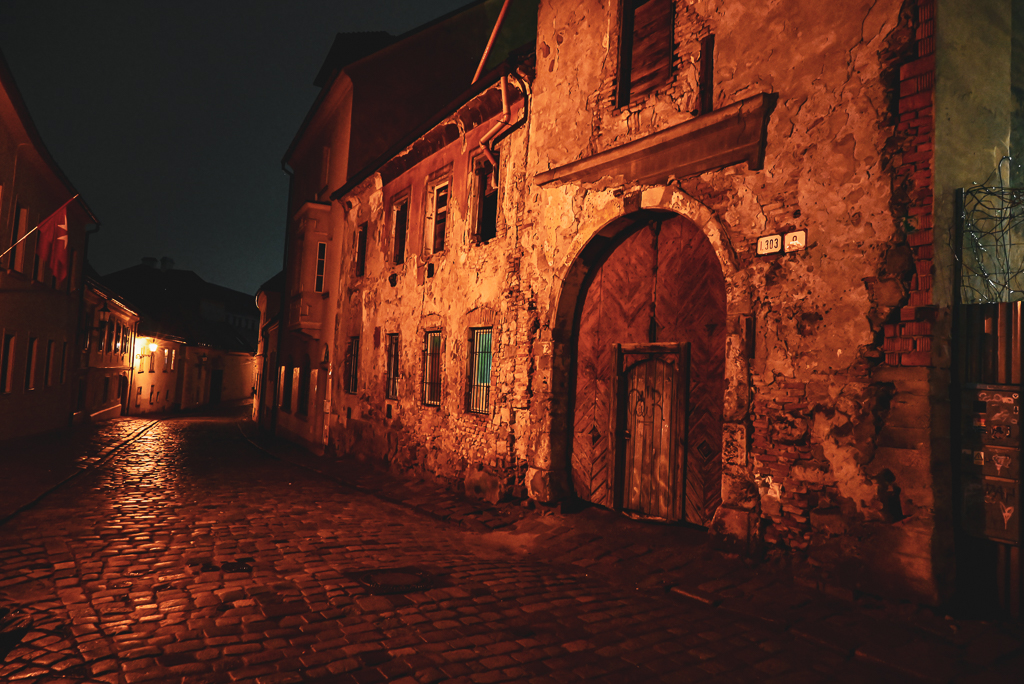
Old town Bratislava in the early morning
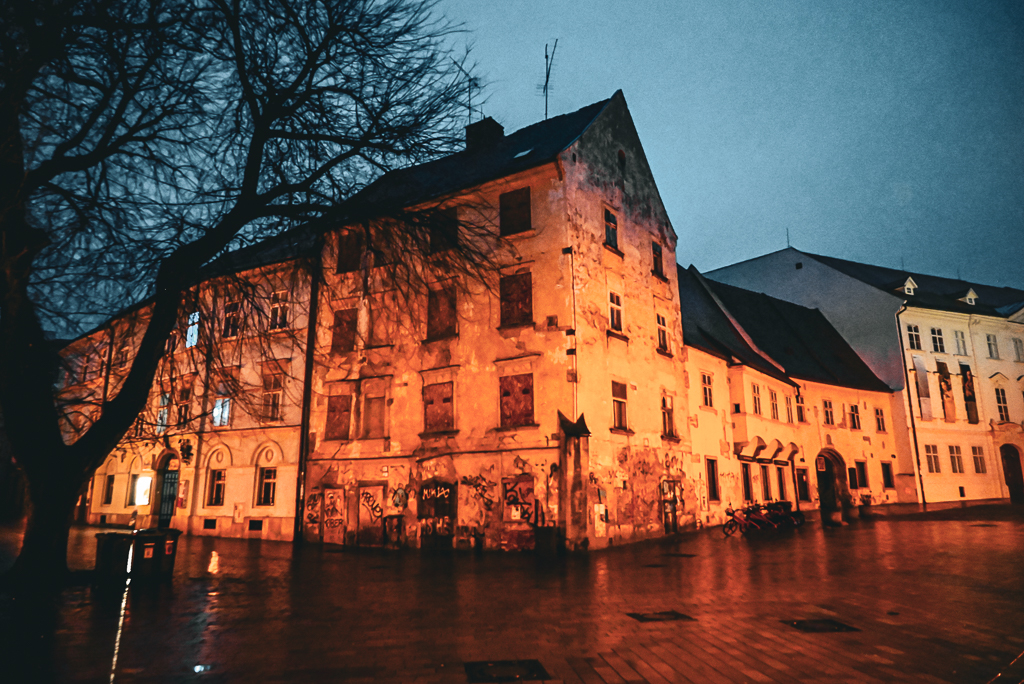
Old town Bratislava in the early morning
Morning in the Old Town
In the morning, we had breakfast at our hotel, which was attached to a Chinese restaurant — an unexpected but convenient start to the day. After eating, we set off to explore more of Old Town Bratislava before picking up our rental car and heading out to Čachtice Castle for the night.
Layers of History
Bratislava is actually older than Prague, with a history that stretches back over a thousand years. Walking its streets, you can feel the layers — medieval foundations, periods of Hungarian rule, the shadows of Nazi occupation, and the heavy imprint of communism.
The architecture reflects it all. Gothic corners meet Baroque façades, while blocks of communist-era buildings stand as reminders of a more recent past. It’s not polished in the same way as Prague, but that layered complexity gives Bratislava its character.
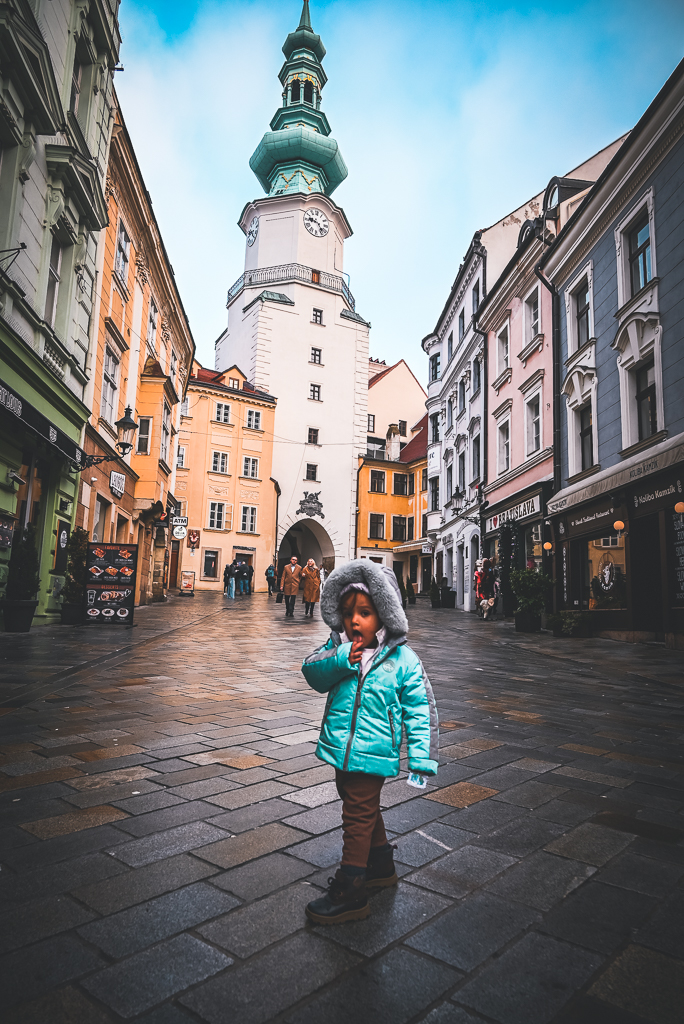
Indie in Bratislava
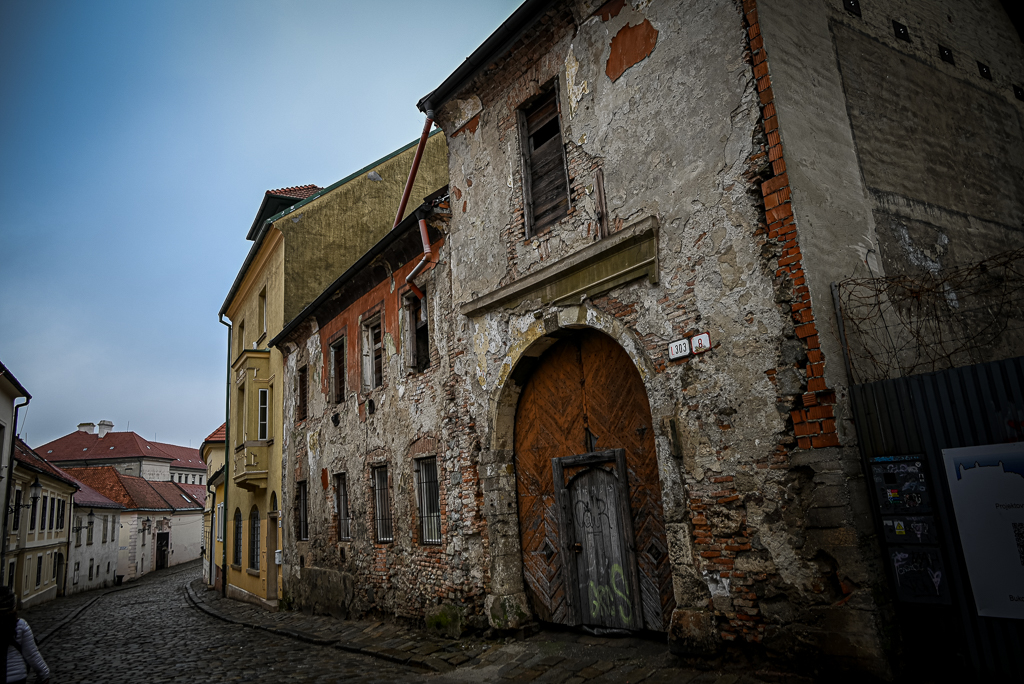
Old town
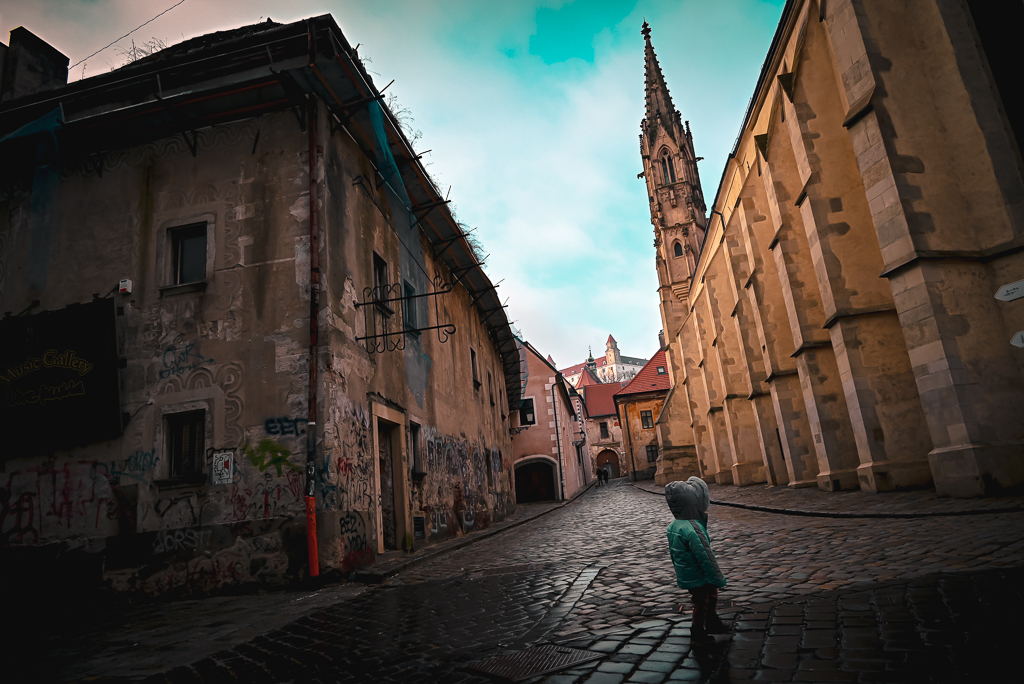
Indie wandering the old town streets
St. Martin’s Cathedral
The highlight of our morning was visiting St. Martin’s Cathedral, a 13th-century Gothic church with an enormous vaulted ceiling that seemed to rise endlessly above us. When we arrived, it was cold enough to see your breath inside and nearly empty, the silence amplifying every footstep across the stone floor.
Into the Crypt
A friendly caretaker noticed our curiosity and offered to show us some of the church’s treasures. He then led us down a narrow staircase into the underground crypts — a dark, dungeon-like space beneath the cathedral.
The air grew colder as we descended.
Below, the crypt was filled with the remains of priests from centuries past. Stone chambers, aging coffins, and dim light created an atmosphere that felt heavy with time. We were the only ones down there.
It was undeniably creepy.
Indie — whom I had been trying to get excited about Egypt by showing her cartoons of pyramids and mummies — suddenly wanted nothing to do with the crypts. She refused to let me put her down and clung tightly to me. When I briefly set her down to take a photo, she quickly grabbed back onto me and whispered urgently, “Hug, hug… there are mummies here.”
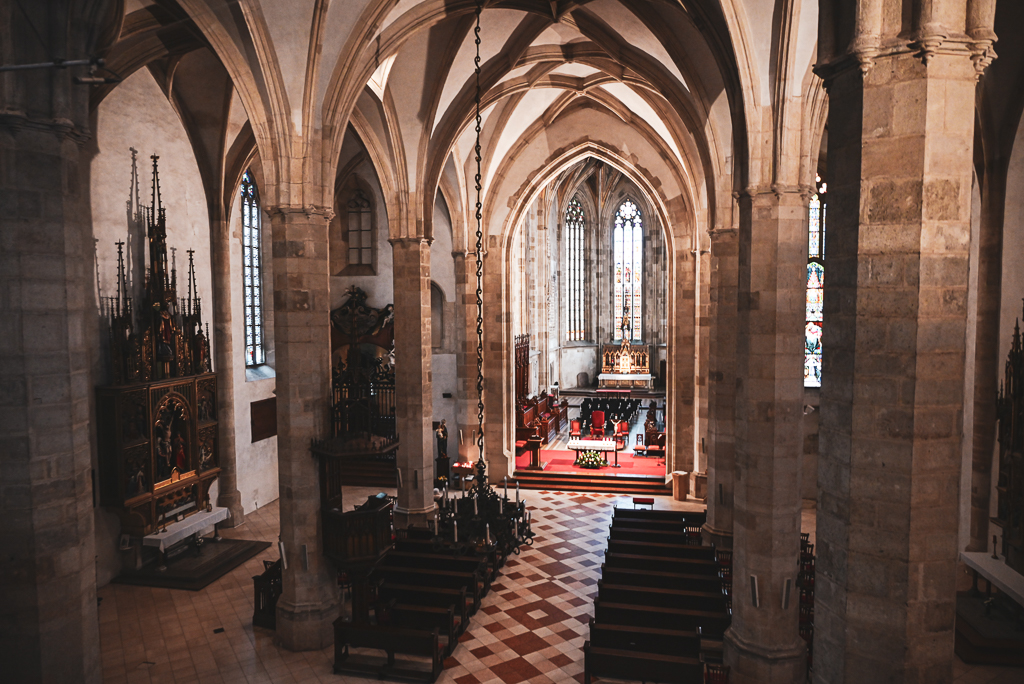
St Martins Cathedral
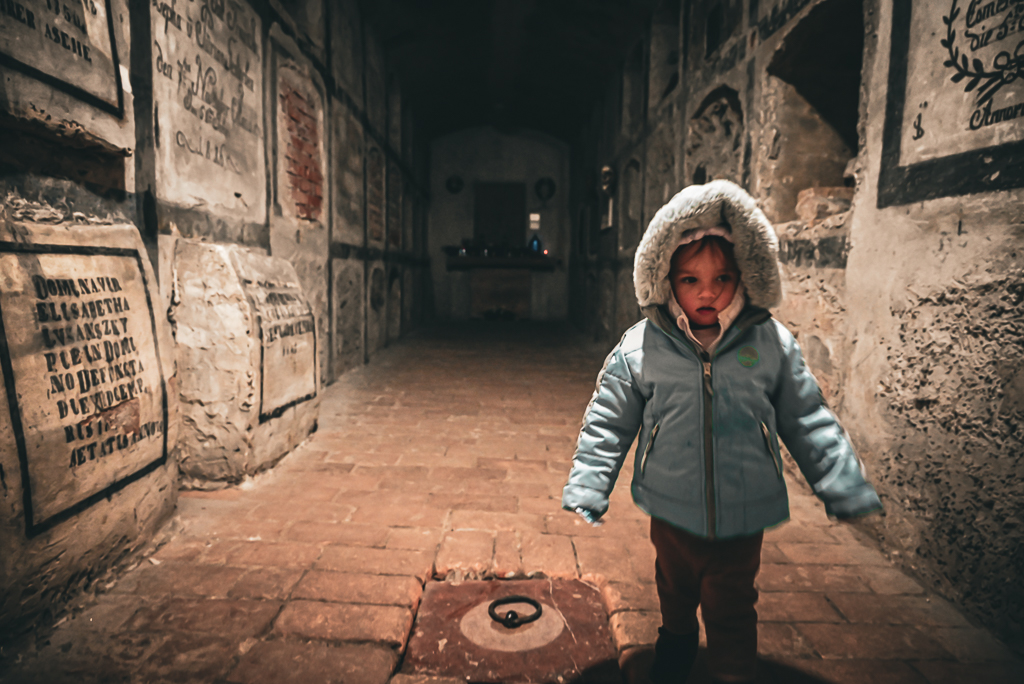
Indie in the underground crypts of St. Martin’s Cathedral, where priests of centuries past are buried
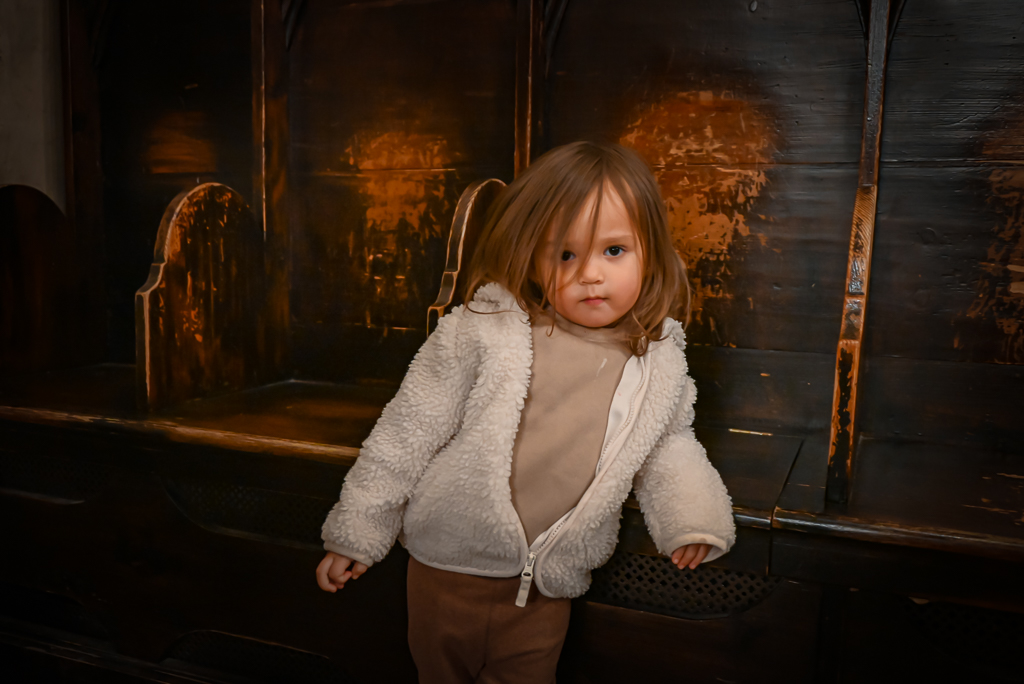
Indie sitting against a church pew
The Legend of Elizabeth Báthory
Like much dark folklore, the story of Elizabeth Báthory exists somewhere between fact and fiction.
She was a wealthy noblewoman in the late 1500s, often described as one of Europe’s first known female serial killers. According to legend, Báthory became obsessed with preserving her youth and believed she could reverse aging by bathing in the blood of young virgin girls.
She is said to have tortured and killed as many as 650 victims, draining their blood for this purpose—earning her the name “The Blood Countess.” Testimonies from the time described horrific acts: beatings, burning, starvation, and other forms of torture. Some accounts even mention devices resembling an iron maiden, though historians debate whether such details were later exaggerations.
Báthory lived at Čachtice Castle, perched on a hill above the village of Čachtice in present-day Slovakia. According to the story, her servants would lure or abduct young girls from surrounding villages. Over time, locals began to suspect what was happening, but their complaints went largely ignored—her wealth and influence shielding her from consequences.
This continued for years until the number of victims and pressure from villagers became too great to ignore. Eventually, even the king intervened.
Despite the accusations, Báthory was never formally tried—likely due to her noble status. Instead, she was confined to her castle and reportedly bricked into a small chamber. Some accounts say a small opening was left for food, water, and air; others claim she was sealed completely. She died there in 1614.
Her body was initially buried in the local church in Čachtice, but according to local accounts, it was later moved—possibly to a family crypt in Bratislava after villagers objected.
Today, the ruins of Čachtice Castle still sit atop the hill, worn down by centuries of decay, earthquakes and weather. The crumbling stone walls stand as a haunting reminder of the legend that surrounds her.
In recent years, the town has begun to lean into that legacy—attempting to draw visitors in the same way Transylvania has embraced the story of Dracula.
It may still be early for that effort.
But it worked—at least on me.
The Drive to Čachtice
By afternoon, the sun finally broke through the clouds, lifting our spirits. We picked up our rental car and began the drive across the beautiful Slovak countryside toward Čachtice Castle.
Rolling hills, scattered villages, and quiet farmland stretched out before us. It felt peaceful — almost too peaceful — considering where we were headed.
Before checking into our hotel, I decided we should go straight to the castle while we still had daylight.
The Icy Ascent
The castle sits high above the town of Čachtice on a forested hill. To reach it, we had to drive up an icy, winding, steep road. Thankfully, the temperature had risen slightly, softening the ice just enough for traction. I knew we needed to get back down before sunset — once the meltwater refroze, there would be no navigating that road safely.
Fortunately, we had a 4WD Volkswagen SUV.
We carefully made our way to the small parking lot and caught our first glimpse of the ruins.
It looked exactly as I had imagined: macabre and sinister. A hulking stone mass rising from the hilltop, broken walls silhouetted against the fading light.
The Guard and the Dogs
Paula and I climbed to a higher vantage point to take a photo of the castle. As we began walking back down to get Indie and Paula’s mom, we suddenly heard a large German Shepherd dog barking — followed by the sharp sound of an alarm.
The castle I had assumed was abandoned was clearly not.
A long-haired, heavily bearded man emerged from the gate and began walking toward us. He started speaking in Slovak. I replied that we didn’t speak Slovak. He tried German. When that failed, we attempted English. His English was bare minimum, but enough to exchange a few words.
I tried using a translation app on my phone, but reception on the hill was poor.
Through gestures and fragmented phrases, he managed to explain that we could still visit the castle even though it was officially closed. When I asked if the dogs were dangerous, he smiled slightly and said, “One is nice… the other is crazy.” He locked up the crazy one.
At first, I worried he might accuse us of trespassing. Instead, he seemed warm — almost lonely — as though he welcomed the company. He did his best to speak with us, but between the language barriers, conversation never quite came together.
Still, there we were: standing at the gates of one of Europe’s most infamous castles, welcomed in after hours by a solitary guard and his dogs, as daylight began to fade over the Slovak hills.
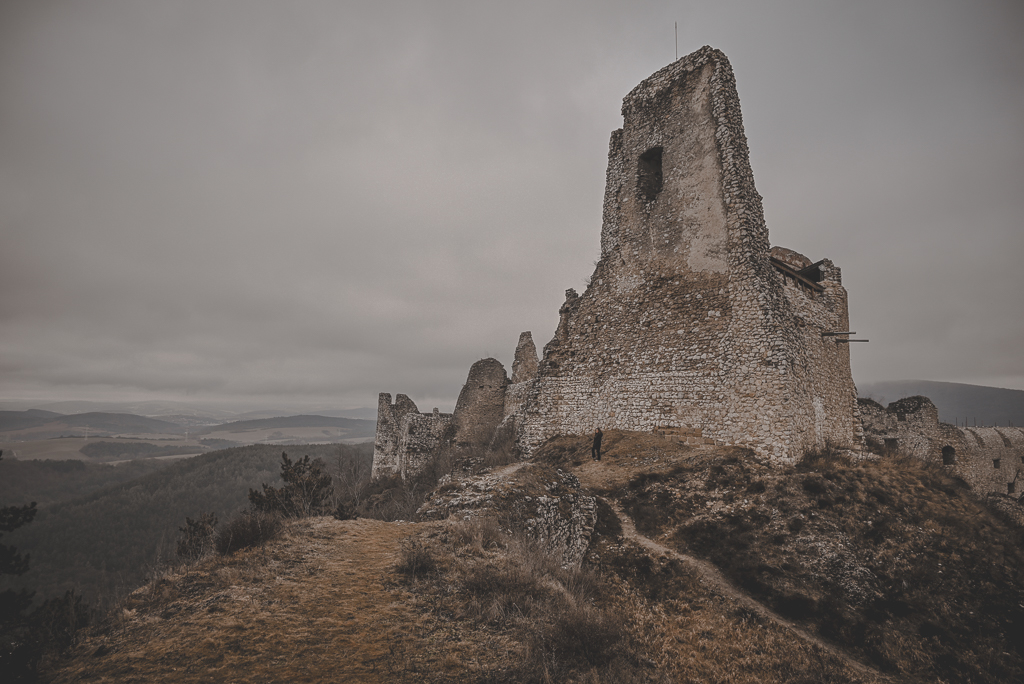
Paula standing at the base of Čachtice castle
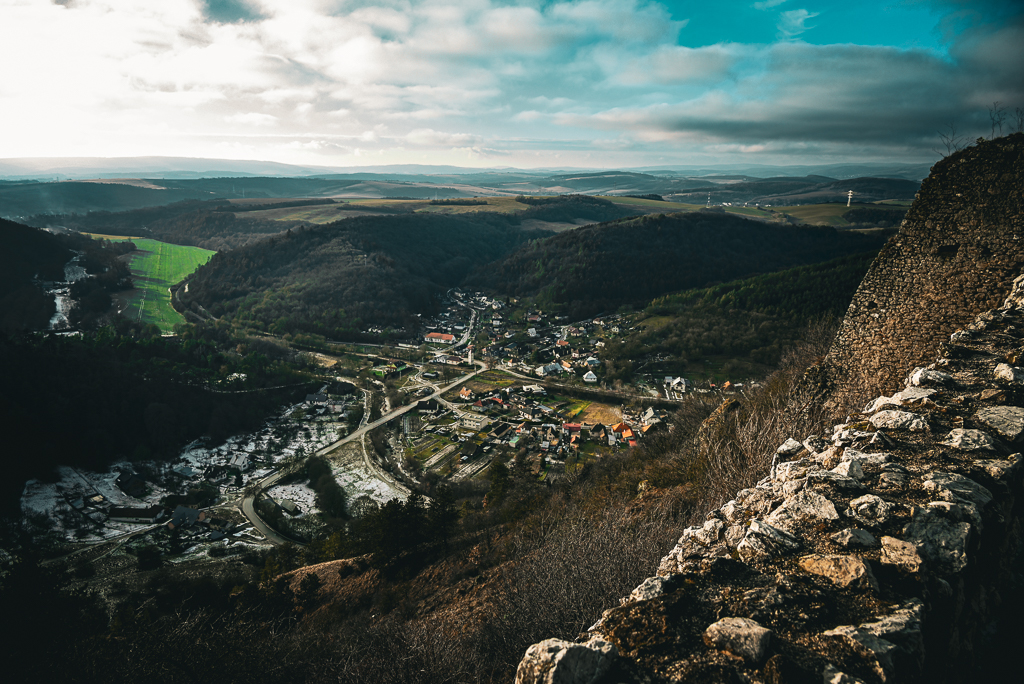
View of Čachtice from Čachtice Castle
Inside the Castle Walls
Inside Čachtice Castle, we stepped through crumbling stone corridors and exposed chambers open to the sky. The wind moved freely through broken windows and roofless rooms, carrying with it the kind of chill that feels older than the weather itself.
The Tunnel Below
We entered a tunnel-like chamber where Elizabeth Báthory is believed to have kept some of her victims — the place where legend says they were tortured and bled. The room was dark and damp, the air heavy and still.
Indie was not happy there and this was definitely the kind of place that gave off bad vibes.
The Countess’s Final Room
We climbed higher into the ruins to what is believed to have been Elizabeth’s chamber — the room where she was ultimately confined as punishment for her crimes, entombed within the castle walls until she perished.
Standing there, looking at the open sky above what was once a sealed chamber, it was difficult not to imagine the isolation of that final imprisonment.
The Pit
In another section of the castle, where a tower once stood, there is now a deep pit plunging roughly thirty feet down. Skeletal remains were reportedly discovered there — possibly victims of the Countess, though history and legend blur together at this point.
Peering into the darkness below, the wind moving through the hollowed stone, it was easy to understand how this castle earned its reputation.
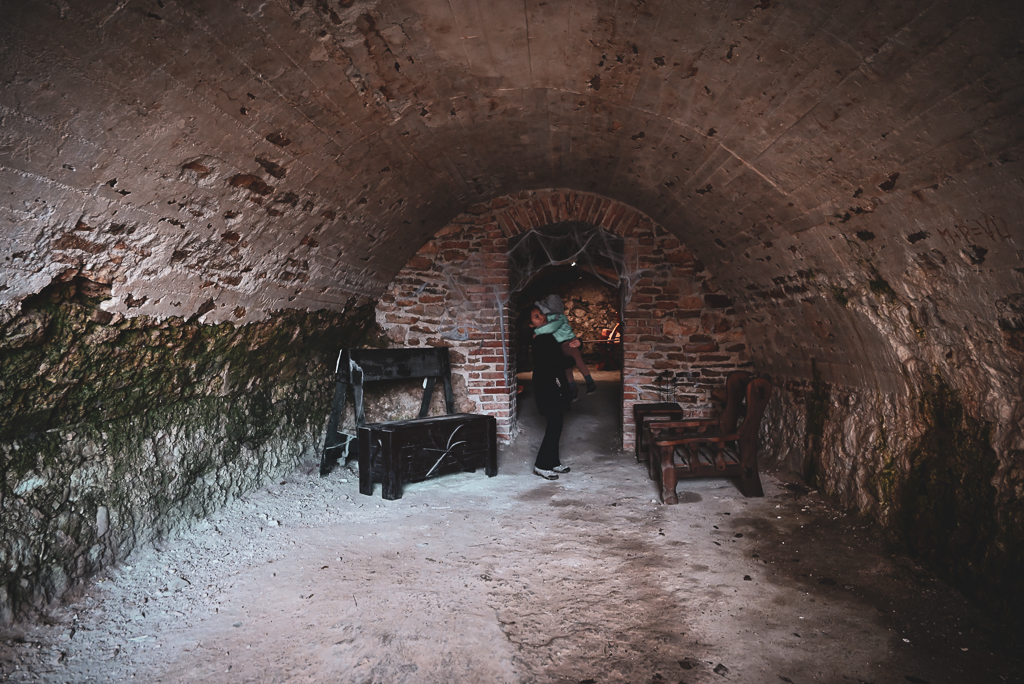
Čachtice castle
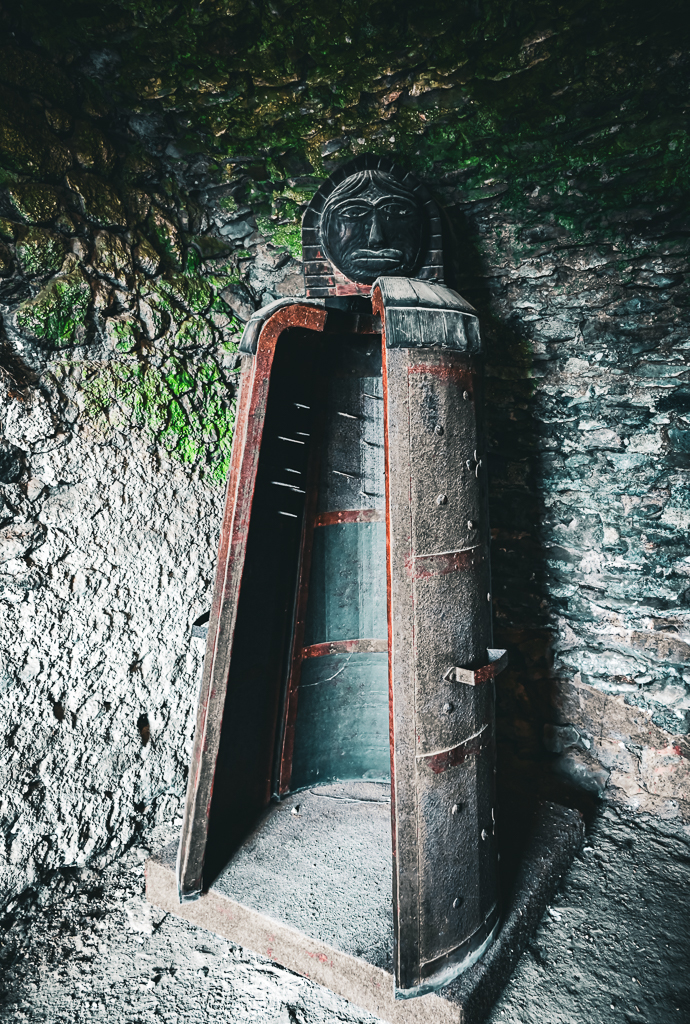
Iron maiden
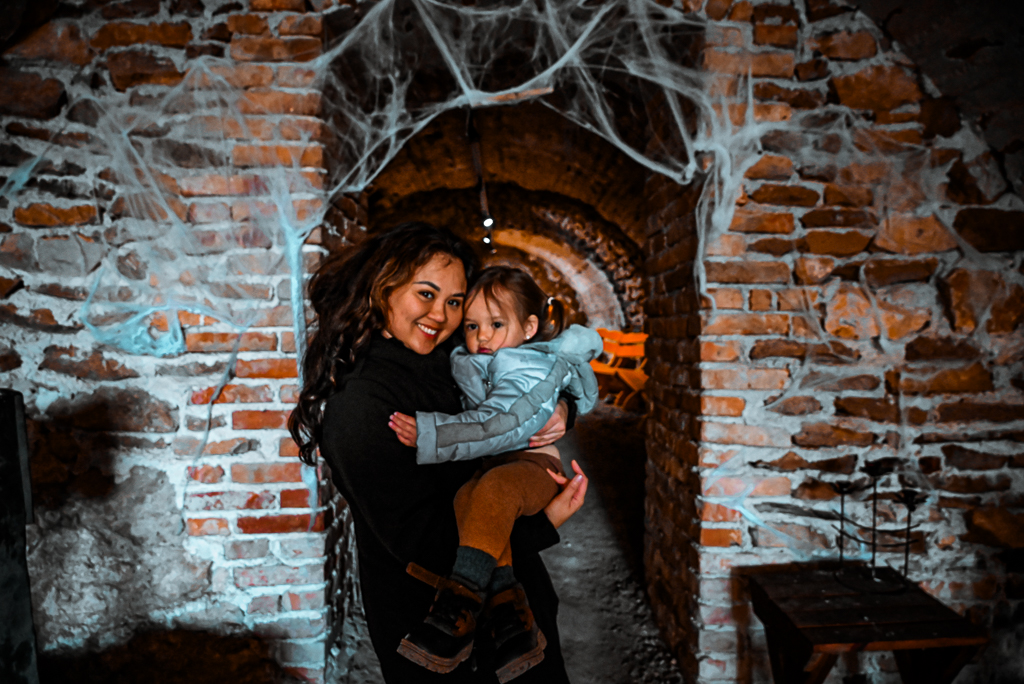
Čachtice
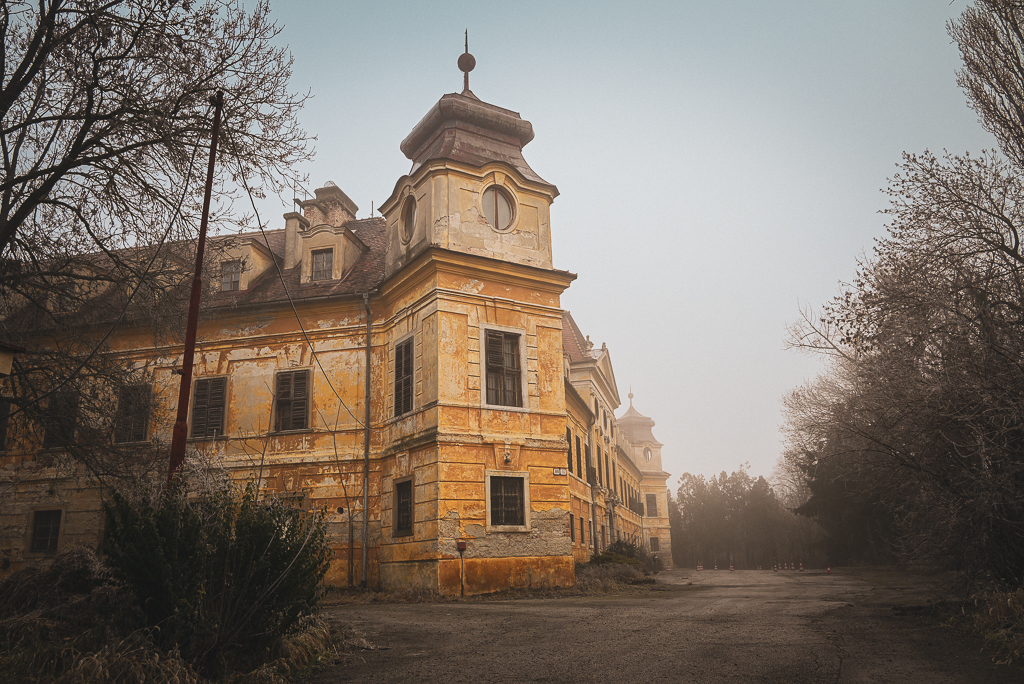
Another castle, Barokovy Castle that we visited on the way back to Bratislava