
Albania: A Country Being Discovered—and Changed
Albania is one of my favorite countries in Europe.
For such a small nation, it packs an extraordinary punch, with dramatic mountains, pristine coastlines, ancient castles, Roman ruins and a fascinating communist history.
Decades under one of the world’s most isolated communist regimes reshaped the landscape with thousands of bunkers, underground tunnels, secret military installations and strange concrete structures that still appear throughout the country.
I first visited Albania in 2008 and was immediately captivated by its rawness and beauty.
Tourists were still scarce, and long stretches of the idyllic Adriatic and Ionian coastlines remained largely undeveloped. Even then, I knew this extraordinary country would eventually be discovered—and that mass tourism and development could change it forever.
That transformation is now well underway.
Albania has experienced record tourism in recent years, with millions of visitors flocking to its beaches as hotels, resorts and apartment buildings spread rapidly along the coast.
One place that may soon change dramatically is Sazan Island.
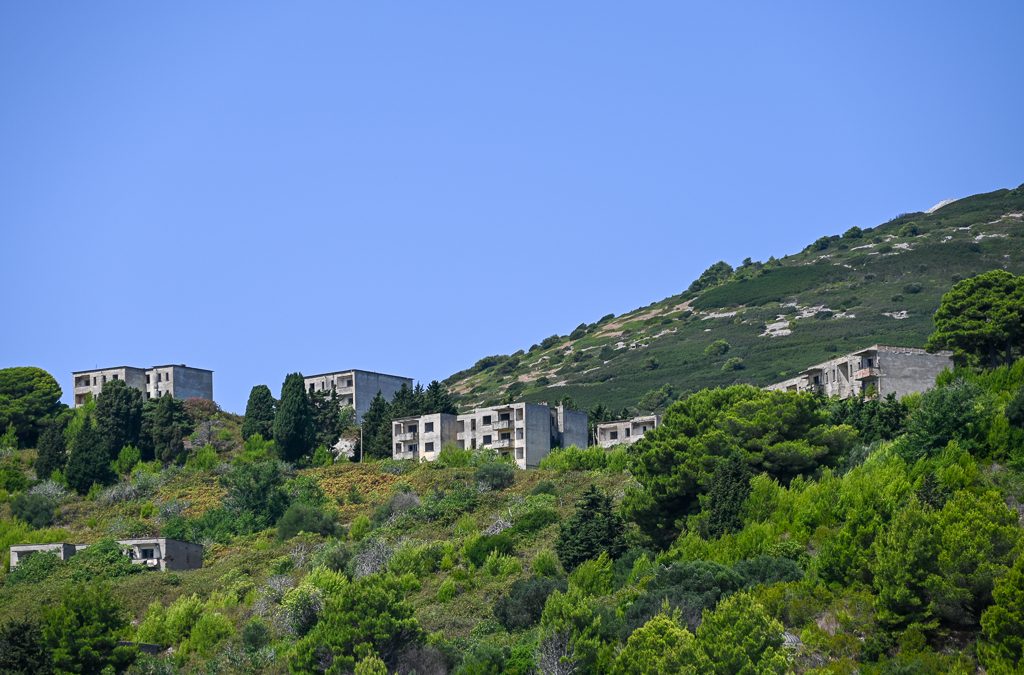
For years, I had wanted to explore this beautiful but mysterious island, once home to a top-secret communist military base. Its abandoned landscape contained miles of tunnels, ammunition-storage facilities, bunkers and crumbling military buildings.
For someone like me who loves exploring abandoned historical places, Sazan Island promised an extraordinary urban-exploration opportunity—a Cold War treasure trove that had remained largely untouched for decades.
Now, access to this historic site could eventually become far more restricted.
A development company associated with Jared Kushner and Ivanka Trump was pursuing plans to build a luxury resort on the island. The proposal had sparked opposition and protests among some Albanians concerned about corruption and its potential environmental and cultural effects.
If the project moved forward, the abandoned military landscape could be transformed forever and even become off-limits.
I therefore decided to route my United Airlines award journey home from the North Pole through Albania. The stop would give me one day to explore Sazan Island while its bunkers, tunnels and abandoned buildings remained accessible.
I wanted to see it before it was too late.
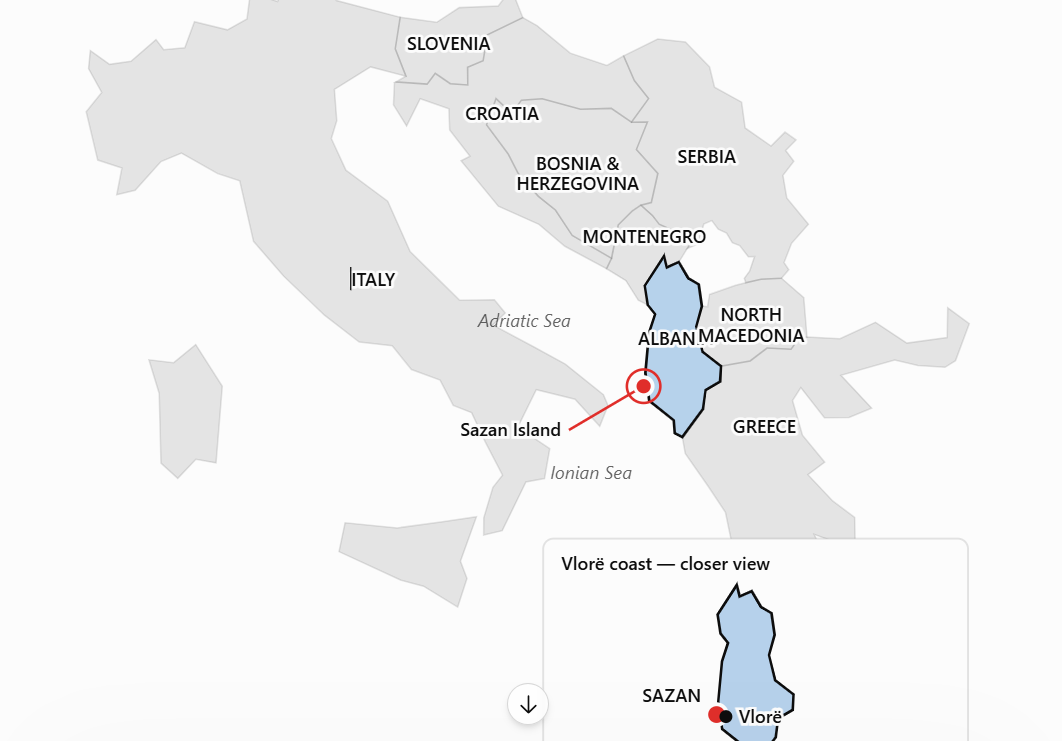
Location of Sazan Island
Getting to Sazan Island
Finding a Way to Explore Alone
I wanted a full day to explore Sazan Island on my own, but every tourist excursion I found online allowed passengers only about 30 minutes on the island—barely enough time to walk around the beach before returning to the boat.
There were no dedicated full-day trips, so I devised my own solution.
I booked two separate round-trip excursions with the same Albanian boat operator: one departing in the morning and another in the afternoon. After coordinating the arrangement with the owner, we agreed that the first boat would drop me off on Sazan and the second would collect me later that day.
This would leave me alone on the island for the better part of a day—exactly what I wanted.
It also introduced several risks. Cellphone reception was unreliable in the island’s interior, the July heat would be intense and much of the terrain was exposed. The abandoned tunnels and military structures could also be confusing and potentially dangerous.
I packed multiple flashlights, plenty of water and basic survival equipment. I also brought string that I could use to mark my route if I entered any complicated tunnels, helping me retrace my steps and find the exit.
Most tourists would see only the beach and the ruins closest to the landing area. I hoped to venture farther into the abandoned military settlement and explore as much as I safely could before my afternoon boat returned.
A Carefully Planned Route Through Albania
To make the early departure possible, I booked a beachfront hotel in Vlorë within walking distance of the pier.
I was scheduled to fly from Istanbul to Tirana aboard Aegean Airlines, a Star Alliance partner. This allowed me to use the lounge during my long layover in Istanbul and book the journey as part of my United Airlines mileage ticket home, continuing from Tirana through Rome and eventually back to San Diego.
The plan seemed perfect.
Then bad weather struck Istanbul.
My departure was delayed long enough that I would miss my connection in Athens to Tirana. Losing that connection threatened more than my hotel reservation. If I reached Vlorë too late—or not at all—I could also miss my carefully arranged morning boat to Sazan Island.
Fortunately, the airline transferred me to a nonstop Turkish Airlines flight to Tirana. Possibly because of my United Premier Gold status, I was also given a complimentary upgrade to business class.
After days of delays, canceled tickets and uncomfortable travel, the unexpected upgrade was a welcome surprise.
A Very Different Albania
My taxi driver met me at Tirana International Airport that evening.
The moment I emerged from the terminal, I was overwhelmed by the crowds and chaos created by Albania’s rapidly growing tourism industry. The airport was packed with arriving visitors, drivers and tour groups moving in every direction.
It felt completely different from the Albania I remembered from my previous two visits.
When I first came in 2008, foreign tourists were still relatively scarce. Now the country appeared to be surging in popularity, and the crowded airport offered immediate evidence of how dramatically Albania had changed.
From Tirana, the drive to Vlorë took several hours.
By the time I reached my hotel, I was exhausted. It was my first proper opportunity to sleep in nearly two days since leaving the icebreaker in Murmansk.
I collapsed into bed knowing that the rest would be brief.
Early the following morning, I needed to wake up, walk to the pier and board the boat that would leave me alone on Sazan Island.
A Beautiful Morning—and Bad News
I rose early the following morning and walked toward the pier.
The Bay of Vlorë looked beautiful in the morning light, and the calm Mediterranean water sparkled beneath a clear sky. After all the difficulties of reaching Albania, everything finally seemed to be working in my favor.
I felt good about the day ahead.
That changed as soon as I checked in with the boat captain.
To my surprise, he told me that the afternoon excursion would probably be canceled. The wind was expected to strengthen considerably later in the day, possibly reaching 30 miles per hour and producing seas too rough for the small tourist boat.
He asked me to abandon my plan to remain on Sazan and instead return aboard the morning boat.
I was deeply disappointed. I had carefully booked two excursions precisely so I could spend most of the day alone on the island. Now, despite all that planning, the approaching weather had eliminated my afternoon ride back.
If I had possessed more than one full day in Albania, I would have postponed the trip and tried again when the weather improved. My flight home, however, was already booked for the following day. This was my only opportunity.
Reluctantly, I agreed to return with the morning group.
Ninety Minutes on Sazan
The captain understood how important the island was to me and offered a compromise.
Although the other passengers had expected to remain on Sazan for only about 30 minutes, he extended our stop to approximately an hour and a half. It was far less than the full day I had planned, but it was enough to give me a fighting chance.
The moment we landed, I raced away from the beach and headed uphill toward the abandoned military settlement.
There was no time for a slow or methodical exploration. I had to choose whatever I could reach quickly while constantly watching the clock. During those precious 90 minutes, I managed to explore several deteriorating buildings, an abandoned school and some of the bunkers left behind by Albania’s communist military.
I could see that far more remained hidden across the island—additional buildings, gun positions and tunnels that I would not have time to reach. The survival equipment, extra water and string I had carried for a long solitary expedition were mostly unnecessary now.
Still, I had made it to Sazan Island, and I was determined to see as much as possible before the boat departed.
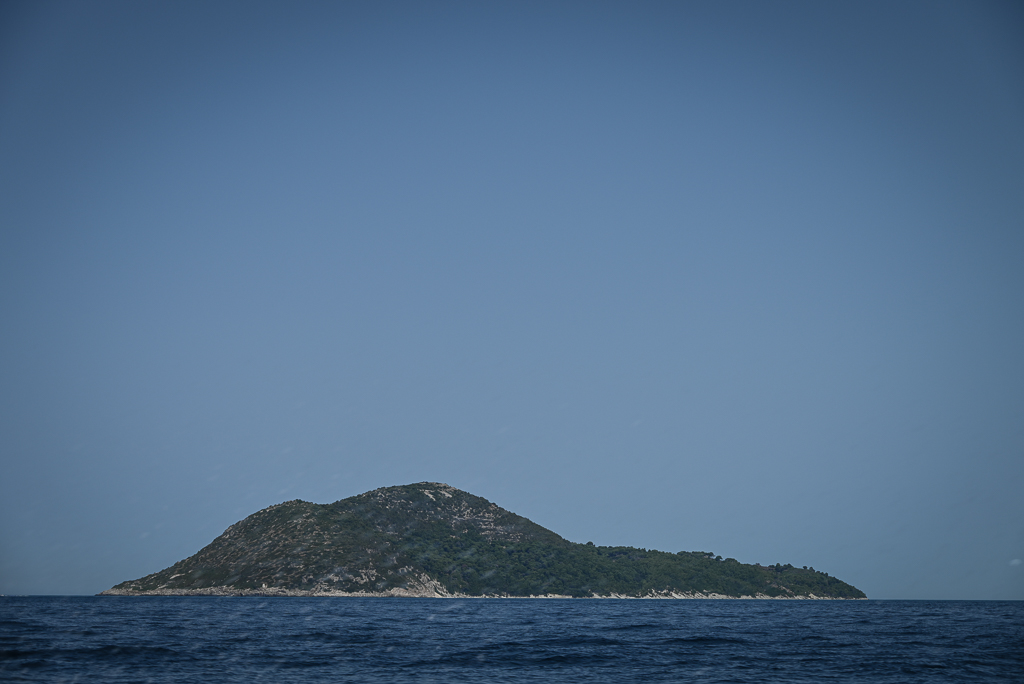
Sazan Island
Racing Into Sazan’s Interior
We traveled to Sazan Island aboard a small, uncovered boat with a group of tourists from several European countries.
The crossing took approximately 40 minutes. The sea remained calm, and along the way we watched dolphins leap from the sparkling Mediterranean water. After learning that the afternoon wind would destroy my carefully planned day, the dolphins felt like a welcome change of fortune.
As soon as we reached Sazan, I jumped from the boat with no time to spare.
As expected, almost everyone else headed directly to the beach. None of the other passengers appeared interested in climbing into the island’s interior to explore the abandoned communist ruins.
I understood their decision. The idyllic pebble beach and clear turquoise water made a beautiful place to swim, and for most visitors, the beach was Sazan’s primary attraction. Its natural beauty was also an obvious reason that the proposed luxury resort associated with Ivanka Trump and Jared Kushner had generated so much interest.
However, I imagined that the island’s abandoned military landscape might also become part of the resort’s appeal. Modern luxury travelers often want more than beautiful rooms and private beaches—they want a story, an atmosphere and a distinctive theme. Sazan’s mysterious Cold War past could provide all three.
For me, the ruins had always been the main attraction.
Once ashore, I realized that the island was much larger and more mountainous than I had expected. Its highest point rose more than 1,000 feet above the sea, and many of its abandoned military installations, bunkers and tunnels were scattered far into the rugged interior.
With only about 90 minutes available, I knew that I would reach only a small fraction of them.
An active Albanian military facility remained near the landing area, surrounded by signs prohibiting trespassing and photography. I kept well away from the restricted buildings and headed directly toward the abandoned settlement farther uphill.
Then I began to run.
Every minute I spent near the beach was one less minute inside the ruins, and I had crossed half the world for the chance to explore them.
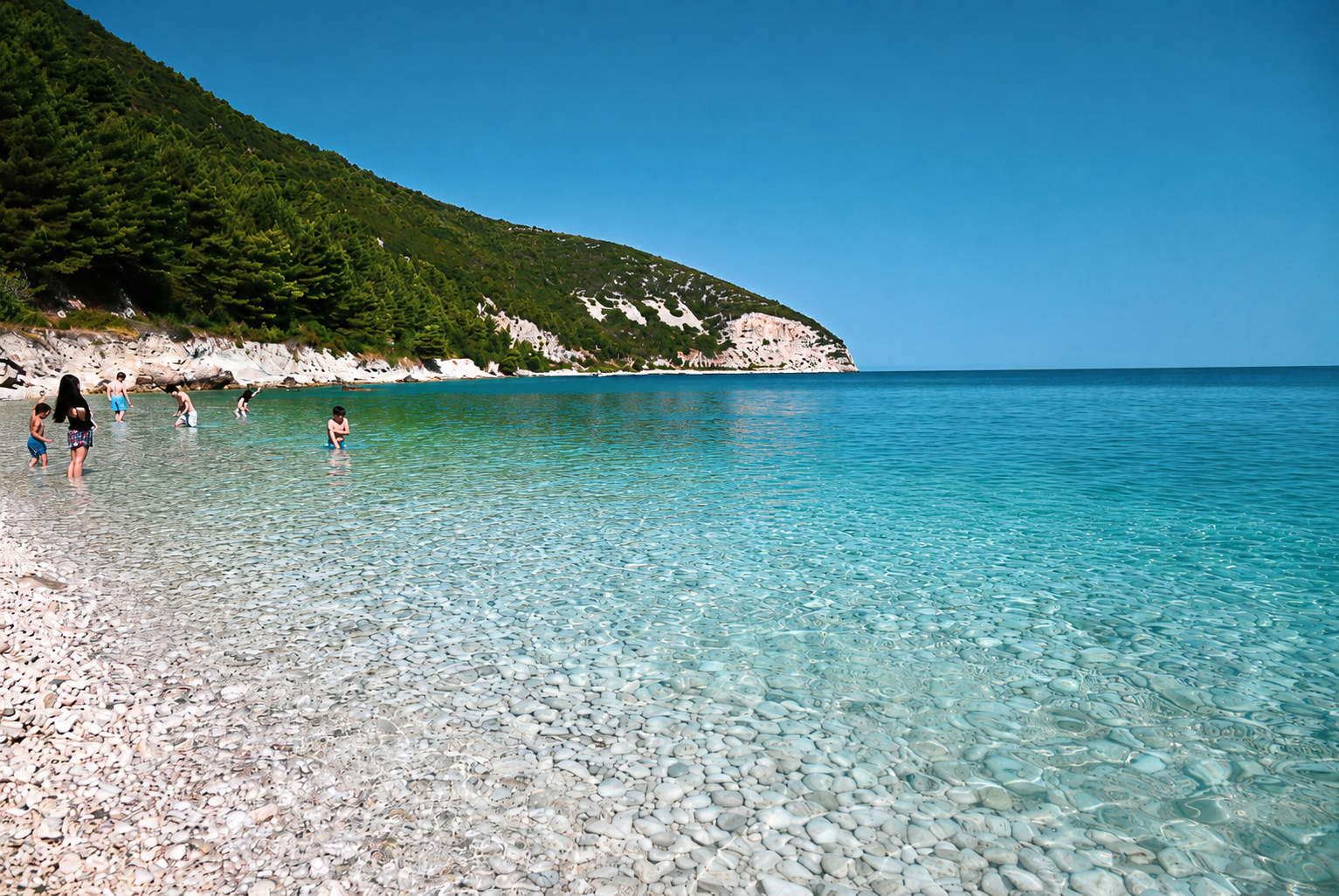
Sazan Island Beach
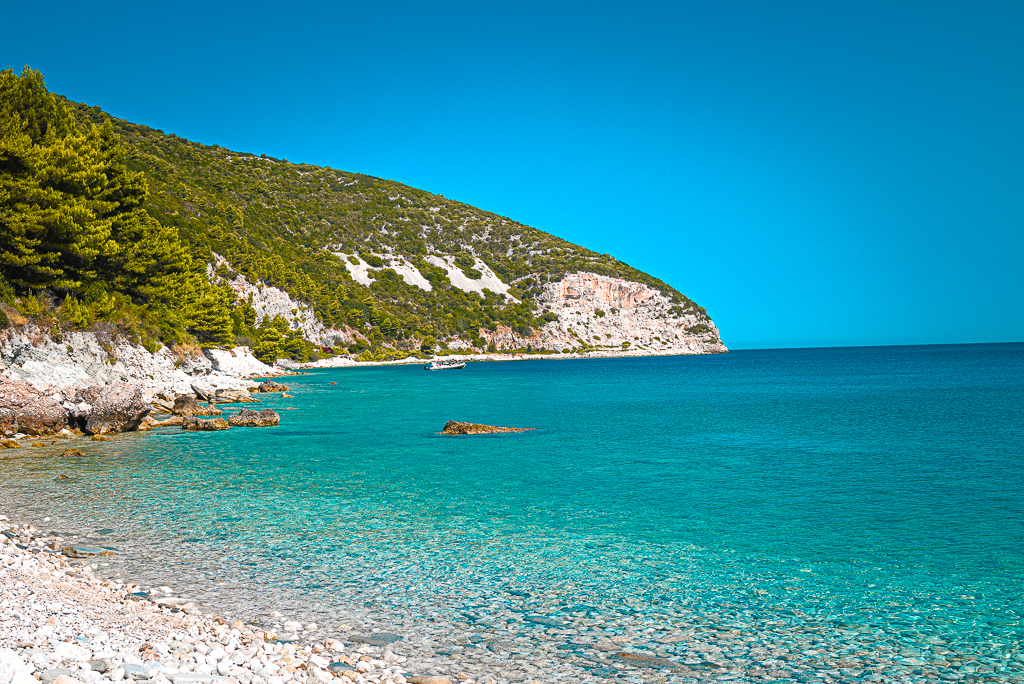
Sazan island Beach
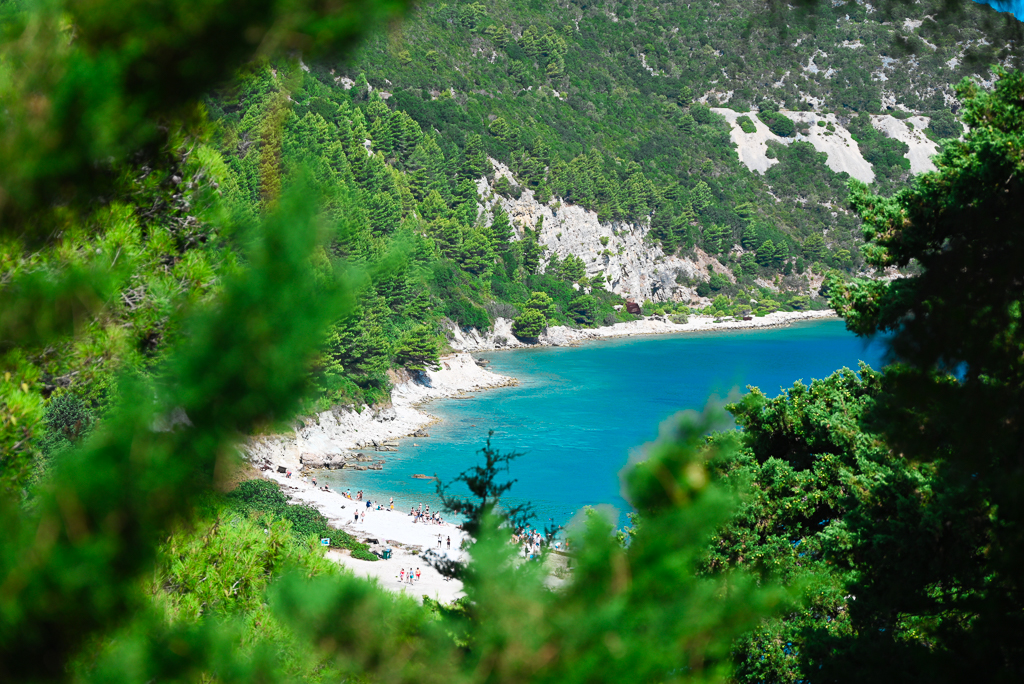
View of beach from uphill
Bunkers and the Flamingo Revolution
The first thing I noticed as I climbed away from the beach was the sheer number of concrete bunkers scattered across the island.
They were part of a much larger network constructed throughout Albania under communist dictator Enver Hoxha. Convinced that his isolated country might be invaded by NATO, Yugoslavia or even the Soviet-led Warsaw Pact, Hoxha prepared the entire population to resist an attack through a doctrine of “people’s war.”
During Albania’s early alliance with the Soviet Union, the Bay of Vlorë became an important base for Soviet submarines, and Sazan helped guard the strategic entrance to the bay. When Hoxha broke with Moscow in the early 1960s, the former allies became potential enemies. Albania retained several Soviet submarines, expelled Soviet personnel and increasingly fortified its coastline against an invasion that never came.
Across the country, hundreds of thousands of bunkers were eventually constructed so ordinary Albanians could supposedly help defend every beach, village, mountain pass and city. The enormous program consumed scarce resources in one of Europe’s poorest countries, yet none of the bunkers was ever used to repel a foreign army.
Decades after the collapse of communism, these concrete eyesores remain almost everywhere. Their reinforced shells are so strong, heavy and expensive to remove that many have simply been abandoned where they were built.
Sazan appeared to contain an extraordinary concentration of them.
Some of the bunkers I passed had recently been spray-painted with the words “Flamingo Revolution.” The name referred to the protest movement that had emerged in opposition to the Kushner-backed developments planned for Sazan and the ecologically sensitive coastal area around the Narta Lagoon, an important habitat for flamingos and other migratory birds.
What began as resistance to the resort proposals had grown into a much broader expression of anger toward the Albanian government. Protesters accused Prime Minister Edi Rama’s administration of corruption, environmental destruction and allowing valuable public land and natural resources to be transferred to wealthy private developers.
The son of my hotel’s owner in Vlorë told me that he had participated in the demonstrations. To him, the Sazan controversy represented only part of a much larger problem. He blamed the government for rising costs, unemployment and what he saw as the steady sale of Albania’s natural resources and public spaces.
I could not independently judge every accusation he made, but his frustration was unmistakable.
The graffiti transformed the bunkers into something more than abandoned remains of the communist era. Structures originally built to defend Albania from foreign powers were now being used as canvases by Albanians who believed their country once again needed protection—this time from corruption, uncontrolled development and the loss of its natural heritage.
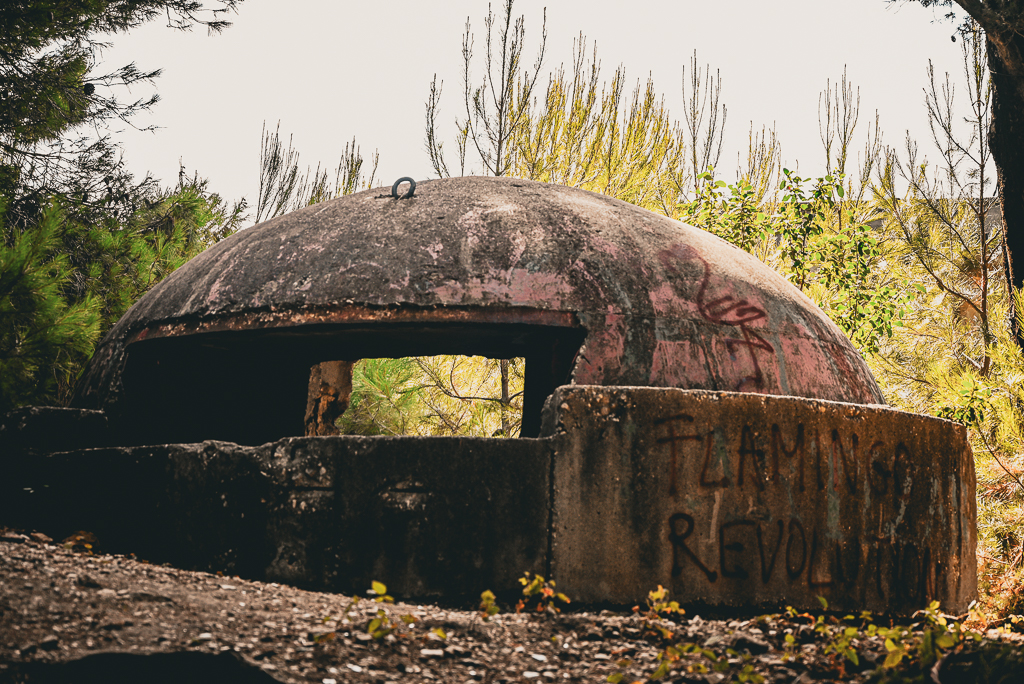
Bunker with Flamengo Revolution Spray Painted on it
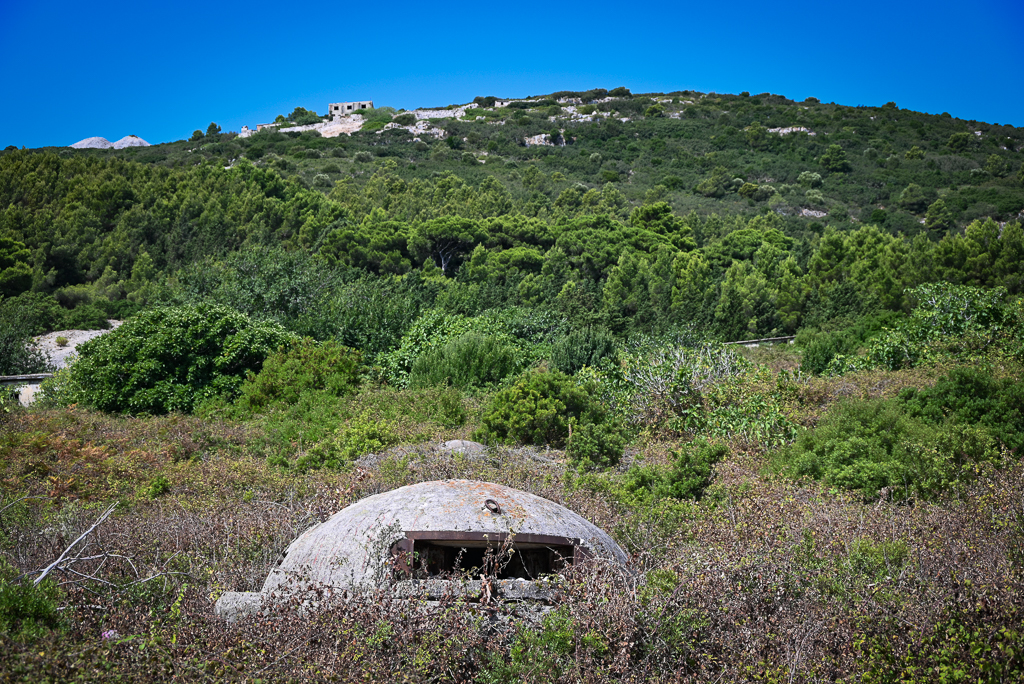
Bunker
Alone Among the Ruins
As I had anticipated, I had Sazan’s abandoned interior entirely to myself.
I followed overgrown roads once traveled by the soldiers and families who lived inside this top-secret communist military base. Weeds and brush were slowly reclaiming the pavement, but the roads still led uphill toward clusters of concrete buildings scattered across the smaller ridges.
I moved quickly between the ruins, sometimes stepping through collapsed walls to explore their empty interiors. Roofs had fallen in, vegetation grew through cracked floors and almost everything of value had been removed long ago.
The most interesting building I reached was the former school. A few wooden desks remained inside, slowly deteriorating in the silence. They were a reminder that Sazan had been more than a military installation. For years, it had supported an isolated community where soldiers lived with their families and children attended classes far from the rest of Albania.
From there, I could see additional ruins on a larger hill in the distance, including an old hospital and a church dating from the period of Italian control around World War II. I also knew that military tunnels penetrated deep into the hills beyond them.
Those were among the places I had most wanted to explore.
I checked the time and studied the distance. There was no realistic way to reach them, explore safely and return before the boat departed.
After traveling so far, it was painful to see the ruins waiting on the hillside and know that I had to leave them behind. The abandoned roads continued deeper into the island, but my own journey along them had reached its limit.
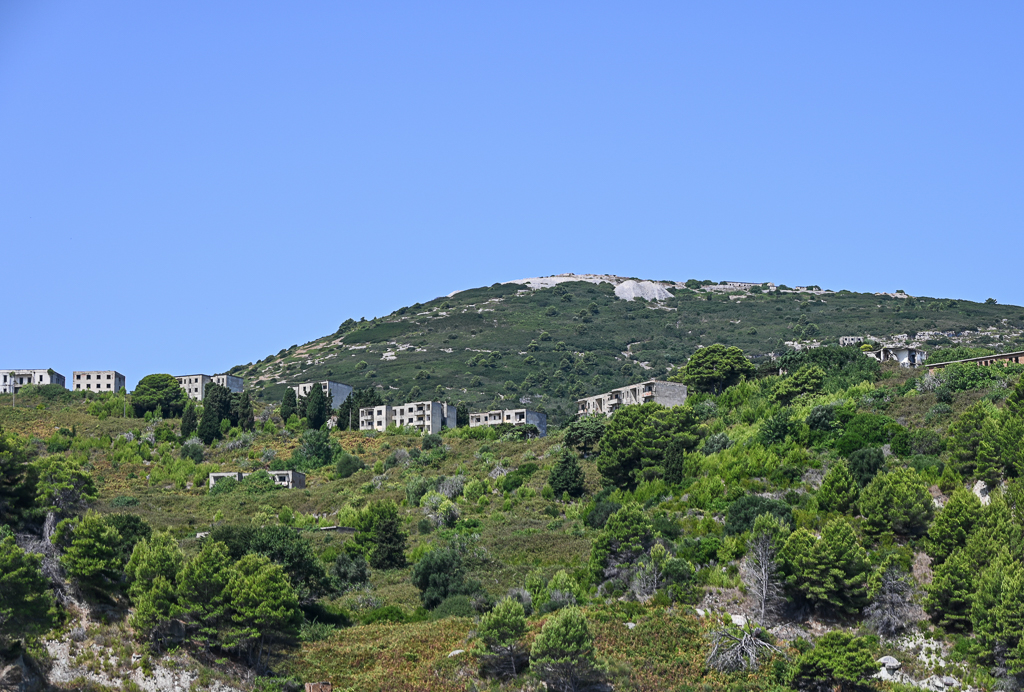
Abandoned Housing blocks
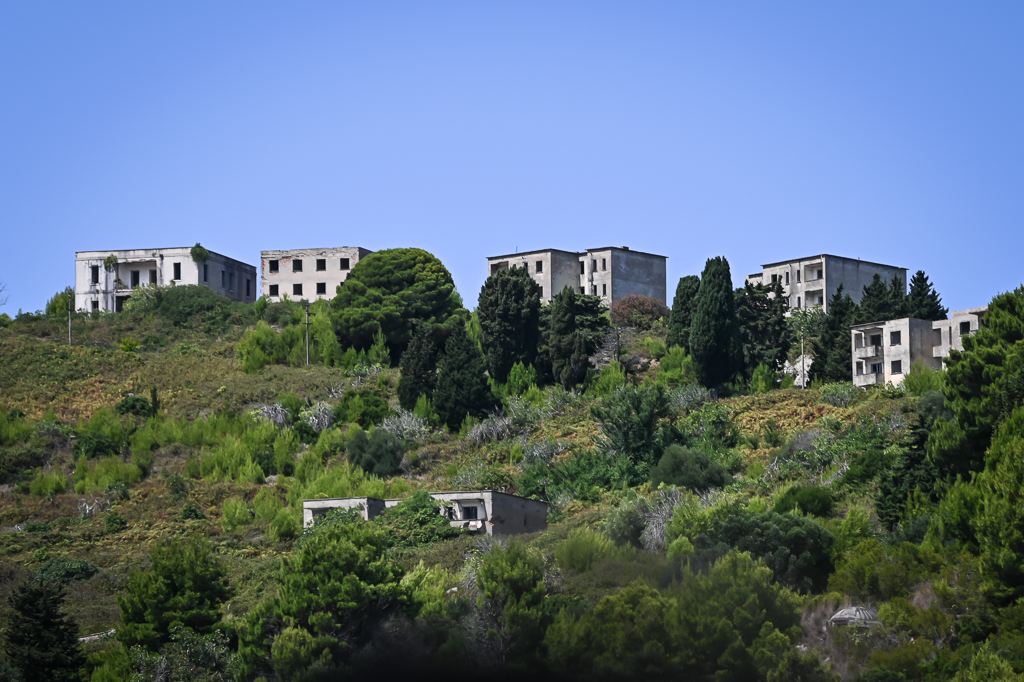
Abandoned Housing blocks
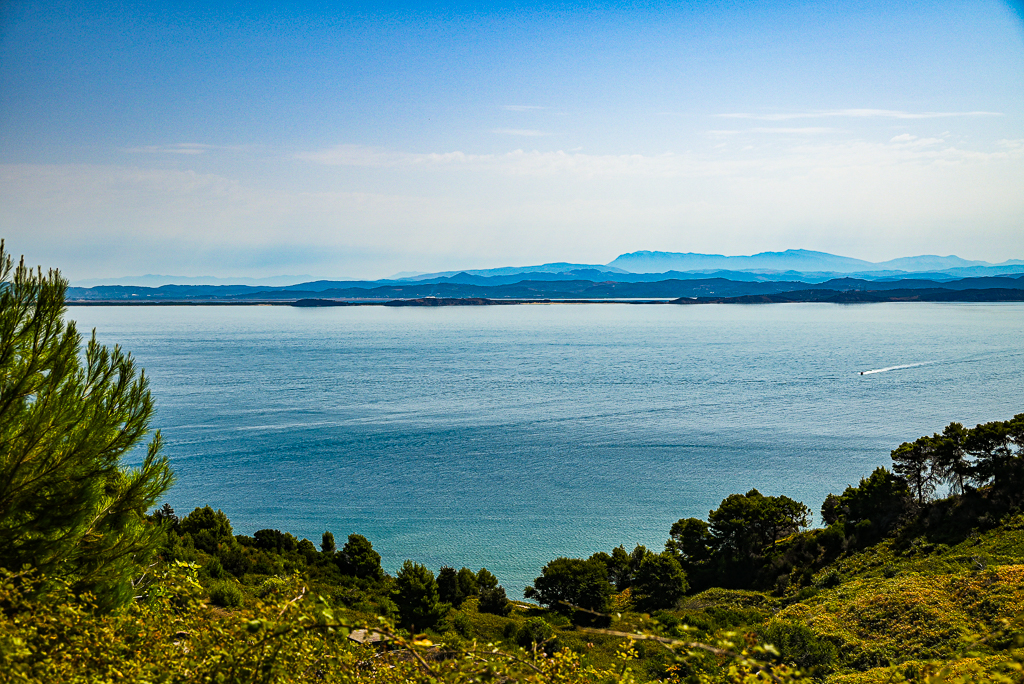
View of ocean from hilltop
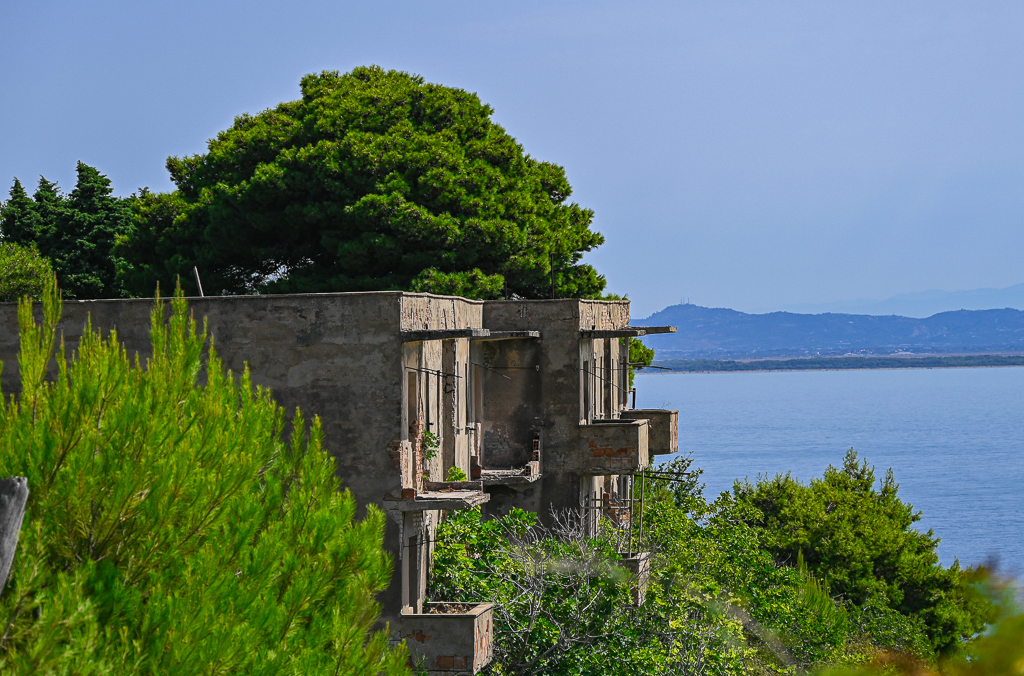
Abandoned Housing blocks
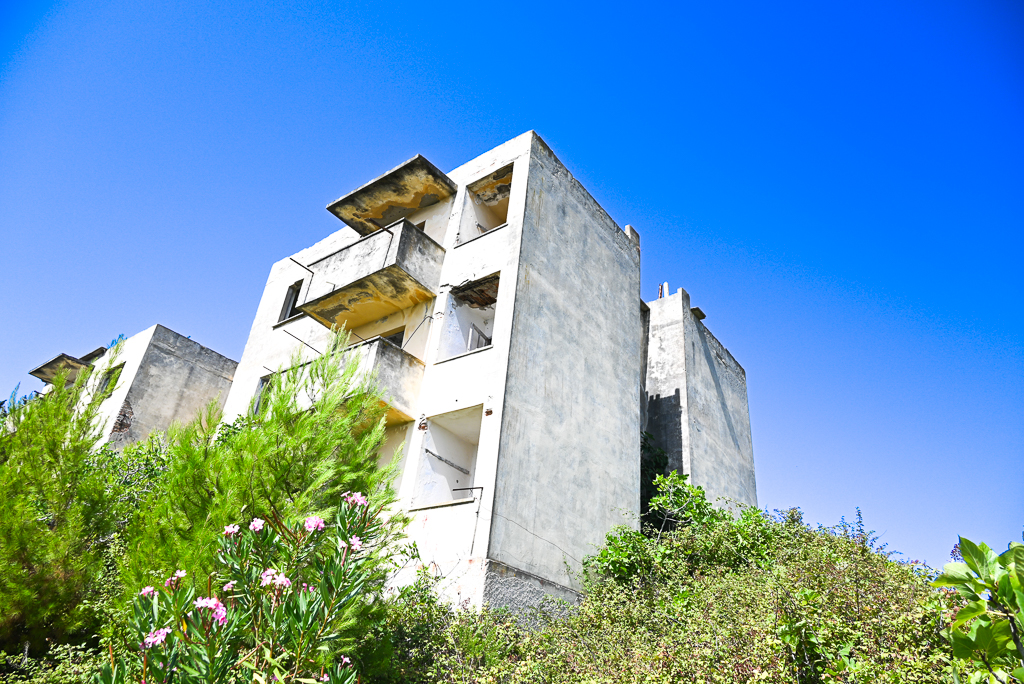
Abandoned Housing blocks
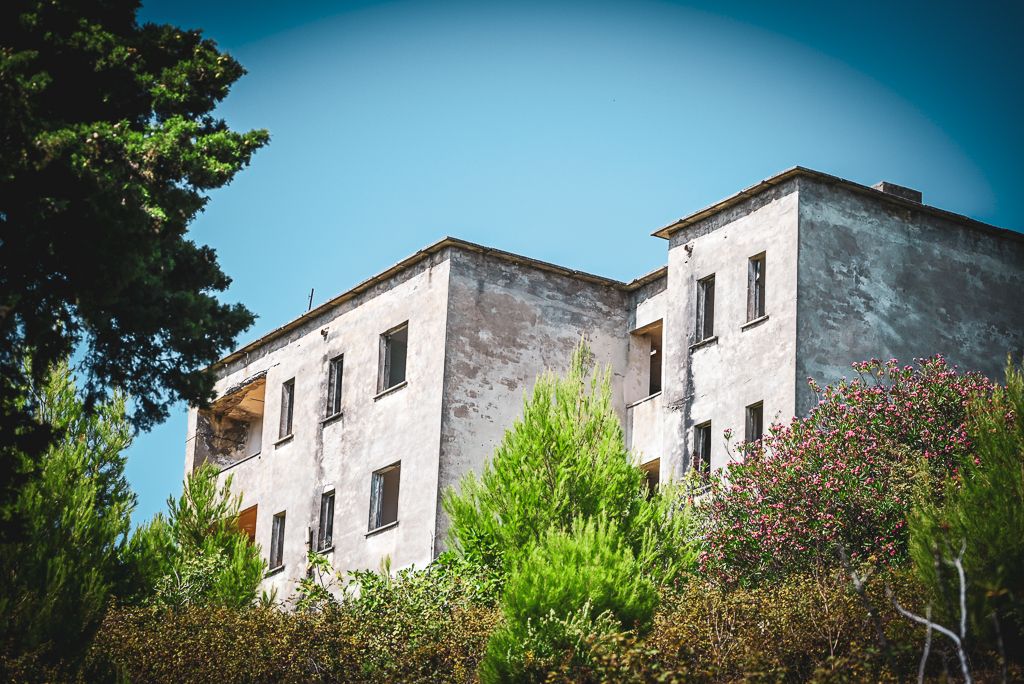
Abandoned Housing blocks
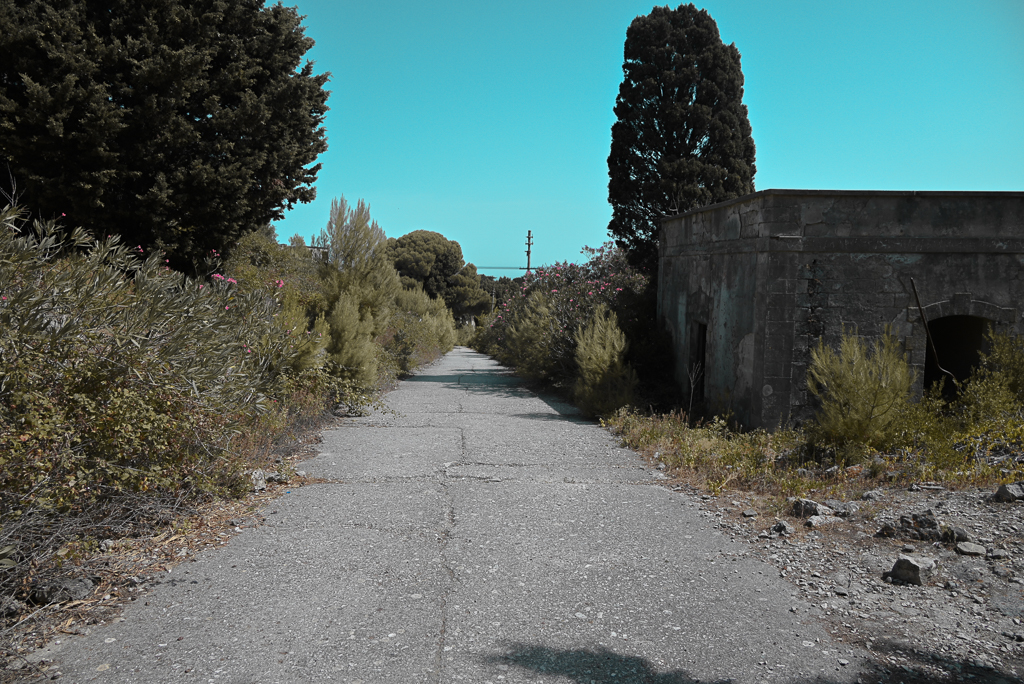
Old overgrown road to island interior
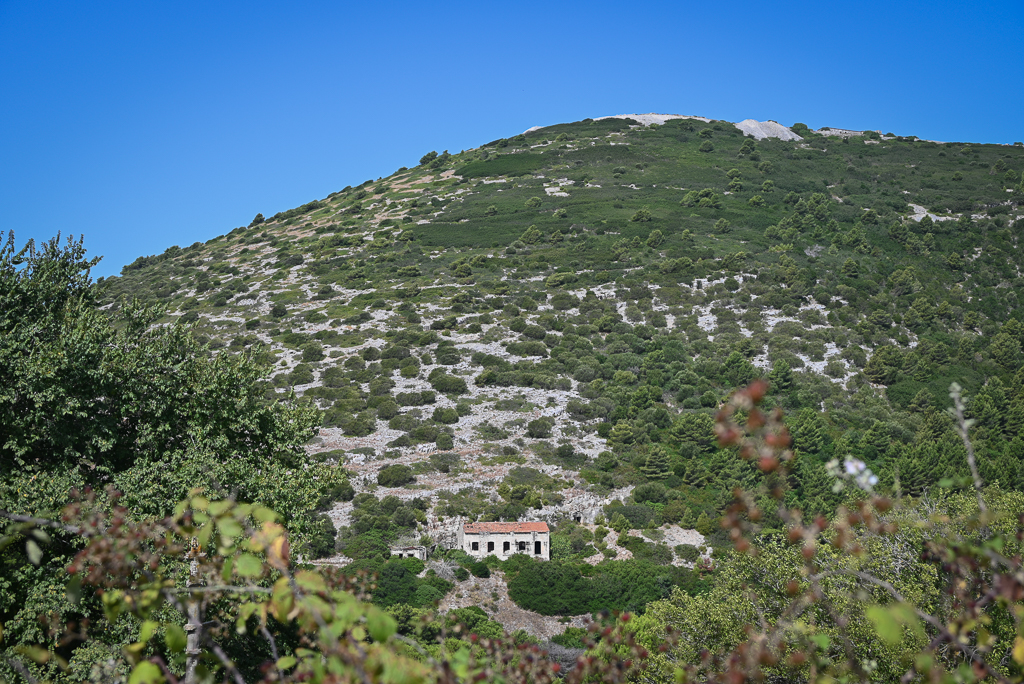
Old Italian church
The Island’s Abandoned School
The abandoned school was one of the most interesting places I explored.
A few old desks remained inside its deteriorating classrooms, and I tried to imagine what life had been like for the children of the soldiers stationed here. They had grown up on an isolated, heavily fortified island that most Albanians were forbidden to visit, surrounded by bunkers, weapons and military secrecy.
For them, however, Sazan had also been home. They attended school, played with friends and lived with their families in a small community separated from the mainland by miles of water.
Even after Albania’s communist government collapsed in the early 1990s and the military presence declined, a small number of residents reportedly remained. Eventually, they also departed, and Sazan was left without a permanent civilian population.
The island’s isolation and limited supply of fresh water made ordinary life difficult. Everything needed to support the community had to be transported across the sea, and once the military no longer required thousands of people to live there, there was little reason for families to remain.
The empty desks seemed especially haunting. Unlike the bunkers and ammunition facilities, the school revealed the human side of Sazan’s history—the children whose lives had unfolded inside one of communist Albania’s most secretive military strongholds.
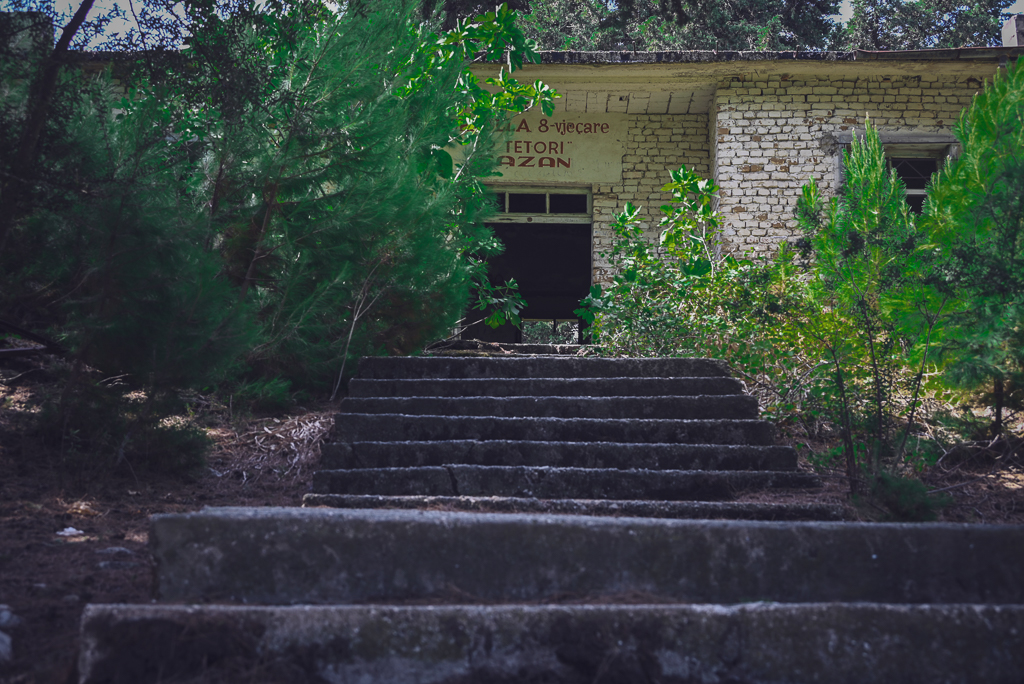
School
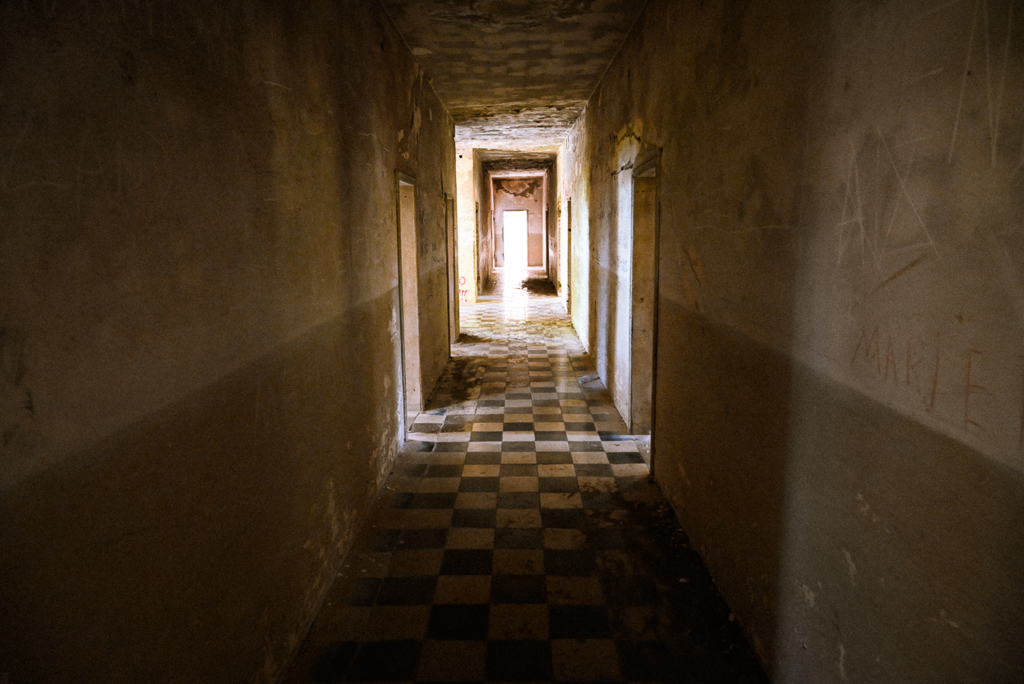
Hallways of school
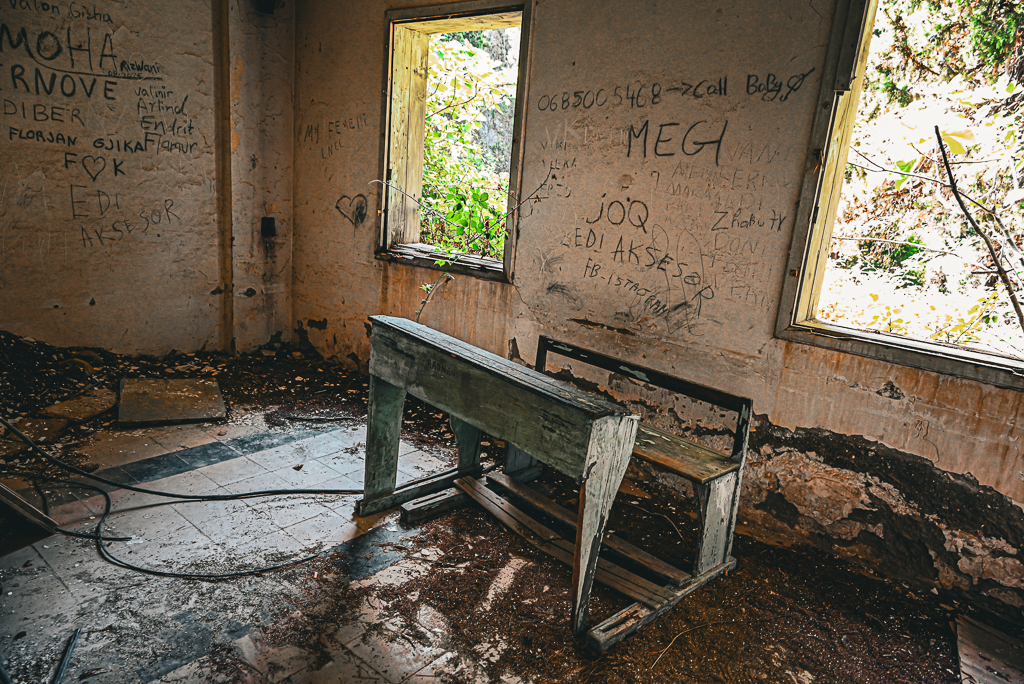
Old school desk
Making the Most of the Tour
Sazan was only one part of the day’s excursion.
After leaving the island, our boat continued to the nearby Haxhi Ali Cave Sea Cave, one of the largest in Albania, before carrying us to the Karaburun Peninsula. We spent approximately four hours there, surrounded by clear water that was ideal for swimming.
It was a beautiful place, but my thoughts remained with Sazan and everything I had been forced to leave unexplored.
The day had not unfolded as planned. Instead of spending hours wandering alone through abandoned military installations and underground tunnels, I had been given 90 frantic minutes to race through a small portion of the island.
It was frustrating—but with deteriorating weather, a fixed flight home and no additional day available, it was the best opportunity I was going to get.
Sometimes travel requires careful planning.
Other times, it requires accepting that even the best plan can be destroyed by the wind.
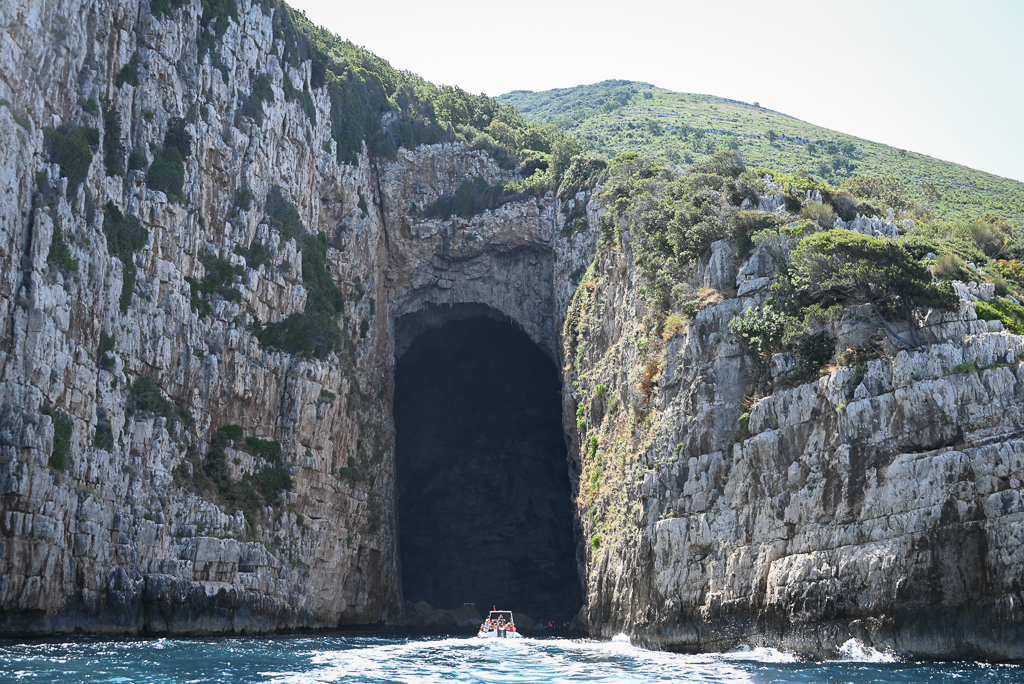
Haxhi Ali Cave Sea Cave
A Private Corner of Karaburun
After leaving Sazan, we continued toward the Karaburun Peninsula, a beautiful stretch of largely undeveloped coastline with miles of rugged cliffs, secluded coves and sparkling Mediterranean water.
The boat dropped us at a crowded beach filled with other tour boats, rows of umbrellas and busy cafés. It was pleasant, but it was not the remote coastal experience I wanted.
While the other passengers settled around the main beach, I followed a small dirt road in the opposite direction. Before long, the crowds disappeared, and I found my own quiet stretch of coastline with no one else around.
An abandoned dock extended over the clear water. I jumped from it into the sea and swam above schools of colorful fish moving through the blue water below.
For a while, it felt like I had discovered my own private corner of the Albanian coast.
It was heaven.
Still, as beautiful as Karaburun was, part of me remained frustrated. I had been given four hours to swim on the peninsula but only 90 minutes to explore the place I had traveled to Albania specifically to see.
I could not help wishing that more of those hours had been mine to spend among the abandoned ruins and tunnels of Sazan Island.
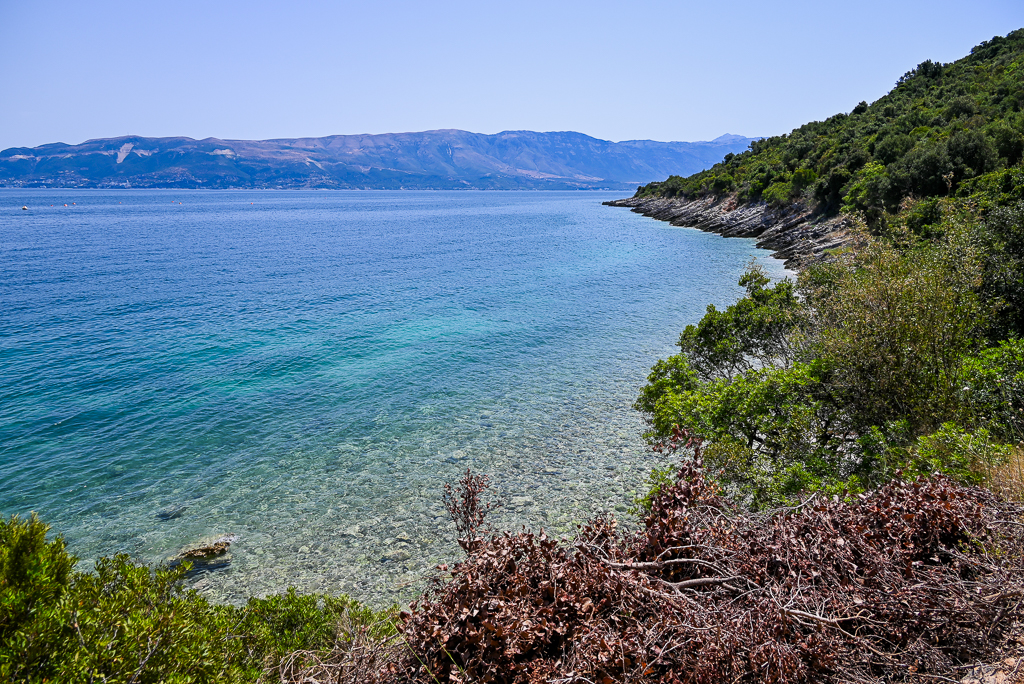
Karaburun Peninsula
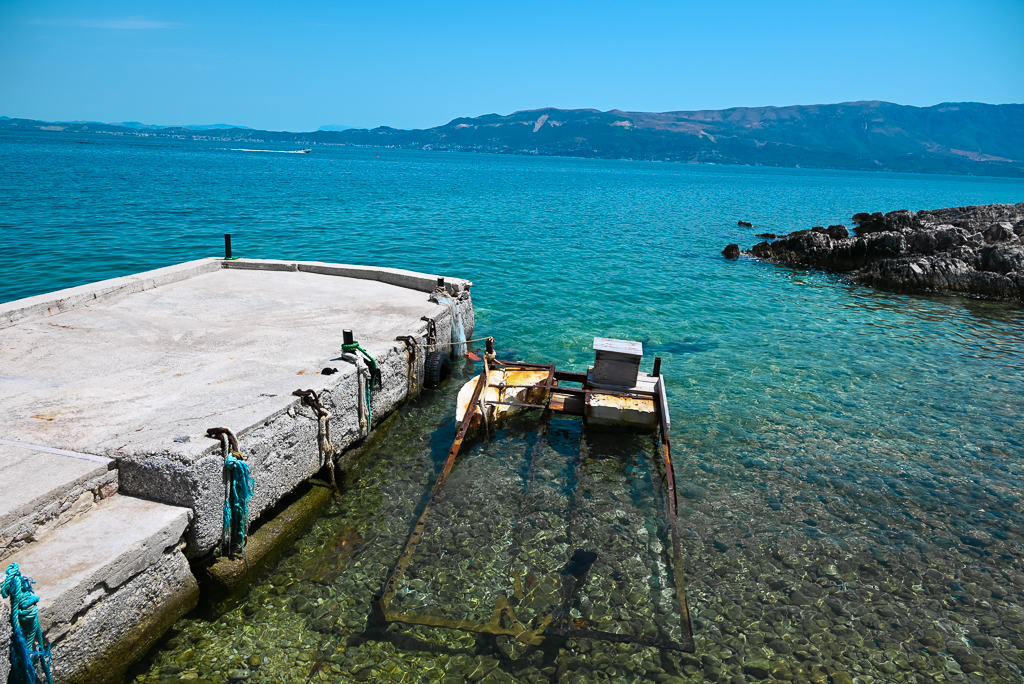
Karaburun Peninsula
A Rough Ride Back to Vlorë
By the time we left Karaburun, the captain’s weather prediction had proved correct.
The wind had strengthened, the sea had become dangerously rough and boats scheduled to visit Sazan that afternoon were being canceled because they could no longer land safely on the island. As disappointed as I had been that morning, I now understood why the captain had refused to leave me there.
Our return to Vlorë was bumpy, wet and considerably slower than the outward journey. To avoid the worst of the open water, the captain kept the small boat close to the coastline, turning what had been a 40-minute crossing into a tense journey lasting approximately an hour.
Waves repeatedly struck the uncovered boat, spraying everyone with seawater as we rose and fell across the swells. At times, the boat tilted and crashed down so violently that I worried it might flip.
I asked the captain where the life jackets were stored and urged him to tell the other passengers, just in case we ended up in the water.
Reaching Vlorë did not immediately end the danger. Waves were crashing against the dock, causing the boat to lurch away each time the captain tried to bring it alongside. There was no opportunity for an orderly landing.
We had to move quickly.
One by one, we waited for the brief moment when the boat rose beside the dock, then scrambled ashore as fast as possible before the next wave pulled it away again.
Only after my feet were safely on the dock did I fully appreciate how fortunate I had been. Had I remained alone on Sazan as planned, the afternoon boat would never have arrived to collect me.
The decision that had ruined my day may also have prevented me from being stranded overnight on an abandoned military island.
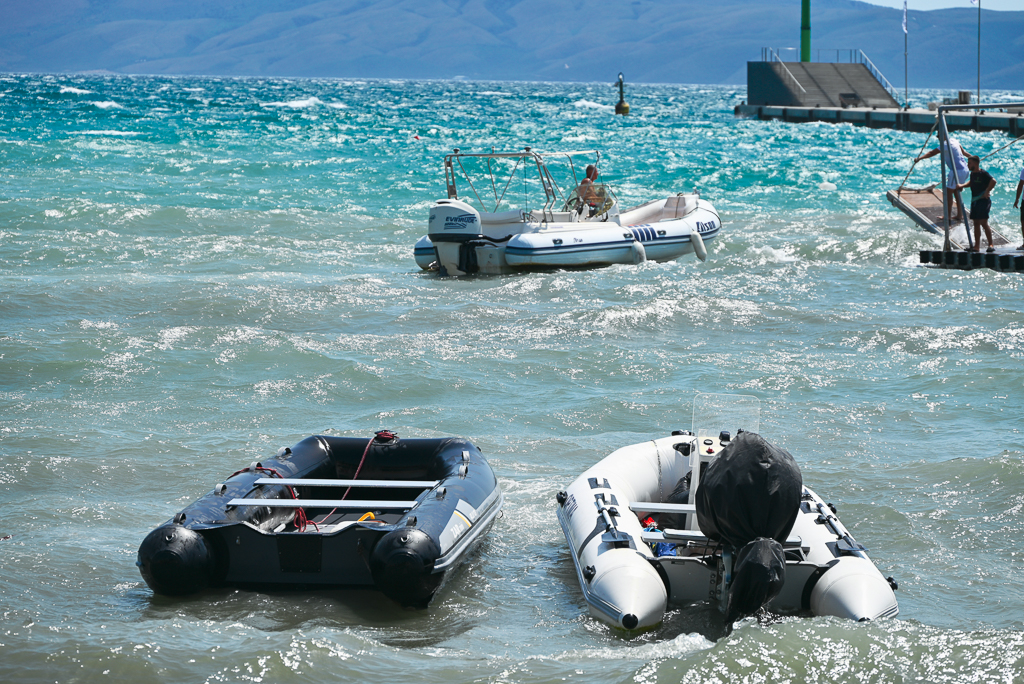
Rough seas
Eight Hours Trapped on the Runway
The greatest travel ordeal of the entire journey came during my flight home from Rome.
Storms around Chicago prevented our aircraft from landing at O’Hare, forcing us to divert to Minneapolis–Saint Paul.
After an already long transatlantic flight, we remained trapped aboard the aircraft on the runway for approximately eight additional hours. I repeatedly asked to leave the plane, but the passengers were not allowed to disembark.
I no longer wanted to continue to Chicago. I wanted to get off the aircraft in Minneapolis and find another way home, but that option was not given to me.
By the time a replacement crew arrived and we finally continued to Chicago, I had missed my connecting flight to San Diego. Widespread weather disruptions had left me without another confirmed way home, so I spent the night sleeping on the airport floor.
After being separated from Paula and Indie for nearly three weeks, sleeping inside another airport while waiting for an uncertain flight was the last thing I wanted to do.
Scrambling for a Way Home
The following morning, I scrambled like hell to find a way home.
Flights were full, passengers were stranded throughout the airport and every available seat seemed to have someone competing for it.
I eventually secured a seat on a United standby flight to San Diego. My United Premier Gold status probably helped move me high enough on the standby list to make that possible.
When I finally boarded, the relief was overwhelming.
At last, I was going home.