
Ending the Journey in Turkey
February 2026: As part of an almost three-week trip across Eastern Europe, Egypt, and Saudi Arabia with my family, we decided to end our journey by visiting Turkey for a few days before heading home.
In hindsight, it was an ambitious plan. We had packed a lot into a short period of time, but at the time, finishing in Cappadocia felt like the perfect way to end on a high note. It was also our first time visiting Turkey as a family, which made it feel even more meaningful.
We planned three nights—two in Istanbul and one in Göreme in Cappadocia, staying in one of the region’s famous cave hotels carved into soft volcanic rock.
Cappadocia: Our Main Goal in Turkey
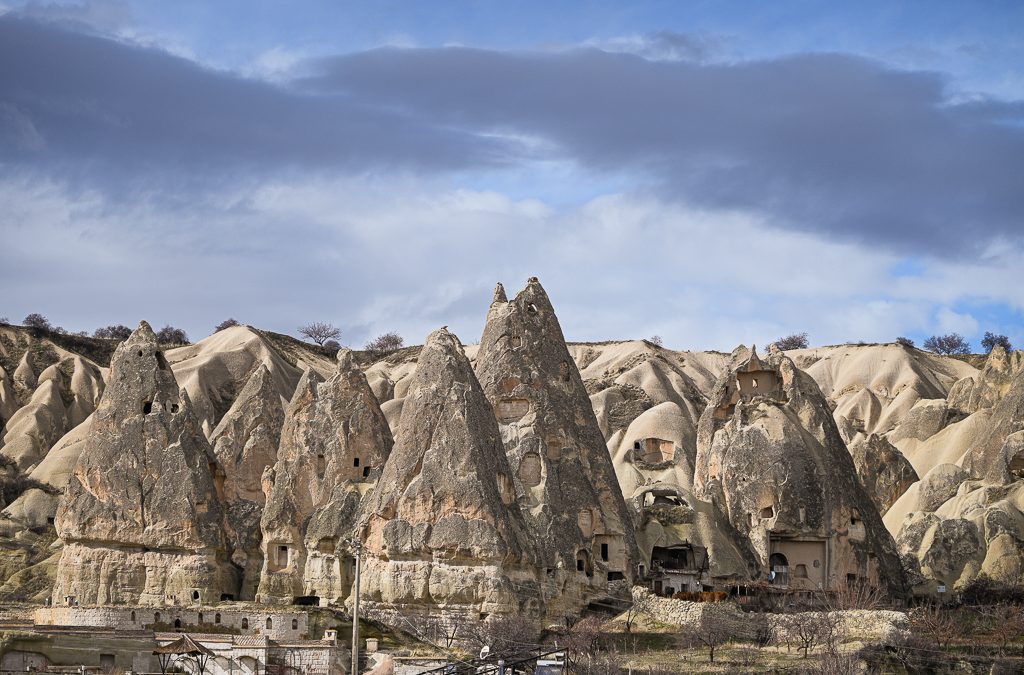
Across the valleys and hillsides, entire communities were carved directly into the soft rock. Many of these cave homes and underground tunnel systems were used by some of the earliest Christians more than 1,500 years ago, who lived in hiding from their enemies.
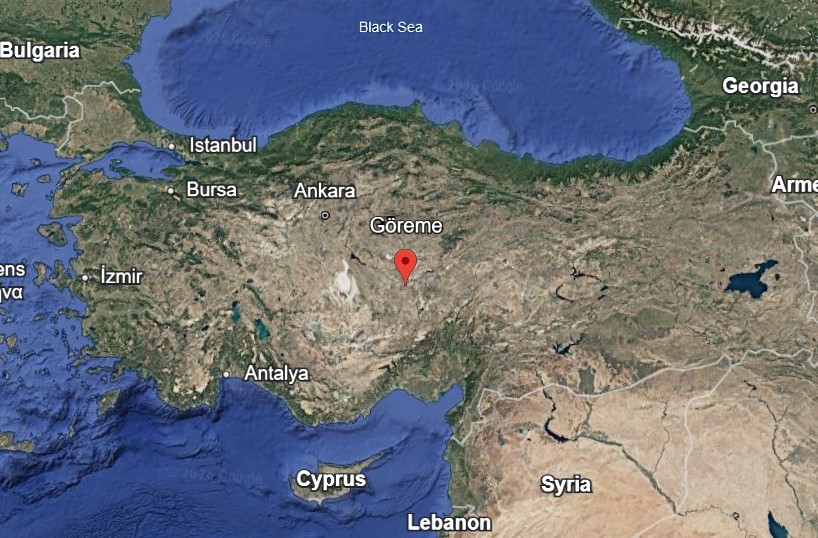
Cappadocia
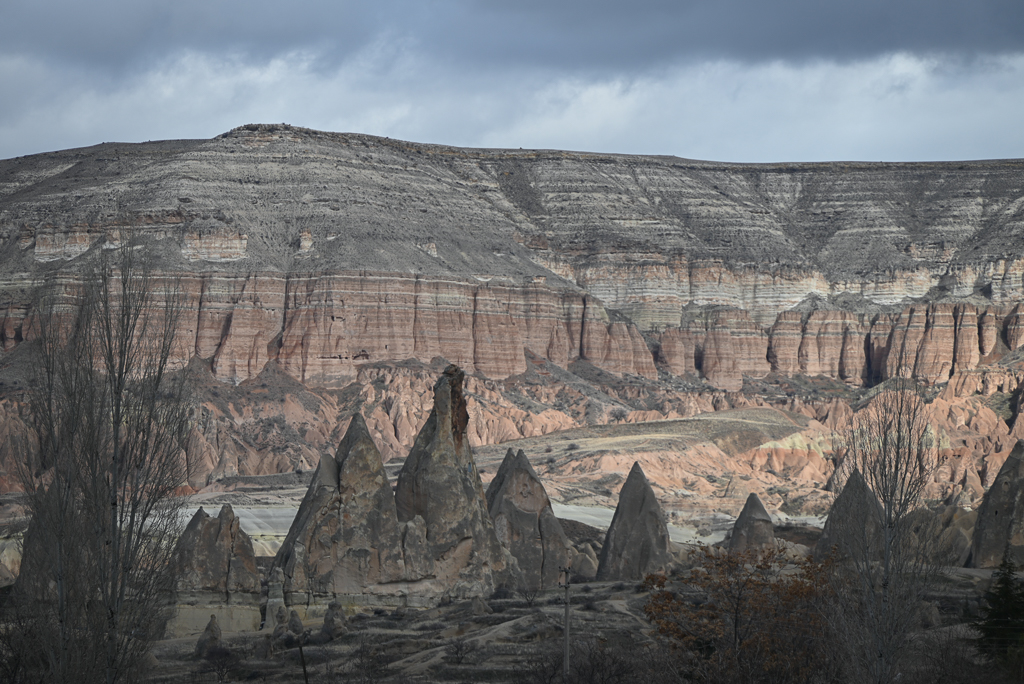
Beautiful mountains in Gerome
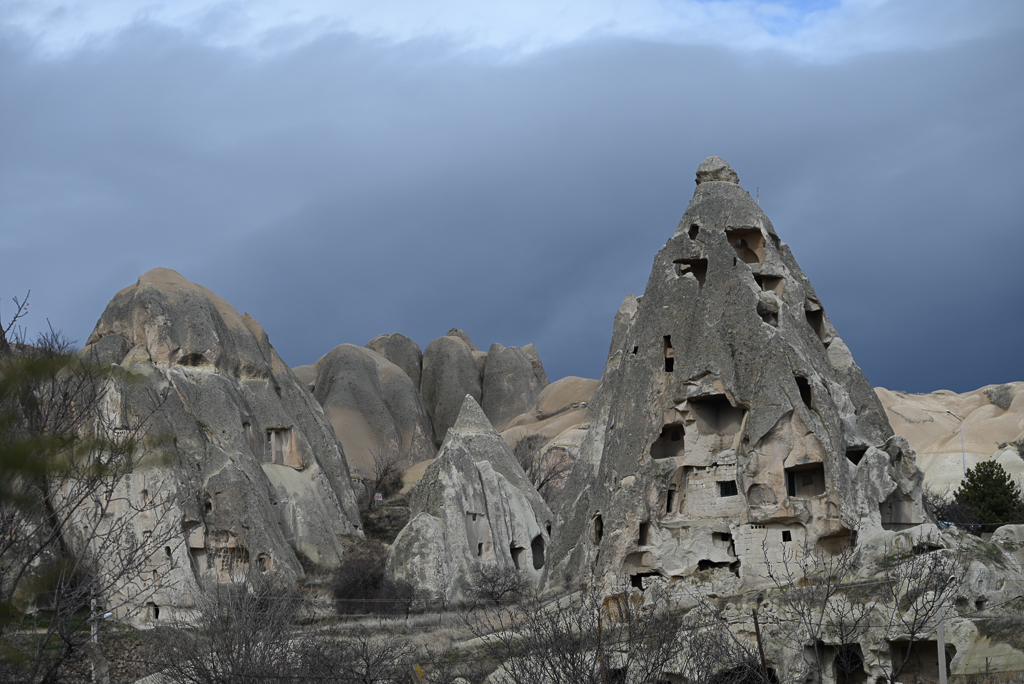
Cave Homes Carved from Mountain
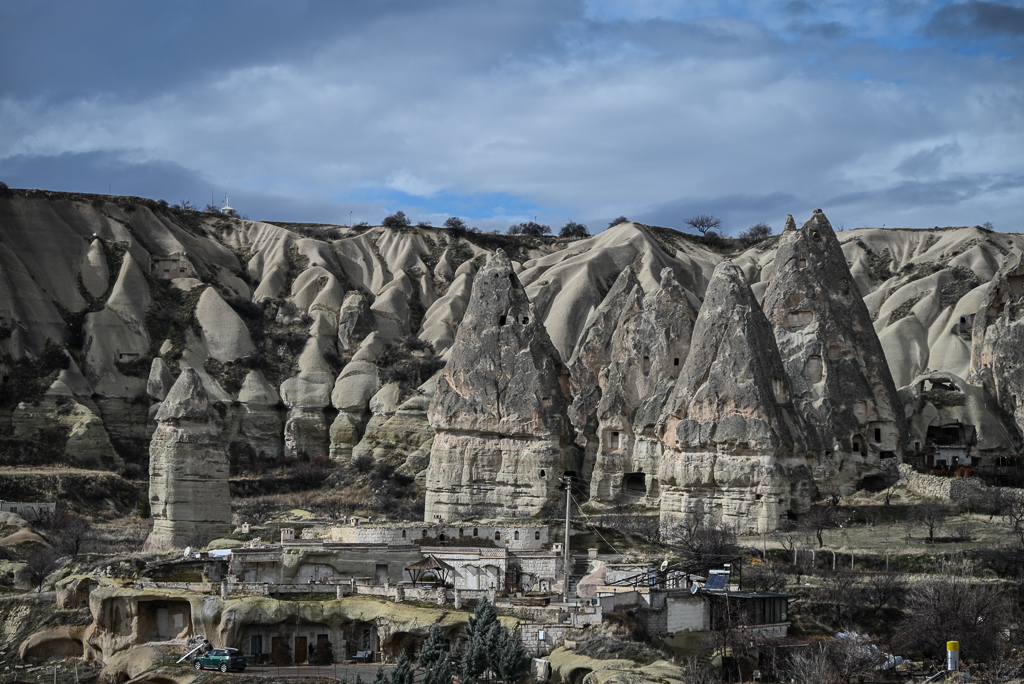
Fairy Chimney Homes
Driving Across the Anatolian Plains
We flew into Kayseri, a city that sits at the base of Mount Erciyes, a massive 13,000-foot volcano whose upper slopes are often covered in snow and glaciers and drove about an hour across the open plains of the Anatolian plateau to Göreme.
Navigating Göreme’s narrow, winding streets in our rental car wasn’t easy, and finding parking proved even harder. The only available spot was shared between several cave hotels—three cars deep against a cliff. I had to leave my keys with the hotel manager so they could move the car if needed.
We immediately fell in love with our cave hotel.
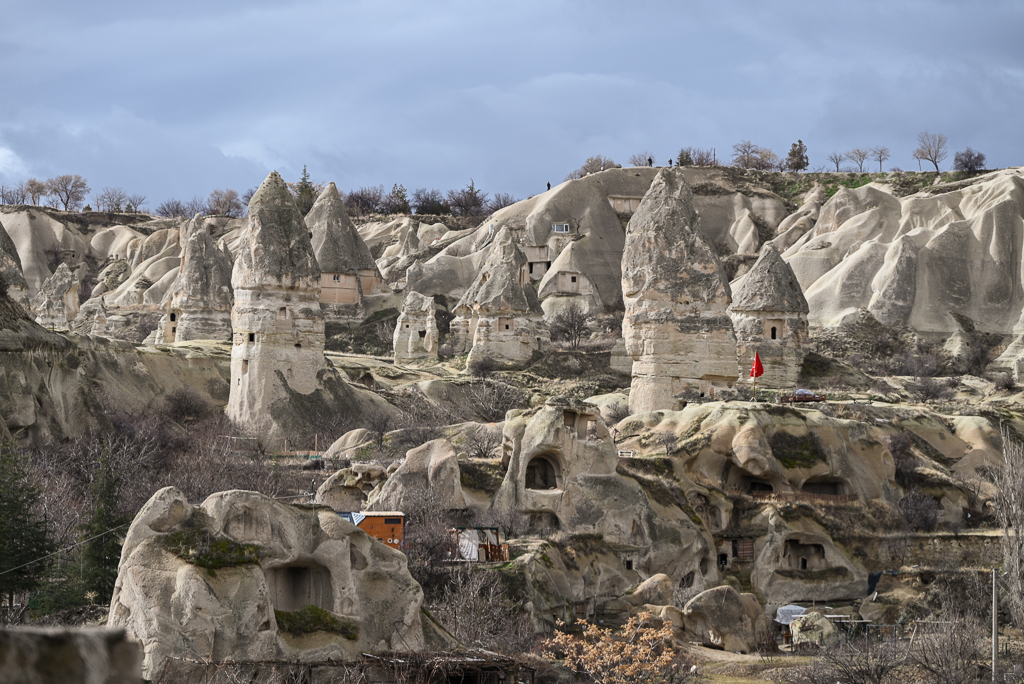
Fairy Chimeny Homes
Our Cave Hotel
Our cave hotel in Göreme was one of many accommodations carved directly into the region’s soft volcanic rock and staying there was like literally staying in one of the ancient dwellings that people have used here for centuries.
Our hotel had been family-run for decades, and like many of the caves in the region that were once lived in by local families, it has now been refurbished into a hotel to accommodate tourists. Today, very few local families still live in caves, a sharp contrast to just a few decades ago when this was still a common way of life.
Our room was simple but atmospheric and carried a strong sense of history. Part of the cave had once been used as a Christian temple in the `1400s, adding another layer to the experience. In one small chamber, the ceiling was darkened with soot, likely from years of candle use—possibly for religious ceremonies.
Sudden Turn
Not long after arriving, Indie began to spike a fever.
Instead of heading out to explore, we decided to lay low for the evening and planned to visit the underground cave city the next day. I went into town to find medicine while the rest of the family rested at the hotel.
At first, we assumed she just needed sleep and would recover quickly.
So that night, Jimmie, Paula’s mom, and I attended a whirling dervish ceremony in a nearby cave hall, while Paula stayed behind with Indie.
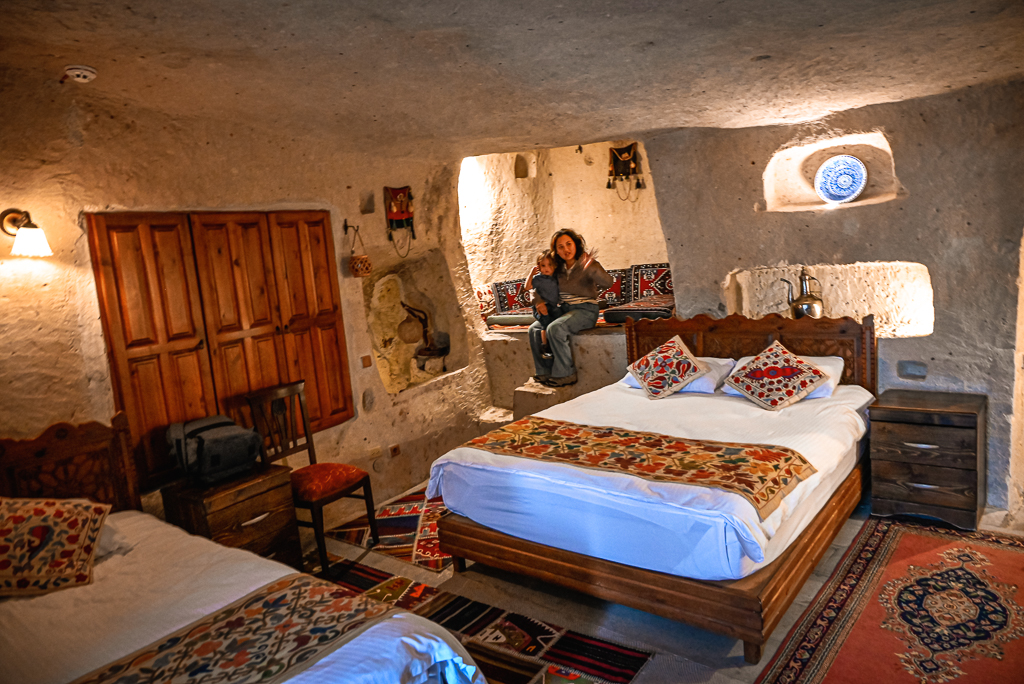
Our family run cave hotel
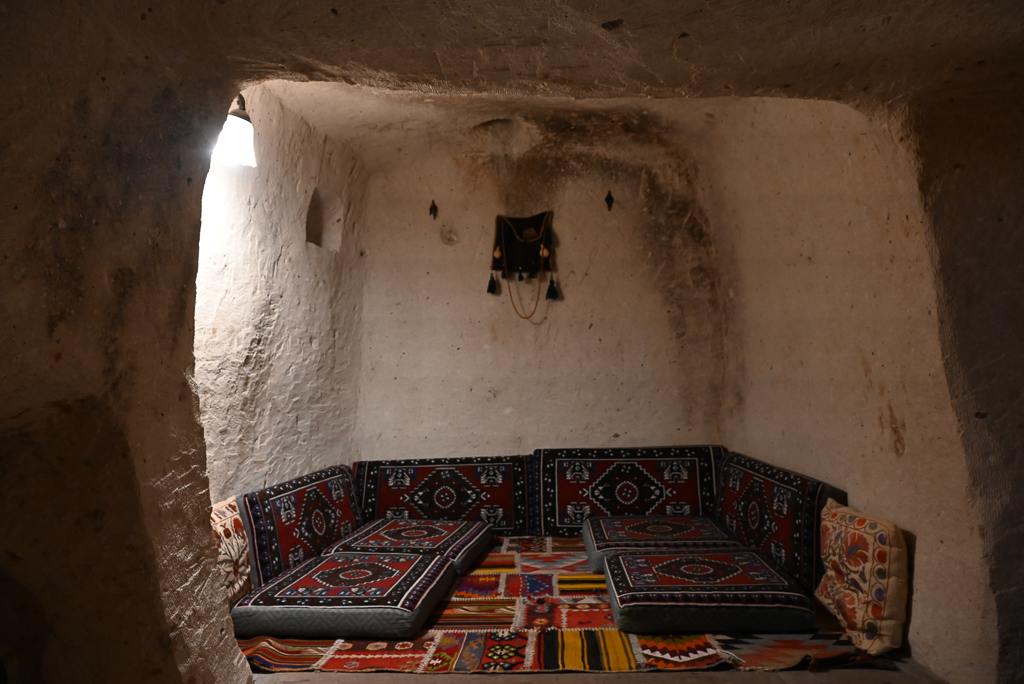
Our cave hotel
The Whirling Dervish Ceremony
The ceremony was just outside of town Inside an underground stone chamber, the atmosphere felt ancient and quiet. The ceremony began with musicians playing traditional instruments—drums and chanting voices echoing softly off the cave walls.
Then the dervishes began to spin.
This wasn’t just a performance for tourists—it was a true act of worship. The dervishes, followers of a Sufi Islamic tradition, were there to pray through movement, entering a trance-like state as a form of devotion to God.
Before the ceremony began, it was made very clear that this was a sacred ritual and demanded complete respect. There were to be no interruptions—no talking, no movement, no leaving the chamber once it began. Cameras and phones were strictly prohibited until the very end, when a brief moment was announced for photos.
For nearly an hour, we watched as they moved in slow, controlled circles, their white robes fanning outward. The rhythm of the music, the chanting, and the steady motion created something hypnotic—almost otherworldly.
The dervishes appeared completely absorbed, lost in their devotion, and it was clear this was not meant to entertain but to connect with something far deeper.
For that hour, I felt transported—quiet, focused, and overwhelmed by the beauty and intensity of the ritual.
When the Trip Turned
Unfortunately, after that moment, our visit to Cappadocia would begin to unravel.
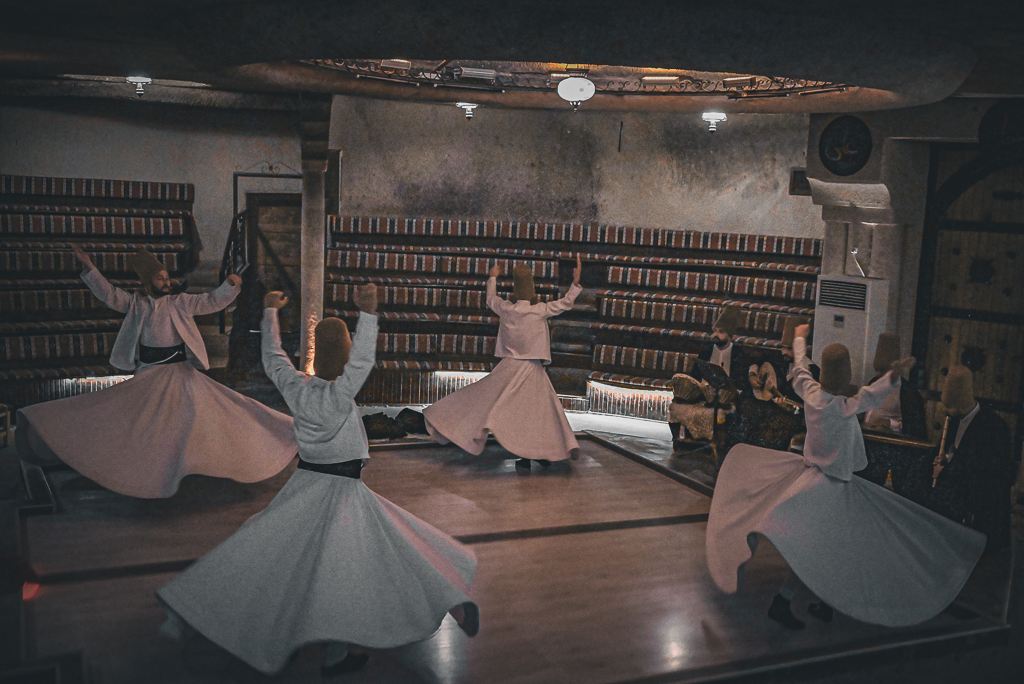
Devish ceremony
A Long Night
After dinner, Indie’s fever spiked dangerously high. Her breathing became deeper and more labored, and her cough worsened. She stopped drinking and eating entirely. We gave her Tylenol every four hours, but while her fever would dip slightly, it never truly broke.
It was a long, restless night. None of us slept. We began researching hospitals, and the hotel manager kindly helped us in the middle of the night.
By early morning, we knew we couldn’t wait any longer. Her fever had climbed to 104°F, and her breathing had become frightening.
The Race to the Hospital
We decided to take her to a private hospital about twelve miles from Göreme. We called a taxi, and the driver—sensing the urgency—drove quickly through the quiet morning roads. He wasn’t reckless—he was trying to help. It was one of several moments where we felt genuine care from the people we encountered in Turkey.
When we arrived, the hospital was nearly empty.
The doctor didn’t speak English, so I used my phone to translate. Through that, we learned Indie needed fluids, antibiotics, and treatment to bring down her fever—and that the only way to stabilize her quickly was through an IV.
The IV
It wasn’t easy.
Indie screamed as the nurses tried to place the IV, and the whole experience felt overwhelming. To calm her, I played “Fairytale” from the Shrek soundtrack—the same song I used to play when she was first born.
It took about twenty minutes, several failed attempts, and a lot of tears—from both of us. She kept saying, “Owie… I want to go home.”
Eventually, the IV was successfully placed, and slowly her fever began to break.
I’ve had some intense experiences in my travels—being detained by the Taliban, capsized by a hippo, seriously ill in Nepal—but none of them compared to this. Those moments were about me. This was about my daughter.
And that made it different.
Paula was incredible through it all—calm, focused, asking the right questions and making sure everything was handled properly. I was really proud of her.
Once Indie stabilized, she relaxed a bit, watching Dora the Explorer on her iPad while I stepped out to find her a popsicle and some snacks.
Recovery — and a Difficult Journey Home
After a few hours, Indie was stable enough to be discharged. The doctors prescribed medication and gave her an inhaler to help her breathing. It worked—but left her emotional and unsettled over the next few days.
The journey home was difficult.
She had moments of distress on the flights—crying, restless, and overwhelmed. When her fever returned mid-journey, we had to extend our trip and spend an extra night at an airport hotel in Berlin before continuing.
It gave her time to recover before the final leg.
We rebooked our flights—thankfully covered by travel insurance—and finally made our way home.
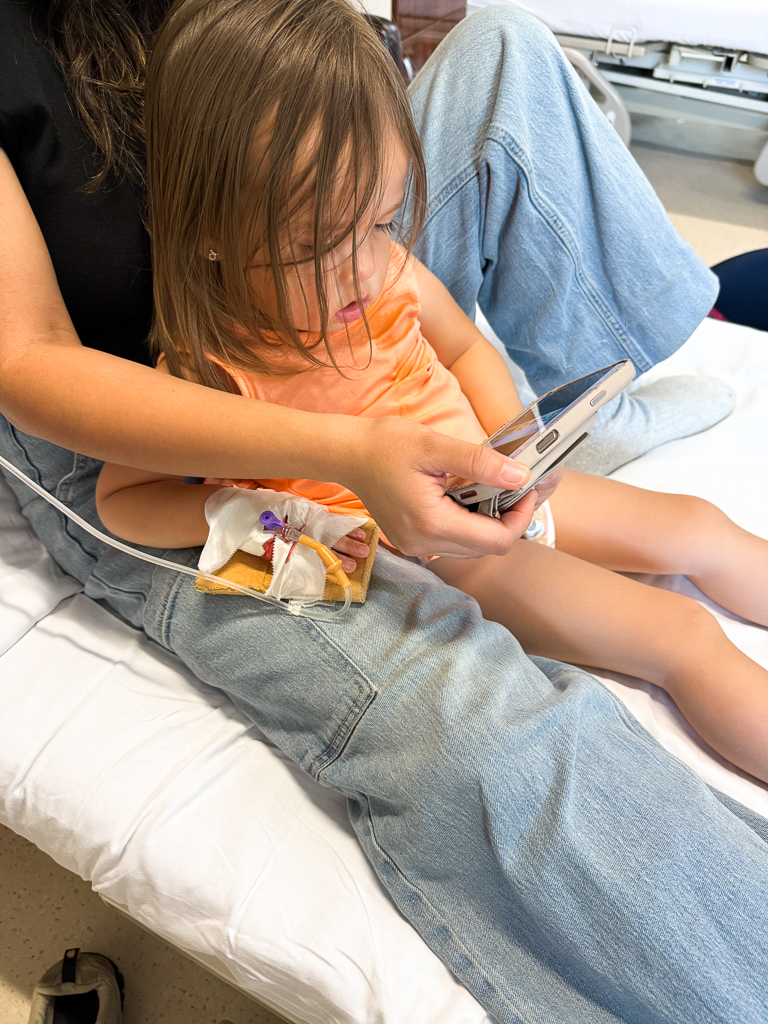
Indie in the hospital with IV