
Puerto Rico: The Island That I Was Missing
March 2026: After visiting every independent country in the Caribbean and numerous other unique islands, I felt like I couldn’t say my journey in the region was complete without visiting one of its largest islands—the U.S. territory of Puerto Rico. It has had an enormous influence on American culture, from music and food to language and migration.
Puerto Rico also has a deep and complex history. Founded by the Spanish in the early 1500s after Christopher Columbus arrived in the Caribbean, it became one of the earliest European footholds in the Americas. Today, it remains a U.S. territory with a unique cultural identity shaped by Spanish, African, and Caribbean influences, and it is home to El Yunque National Forest—the only tropical rainforest in the U.S. National Forest system. Despite its cultural richness, Puerto Rico faces significant economic challenges, with roughly 40% of residents living below the poverty line. At the same time, it can be surprisingly expensive to visit due to the high cost of imports and infrastructure challenges. The island is also highly vulnerable to hurricanes—most notably Hurricane Maria, which devastated much of the island and left many areas without reliable electricity and water for months.
One thing that felt strange about the trip was how easy it was to get there—flying deep into the Caribbean without needing a passport felt unusual after years of international travel. All I needed to board the domestic Southwest flight to Orlando and then on to San Juan was my driver’s license.
A Long Weekend in Puerto Rico
With an expiring airline credit, I decided to fly out to Puerto Rico for a long four-day weekend with one main goal in mind: to see the world’s brightest bioluminescent bay on Vieques—something I had wanted to experience for nearly two decades.
Two Places I Had to See
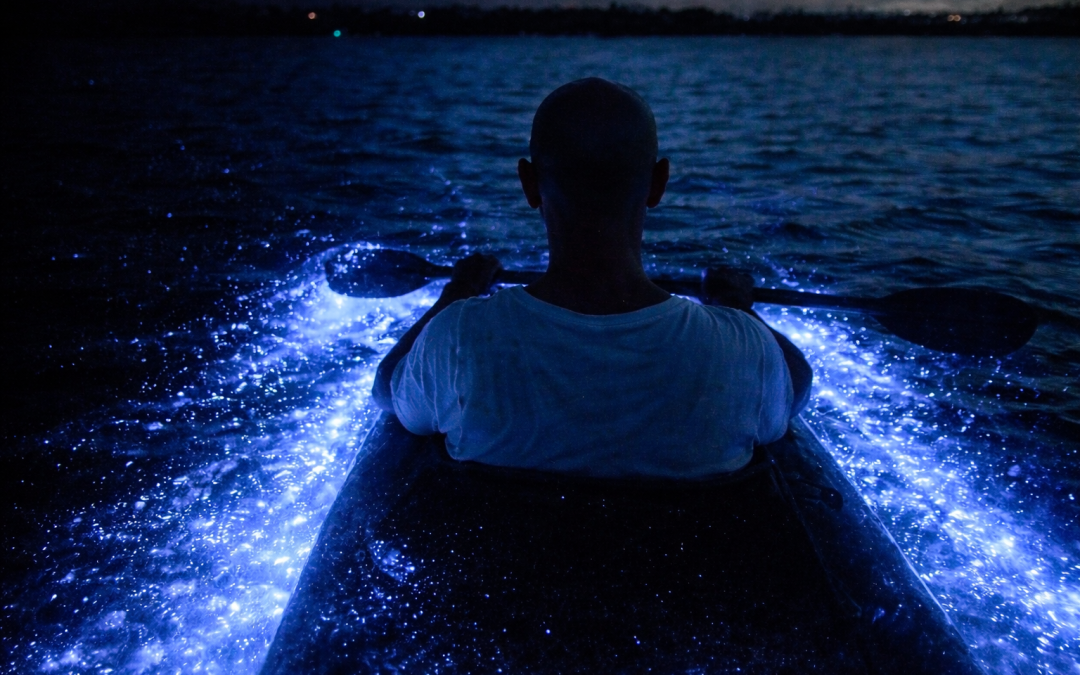
The first was Mosquito Bay, famous for being the brightest bioluminescent bay in the world. Tiny organisms in the water glow bright blue when disturbed, creating a surreal effect as paddles, fish, or even hands move through the water.
The second was Old San Juan, one of the oldest continuously inhabited towns in the Americas. With its colorful colonial buildings, cobblestone streets, and massive Spanish fortresses overlooking the Atlantic, it reflects centuries of Caribbean history.
Arrival
I arrived late at night into San Juan and booked an airport hotel just minutes from a beach and a few good restaurants. Like many places I experienced in Puerto Rico, the hotel felt overpriced for what it offered—basic rooms with few frills. No matter how much I searched, good deals were hard to find.
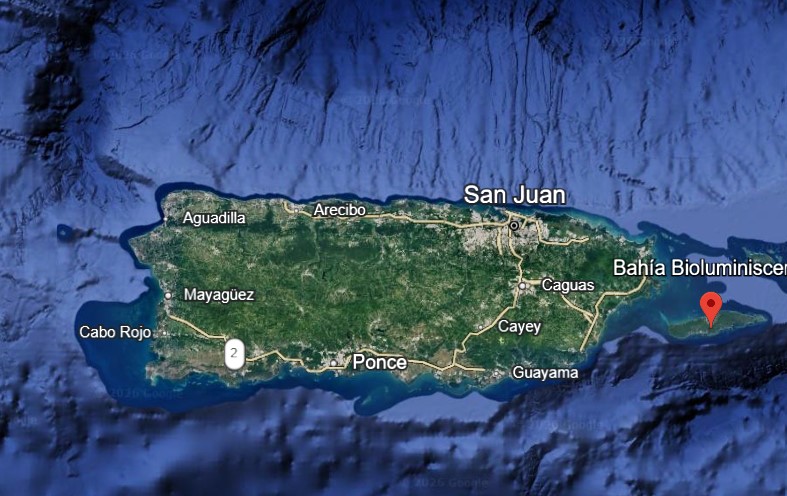
Location of the Bio Bay
About Vieques Island
A Focused Visit
There’s a lot to see in Puerto Rico—both culturally and naturally—but with limited time, I focused on two highlights: the bioluminescent bay and Old San Juan.
The biobay is located on Vieques, a small island just east of Puerto Rico’s main island. It’s typically reached via a no-frills public ferry (around $2–$5) from Ceiba, which takes about 30–45 minutes to an hour depending on conditions. Getting to the ferry terminal from San Juan takes roughly 1–1.5 hours by car or taxi.
An Untouched Caribbean Feel
Vieques is scenic, laid-back, and relatively undeveloped compared to much of the Caribbean, with no large-scale resort chains. Much of the island is protected land, made up of nature reserves, quiet beaches, and small communities.
The atmosphere is a mix of local Puerto Rican culture and a smaller population of colorful, often eccentric mainland Americans—many from colder northern states—who have made the island their home.
A Complicated Past
For decades, much of Vieques was used by the U.S. Navy as a training and bombing range. Tensions escalated in 1999, when an errant bomb killed a local civilian and injured others, sparking widespread protests by residents.
After years of sustained activism, military operations ended in 2003, and large portions of the land were transferred for conservation and public use.
Some areas remain restricted due to unexploded ordnance, and cleanup efforts have been ongoing. Concerns about environmental contamination and potential health impacts have been raised over the years. Government and academic studies have noted elevated levels of certain heavy metals in some residents, which some researchers link to decades of military activity, though the full extent and direct causes remain debated.
Broader Health and Environmental Impact
The long-term impact of military activity on Vieques continues to be studied. The U.S. Department of Veterans Affairs has acknowledged that personnel stationed on Vieques may have been exposed to hazardous substances such as heavy metals. Environmental groups and international organizations, including the United Nations, have raised concerns about higher rates of certain health conditions—such as cancer, respiratory illness, and other chronic diseases—potentially linked to decades of military use. However, the degree of impact and direct causation remain subjects of ongoing research and debate.
Navy Withdrawal
Following the 1999 incident and sustained protests, the Navy ceased training exercises in 2001 and fully withdrew in 2003. Parts of the former military lands were later designated for conservation, and cleanup efforts—managed in part as a Superfund site—continue today.
A Wild Landscape
Today, much of the island is protected within the Vieques National Wildlife Refuge, covering a majority of the land.
Vieques feels like an adventurer’s playground—remote beaches, coral reefs, nesting sea turtles, and wild horses roaming freely along the shoreline. Inland, dry forests conceal remnants of the island’s military past, including abandoned structures and bunkers.
Many of the best areas require a rental Jeep, SUV, or golf cart, especially on rough roads through former military lands.
Why I Came
I really liked Vieques and wish I had more time to explore it fully. But my main focus—and the reason most visitors come here—was the bioluminescent bay.
And for good reason.
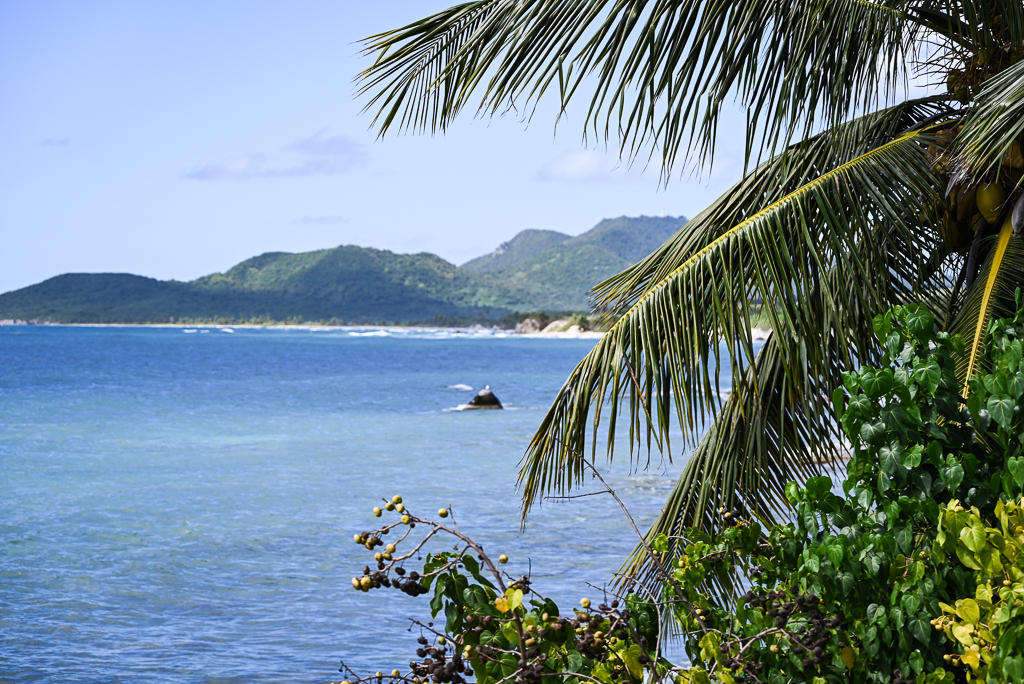
Vieques Island
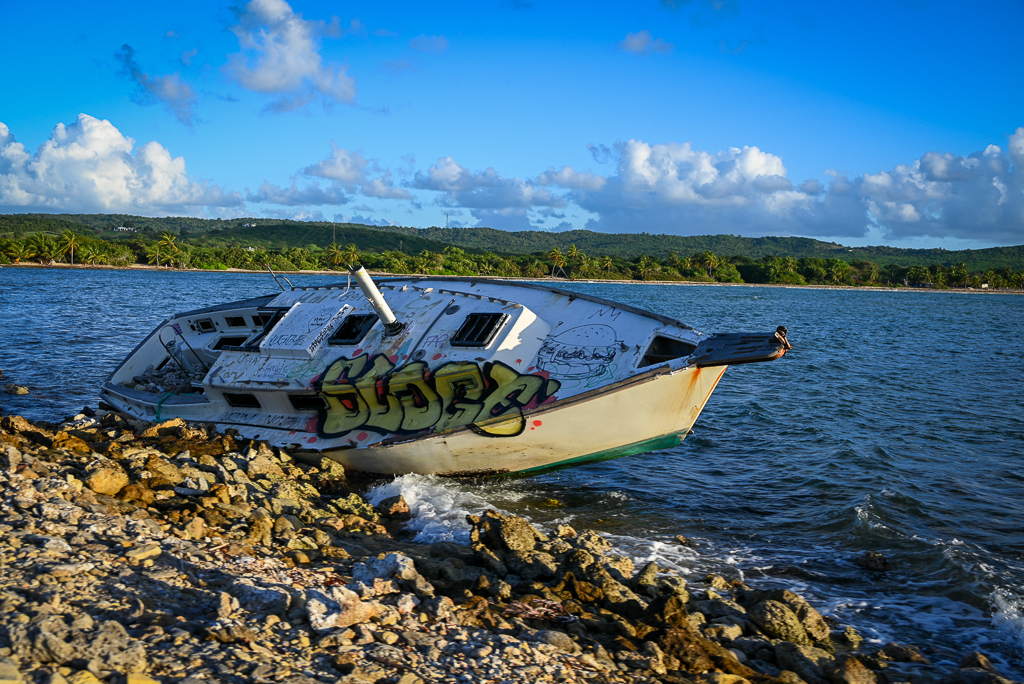
Abandoned boat on Vieques island
Arrival on Vieques
When the ferry finally pulled into Vieques, the pace of everything seemed to slow immediately.
I grabbed a shared taxi across the island to Esperanza, the main base for visitors. The town had a laid-back but slightly rowdy feel—beachfront bars, local Puerto Ricans, and a mix of mainland retirees all drifting between the same few spots along the water.
I headed straight to a bar and ordered a couple of beers while waiting for my room to be ready at Waterside Inn. The room was about as basic as it gets—a bunk bed, not much else, and a shared bathroom down the hall—yet it still cost around $120 a night. That seemed to be the norm here: simple, expensive, and limited options.
While I waited, I ended up talking with a few mainland transplants who had made Vieques home. They spoke openly about the trade-offs—fewer conveniences, slower pace—but also about the strong sense of community. One story stuck with me. They described living through Hurricane Maria, when the island was devastated. Power and running water were gone for months. Yet somehow, they said, it was also one of the most meaningful times—neighbors helping neighbors, everyone relying on each other just to get through it.
That sense of community seemed to define the island as much as its beaches.
Exploring the Island
To explore, I rented a vehicle for 24 hours—a strange hybrid that looked like a golf cart but drove like a small ATV, capable of hitting about 30 mph. It wasn’t ideal on paved roads. Cars would tailgate me or whip around blind corners, sometimes drifting into my lane. It felt exposed and a bit sketchy.
But once I got off the pavement, it made perfect sense.
The interior of Vieques felt wild and largely untouched—dusty roads cutting through dry forest, opening up to empty beaches and remote stretches of coastline. Large parts of the island, once closed off during the military years, now felt open and raw again.
The Lighthouse Mission
My goal was to reach Faro Punta Este, a remote lighthouse on the eastern edge of the island. Built by the Spanish in the late 1800s, it marked one of the easternmost points of Puerto Rico. Today, it sits abandoned—crumbling, unrestored, and exposed to the elements.
Getting there required a long, rough track through the wildlife refuge.
Back at the hotel earlier, I had overheard a Chinese couple in their late 50s asking another traveler what they should do on the island. On impulse, I invited them to come along. They barely spoke English and looked unsure, but eventually agreed.
As we set off, I could tell they weren’t entirely confident in the decision.
The drive took nearly two hours.
We bounced along uneven dirt roads through scrub forest, the ocean occasionally appearing through the trees. The farther we went, the more isolated it felt—no other vehicles, no buildings, just the sound of the engine and the wind.
Eventually, the road gave way to a rugged coastline.
From there, we walked a few hundred yards to the lighthouse.
It stood alone above the cliffs—weathered, worn, and partially in ruins. No restoration, no crowds, no signs. Just the remains of a structure slowly being reclaimed by time.
And we had it completely to ourselves.
We stood there in the wind, looking out over the Atlantic as waves crashed below. It felt raw and untouched—one of those places that still exists outside of tourism.
We didn’t stay long. The reserve gates close at night, and getting locked inside wasn’t something we wanted to test.
The ride back was just as rough.
The couple looked slightly shaken—but also, I think, quietly impressed.
Dinner Before the Night Paddle
Back in town, I pushed the day a little further.
I invited them to join me that night for kayaking in the bioluminescent bay—something I had come all this way to see. They hesitated, but agreed.
Before heading out, we stopped for dinner. They insisted on paying, thanking me with fish tacos and beers.
That turned into more beers than expected.
The husband, to his wife’s clear frustration, had quite a few—and casually mentioned he had never kayaked before. That gave me pause, considering we’d be heading out into dark water.
He reassured us he just needed a quick nap.
He reassured us he just needed a quick nap.
We didn’t have much time to see if that would be true.
I felt a bit responsible, so I walked to a nearby convenience store—the only place still open. Outside, a few Puerto Rican locals sat around blasting loud, bass-heavy music from a boombox. Inside, an elderly woman in curlers and a nightgown stood behind the counter. The shelves were sparsely stocked—mostly beer, with a small selection of snacks.
I grabbed Gatorade, chips, and a few chocolate bars—figuring it might help revive my Chinese friend before we headed out into the dark waters of the bioluminescent bay.
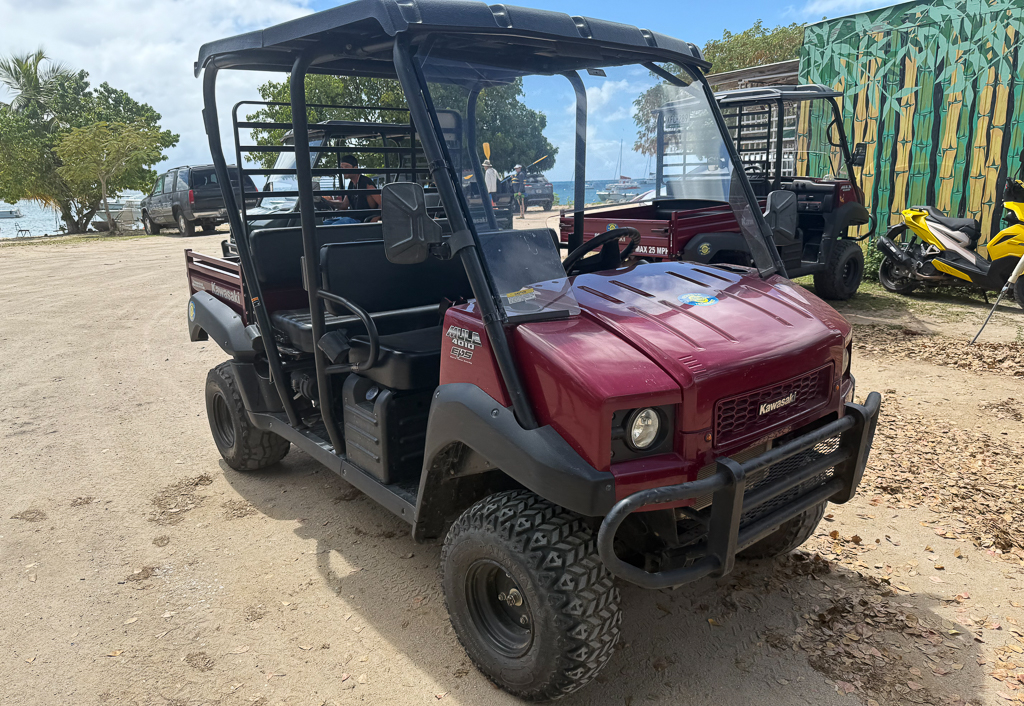
My ATV rental
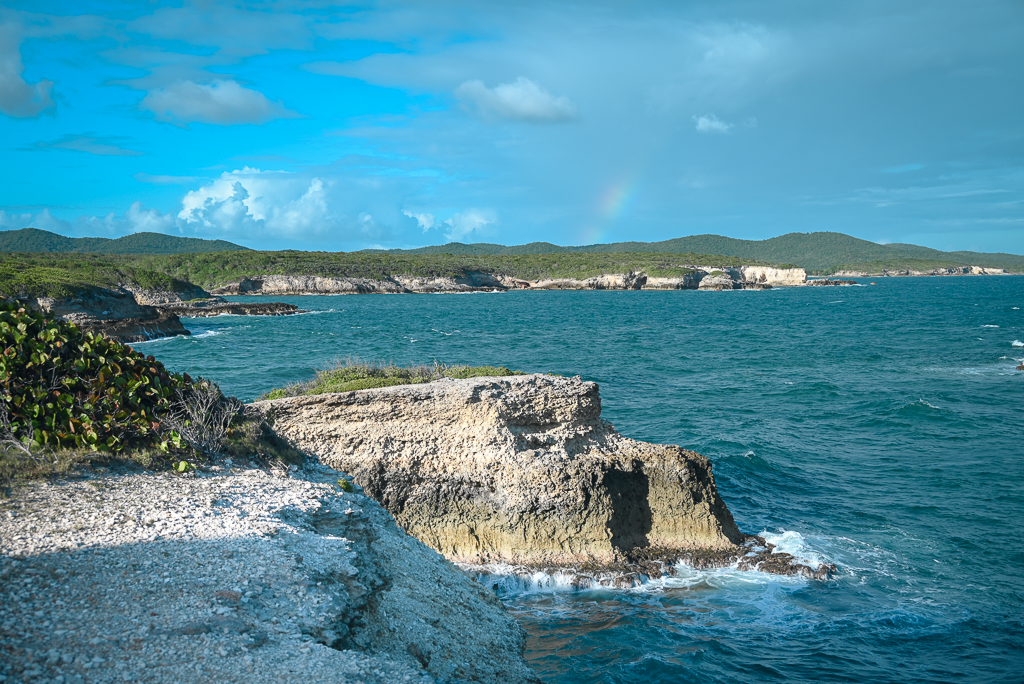
Rugged beauty of the island
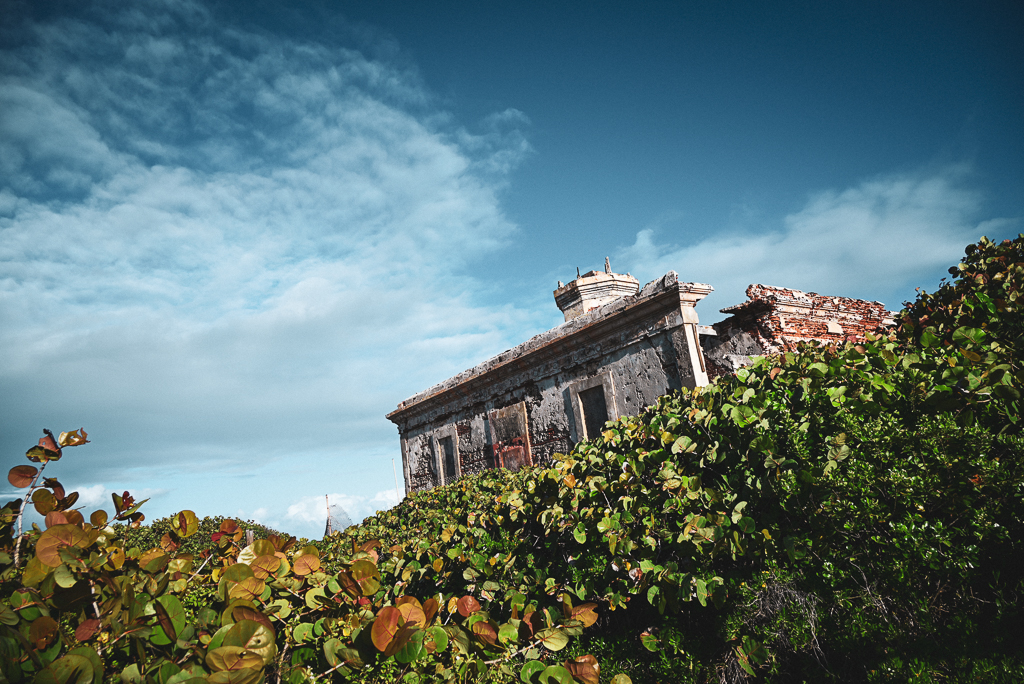
Oldest Spanish lighthouse in Puerto Rico
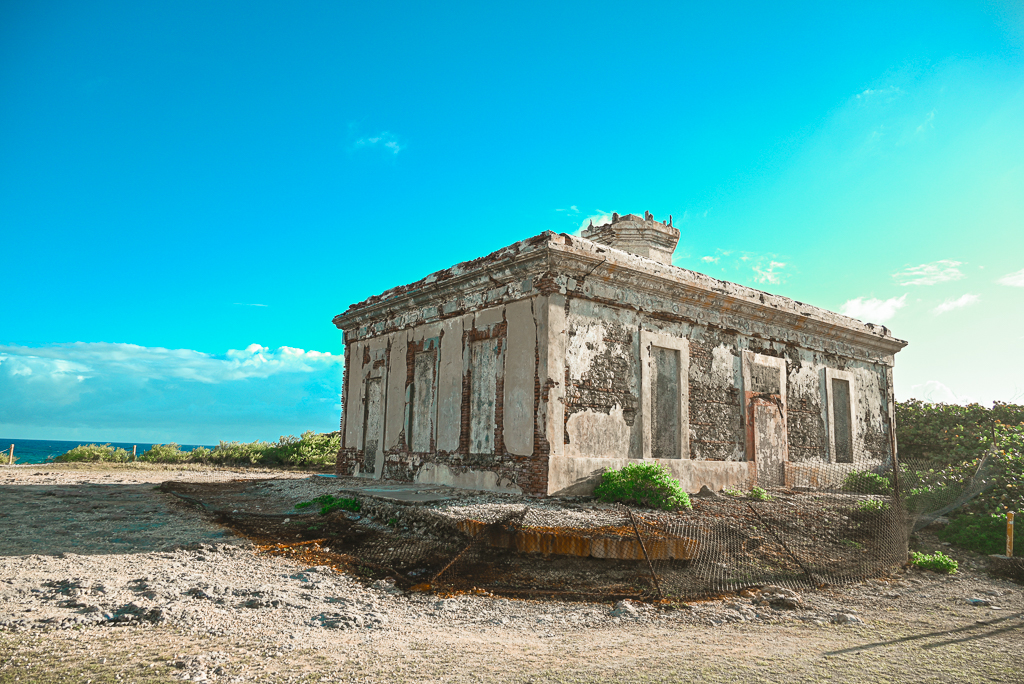
Oldest Spanish lighthouse in Puerto Rico
The Bioluminescent Bay
At 9:30 p.m., the moon finally set, and it was time to head out to Mosquito Bay. I had planned the trip around the moon phase—this phenomenon is brightest on moonless nights, when darkness allows the glow to fully come alive.
The bay is connected to the ocean but remains mostly enclosed, which helps trap the dinoflagellates inside. Combined with limited development and relatively clean waters—even though the lagoon is shallow, brackish, and somewhat swampy—these conditions allow the organisms to thrive and produce intense bioluminescence.
That said, the glow hasn’t always been consistent. Years of over-tourism, people swimming, runoff from sunscreen and insect repellent, and increased light pollution have all impacted the bay at different times. In response, locals have taken steps to protect what is essentially their lifeblood—banning swimming, limiting access to guided kayaking tours, regulating nearby lighting, and restricting development near the bay. Events like Hurricane Maria also temporarily disrupted the ecosystem, though the bay has largely recovered. Even now, brightness can vary depending on moonlight, rainfall, and other environmental conditions—so nothing is ever guaranteed, despite its reputation as the brightest bioluminescent bay in the world.
Kayaking Through the Light
This was actually my second time experiencing a bioluminescent bay—the first was in Jamaica, where I was allowed to swim directly in the glowing water. Here, swimming wasn’t permitted, so kayaking was the only option.
After a short, bumpy late-night bus ride with a group of other tourists, we arrived at the lagoon. We kept things minimal—just our phones sealed in a waterproof bag—and even left our shoes on the bus. The launch area was thick, muddy, and we had to wade through it barefoot to reach the kayaks.
We set off in small groups, spreading out across the lagoon behind a guide.
I was paired with a young guy from New York who had never kayaked before, so I took the back seat to steer. Our kayak was transparent, which made the experience even more immersive—every stroke of the paddle sent bursts of blue light shimmering beneath us, visible right through the hull.
As we paddled deeper into the lagoon, the water came alive.
Each movement triggered glowing trails. Fish darting below us left streaks of light like underwater shooting stars. Even the ripples around the kayak shimmered with faint electric blue.
Running a hand through the water made it sparkle.
It felt surreal.
Reality vs. Expectation
I’ll admit—some of the photos you see online (and even some I took) make it look brighter than it appears in real life. Cameras and post-processing can enhance the effect significantly. In person, the glow is more subtle—but still incredible in its own way.
It wasn’t quite as overwhelmingly bright as I had imagined after nearly twenty years of anticipation—but it was still a unique experience.
A Rougher Night for Some
At some point during the paddle, I lost track of the Chinese couple I had met earlier.
When the tour ended and we regrouped on shore, I spotted them again—completely soaked.
Their kayak had flipped in the lagoon.
They didn’t say much, but it was clear they hadn’t enjoyed the experience nearly as much as I had. Between the darkness, the unstable kayaks, and the muddy launch, it had been a bit more adventure than they had signed up for.
A Family Decision
Originally, I had hoped to bring Paula and Indie on this part of the trip. I especially wanted Indie to experience it.
But she had been recovering from an illness earlier in our travels, so they stayed home to give her more time to rest.
Looking back, it was probably the right call.
The experience required sitting still in a small, slightly unstable kayak, in total darkness, for an extended period. Even with a life jacket, it would have been difficult for her—and there’s a good chance we would have turned back after just a few minutes.
A Quiet Ending
Out there in the dark, surrounded by faint blue light and silence, the experience still felt special.
Not perfect.
But real.
And after chasing it for nearly two decades, that was enough.
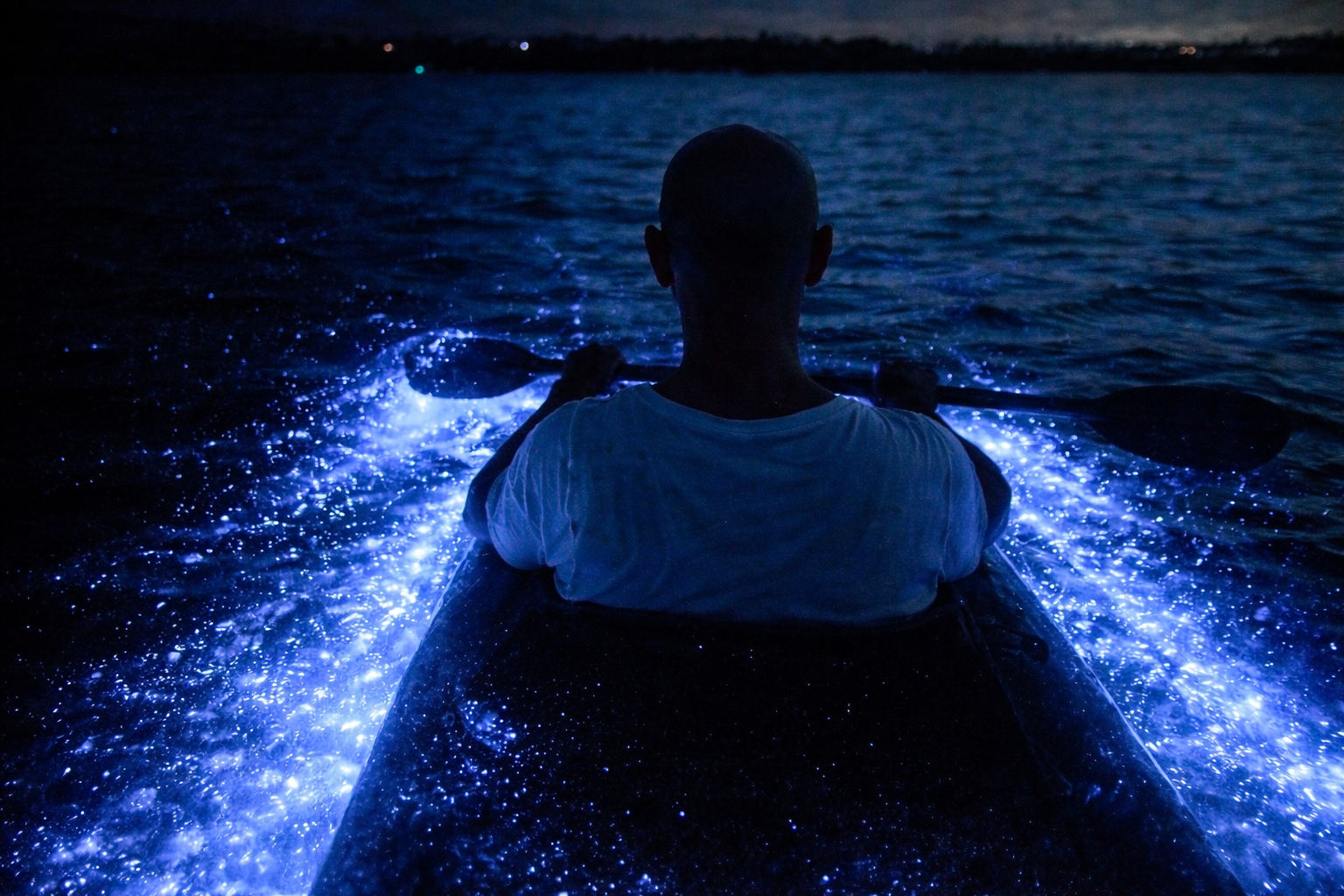
Kayaking in the Bio-Bay
Back to the Mainland
The next morning, I woke up early, walked along the coastline, and grabbed a quick breakfast at a local café. I had originally booked an afternoon ferry, but I wanted to maximize my time in Old San Juan—so I changed plans.
I grabbed a $15 taxi to the port, bought a new $5 ticket on the spot, and caught an earlier ferry back to the mainland. From Ceiba, I took an Uber across the island to San Juan, where I would spend my final night exploring before flying home the next morning.
I was especially looking forward to my stay in a small boutique hotel in the heart of the old town, perched near the edge of the historic fortifications. I wanted to make it in time to visit the forts—part of the U.S. National Park system—before they closed for the day.
One night wasn’t nearly enough.
But I planned to make the most of it.
Old San Juan
After one night on Vieques, I arrived back in San Juan and made my way into Old San Juan.
I checked into a beautiful historic hotel overlooking the ocean and the massive stone fortress walls that protect the city.
A City Steeped in History
Old San Juan is one of the oldest European-founded cities in the Americas, dating back to the early 1500s. Walking its narrow cobblestone streets feels like stepping into another era.
Colorful colonial buildings line the streets, their balconies draped with plants and flags, while centuries-old fortifications rise above the Atlantic.
The most impressive are the twin forts:
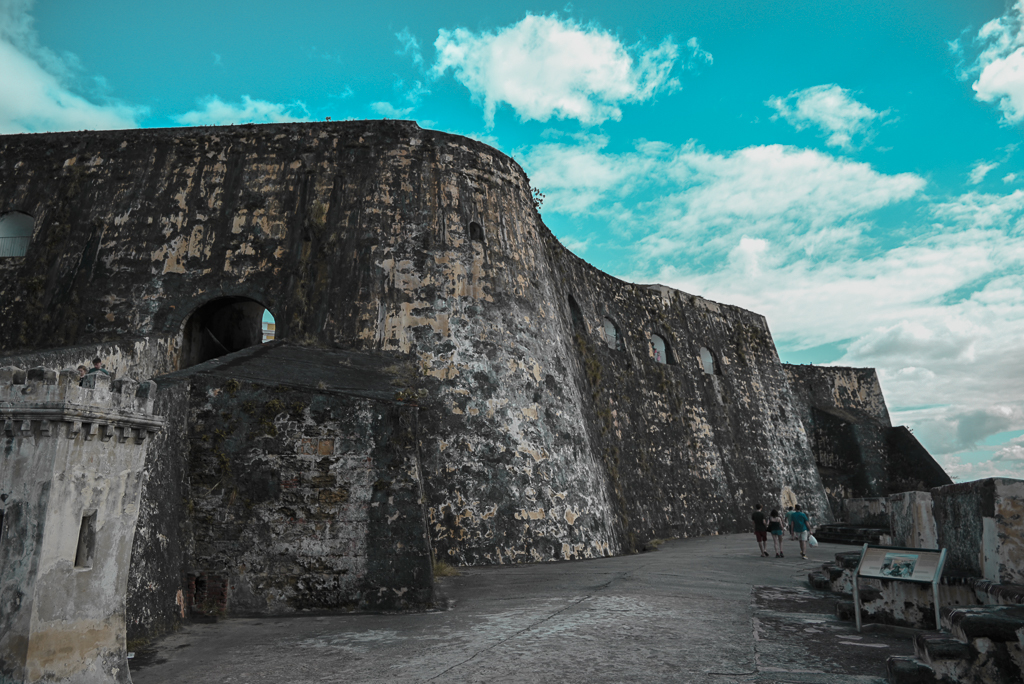
- Castillo San Felipe del Morro, guarding the entrance to the bay
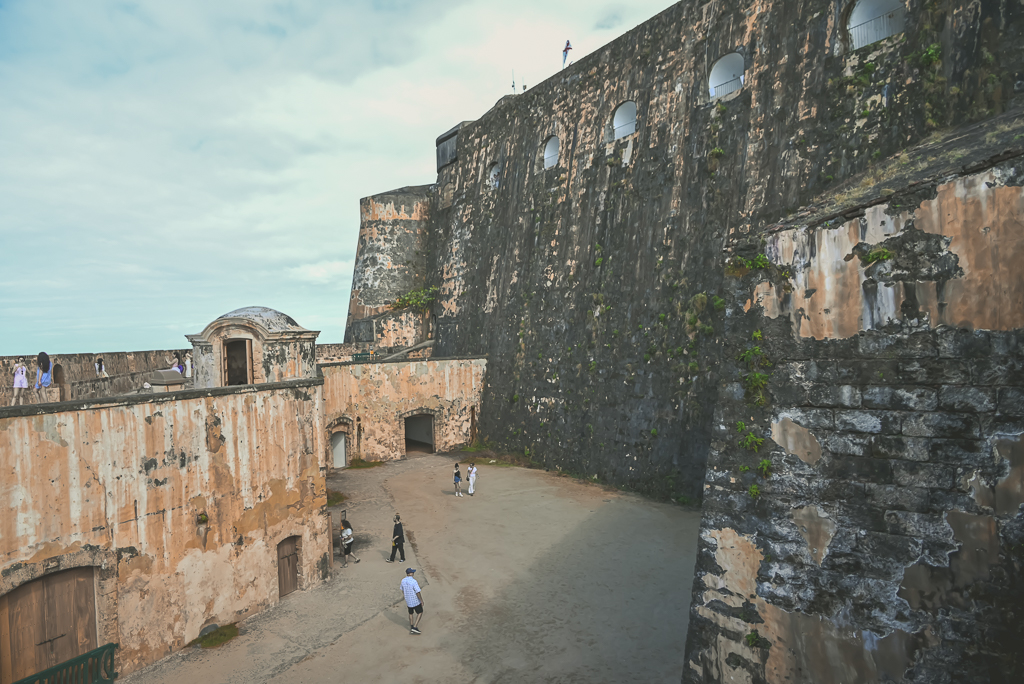
- Castillo San Cristóbal, one of the largest Spanish fortifications ever built in the New World
Together, they form part of the San Juan National Historic Site.
Standing on the walls, looking out over the ocean, it’s easy to imagine the centuries of ships, battles, and history that passed through this harbor.
Making the Most of One Night
There was far more to see than I had time for.
But even in a single evening—wandering the streets, watching the light fade over the fort walls, and feeling the mix of history and Caribbean energy—I could tell Old San Juan was a place that deserved much more time.
It wasn’t just a stop at the end of a trip.
It felt like a destination in its own right.
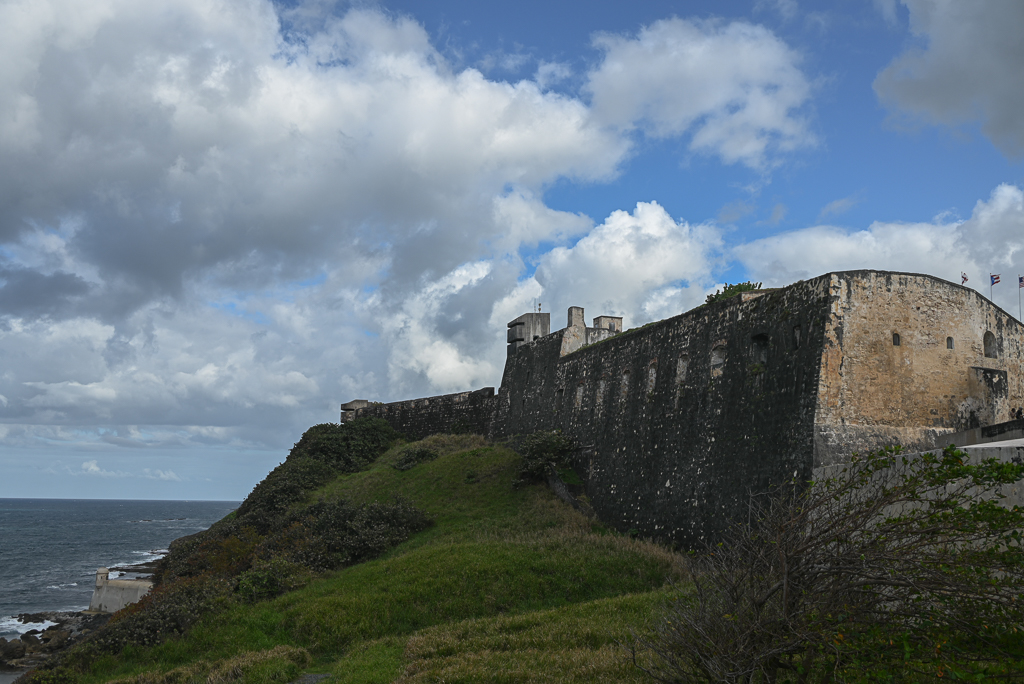
Castillo San Cristóbal, Built: 1634–1790, One of the largest Spanish forts in the Americas
A Lively Sunday in Old San Juan
It was Sunday afternoon when I arrived, and the narrow cobblestone streets were alive with activity. Locals drove into town with their families to eat out or gather for picnics on the wide grassy fields near the forts.
Cars rolled past with windows down, blasting loud reggaeton at ear-shaking volumes. The energy felt unmistakably Puerto Rican—vibrant, social, and full of life.
There were plenty of mainland U.S. tourists as well, especially with large cruise ships docked nearby, but the city didn’t feel overwhelmed by tourism. If anything, it felt like it belonged more to the locals than to visitors.
A Strong Sense of Identity
What stood out most was the strong sense of Puerto Rican identity.
Murals lined parts of the city walls and streets—bold, political, and expressive. One in particular struck me as a call for independence from the United States. That sentiment still exists among part of the population.
At the same time, there are others who support the idea of Puerto Rico becoming a full U.S. state. The island’s political future remains uncertain, shaped by a mix of economic realities, cultural identity, and shifting political views.
During my visit, the local leadership leaned more conservative and was even exploring closer cooperation with the U.S. in areas like security and drug enforcement. It was a reminder that Puerto Rico’s political direction isn’t as simple as it’s often portrayed.
Where it ultimately lands is still an open question.
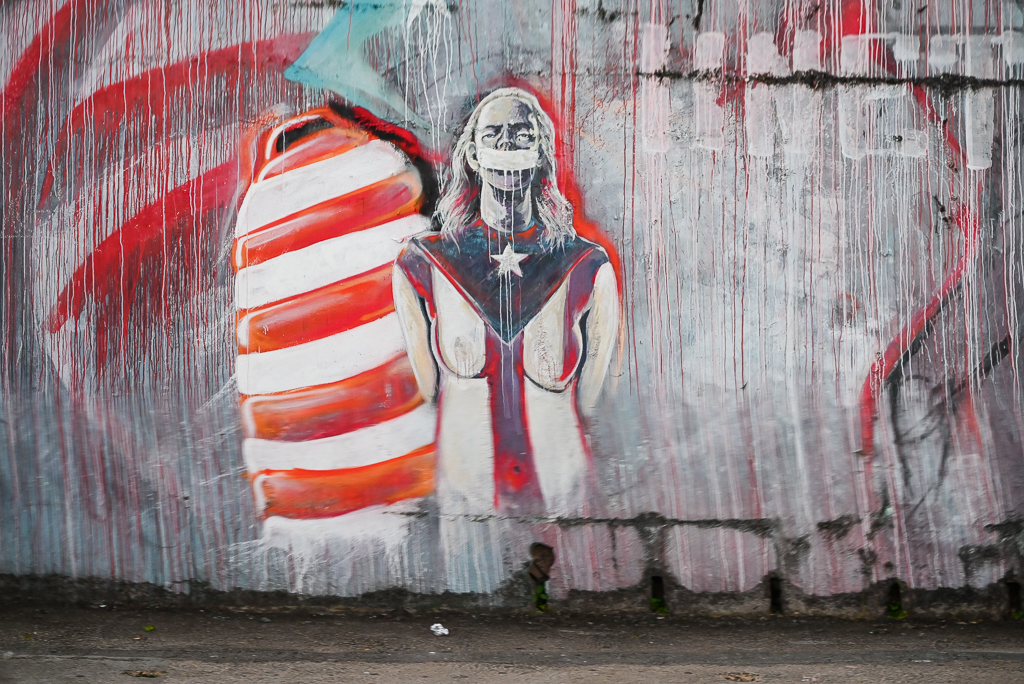
Pro-Puerto Rican Independence Street Art
El Morro — The Oldest Guardian of San Juan
The most exciting place for me at the edge of Old San Juan was Castillo San Felipe del Morro—the oldest and most iconic fort in the city.
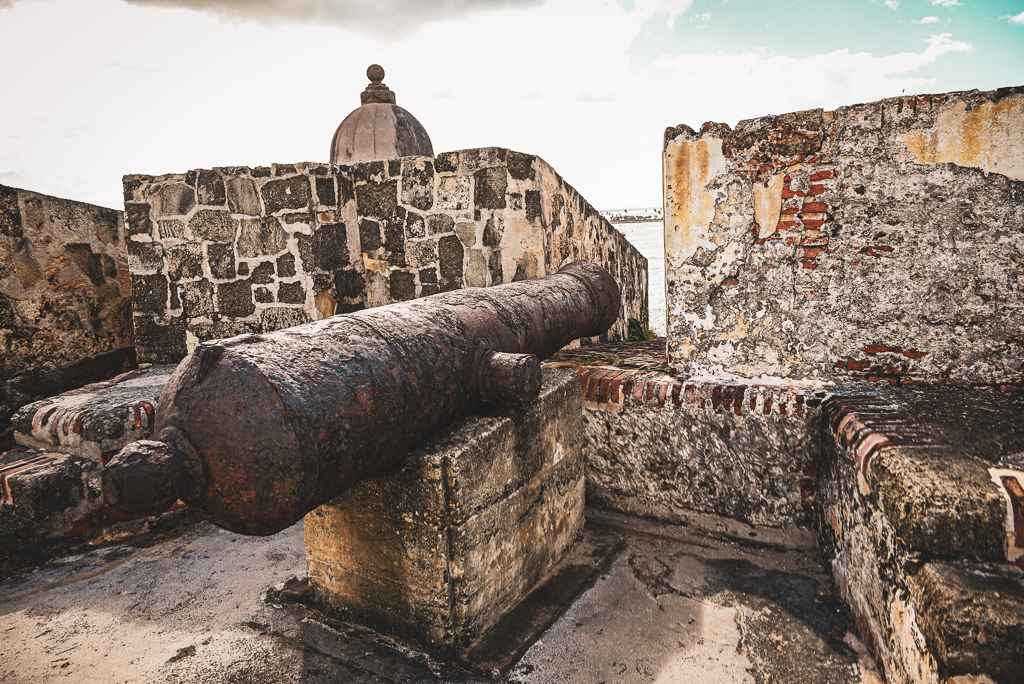
Construction began in 1539, and over the next two centuries it was expanded into a massive six-level fortress guarding the entrance to San Juan Bay. Its thick stone walls were designed to withstand the heaviest artillery of the time, and for centuries, it did exactly that.
During the height of the Spanish Empire, Old San Juan served as a key port where wealth from across the Americas passed through on its way back to Spain. Because of this, the city was heavily fortified to defend against attacks from the British, French, Dutch, and pirates, the most notable one being Sir Francis Drake.
Despite numerous attempts, no enemy ever successfully breached El Morro’s defenses.
It wasn’t until the Spanish American War in the late 1800s that the fort faced its most serious challenge. The U.S. Navy bombarded San Juan, and while El Morro sustained visible damage—some of which can still be seen today—the Spanish ultimately surrendered before the fort was ever overtaken in battle.
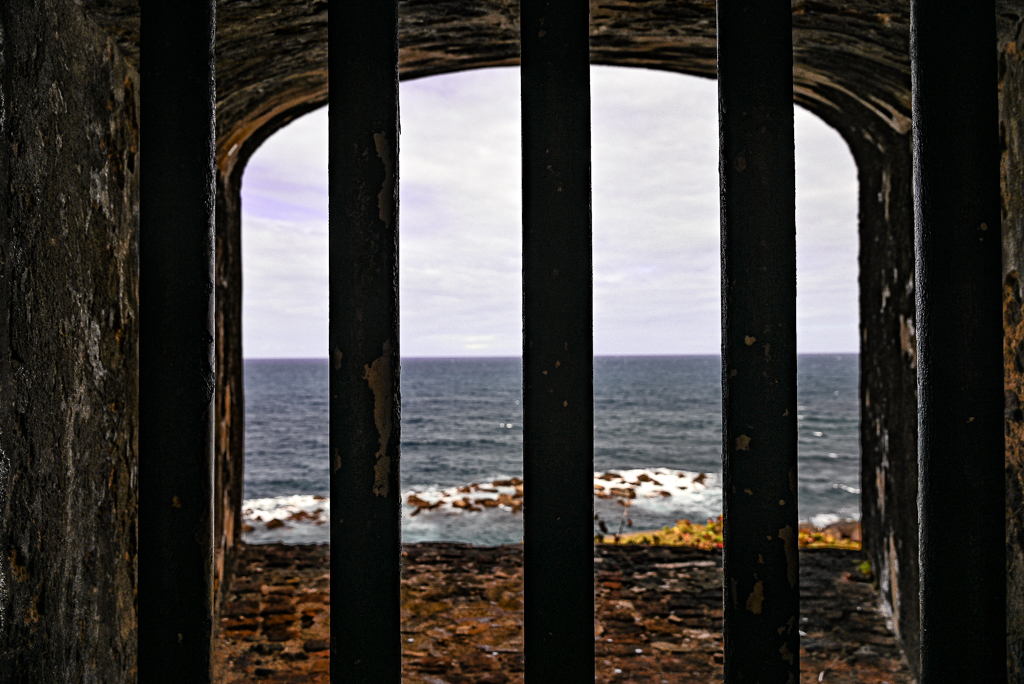
Walking along its walls, looking out over the Atlantic, it was easy to imagine the centuries of conflict, trade, and history that passed through this harbor.
The fort isn’t just a relic—it’s a living reminder of the strategic importance Puerto Rico once held in the world.
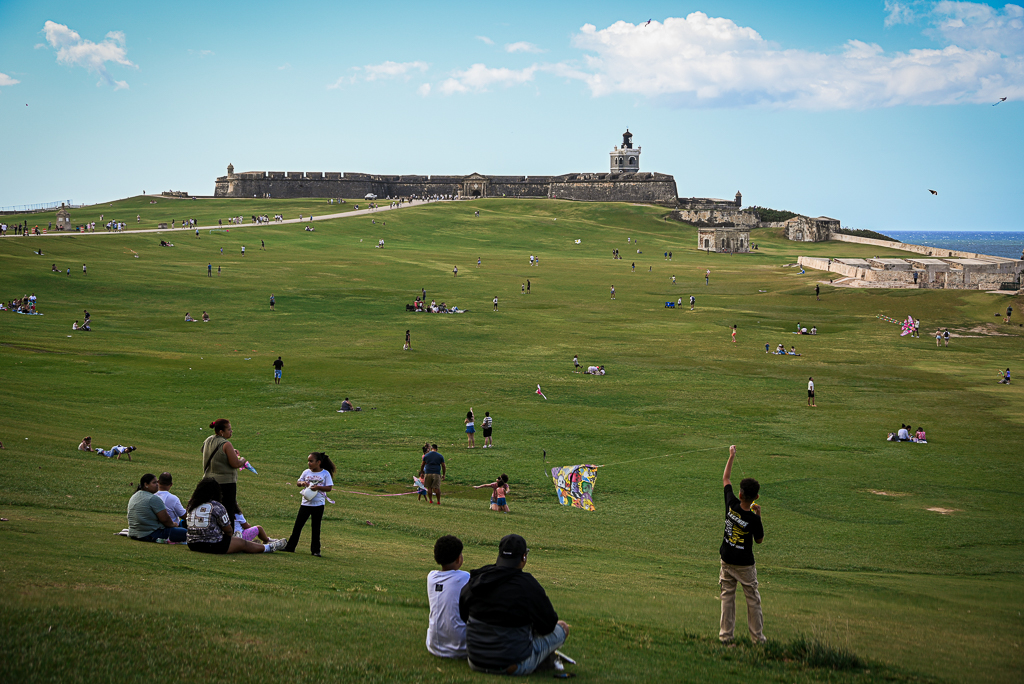
Puerto Ricans flying kites and having picnics on a Sunday near the old fort
Old Fort
Old Fort
Old Fort
Old Fort
My Stay at the Gallery Inn
My hotel was especially unique—The Gallery Inn, perched at the edge of the old city within steps of the walls and the great fort. It ended up being one of my favorite places I’ve ever stayed—but not because of the room itself. My room felt more like a rickety broom closet tucked off an alley, reached by an even more precarious, narrow spiral staircase I could barely squeeze up. The shower worked only intermittently, and when it did, it came out in a weak trickle. And none of it was cheap.
Yet the place was fully booked—and I had managed to get the last room.
The reason was obvious the moment you stepped beyond the room. The location overlooking the ocean, the live music, and the atmosphere made it feel like something out of Midnight in the Garden of Good and Evil—an old-world, slightly haunted, deeply atmospheric space where history, art, and personality collide. The building itself dates back centuries and was once associated with a Spanish military general connected to the nearby fortifications. It had sat abandoned for years before being purchased in the 1960s by artist Jan D’Esopo, who transformed it into a living, evolving work of art.
The property now weaves together multiple historic buildings, filled with lush courtyards, tropical vegetation, and terraces that open out to the sea. Everywhere you look, there are sculptures, paintings, and—most memorably—heads. Carved heads, painted heads, sculpted heads. Some, I was told, were inspired by the owner’s former husbands. One statue, notably missing a certain anatomical feature, was said to represent a cheating ex.
It was strange. A little surreal. And completely unforgettable.
The place actually reminded me of Amargosa Opera House and Hotel, a spot I once stayed at near Death Valley in a near-abandoned town. There, too, a woman passed through in the 1960s, saw potential in a forgotten place, and transformed it into something beautiful—an opera house and hotel shaped by her own art and vision. The same spirit seemed to exist here: one person’s creativity breathing life back into something long neglected.
At night, I sat on the terrace overlooking the ocean, sipping red wine while live jazz drifted out from the piano room. The space glowed with warm light, its old walls and eclectic décor creating an atmosphere that felt both elegant and slightly haunted. Across the room, the owner—now nearly 90—moved through the space with a quiet presence, still carrying a youthful energy that suggested a life fully lived.
Yes, the bed was uncomfortable—I woke up with springs digging into my back—but it didn’t matter.
I loved the place.
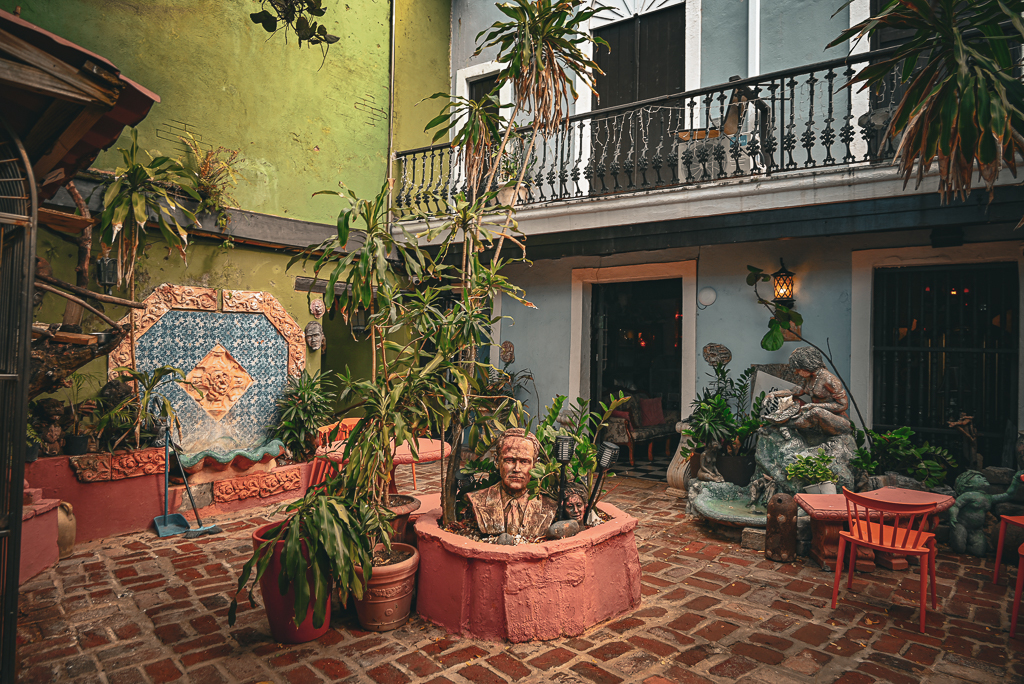
Gallery Inn Garden
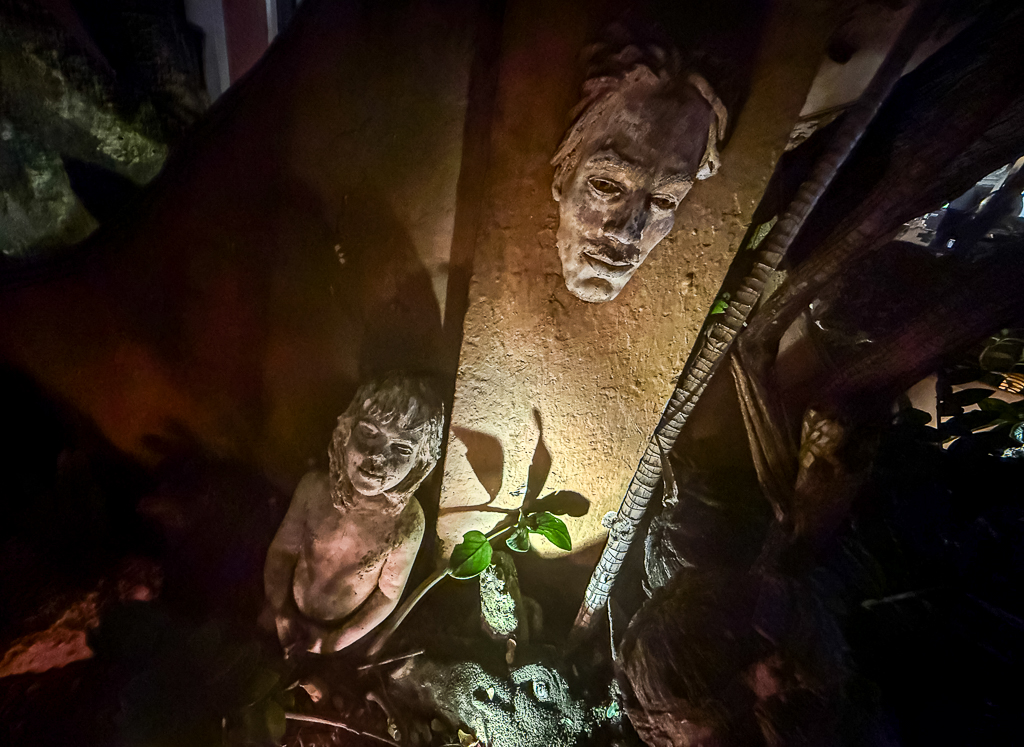
One of the many creepy statues at the Gallery Inn
A Morning Walk to the Seaside Graveyard
On the morning of my final day, before flying home, I woke up early to explore the old graveyard just outside the historic walls of Old San Juan. I had seen it the day before, and like many old cemeteries, it had a quiet pull that stayed with me. I knew I had to come back when it was empty—either late at night or early in the morning. Since it was locked at night, I returned right at opening.
It didn’t disappoint.
The cemetery—Cementerio Santa María Magdalena de Pazzis—dates back to the 1800s and was built outside the city walls for sanitary reasons during the Spanish colonial period. It sits dramatically on a narrow strip of land beside Castillo San Felipe del Morro, overlooking the Atlantic Ocean.
Rows of white tombs and above-ground mausoleums stretch toward the sea, many adorned with crosses and weathered statues of angels that seem to follow you as you pass. The graves all face the ocean, symbolizing the journey into the afterlife.
When I arrived just after sunrise, the only other visitors were roosters perched among the tombstones, crowing into the still morning air.
Walking through the cemetery in that quiet light, with waves crashing below the cliffs and the fortress walls rising beside it, felt peaceful and reflective—a calm, almost cinematic moment to end the trip.
It may be one of the most beautiful graveyards I’ve ever visited.
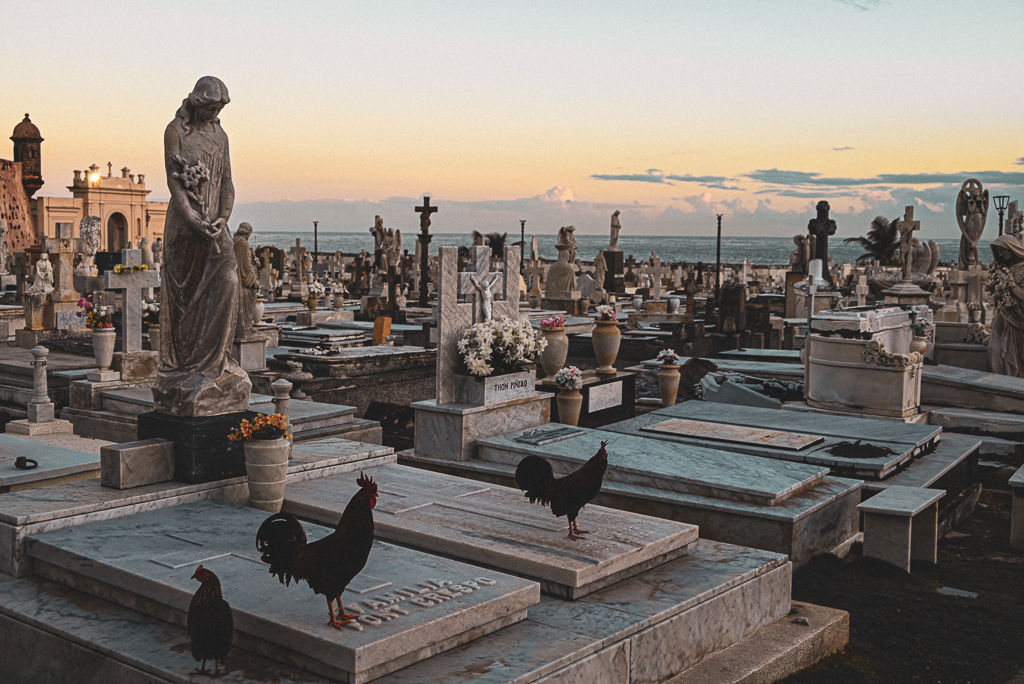
Roosters in the graveyard
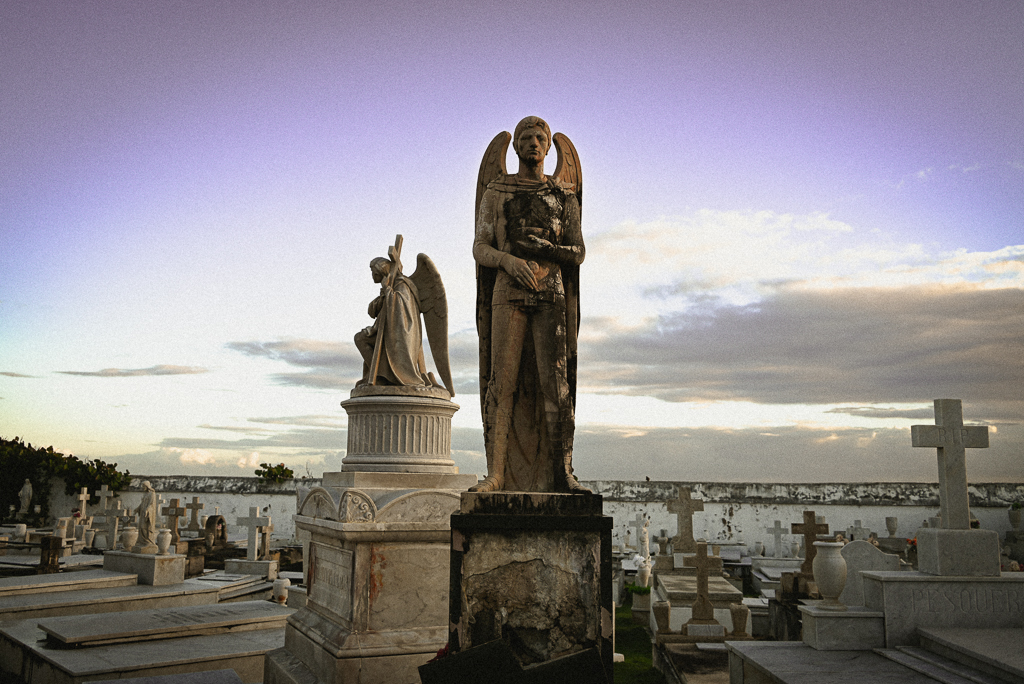
Old Graveyard
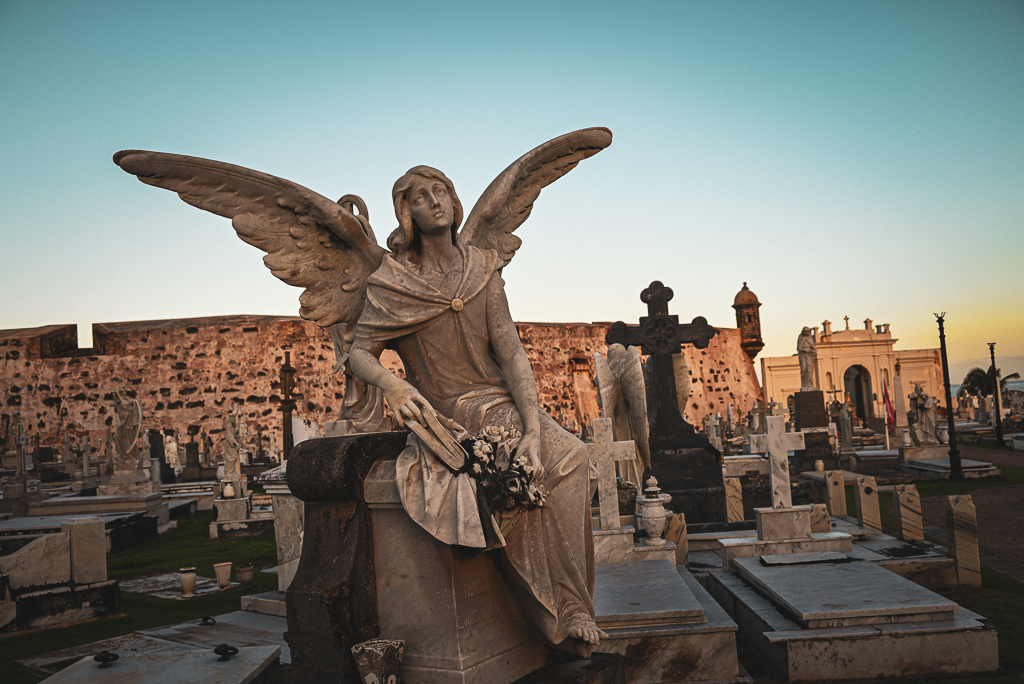
Old graveyard
Reflections on Puerto Rico
I really enjoyed my time in Puerto Rico, especially San Juan, and the island exceeded my expectations in many ways. The combination of history, culture, and beautiful scenery made it a fascinating place to explore.
Comparing the Caribbean’s Great Latin Islands
That said, if I had to compare Puerto Rico with the other two major Latin islands in the Caribbean — Dominican Republic and Cuba — I would still choose Cuba as my personal favorite.
There is something about Cuba’s atmosphere, history, and character that feels especially unique in the Caribbean. Still, Puerto Rico was a memorable experience and an important island to finally visit after so many years of traveling through the region.