
Returning to Costa Rica: A Different Kind of Adventure
First Trip to Corcovado National Park
May 2026: This was my first trip back to Costa Rica since my first visit 16 years ago, when I trekked across Corcovado National Park. That journey felt more like a wilderness expedition than a vacation—days spent deep in one of the most biologically diverse places on Earth. Corcovado remains one of my favorite national parks anywhere on the planet, and the memories from that adventure have stayed with me ever since.
Traveling with Family Instead of a Backpack
This trip to Costa Rica was very different.
The last time I visited, I was in my mid-thirties, traveling alone with the freedom and spontaneity that comes with backpacking. This time, I was traveling with my wife and our two-year-old daughter. The priorities were different, but the goal was the same: to experience the incredible wildlife and natural beauty that make Costa Rica such a special destination.
Why We Chose Costa Rica
Costa Rica felt like the perfect choice for a family adventure. It is one of the safest tropical, rainforest-covered countries in the world, with abundant wildlife that is remarkably easy to see and access. From monkeys and sloths to colorful birds and reptiles, opportunities to connect with nature are everywhere. Costa Rica’s biodiversity is nothing short of remarkable. Although the country covers only about 0.03% of the Earth’s land surface, it is home to an estimated 5% to 6% of the world’s biodiversity and approximately 18% of all butterfly species. Recognizing the importance of this natural heritage, Costa Rica has protected more than 25% of its territory through a network of national parks, wildlife refuges, and biological reserves. Unlike many wildlife destinations that require long expeditions into remote wilderness areas, Costa Rica makes nature easily accessible. In many places, you can spot monkeys from your hotel balcony, scarlet macaws flying overhead during breakfast, or sloths hanging from trees just a short walk from town.
More importantly, I wanted to share my love of wildlife with my daughter and continue nurturing the curiosity and affection for animals that both her mother and I have. Having spent much of my life seeking out wildlife in some of the world’s most remote places, there was something especially rewarding about watching my daughter experience these animals for the first time. My hope was that this trip would help plant the same appreciation for nature and wild places that has shaped so much of my own life.
The Perfect Birthday Getaway
The timing worked out perfectly. I had a free round-trip Southwest Airlines award ticket, and Costa Rica offered an easy, affordable escape. What followed was a memorable five-day birthday getaway filled with rainforest walks, wildlife encounters, family adventures, and the chance to introduce my daughter to one of the most beautiful corners of the natural world.
It was also the beginning of Costa Rica’s rainy season. With a young child in tow, I wanted to keep our itinerary simple, minimize driving time, and get the most wildlife viewing possible. After some planning, I decided to rent a car and focus our trip on two of Costa Rica’s most accessible and wildlife-rich national parks: Carara National Park and Manuel Antonio National Park. Along the way, we would also stop to see the famous crocodiles of the Tárcoles River.
Our plan was straightforward. We would spend our first night in San José before heading to a family-run rainforest bungalow resort near Carara National Park for two nights. From there, we would continue to the Pacific coast for a final night at a beachfront hotel adjacent to Manuel Antonio National Park before returning home.
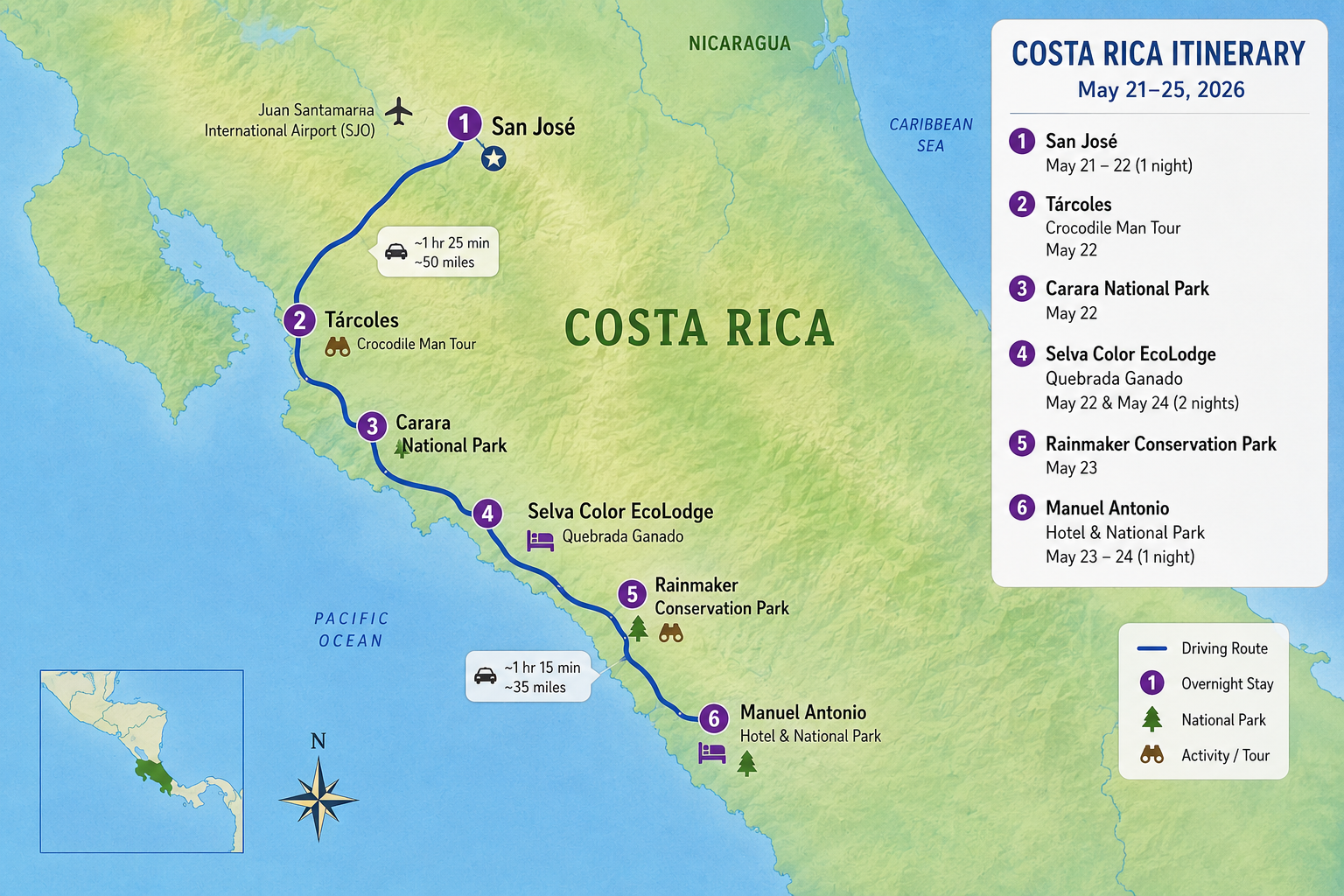
Our travel itinerary in Costa Rica
Getting There: The Journey to Costa Rica
Traveling Light
Before this trip, I made another important decision: we would no longer travel with checked luggage. Instead, we embraced the flexibility and simplicity of traveling with carry-on bags only. With a toddler in tow, being able to move quickly through airports and avoid waiting at baggage claim proved invaluable.
Delays, Storms, and Turbulence
That flexibility came in handy almost immediately. Our Southwest Airlines flights through Houston and Dallas were plagued by delays as bands of severe thunderstorms moved through the region. What was supposed to be a straightforward travel day turned into a long journey filled with gate changes, waiting, and uncertainty.
Eventually, after a long and surprisingly turbulent flight, we arrived in San José late in the evening. Despite the delays and chaos, Indie handled the flights remarkably well, with very few tantrums along the way.
A Toddler’s Airport Adventure
The airports, however, were another story.
Like many adventurous two-year-olds, Indie viewed every terminal as her personal playground. More than once, we found ourselves sprinting after her as she darted off in pursuit of some new discovery. Keeping track of a curious toddler in a busy airport can feel like a full-time job.
At one point, we had a genuine scare when she tipped herself over in her stroller, hitting her face hard enough to make her mouth bleed. For a few frightening moments, we worried she might have broken her nose or loosened a tooth. Fortunately, after some tears, plenty of reassurance, and the restorative power of ice cream, she was smiling again and back to causing mischief as if nothing had happened.
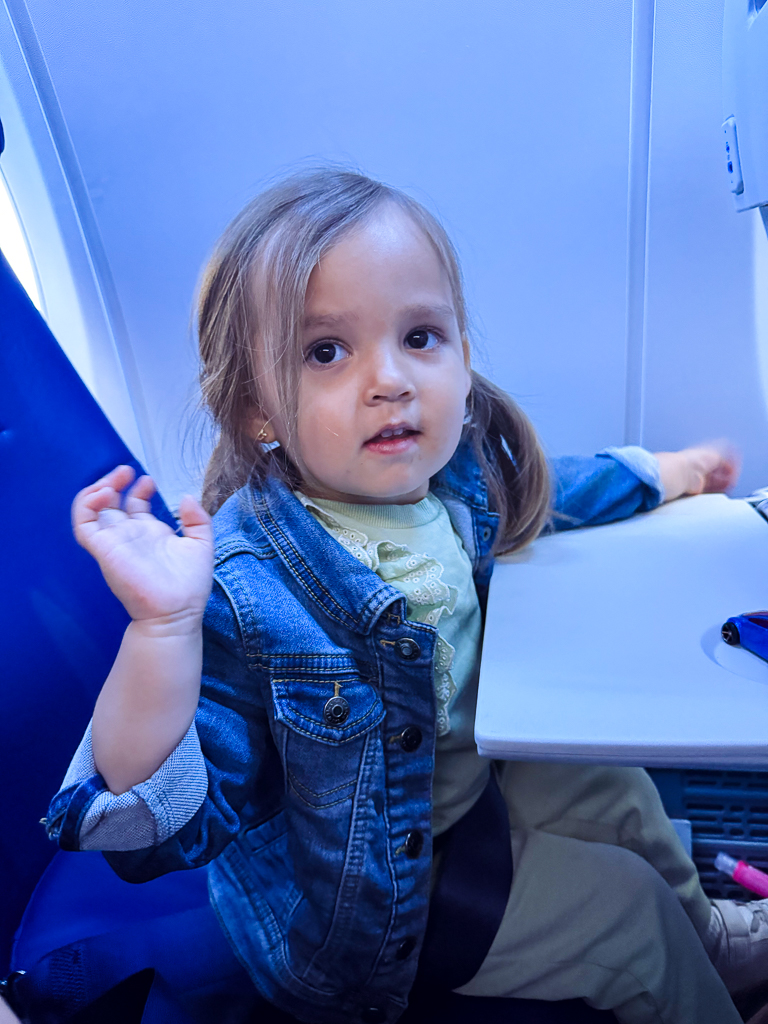
Indie on the plane
Indie and her mom pushing carry-on bags through the airport
Our First Night in Costa Rica
As much as I love Costa Rica’s incredible wildlife and natural beauty, it isn’t my favorite country in Central America. I prefer Nicaragua and Guatemala because they feel less Americanized and offer more culturally unique travel experiences.
Some examples of Costa Rica’s Americanization became apparent almost immediately after arriving in San José. The roads were lined with familiar American fast-food chains, large shopping centers, and international hotel brands that made parts of the city feel surprisingly similar to the United States.
After arriving in San José, we picked up our rental car from Fox Rent A Car and drove to the Holiday Inn near the airport, where we would spend our first night. Exhausted from a long day of delayed flights and travel, we kept things simple and ordered dinner from Denny’s through Uber Eats.
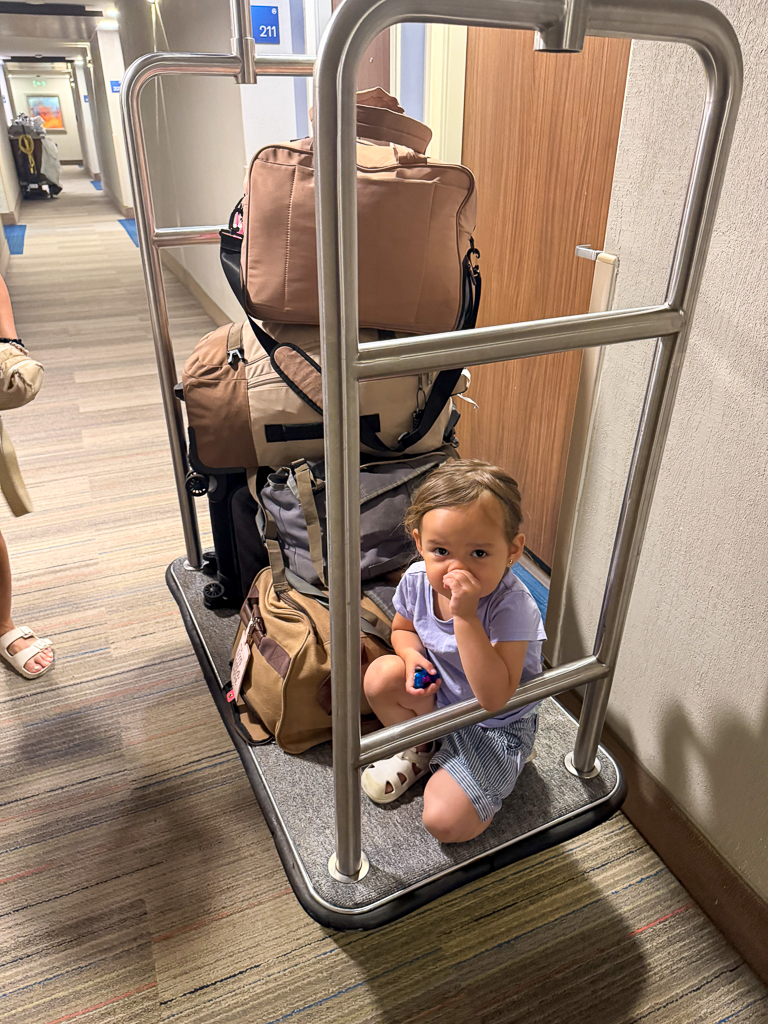
Indie hitching a ride in the luggage cart that Pushed to our room at the Holiday Inn
Crocodiles of the Tárcoles River
Driving to Costa Rica’s Crocodile Hotspot
The next morning, we set off on the 1.5-hour drive to the Tárcoles River to see the massive American crocodiles that inhabit the river near its outlet to the Pacific Ocean. This area is famous for its high density of crocodiles, including many individuals exceeding 12 feet in length, and there is no shortage of boat tours offering visitors a closer look at these impressive reptiles and the other wildlife that call the river home.
A Boat Trip Among Giants
We found a small covered boat with only two other tourists and embarked on a two-hour tour. Before long, we were spotting crocodiles everywhere. Over the course of the trip, we saw no fewer than 20 crocodiles, ranging from smaller individuals to enormous adults basking along the muddy riverbanks.
The river itself was less picturesque than I had expected. The water was murky, and sadly, a considerable amount of plastic and other garbage had accumulated along parts of the shoreline. Much of this debris washes downstream during the rainy season from the San José metropolitan area before eventually reaching the Pacific Ocean. Despite these challenges, the river supports a remarkably healthy population of wildlife, including its famous giant crocodiles.
Boating with a Toddler
Traveling with a defiant and curious two-year-old added a layer of excitement to the experience. Indie wore a life jacket we had brought from home, which the boat captain said was not needed, despite there being no life jackets provided on board and safety measures minimal. The boat had low railings, and throughout the tour we found ourselves constantly chasing Indie from one side of the boat to the other to make sure she stayed safe. I had to tell her that the crocodiles would eat her if she fell in and she said no my daddy would save me.
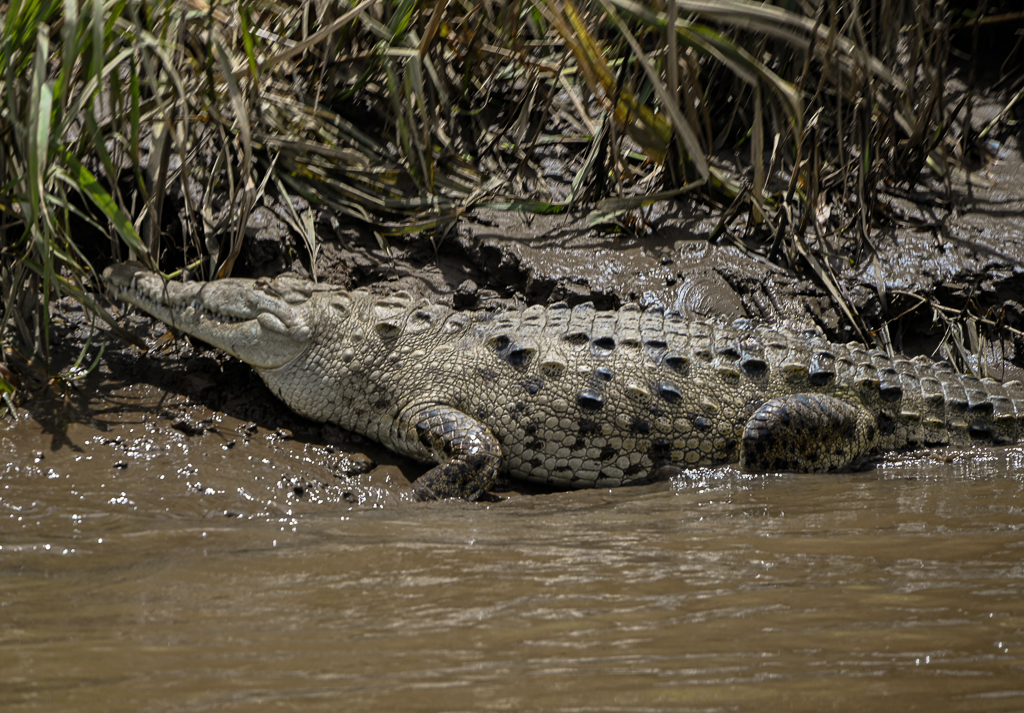
Huge American Crocodile
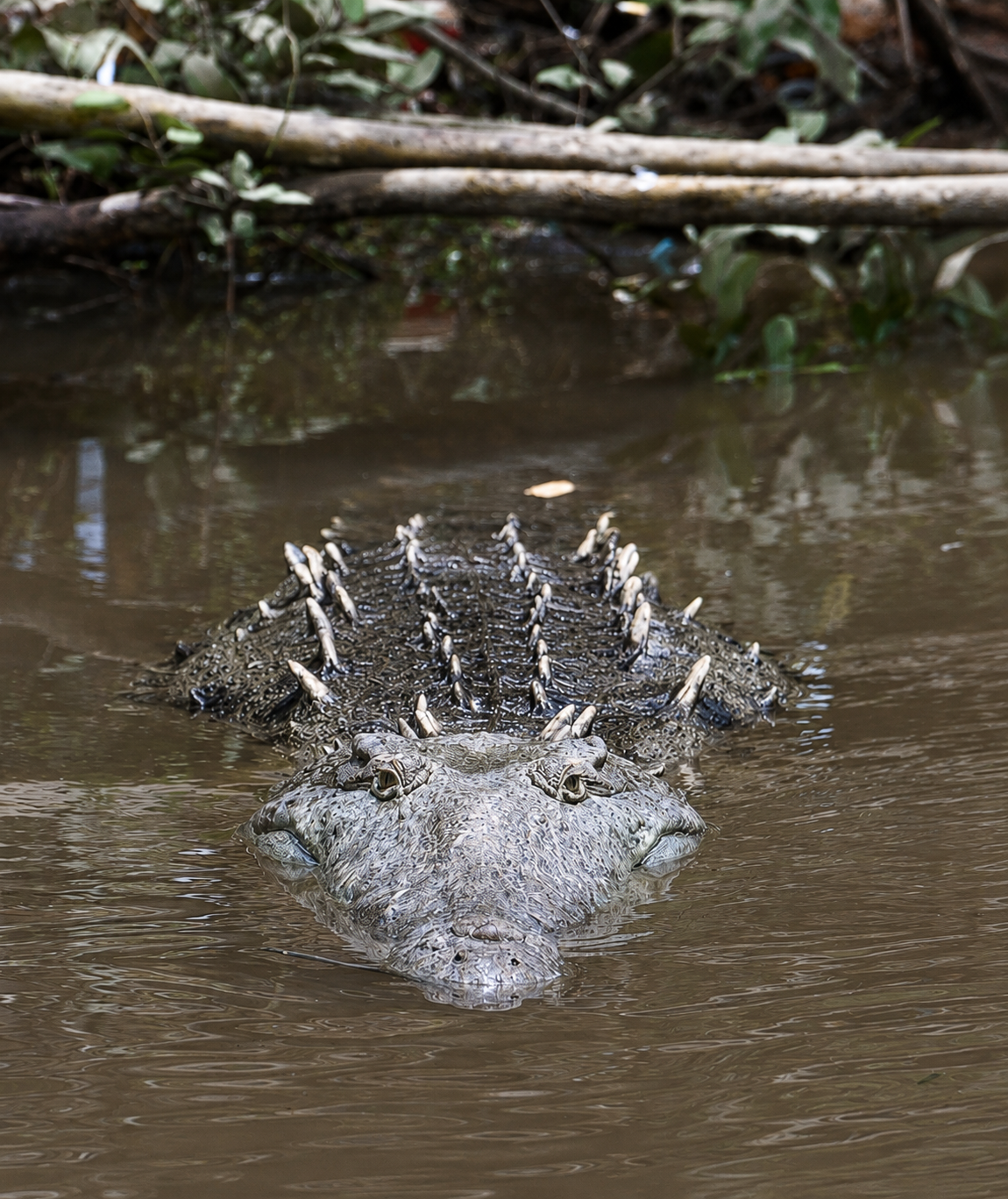
Tarcoles River
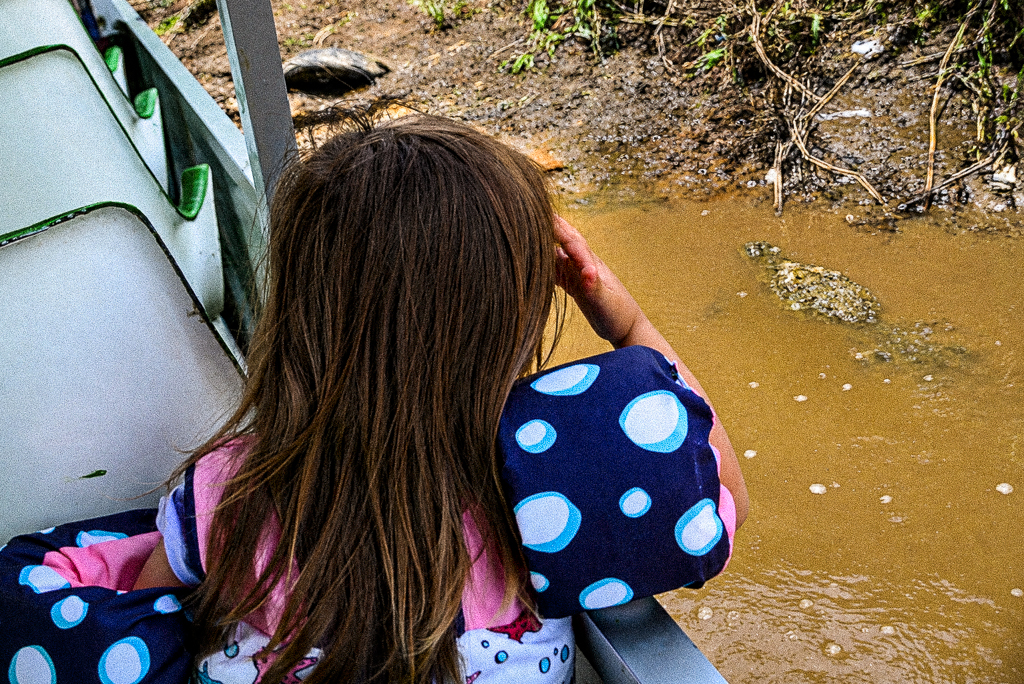
Indie watching the crocodiles
Exploring Carara National Park
Entering the Rainforest
Our next stop, just down the road from the crocodiles, was Carara National Park, a protected rainforest where the mountain forests transition into the lowland forests of Costa Rica’s Pacific coast. Like Manuel Antonio, the park is teeming with wildlife and is especially known for its populations of howler and white-faced capuchin monkeys, poison dart frogs, and the iconic scarlet macaw.
As soon as we pulled into the nearly empty dirt parking lot and saw lounging iguanas and flocks of scarlet macaws flying overhead, I knew I was going to love this place.
Into the Primary Forest
I put Indie into my backpack carrier, and we set off along the loop trail beneath towering primary rainforest trees. The forest immediately enveloped us in heat and humidity, and the sounds of insects and birds echoed through the canopy above.
Because it was the beginning of the rainy season and conditions were especially wet, the poison dart frogs were incredibly active. Within minutes, we began spotting them everywhere. Hundreds of tiny frogs hopped across the trail in front of us, their bright colors standing out against the dark forest floor.
Wildlife and Hidden Dangers
Seeing so many poison dart frogs was one of the highlights of the hike, but it also reinforced why I was glad Indie was safely secured in the backpack carrier. Tropical rainforests are full of hazards for curious toddlers, from poisonous plants and biting ants to venomous snakes hidden among the leaf litter.
Even the frogs themselves can pose a risk. While these tiny amphibians are beautiful, their skin contains toxins that can cause serious irritation if transferred to the eyes, mouth, or open cuts. With a toddler who loved touching everything she could reach. Interestingly, poison dart frogs are highly toxic in the wild because of their diet of certain ants, beetles, and other small invertebrates that contain toxic compounds. The frogs accumulate these toxins in their skin as a defense against predators. In captivity, however, where they are fed non-toxic insects, they lose their toxicity entirely and become harmless.
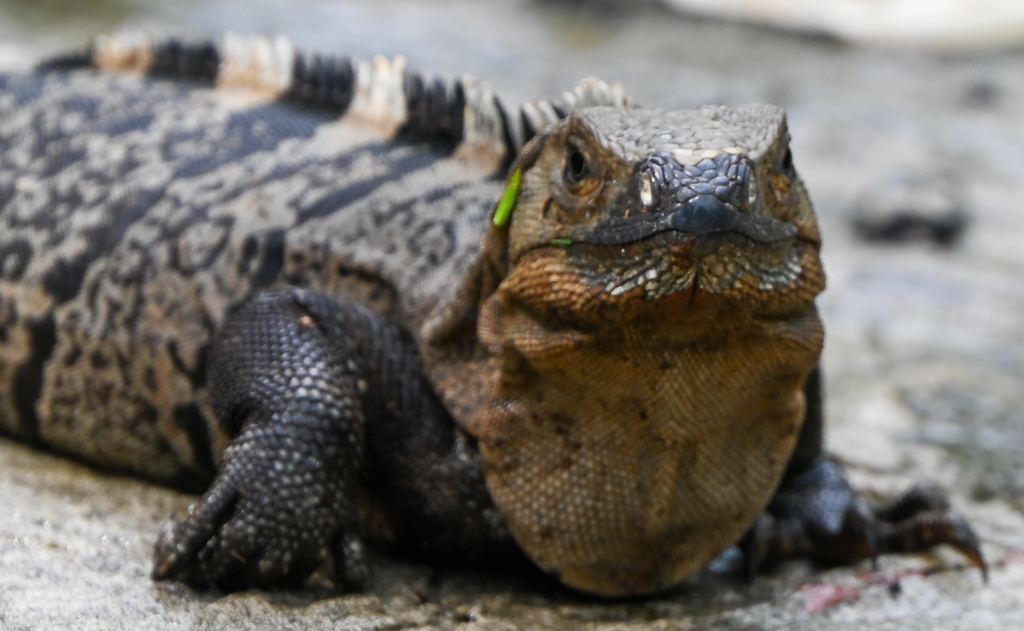
Lounging iguana in the parking lot
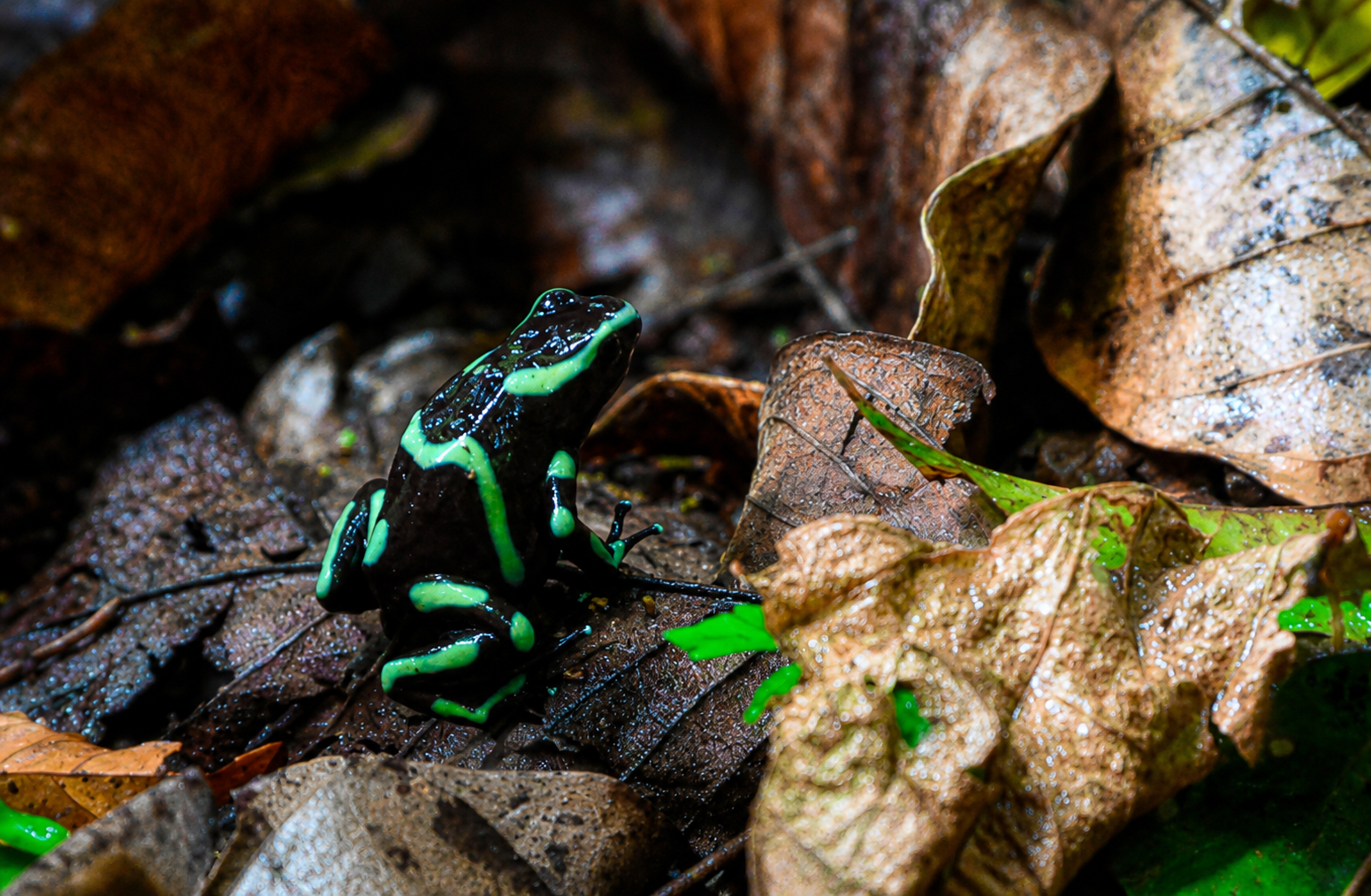
Green and Black Poison Dart Frog
Selva Color: Our Jungle Retreat
A Birthday Stay in the Rainforest
For my birthday, I booked us at Selva Color Jungle Lodge, located just outside Carara National Park. Calling it a lodge is somewhat misleading—it felt more like a collection of private bungalows scattered throughout the rainforest. Surrounded by lush jungle vegetation, multiple swimming pools, and frequent visits from scarlet macaws flying overhead, it was exactly the kind of place I had hoped to find in Costa Rica.
A Special Birthday Upgrade
The property was run by a kind Costa Rican woman who made our stay even more memorable by upgrading us to a larger bungalow for my birthday. The bungalow featured massive glass windows in the living room and kitchen, allowing us to sit comfortably indoors while gazing out at the surrounding rainforest.
On our first night, we ordered drinks, seafood, and cheesecake through Uber Eats in Jaco. The delivery took over an hour as a driver on a motorcycle navigated a torrential thunderstorm to reach our bungalow. Eventually, our dinner arrived, and we celebrated my birthday around the kitchen table while rain pounded the roof and lightning illuminated the jungle outside.
Indie listened to the storm in awe. Every crack of thunder drew her attention, and she repeatedly told us she was scared.
Swimming Pool Paradise
We loved our stay at Selva Color and ended up spending two nights there during the trip. The pools quickly became one of Indie’s favorite parts of the property.
In fact, during our stay she became comfortable enough to swim on her own for the first time. While she still wore her arm floaties, it was exciting to watch her gain confidence in the water and begin exploring independently. Watching her overcome her fears and discover new confidence made the experience every bit as rewarding as the wildlife encounters that had brought us to Costa Rica in the first place.
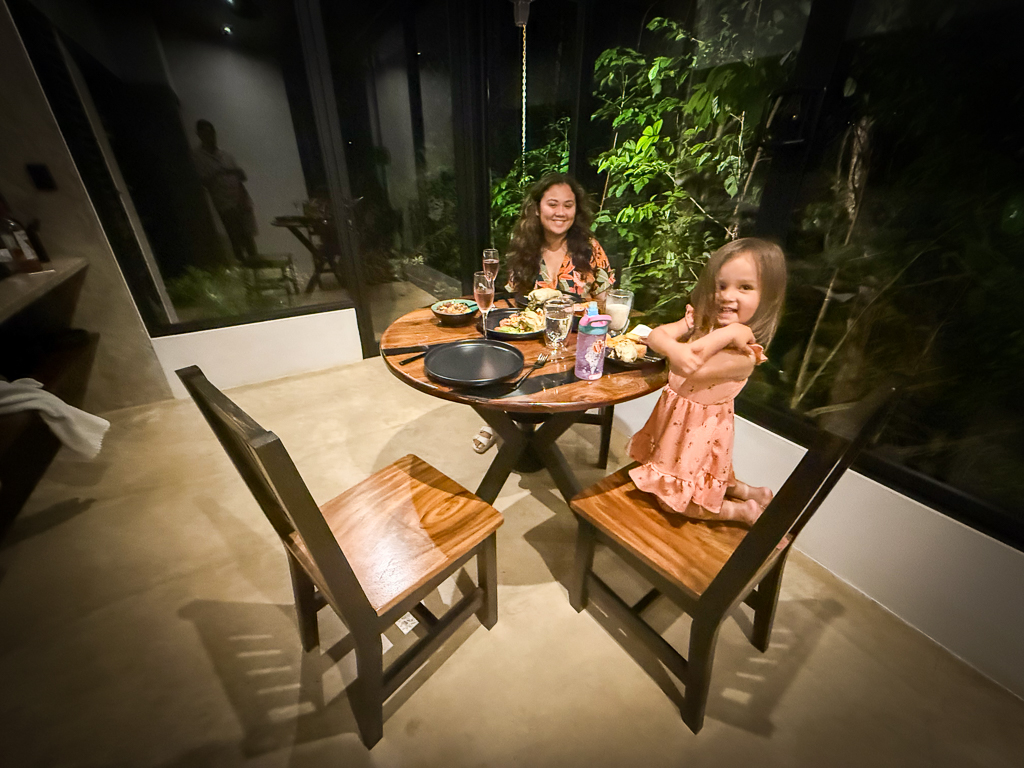
My birthday dinner
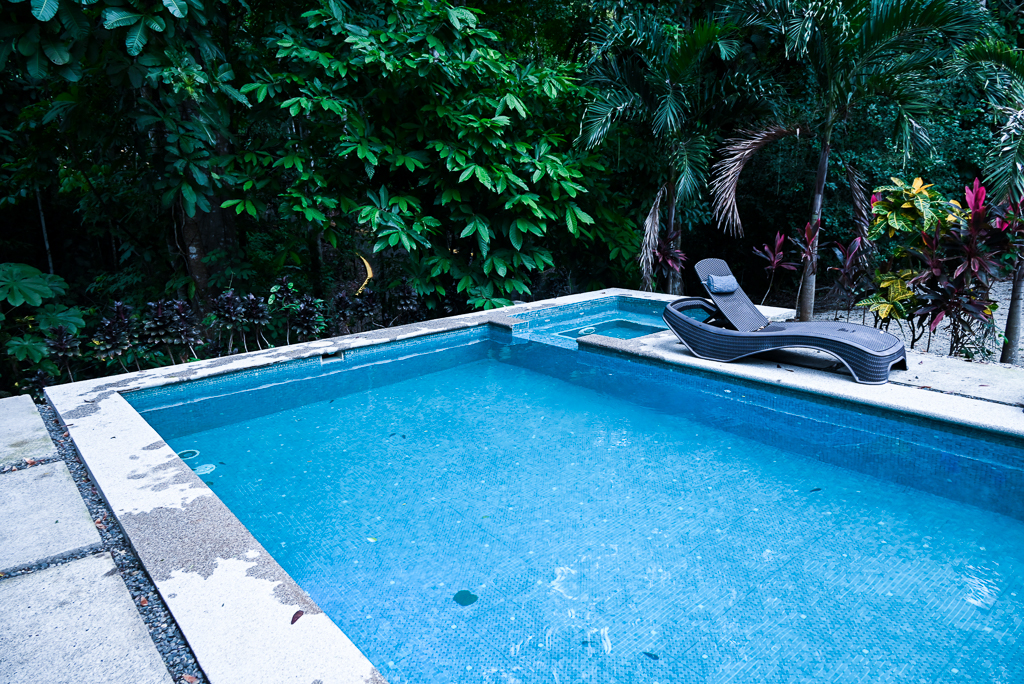
The pool we spent hours swimming in together
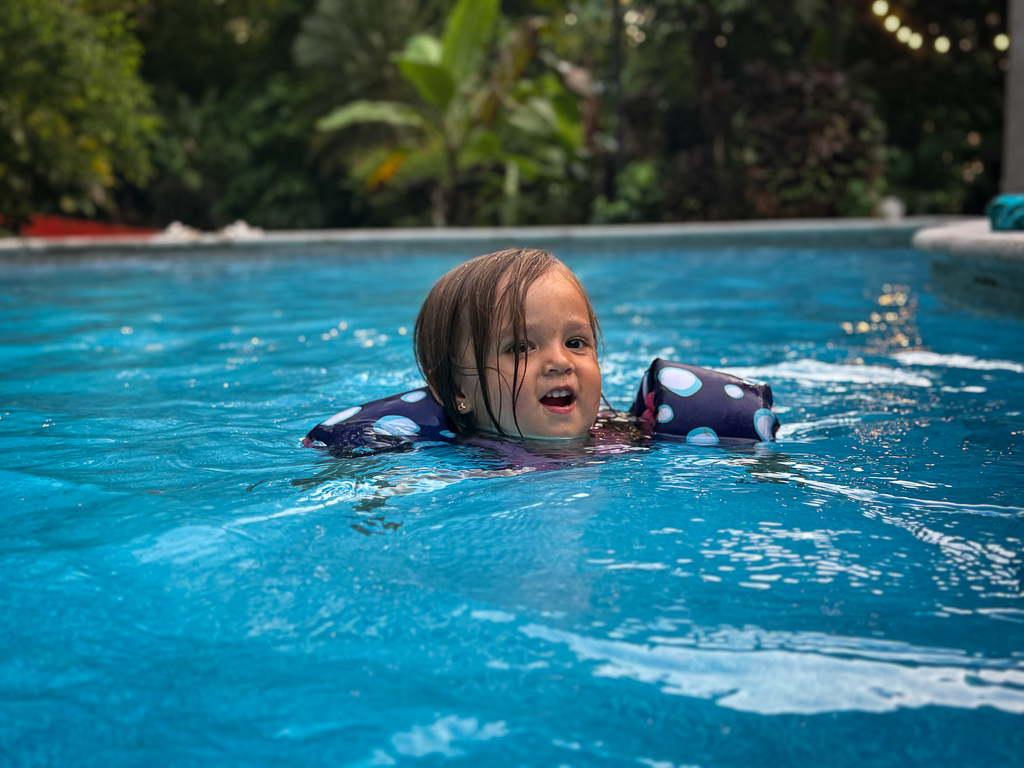
Indie having a blast in the pool
Indie learning to swim
Play time
Rainmaker Reserve
A Detour into Rural Costa Rica
On our third day in Costa Rica, we drove toward Quepos, where we would spend the night at a beach hotel near Manuel Antonio National Park. Along the way, I wanted to make a stop at Rainmaker Reserve, a private rainforest reserve known for its hanging bridges, waterfalls, and swimming holes.
The reserve required a short detour off the main highway and offered a glimpse into a more rural side of Costa Rica. We passed through small farming communities and traveled along rough plantation roads before arriving at the reserve.
Waterfalls and Thunderstorms
Rainmaker protects a beautiful stretch of rainforest climbing up the side of a mountain ridge. The trail winds through dense jungle, crosses a series of hanging bridges, and passes several waterfalls and natural pools.
Unfortunately, the weather did not fully cooperate. Not long after we began hiking, the skies opened up and a heavy tropical downpour arrived, accompanied by thunder rumbling through the forest. Despite the rain, we continued exploring and made our way to one of the waterfalls.
Indie’s First Waterfall Swim
One of the reasons I had chosen Rainmaker was that several of the pools were shallow and calm enough for Indie to safely enjoy. We climbed into the cool water beneath one of the waterfalls and let her splash around.
It was Indie’s first time swimming beneath a waterfall, and she absolutely loved it. She giggled the entire time, splashing happily in the water while the rainforest echoed with the sounds of rain and rushing streams.
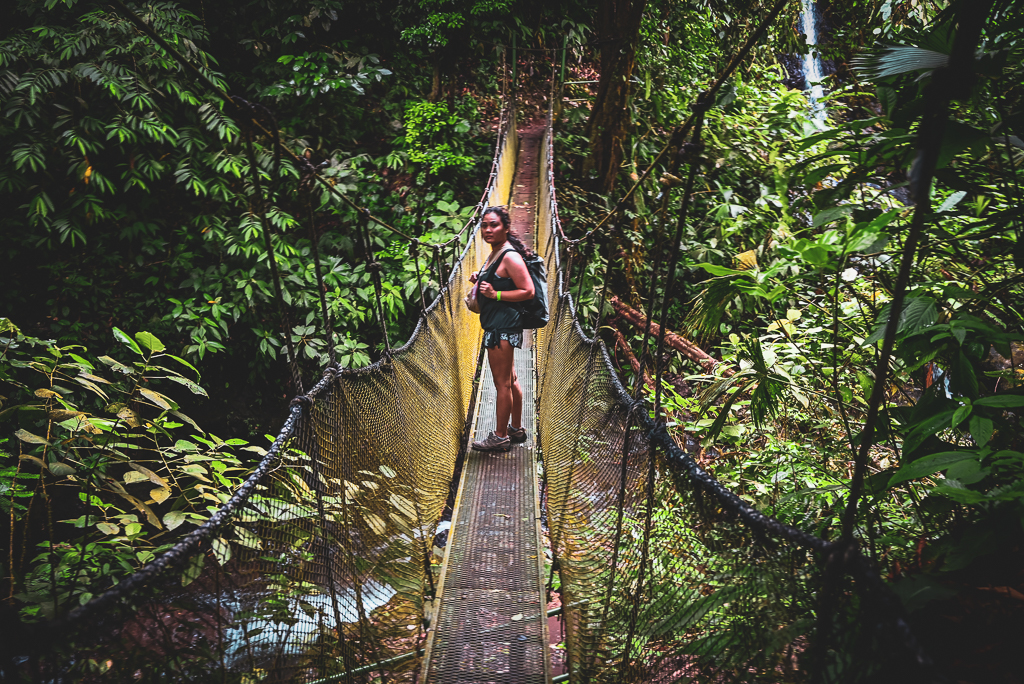
Paula crossing a rope bridge at rainmaker
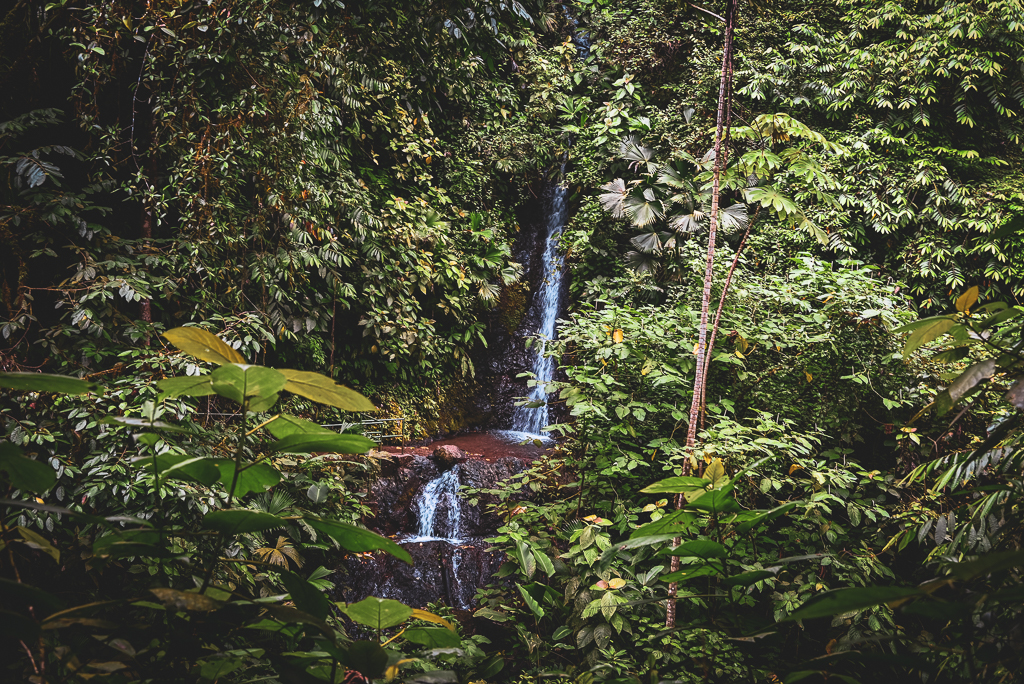
Waterfalls
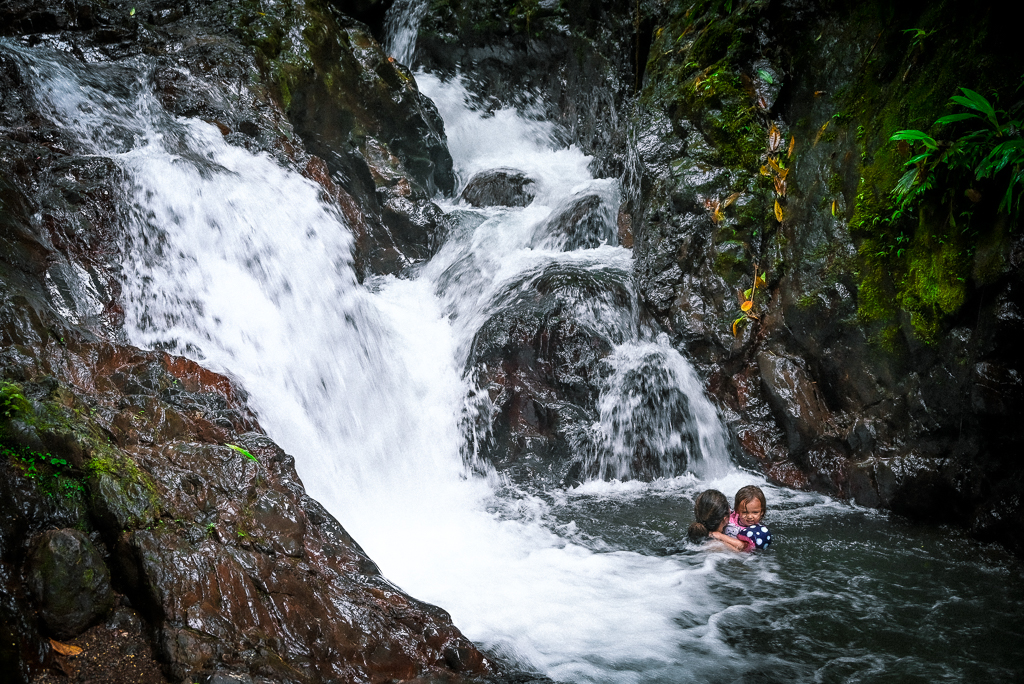
Paula and Indie swimming in the waterfall
Manuel Antonio and a Night Hike in the Jungle
Arrival in Manuel Antonio
After the violent storms subsided and we had lunch in the safety of Rainmaker’s open-air dining area, we continued our drive to Manuel Antonio, where we would spend the night at a beachfront hotel adjacent to the national park.
The hotel was a little rough around the edges, but the staff were friendly and the location was excellent. One challenge was keeping track of Indie, who was drawn to a small playground on the edge of the property. The playground was surrounded by tall grass and dense vegetation that looked like prime snake habitat, so I found myself repeatedly reminding her not to wander off on her own.
Into the Rainforest After Dark
Later that evening, we joined a guided night hike in a private reserve connected to the same rainforest ecosystem as Manuel Antonio National Park. I placed Indie in my backpack carrier and covered her with a rain tarp in preparation for the weather.
That precaution proved wise. About halfway through the hike, a thunderstorm rolled in and dumped rain on us for nearly thirty minutes. Fortunately, the dense rainforest canopy sheltered us from the worst of the downpour, allowing us to continue our search for nocturnal wildlife.
Armed with flashlights, hiking boots, and cameras, our group slowly worked its way through the jungle, scanning leaves, branches, and tree trunks for creatures that emerge only after dark.
Creatures of the Night
The rainforest did not disappoint. We encountered dozens of frogs of different shapes, sizes, and colors. We found tree crabs clinging to vegetation, and our guide pointed out a massive tarantula sitting just inside the entrance of its burrow.
One of the most memorable sightings was a kinkajou scrambling through the branches overhead. Rarely seen during the day, the nocturnal mammal moved effortlessly through the canopy as it searched for fruit.
But the highlight of the evening was spotting a fer-de-lance, known locally as the terciopelo. Widely considered one of the most dangerous snakes in Central America, it is responsible for more venomous snakebites than any other species in the region. Seeing one in the wild was both thrilling and sobering, especially knowing how well camouflaged these snakes can be on the rainforest floor.
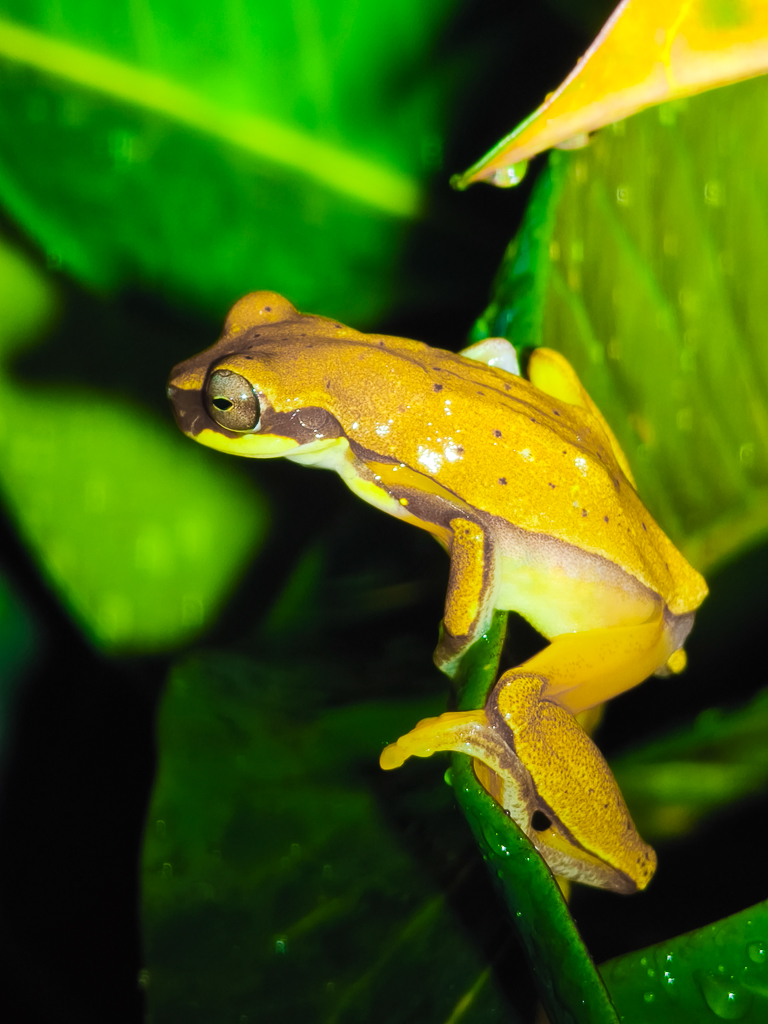
Tree frog
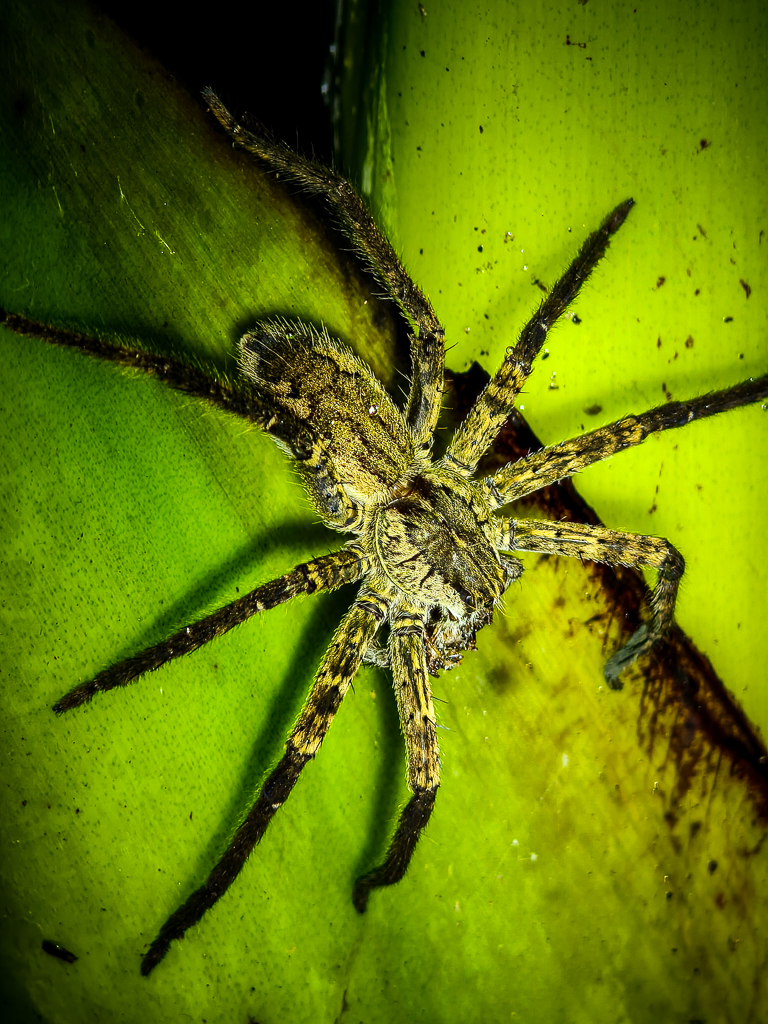
Leaf spider
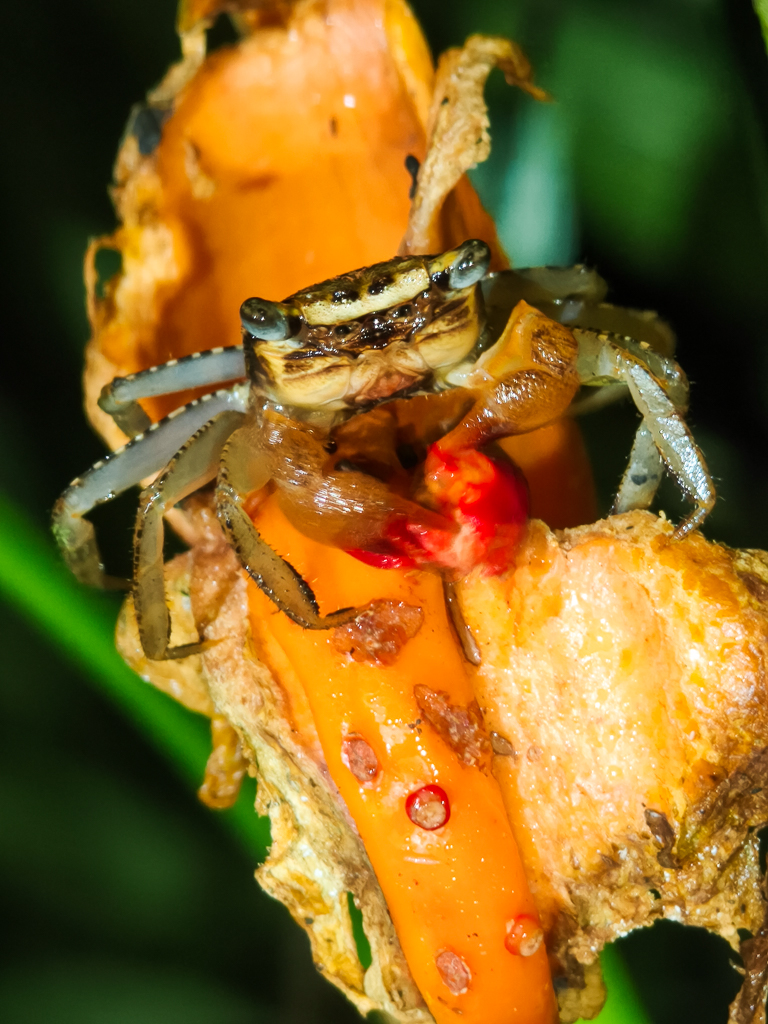
Tree crab
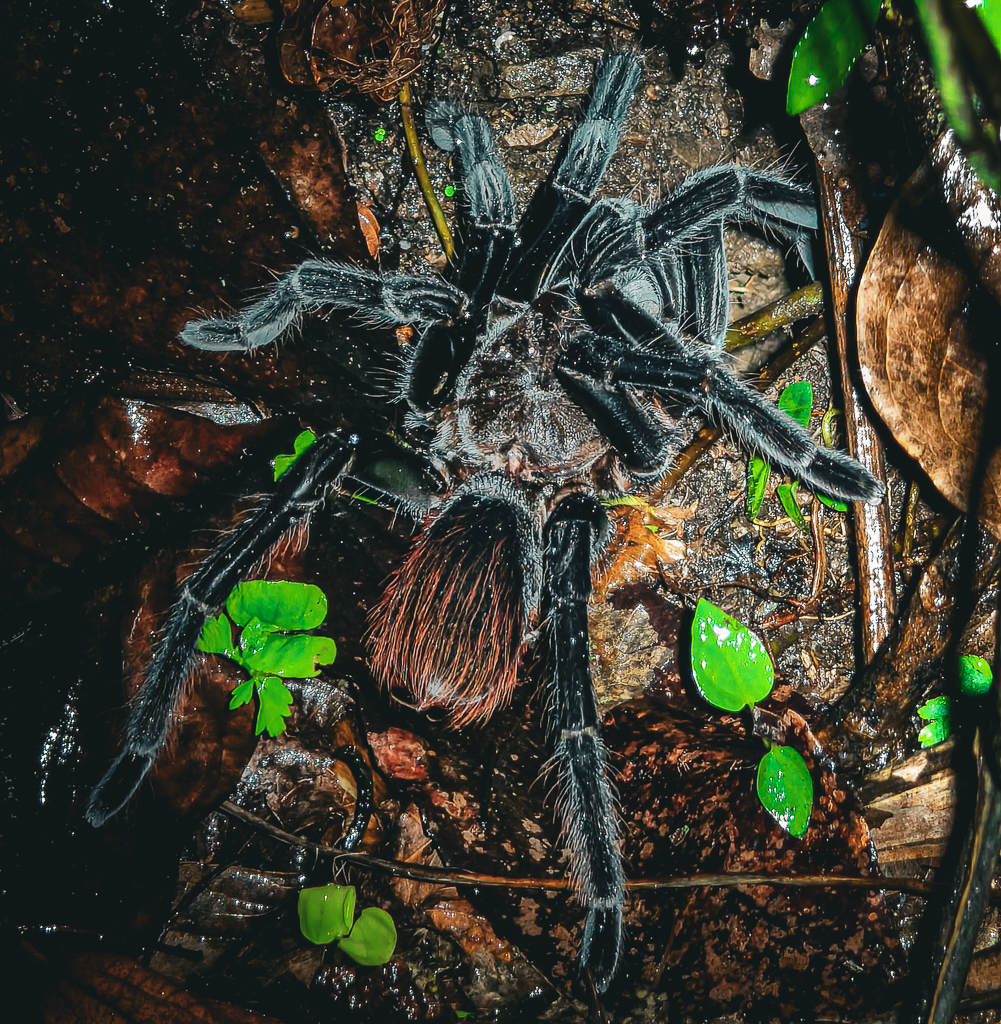
Tarantula
Face to Face with a Fer-de-Lance
Towards the end of the hike, I was reminded why I rarely let Indie walk on her own in tropical rainforests.
Out of the corner of my eye, I spotted a snake slithering across the trail completely unnoticed by our guide. It passed within inches of his boots as he was setting up a tripod to photograph a frog. The snake then disappeared into the leaf litter beside the trail and turned into a defensive posture facing our group.
It was a juvenile fer-de-lance, known locally as a terciopelo, one of the most dangerous snakes in the Americas.
I have spent a considerable amount of time hiking in Central American rainforests, and this was my first confirmed encounter with the species—or at least the first one I was aware of. Given how perfectly camouflaged they are, it is entirely possible I had unknowingly walked past others before.
The fer-de-lance possesses a potent venom capable of causing severe tissue damage, intense pain, internal bleeding, and potentially life-threatening complications if left untreated. While effective antivenom is widely available in Costa Rica, a bite would still be a medical emergency and could result in lasting injury, including tissue necrosis around the bite site.
The beginning of the rainy season is one of the times when these snakes are most active, which increases the chances of encounters with people along forest edges, trails, and agricultural areas. Despite their fearsome reputation, they generally prefer to avoid confrontation and rely heavily on their camouflage for protection
A Dark Night in Quepos
We returned to our hotel after the night hike soaked from the rain and discovered that the hotel had lost electricity due to rolling blackouts in the area. After getting cleaned up, I ventured into Quepos to find dinner at one of the few restaurants that remained open.
The walk took me through a dark and lonely stretch of road where a handful of characters lingered in the shadows. It was one of the few moments on the trip where I felt slightly uneasy, but I eventually found food and made it back to the hotel without incident.
Despite the power outage, we managed to get some sleep. We needed an early start the next morning because our entry window for Manuel Antonio National Park was between 8:00 and 8:45 a.m. The park uses timed entry slots to help control visitor numbers and reduce overcrowding. Fortunately, the entrance was only a five-minute walk from our hotel.
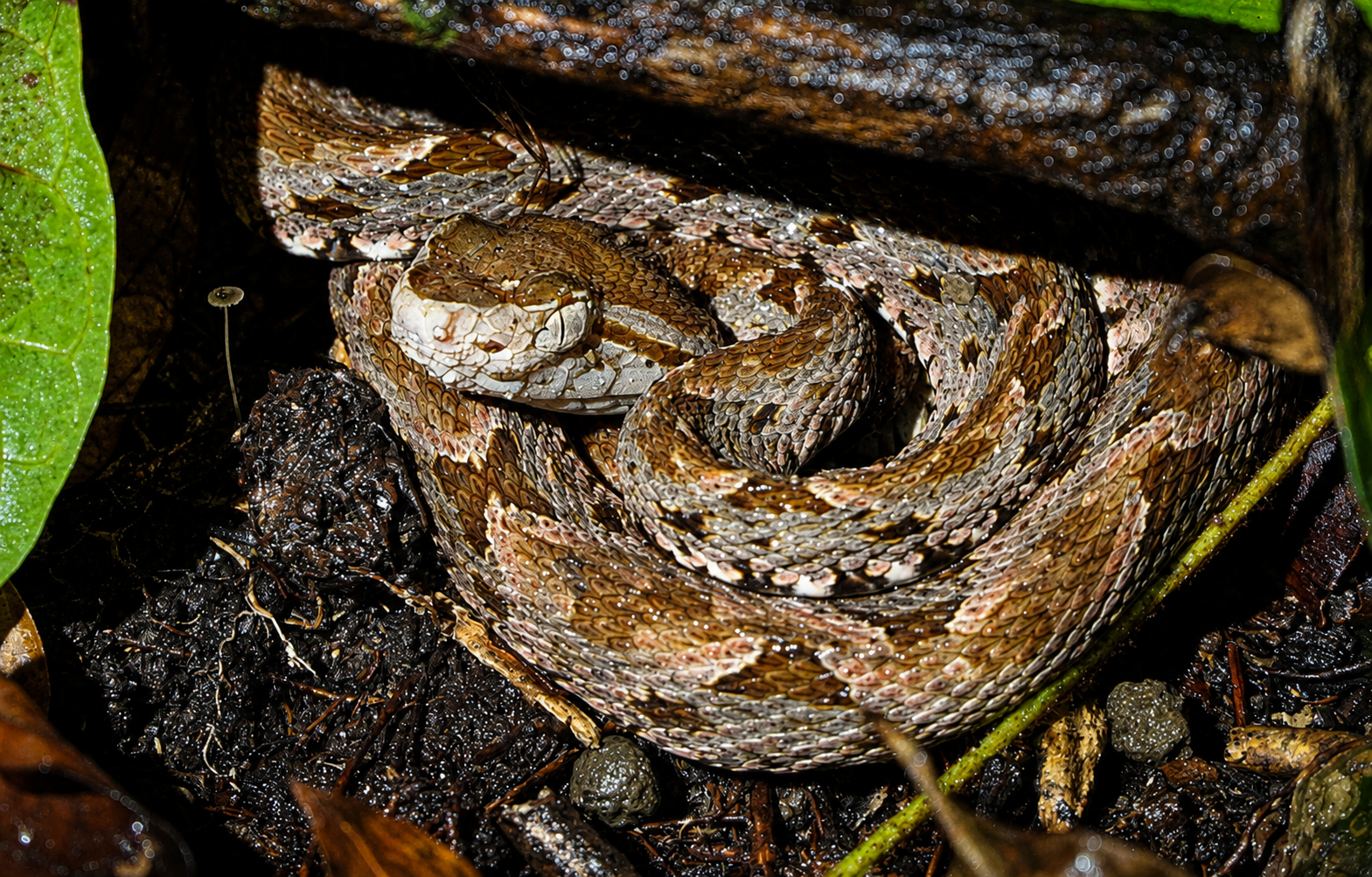
Fer-de-lance snake
Manuel Antonio National Park
Hiring a Local Guide
The next morning, I hired a local guide at the park entrance. We probably didn’t need one, but I figured it might help keep Indie interested if we were able to spot more wildlife. As it turned out, the guide’s spotting scope helped us find animals that we would have easily walked past on our own.
Costa Rica’s Most Family-Friendly National Park
Manuel Antonio National Park is probably one of the most kid-friendly national parks I have ever visited. The rainforest trails are safe, well-maintained, and easily accessible, making them ideal for families with young children. Despite the ease of access, the wildlife viewing is exceptional.
Monkeys seemed to be everywhere, parrots flew overhead, and sloths clung to branches above the trail. The combination of abundant wildlife and easy hiking makes Manuel Antonio one of the best places in Costa Rica for introducing children to the rainforest.
My only complaint is that there are more tourists than I am used to. However, visiting at the end of May, just as the rainy season was beginning, meant noticeably smaller crowds than during the peak dry-season months.
The Sloth Capital of Costa Rica
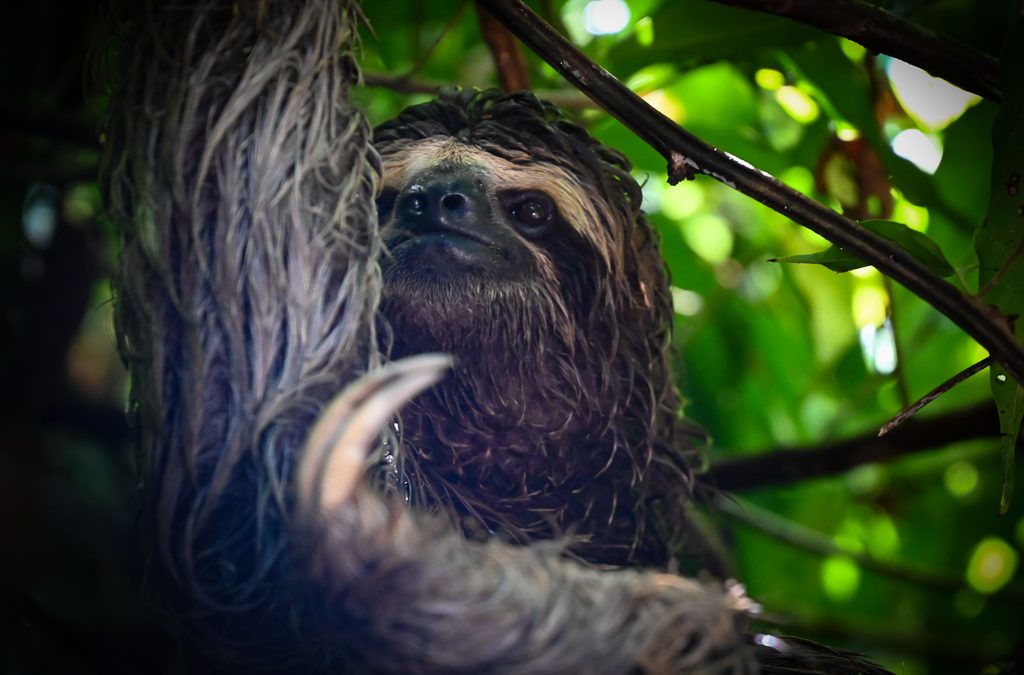
If there is one animal that defines Manuel Antonio, it is the three-toed sloth. Of all the places I have visited in Costa Rica, Manuel Antonio was easily the most reliable location for seeing them in the wild.
With the help of our guide, we found multiple sloths resting high in the trees, their shaggy fur blending surprisingly well into the canopy. They moved slowly, almost imperceptibly, and often drew a crowd of visitors once they were spotted.
For Indie, the monkeys were still the stars of the show, but for me, seeing so many wild three-toed sloths was one of the highlights of the entire trip.
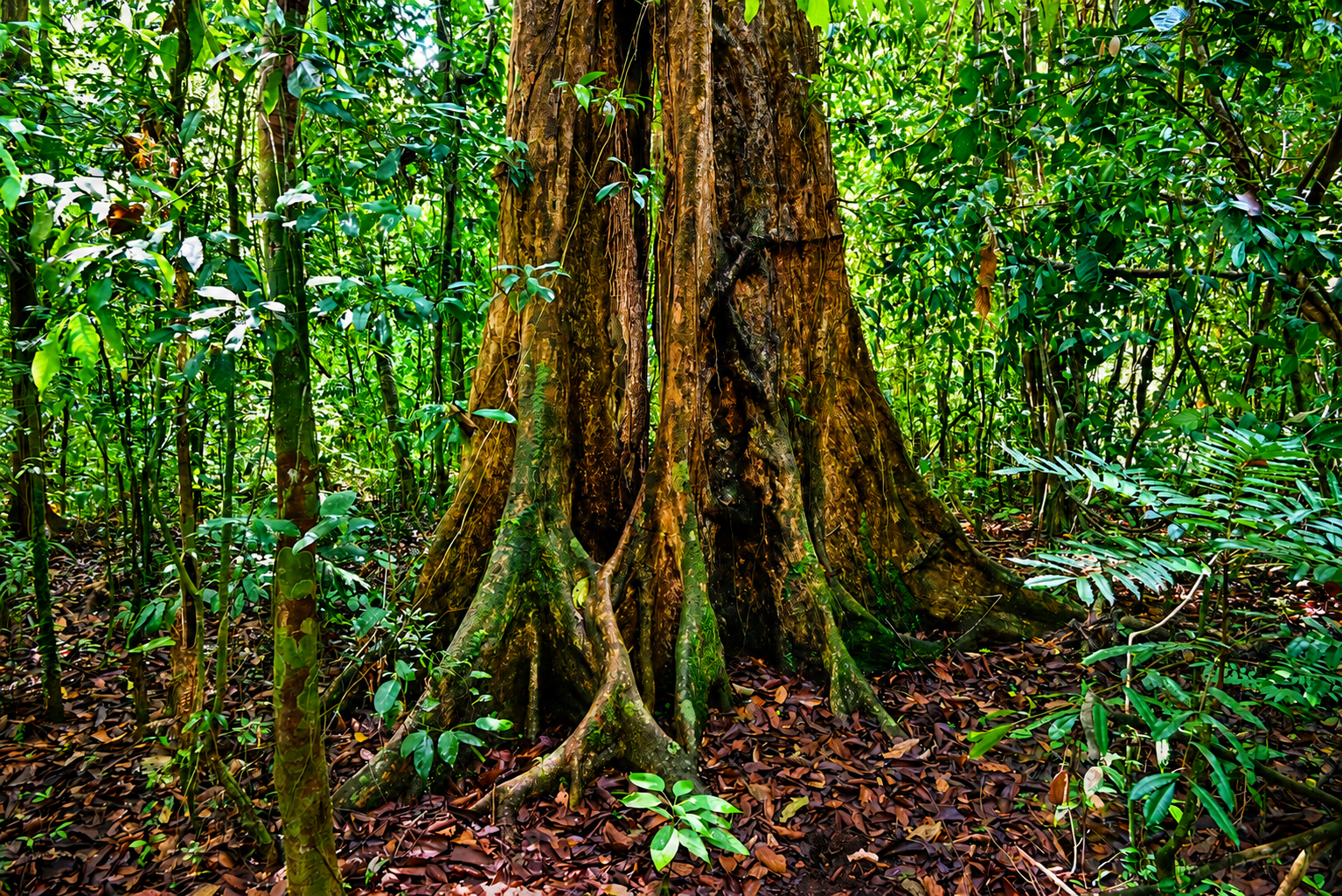
Massive tree
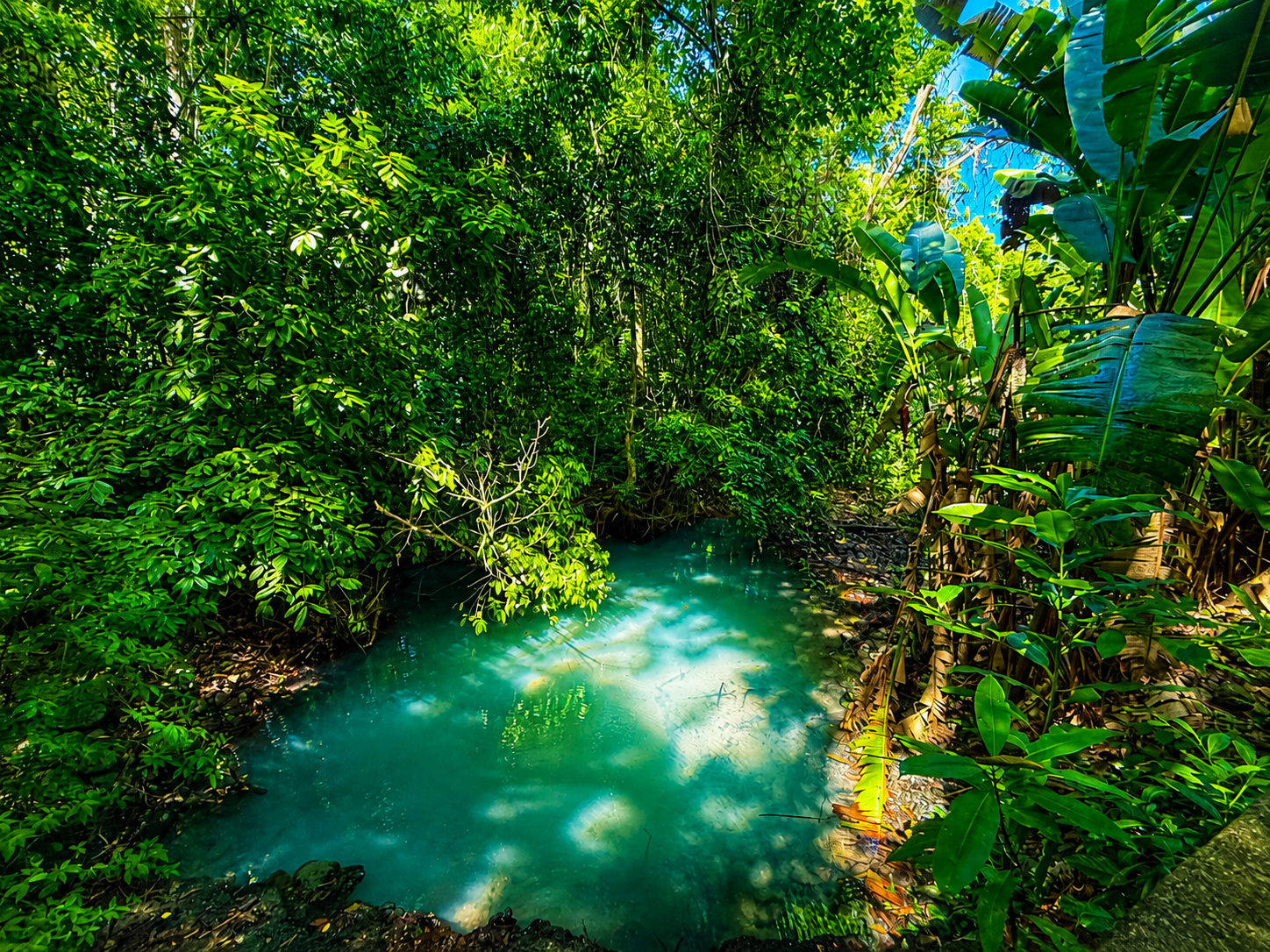
Jungle pool
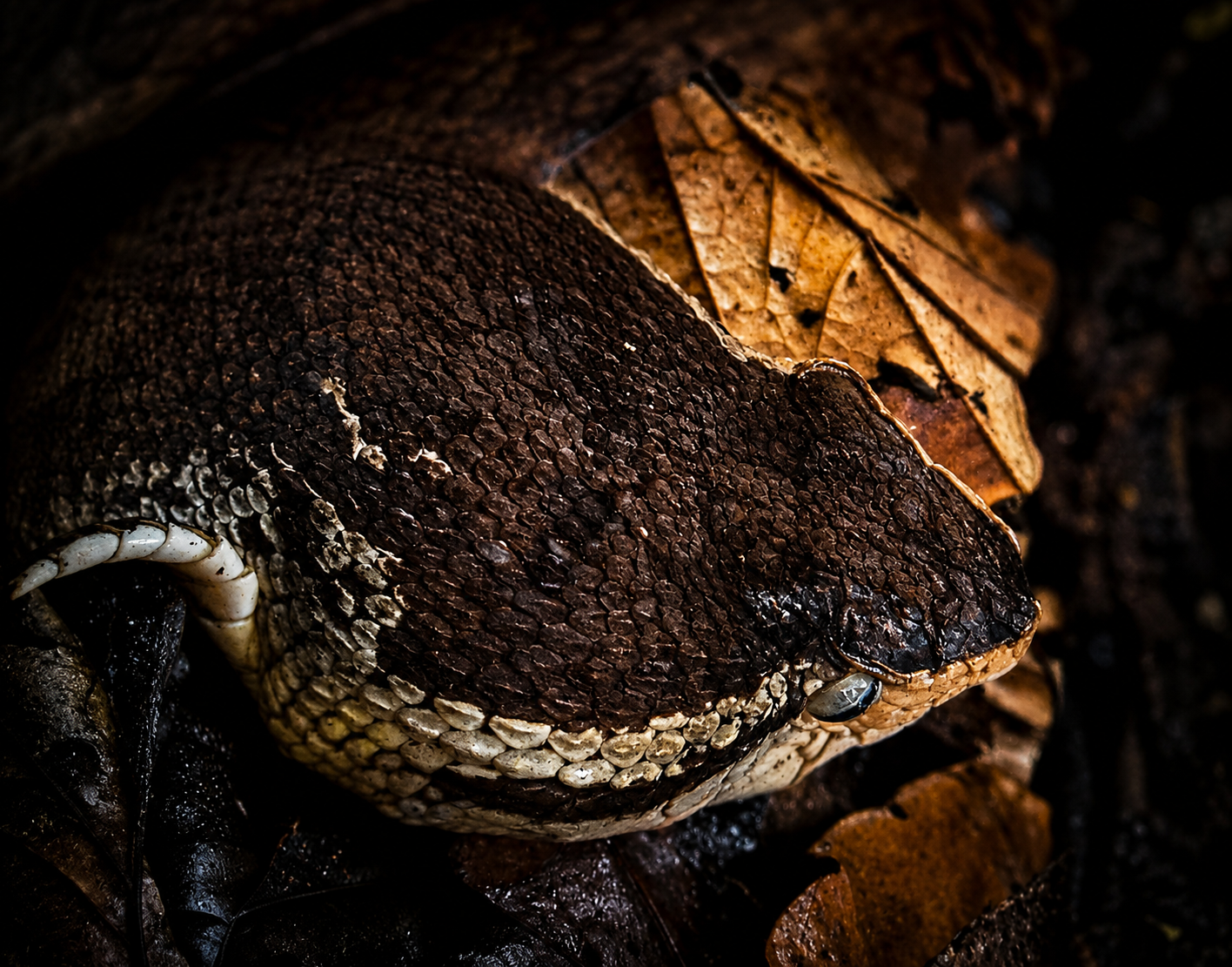
Huge fer-de-lance snake off the trail
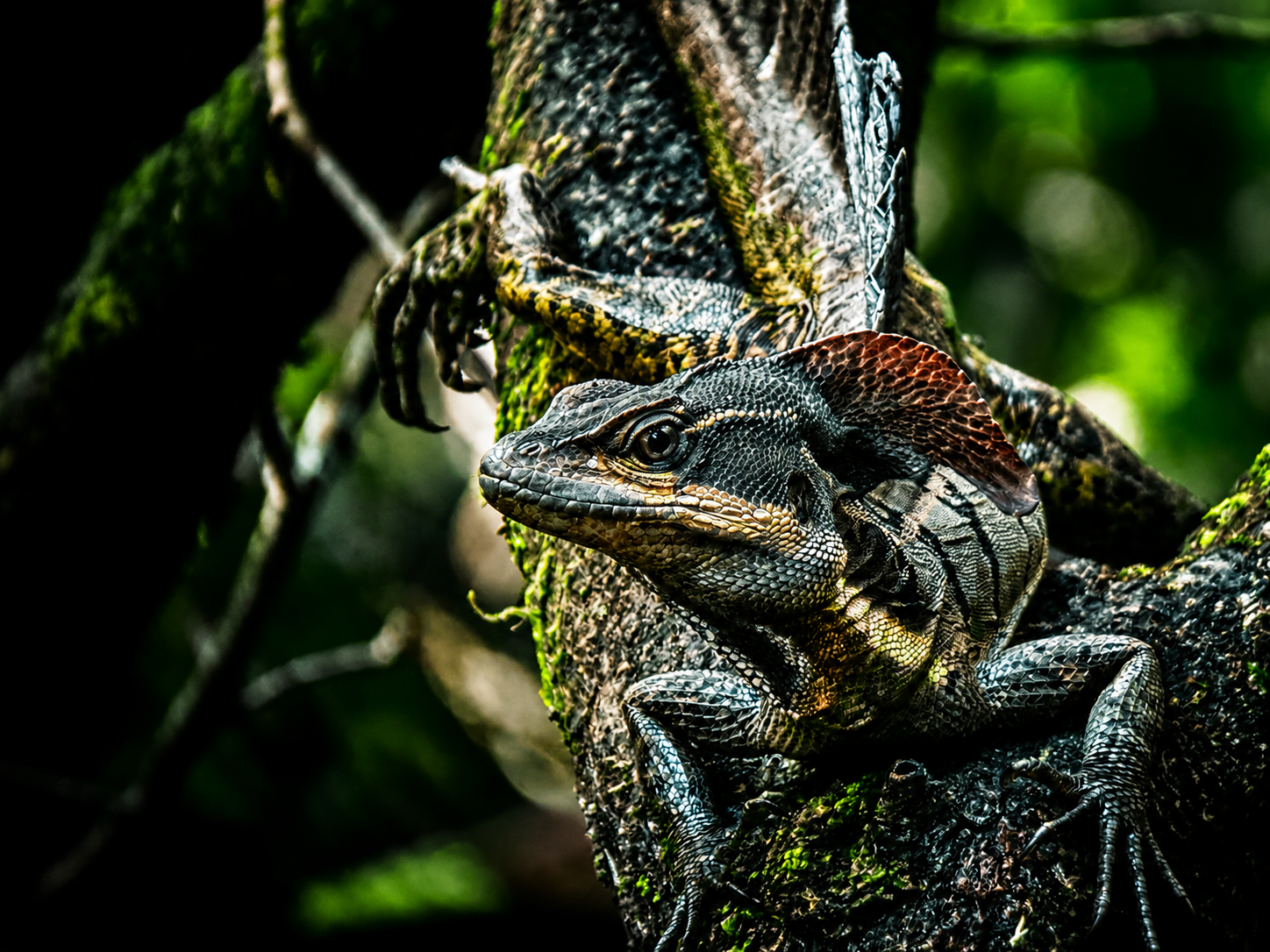
Jesus Christ Lizard
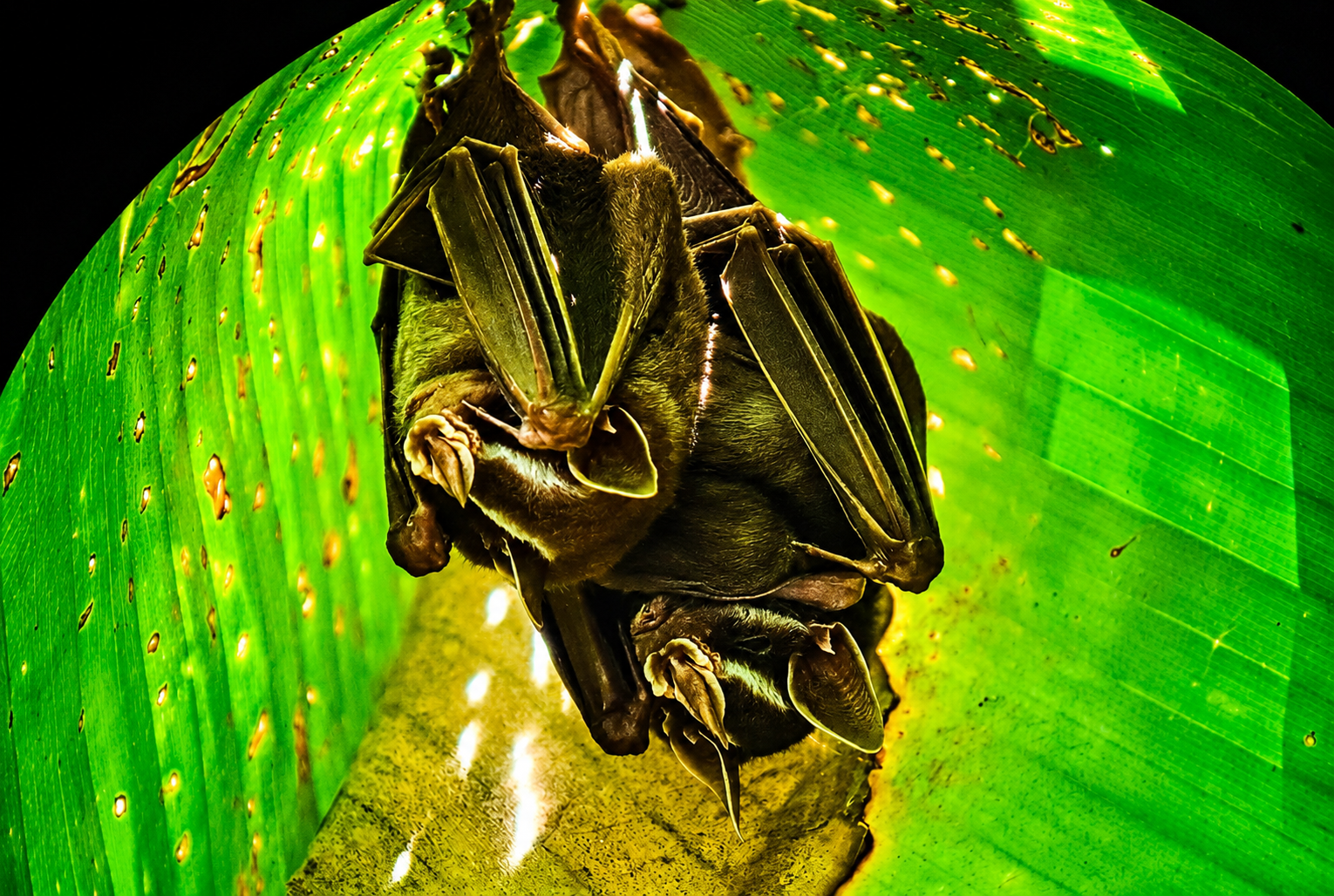
Alien like Fruit bats the size of quarters in a leaf
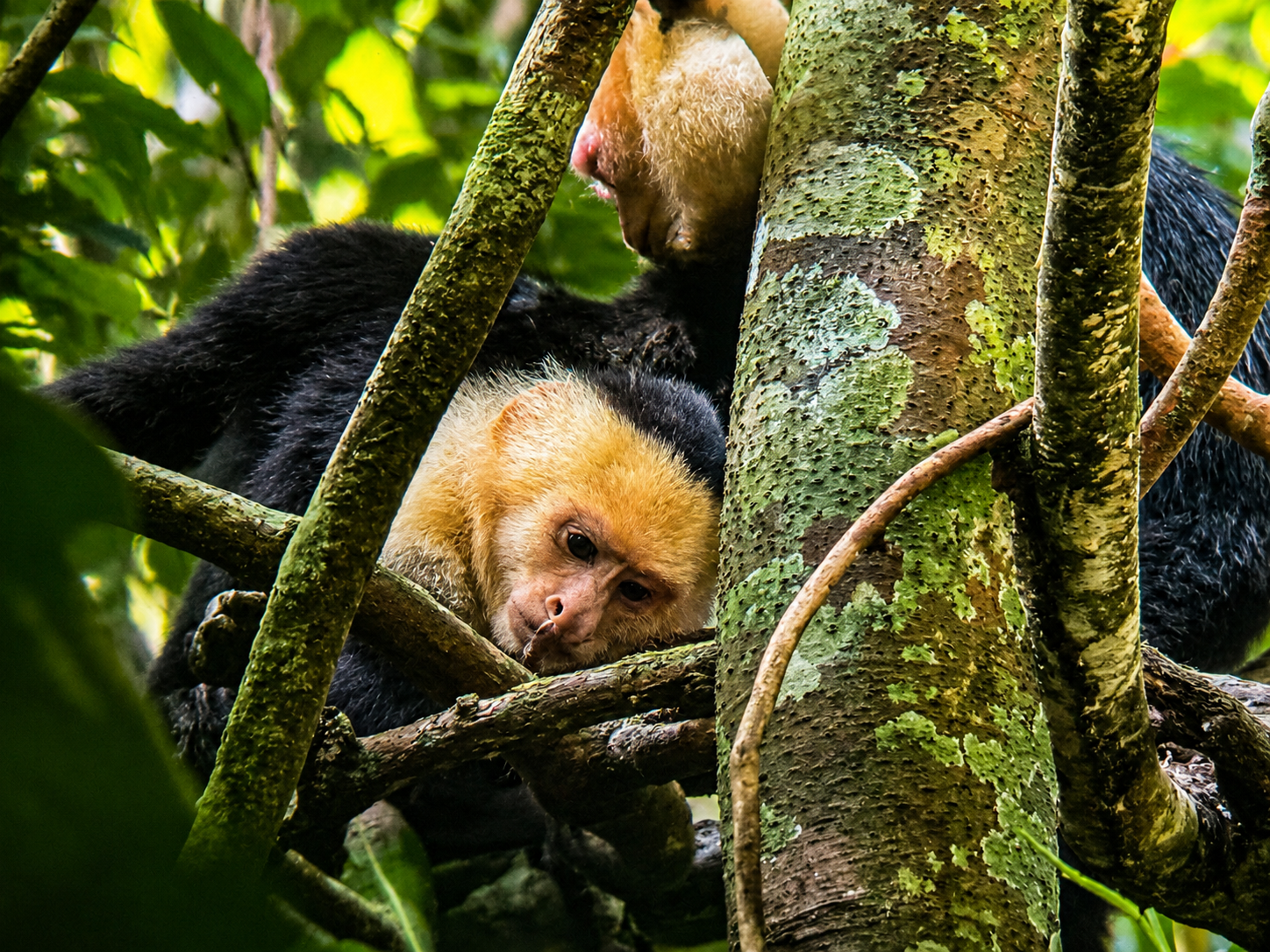
Capuchin monkeys
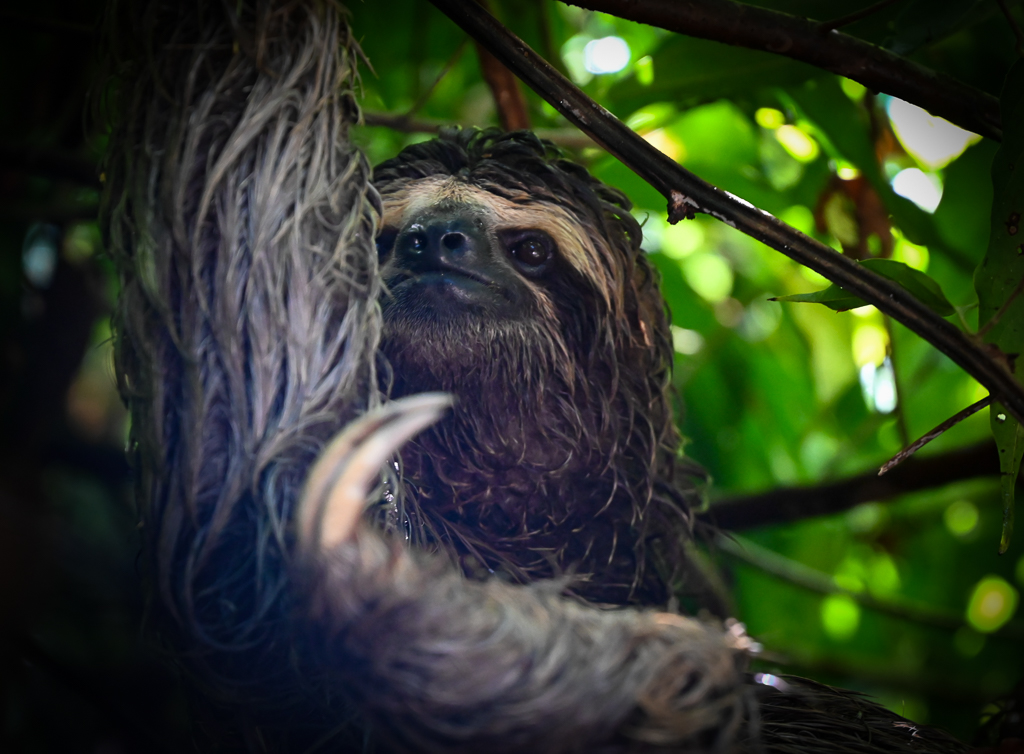
Sloth
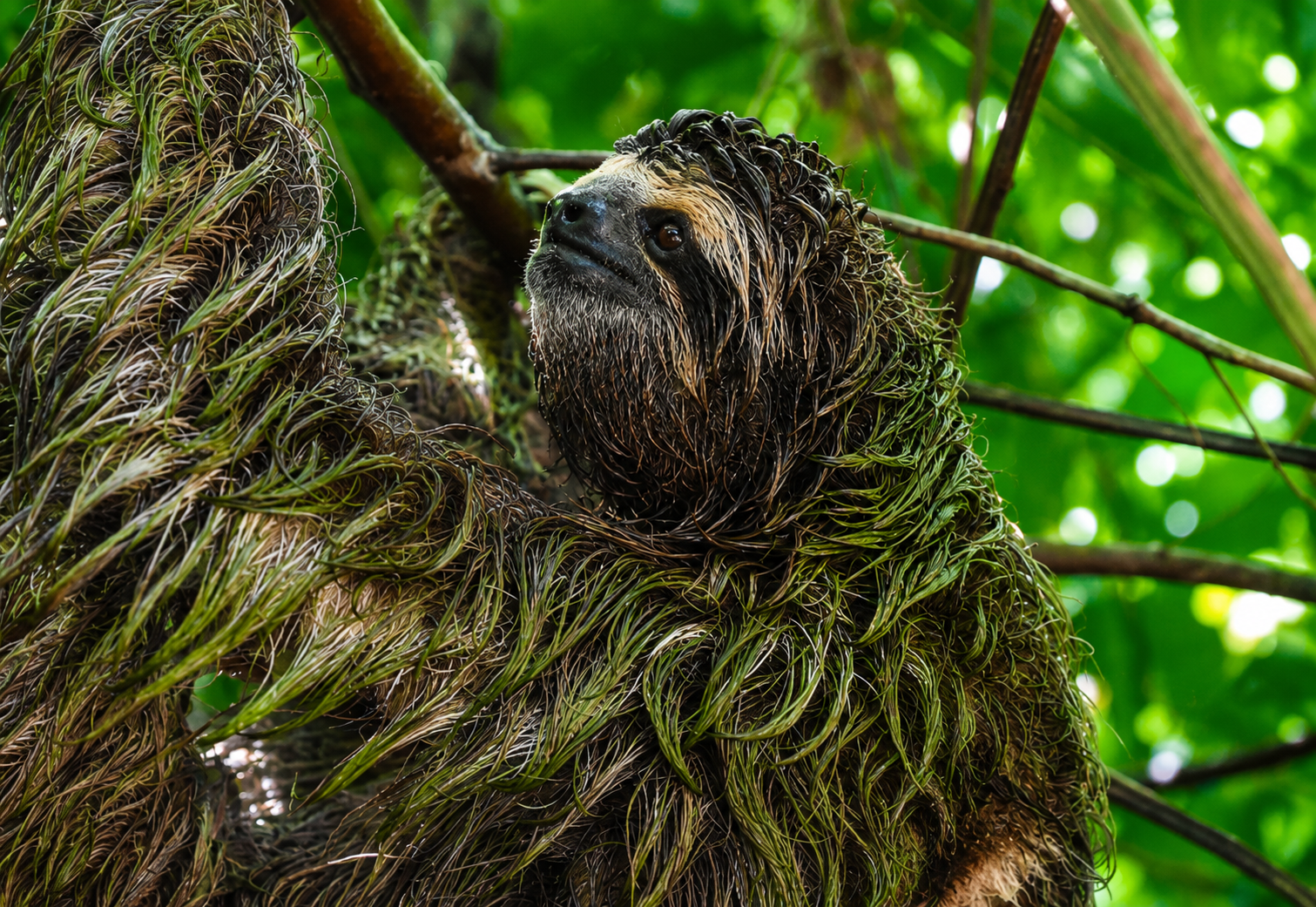
Sloth with green algae growing on fur for camouflage
A Beach at the End of the Trail
One of the things that makes Manuel Antonio so special is that the reward at the end of the rainforest trail is not a viewpoint or waterfall, but a spectacular tropical beach. White sand, turquoise water, and rainforest-covered hills combine to create a scene that feels almost too perfect to be real.
After spending the morning searching for wildlife, it was the perfect place to relax, let Indie play in the sand, and reflect on what had already been an unforgettable family adventure.
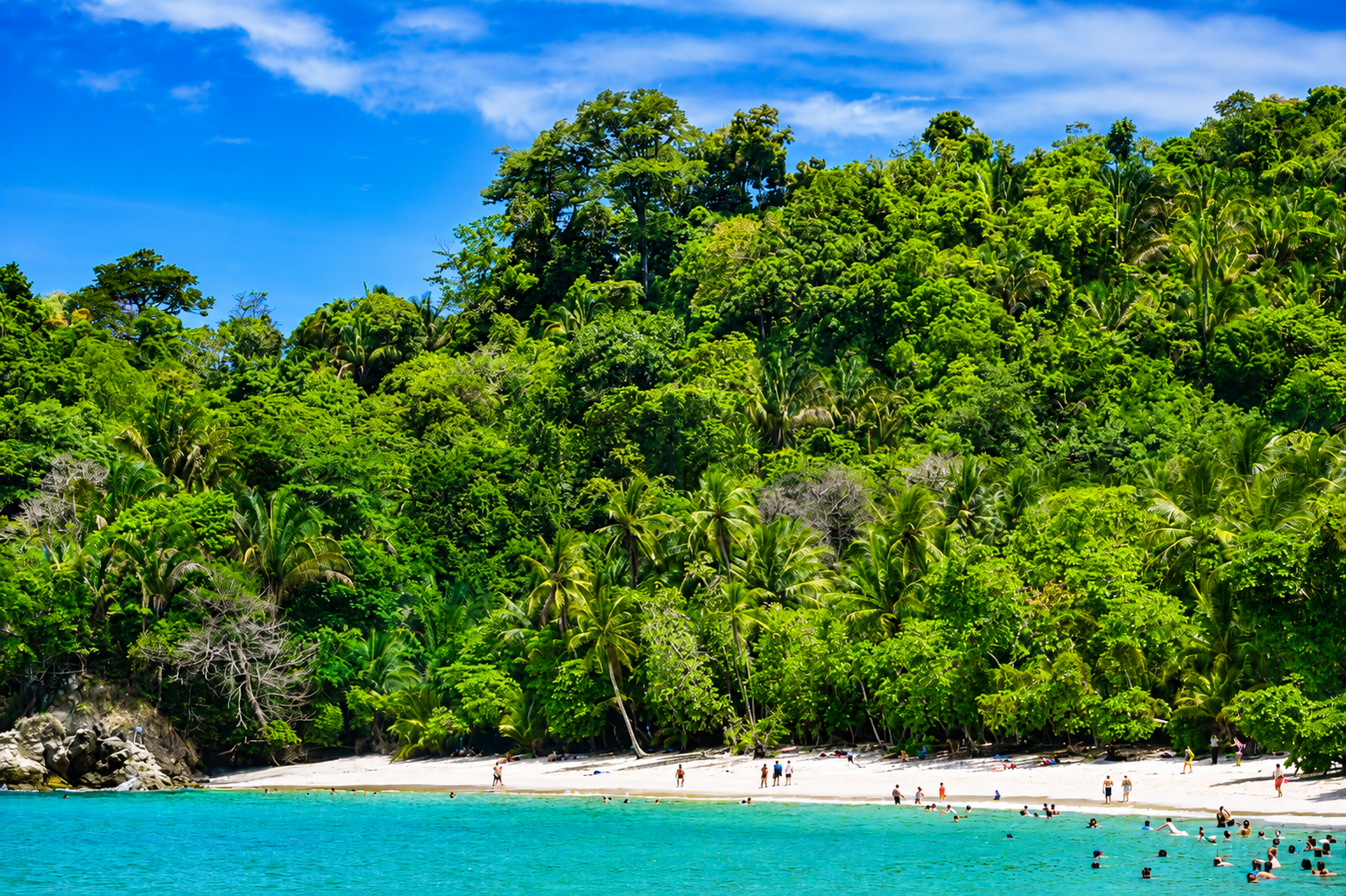
Beach at the end of the trail
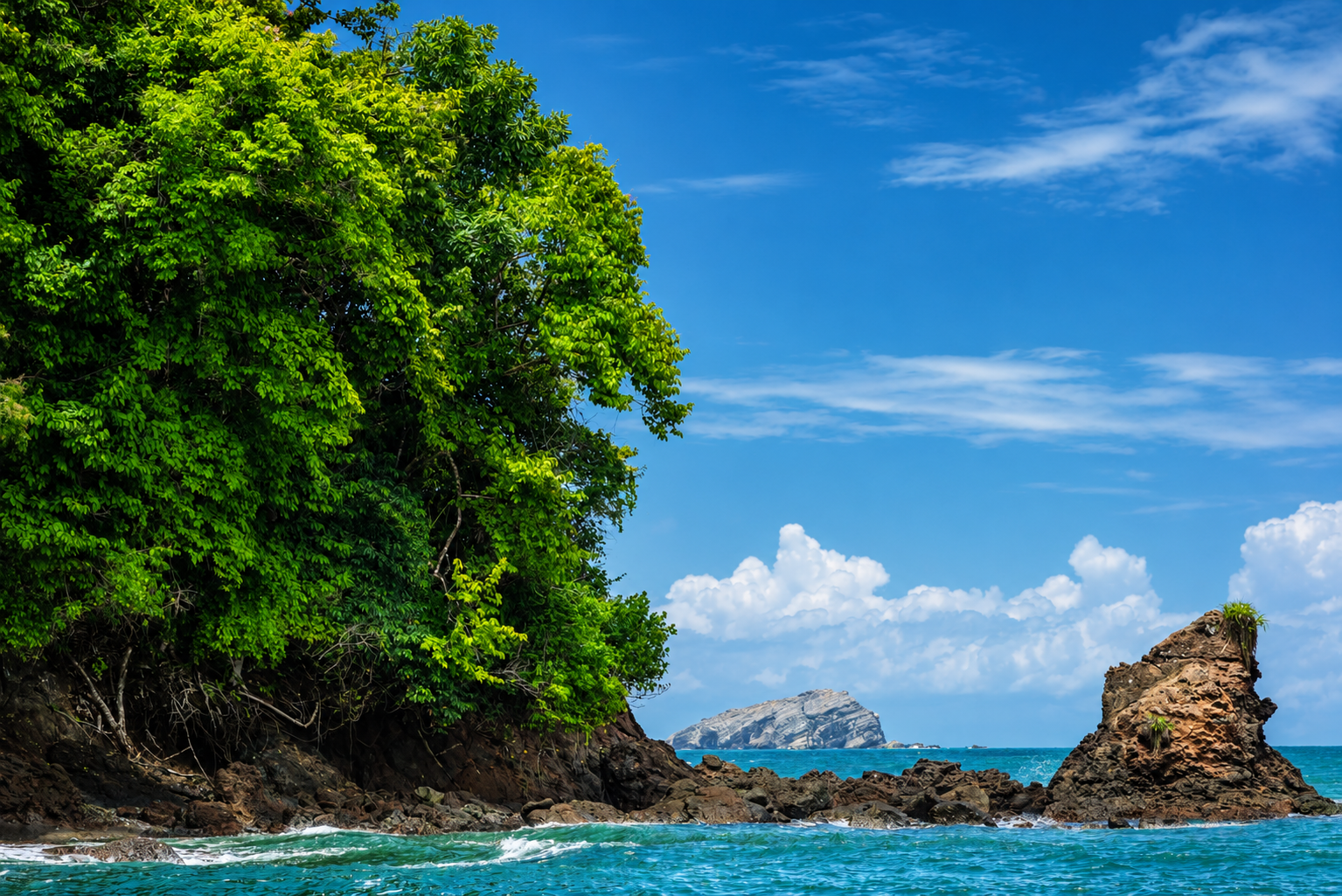
Manuel Antonio National Park
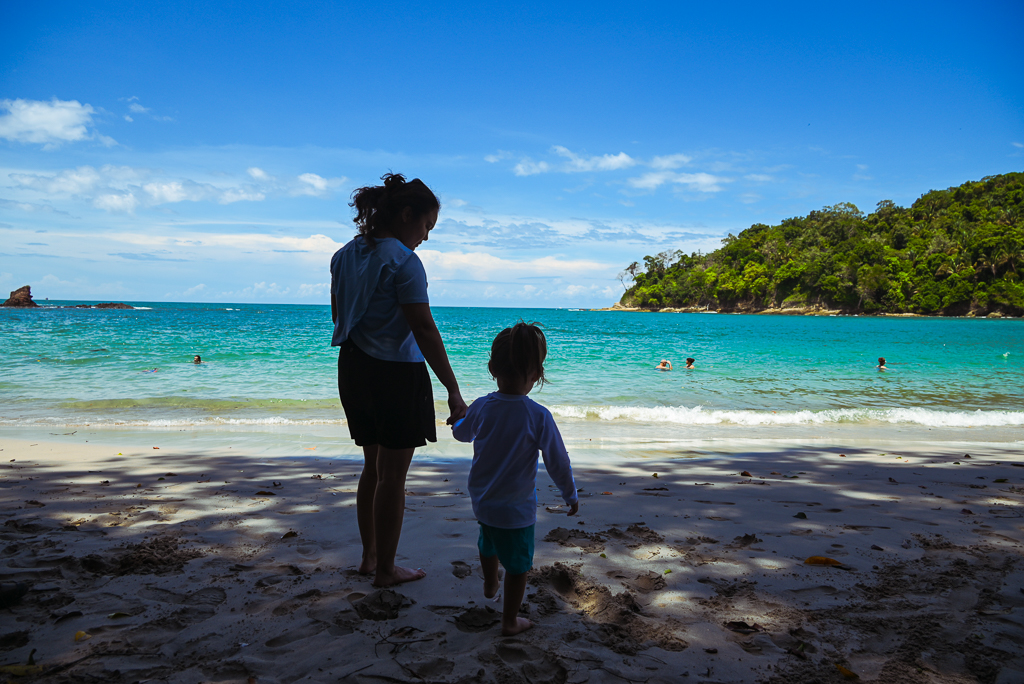
Indie and Paula going for a swim
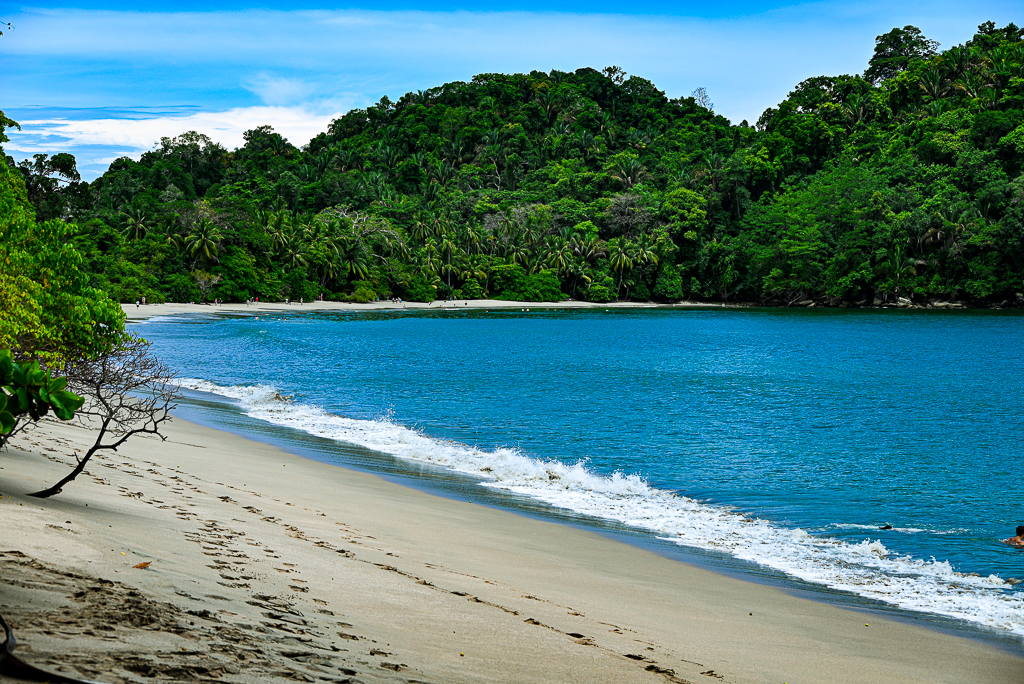
Manuel Antonio Beach
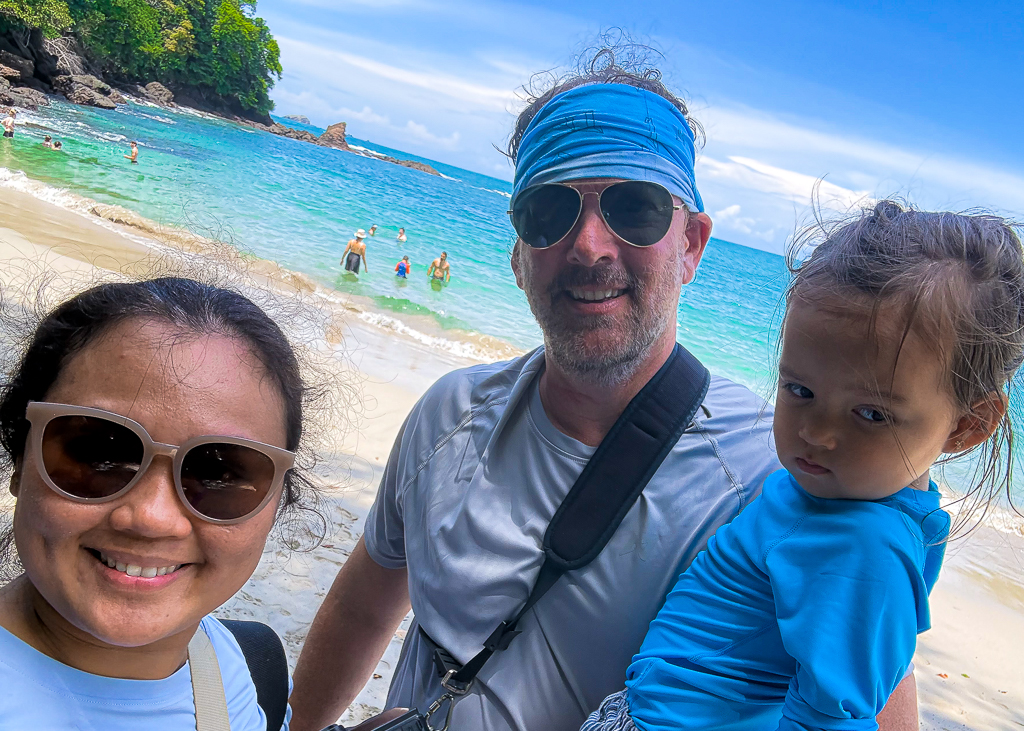
Family photo
One Last Drive Across Costa Rica
On our final day, we packed up early and began the drive back across Costa Rica to San José, where we would catch our 1:00 p.m. Southwest Airlines flight home.